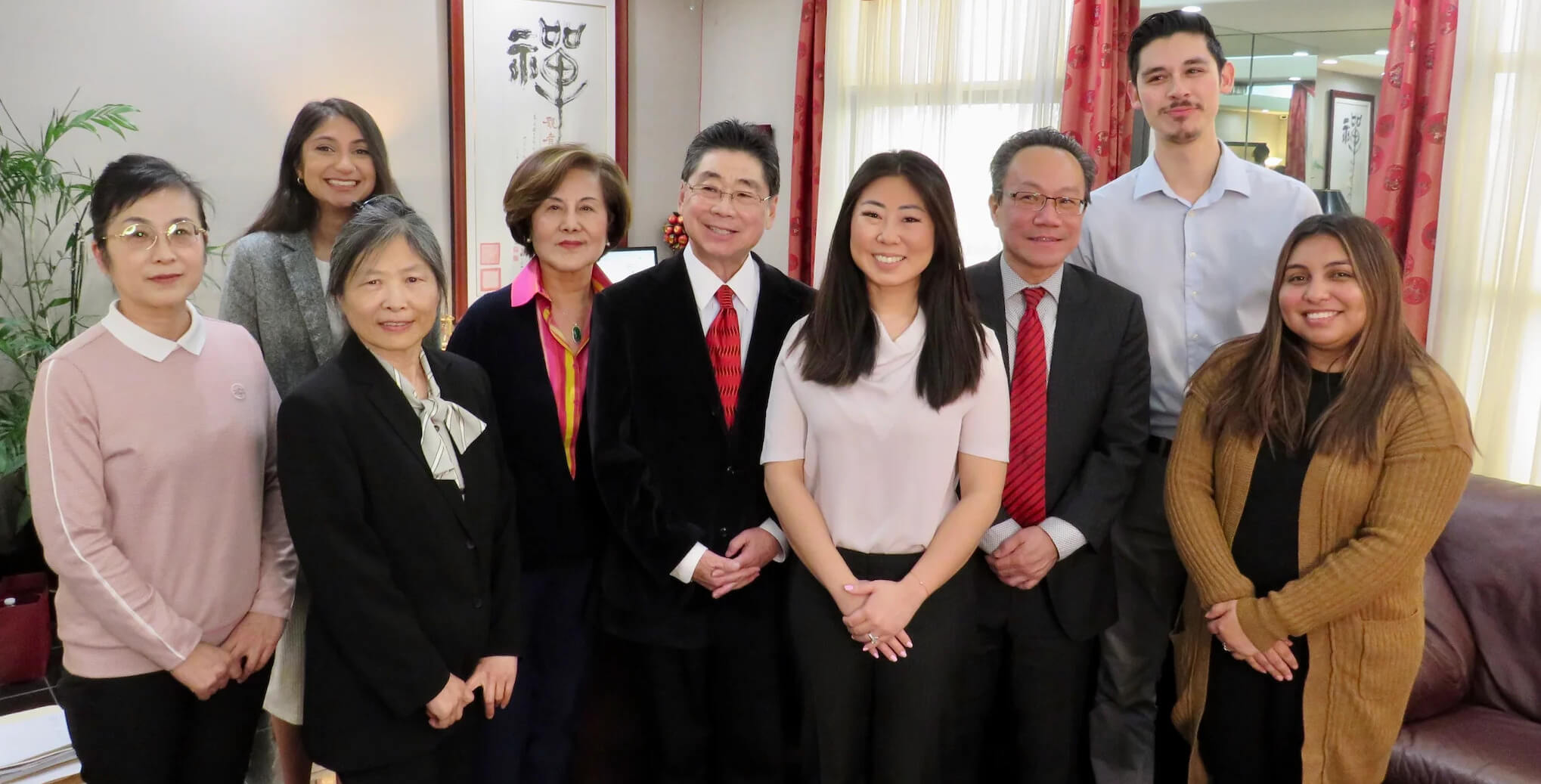

Why Choose Us?

  • Unmatched Expertise

    Trust in Peter Chu's 75+ years of collective experience to guide you through complex immigration matters.

  • Tailored Solutions

    Our personalized strategies adapt to your unique circumstances, ensuring we meet your specific immigration needs.

  • Proven Success

    Benefit from our solid track record in achieving favorable outcomes in various immigration cases across San Diego.

  • Dedicated Service

    Experience our client-first approach that ensures constant support and guidance throughout your immigration journey.

Villa Park, IL is home to over 22,000 residents, many of whom work in research-intensive sectors across Chicago's western suburbs, including pharmaceutical development, university research programs, and corporate R&D facilities. For researchers and academics seeking permanent residency through the EB-1B outstanding researcher visa Villa Park, the difference between approval and a Request for Evidence often hinges on whether the petition demonstrates international recognition under USCIS standards defined in 8 CFR 204.5(i)(3). Law office of Peter Darwin Chu represents Villa Park researchers navigating the EB-1B classification, which requires proof of at least three years of research experience and recognition as outstanding in the academic field, documented through peer-reviewed publications, citations, and letters from independent experts. Unlike employment-based second preference (EB-2) petitions that require labor certification, EB-1B cases bypass PERM processing but demand significantly stronger evidence of sustained acclaim and original contributions to the field.

Book a Consultation

Law office of Peter Darwin Chu is an immigration law firm serving Villa Park, IL residents seeking EB-1B outstanding researcher visa representation — providing petition preparation, evidence compilation, and USCIS response drafting with no upfront consultation fee for qualifying cases. The EB-1B classification is reserved for researchers with documented international recognition, typically evidenced through citation metrics, editorial board memberships, and independent expert endorsements that meet the regulatory standard at 8 CFR 204.5(i)(3)(i) through (vi).

EB-1B Lawyer Villa Park Available Across Villa Park and Surrounding Areas

Law office of Peter Darwin Chu represents clients throughout Villa Park, IL, including residents of the 60181 zip code area and surrounding DuPage County communities. All Illinois researchers with qualifying EB-1B profiles — including those employed by universities, private research institutions, or corporate R&D departments — are eligible for representation regardless of county. We serve clients across greater Chicagoland who require immigration lawyer Villa Park expertise in outstanding researcher classifications.

What Villa Park Researchers Can Access

EB-1B Petition Preparation and Filing

The EB-1B outstanding researcher classification requires demonstrating international recognition through at least two of six regulatory criteria: authorship of scholarly articles, judging the work of others, original contributions of major significance, membership in associations requiring outstanding achievement, high salary, or commercial success. For Villa Park researchers, we compile citation reports, analyze h-index metrics, draft expert letters, and prepare legal briefs that address each regulatory prong. Unlike EB-2 NIW petitions that focus on prospective national benefit, EB-1B cases require retrospective proof of sustained acclaim already achieved. Initial case assessments typically occur within 7–10 business days.

USCIS Request for Evidence (RFE) Response

Approximately 30% of EB-1B petitions receive Requests for Evidence challenging either the quality of recommendation letters, the significance of research contributions, or whether citations meet the 'outstanding' threshold. We draft RFE responses that introduce supplemental expert declarations, comparative citation analyses within the subfield, and documentation of how the researcher's work influenced subsequent studies. RFE response deadlines are strictly enforced at 87 days from issuance — late responses result in automatic denial.

Premium Processing and Status Monitoring

Form I-140 petitions for EB-1B researchers filed with premium processing (Form I-907) receive adjudication within 15 calendar days, compared to standard processing timelines of 6–12 months. For Villa Park applicants requiring certainty for employment contracts or visa status transitions, premium processing costs $2,805 as of 2026 and guarantees a decision or RFE within the statutory window.

Get in touch

Get clear, expert legal guidance tailored to your visa, green card, or citizenship needs.

Licensed Immigration Representation in Illinois

Law office of Peter Darwin Chu maintains all required Illinois state and federal licenses for immigration law practice. All EB-1B petitions are prepared in compliance with USCIS Policy Manual Volume 6, Part F, Chapter 4 governing outstanding researchers and professors, and we adhere to American Immigration Lawyers Association (AILA) practice standards for evidence compilation and expert letter procurement. Every petition includes a case-specific legal memorandum addressing how the evidence satisfies each regulatory criterion under 8 CFR 204.5(i)(3), rather than relying on template filings that fail to contextualize the researcher's contributions within their specific academic subfield.

Inquire now to check if you qualify

What If My Citation Count Is Lower Than Other EB-1B Applicants in Villa Park?

Citation volume is only one metric — USCIS evaluates recognition holistically across all six regulatory criteria. A Villa Park researcher with 200 citations in a narrow subfield may demonstrate greater impact than one with 800 citations in a high-publication-volume discipline, if the evidence includes editorial board service, invited conference presentations, and letters from Nobel laureates or National Academy members. We perform comparative citation analysis within your specific subfield, not across all sciences, to contextualize your metrics appropriately. The key is demonstrating that your work is cited by independent researchers who rely on your findings — not self-citations or co-author citations.

What If My Employer in Villa Park Won't Sponsor an EB-1B Petition?

EB-1B classification requires a permanent job offer from a qualifying U.S. employer — typically a university, research institute, or private company with a dedicated research division. Unlike EB-1A (extraordinary ability), which allows self-petitioning, EB-1B petitions must be employer-sponsored. If your current Villa Park employer declines to sponsor, you may secure a job offer from another qualifying institution willing to file the I-140 on your behalf. The petition does not require the employer to file labor certification (PERM), which reduces the sponsorship burden compared to EB-2 cases, making some employers more willing to proceed.

What If I Received an RFE Questioning Whether My Research Is 'Outstanding' Under Villa Park Standards?

An RFE challenging the 'outstanding' threshold typically requests additional evidence that your recognition extends beyond your immediate institution or collaborators. For Villa Park-based researchers, we respond by introducing supplemental letters from scholars at peer institutions who independently cite your work, citation tracking reports showing adoption of your methodologies by other labs, and evidence of invited speaking engagements at national or international conferences. USCIS applies a higher bar for 'outstanding' than for 'exceptional ability' (EB-2) — the evidence must show you are recognized as one of a small percentage at the top of your field, not merely above average.

What If My EB-1B Case Is Denied and I'm in Villa Park on an Expiring Visa?

A denied EB-1B petition does not automatically terminate your current nonimmigrant status if you hold H-1B, O-1, or another valid visa. You may file a motion to reopen or reconsider if the denial was based on legal error, or re-file with strengthened evidence if new citations, publications, or awards have accrued since the original filing. For Villa Park researchers facing visa expiration, we evaluate whether transitioning to EB-1A (self-petition) or EB-2 NIW provides a more viable path given your current profile, rather than re-filing EB-1B with insufficient evidence.

Why Villa Park Researchers Choose Specialized EB-1B Representation Over General Immigration Firms

Villa Park researchers evaluating immigration representation typically compare three paths: large-volume immigration mills that process hundreds of cases monthly with template filings, general business immigration practices that handle EB-1B as an occasional subset of H-1B work, and boutique practices focused exclusively on employment-based immigrant petitions for researchers and academics.

Here's the honest answer: EB-1B petitions are evidence-intensive legal projects that require subject-matter literacy — an attorney who cannot interpret citation metrics, understand peer review standards, or evaluate the significance of publication venues will draft a petition that fails to meet the 'outstanding' threshold. Template recommendation letter outlines that work for EB-2 cases fall short for EB-1B because they fail to establish international recognition through specific, comparative examples of how the researcher's work influenced the field. If your case has publication gaps, moderate citation counts, or limited independent endorsements, you need an attorney who drafts legal arguments contextualizing those gaps within your subfield's norms — not one who applies a checklist and hopes for approval.

ApproachEvidence StrategyRFE Response CapabilityCost TransparencyProfessional Assessment
Volume Immigration FirmsTemplate checklists, minimal field researchGeneric supplemental lettersFlat fees, hidden RFE chargesEfficient for straightforward cases; risky for borderline profiles
General Business ImmigrationMixed practice, EB-1B as minor subsetLimited academic expertiseHourly billing, unpredictableCompetent but not specialized in researcher cases
Research-Focused BoutiqueCitation analysis, subfield comparison, expert curationCustom legal memos, field-specific argumentsTransparent fee agreements, RFE includedHighest approval rates for complex or borderline EB-1B profiles
Law office of Peter Darwin ChuField-contextualized evidence, comparative metricsUSCIS policy manual arguments, supplemental expertsNo consultation fee, clear pricingPurpose-built for outstanding researcher classifications

Frequently Asked Questions

Find answers to common questions about our services

  • Standard I-140 processing for EB-1B petitions ranges from 6 to 12 months depending on the USCIS service center, though Villa Park applicants may file with premium processing (Form I-907) to receive a decision within 15 calendar days. Premium processing co

  • EB-1A (extraordinary ability) allows self-petitioning and requires demonstrating sustained national or international acclaim through evidence of prizes, memberships, published material about you, or judging others' work. EB-1B (outstanding researcher) req

  • Yes, EB-1B classification is available for researchers employed by private companies if the employer has a dedicated research division and at least three full-time researchers. The job offer must be for a permanent research position, and the employer must

  • USCIS does not specify a minimum number of letters, but successful EB-1B petitions typically include 5 to 8 letters — at least half from independent experts who are not co-authors, collaborators, or current colleagues. Letters must explain how the researc

  • Citation thresholds vary dramatically by field — a biomedical researcher may need 500+ citations to demonstrate impact, while a mathematician with 50 citations in a narrow subfield may meet the outstanding standard. USCIS evaluates citations comparatively

  • Yes, patents may satisfy the 'original contributions of major significance' criterion if they demonstrate practical application and adoption by the industry or research community. Simply holding a patent is insufficient — the evidence must show the patent

  • I-140 approval establishes your eligibility for an immigrant visa, but does not immediately grant you permanent residency. If you are in the U.S. on H-1B, you must file Form I-485 (adjustment of status) to receive your green card, subject to visa number a

  • No, EB-1B outstanding researcher petitions are exempt from PERM labor certification requirements under INA Section 203(b)(1)(B). This exemption eliminates the 6- to 12-month recruitment and prevailing wage determination process required for EB-2 and EB-3

Need Personalized Immigration Guidance?

Law office of Peter Darwin Chu provides EB-1B lawyer Villa Park representation for Illinois researchers seeking outstanding researcher visa classification, offering petition preparation and USCIS response services with evidence strategies tailored to each academic subfield's recognition standards.

Related Immigration Services for Villa Park Researchers

Villa Park researchers may also benefit from EB-1A Visa representation for extraordinary ability self-petitions, EB-1C Visa Law Office services for multinational managers, or EB-2 Visa guidance for advanced degree professionals. Academics exploring nonimmigrant options may review our O-1 Visa Guidance for extraordinary ability temporary status. For related employer-sponsored classifications, see our EB-3 Visa page for skilled worker petitions.

Speak With Us Today