
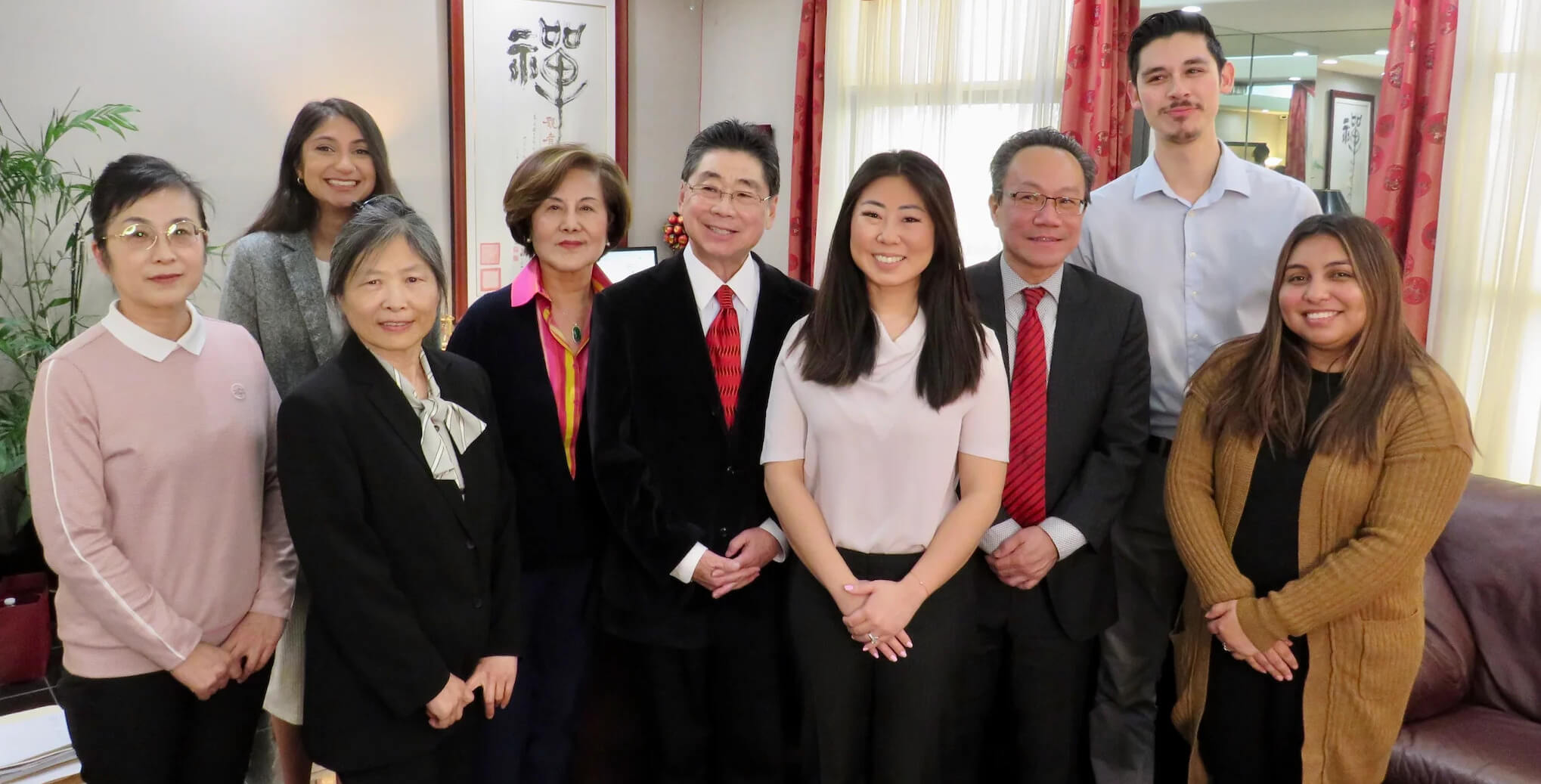
Why Choose Us?
-

Unmatched Expertise
Trust in Peter Chu's 75+ years of collective experience to guide you through complex immigration matters.
-

Tailored Solutions
Our personalized strategies adapt to your unique circumstances, ensuring we meet your specific immigration needs.
-

Proven Success
Benefit from our solid track record in achieving favorable outcomes in various immigration cases across San Diego.
-

Dedicated Service
Experience our client-first approach that ensures constant support and guidance throughout your immigration journey.


Get clear, expert legal guidance tailored to your visa, green card, or citizenship needs.

Inquire now to check if you qualify
Why Arcadia Executives Choose Specialized Immigration Counsel Over General Practice Firms
Multinational managers seeking EB-1C permanent residence face a choice: retain a general practice attorney who occasionally handles immigration matters, work with a high-volume visa mill, or engage counsel who focuses exclusively on employment-based immigrant petitions. Here's the honest answer: EB-1C petitions have a significantly higher RFE rate than other employment-based categories — approximately 40% according to USCIS data — because the managerial capacity and qualifying relationship standards are highly fact-specific and require precise documentation. General practice attorneys often overlook critical evidentiary gaps that trigger RFEs, and visa mills prioritize volume over case-specific strategy. Law office of Peter Darwin Chu limits its practice to employment-based visas, ensuring every EB-1C petition receives the individualized attention required to satisfy USCIS adjudicators.
| Approach | Documentation Depth | RFE Prevention | Professional Assessment |
|---|---|---|---|
| General Practice Firm | Standard templates, minimal customization | Reactive — responds after RFE issued | May lack EB-1C-specific experience |
| High-Volume Visa Mill | Assembly-line petition prep, minimal attorney review | Limited — prioritizes speed over accuracy | Volume model increases error risk |
| Specialized Immigration Counsel | Case-specific evidence compilation, organizational analysis | Proactive — anticipates USCIS concerns | Focused expertise reduces RFE rate |
Frequently Asked Questions
Find answers to common questions about our services
-
Standard USCIS processing for EB-1C petitions currently averages 6–9 months, though processing times fluctuate based on service center workload. California petitions are typically processed at the California Service Center or Nebraska Service Center. If y
-
No — the EB-1C category requires that you worked abroad for the qualifying foreign entity in a managerial or executive capacity for at least one continuous year within the three years immediately preceding your admission to the United States, as specified
-
EB-1C is for multinational managers and executives transferring within the same corporate family, while EB-1A is for individuals with extraordinary ability in sciences, arts, education, business, or athletics. EB-1C requires a qualifying employer petition
-
You do not need to maintain L-1A status while the EB-1C I-140 is pending, but doing so provides work authorization and legal status continuity during processing. If your L-1A expires while the I-140 is pending, you lose work authorization unless you have
-
Yes, you can refile an EB-1C petition after a denial, but you must address the reasons for the initial denial in the new filing. USCIS denial notices cite specific deficiencies — such as insufficient evidence of managerial capacity, failure to establish t
-
Yes — your spouse and unmarried children under 21 are eligible for derivative green cards as your dependents under the EB-1C category. They receive the same priority date as your I-140 petition and can file for adjustment of status concurrently or follow-
-
USCIS requires corporate documents proving the U.S. employer is a parent, subsidiary, branch, or affiliate of the foreign entity through ownership or control. Required evidence includes articles of incorporation, stock certificates, shareholder agreements
-
Premium processing requires filing Form I-907 with your I-140 petition and paying a $2,500 fee to USCIS. It guarantees a decision — approval, denial, or Request for Evidence — within 15 calendar days from the date USCIS receives the request. If USCIS fail
Need Personalized Immigration Guidance?

