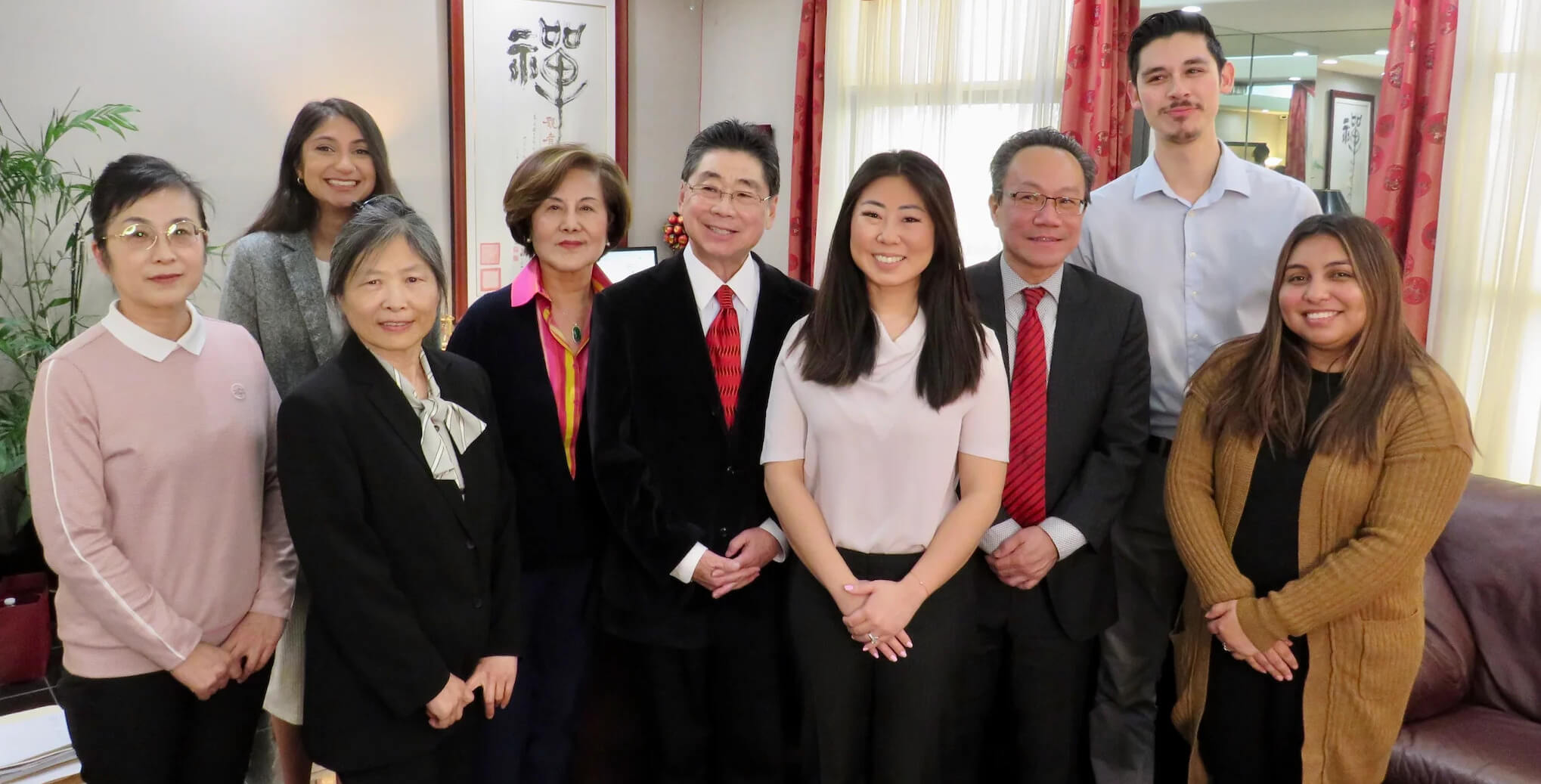

Why Choose Us?

  • Unmatched Expertise

    Trust in Peter Chu's 75+ years of collective experience to guide you through complex immigration matters.

  • Tailored Solutions

    Our personalized strategies adapt to your unique circumstances, ensuring we meet your specific immigration needs.

  • Proven Success

    Benefit from our solid track record in achieving favorable outcomes in various immigration cases across San Diego.

  • Dedicated Service

    Experience our client-first approach that ensures constant support and guidance throughout your immigration journey.

Over 78,000 Bellflower, CA residents live in one of Southern California's most ethnically diverse mid-sized cities — a community where more than 65% of households speak a language other than English at home, creating substantial demand for immigration legal services. For multinational executives and managers seeking permanent residency through the EB-1C visa category, the difference between USCIS approval and a Request for Evidence often comes down to whether the petition properly documented the qualifying managerial relationship between the U.S. and foreign entities. Law office of Peter Darwin Chu represents Bellflower-based multinational companies and transferring executives throughout the EB-1C petition process, from initial eligibility assessment through final adjustment of status.

Book a Consultation

Law office of Peter Darwin Chu is a California-licensed immigration law firm serving Bellflower residents with EB-1C multinational manager and executive visa petitions — providing eligibility assessments, I-140 petition preparation, and adjustment of status representation with no case filing until strategy is confirmed. Our EB-1C attorney Bellflower practice focuses exclusively on employment-based immigration, ensuring every petition receives specialized counsel familiar with USCIS Administrative Appeals Office precedent decisions governing the EB-1C category.

EB-1C Attorney Bellflower Available Across Bellflower and Surrounding Areas

Law office of Peter Darwin Chu represents clients throughout Bellflower, CA and Los Angeles County — including residents in zip codes 90706 and 90707. Our immigration practice serves multinational companies with U.S. operations in Bellflower and executives transferring from foreign parent, subsidiary, branch, or affiliate entities to qualifying managerial or executive roles in Southern California.

What Bellflower EB-1C Petitioners Can Access

EB-1C Eligibility Assessment and Documentation Strategy

Before filing Form I-140, we conduct a comprehensive eligibility review to confirm that the foreign and U.S. entities meet the qualifying relationship requirements under 8 CFR 204.5(j)(2) — whether parent-subsidiary, branch office, or affiliate structure — and that the beneficiary performed managerial or executive duties abroad for at least one continuous year within the three years preceding the transfer. Many petitions fail because the organizational charts and position descriptions do not clearly establish that the beneficiary supervises professional employees or manages an essential function, rather than performing the work directly. Our Bellflower EB-1C practice includes detailed review of corporate documents, staffing structures, and job duty breakdowns before the petition is filed.

I-140 Petition Preparation and USCIS Response

We prepare the Form I-140 Immigrant Petition for Alien Worker with supporting evidence including organizational charts, tax documents proving the qualifying relationship, and detailed letters describing the beneficiary's managerial or executive capacity in both the foreign and U.S. positions. If USCIS issues a Request for Evidence questioning the qualifying relationship or the nature of the beneficiary's duties, we respond with precedent-based legal arguments citing Matter of Church Scientology International and subsequent AAO decisions. Bellflower companies benefit from counsel familiar with California Service Center processing patterns and RFE trends in the EB-1C multinational manager visa Bellflower category.

Adjustment of Status and Consular Processing

Once the I-140 is approved, we guide clients through Form I-485 adjustment of status if the beneficiary is in the United States, or prepare for consular processing at the U.S. Embassy or Consulate in the beneficiary's home country. EB-1C beneficiaries are not subject to per-country visa backlogs in most circumstances, making this category one of the fastest paths to permanent residency for qualifying multinational executives.

Get clear, expert legal guidance tailored to your visa, green card, or citizenship needs.

Licensed California Immigration Counsel Serving Bellflower

Law office of Peter Darwin Chu is admitted to practice before USCIS, the Board of Immigration Appeals, and U.S. Immigration Courts under California State Bar oversight. Our EB-1C attorney Bellflower practice operates under the American Immigration Lawyers Association (AILA) Standards of Professional Conduct and maintains professional liability coverage as required by California Rules of Professional Conduct Rule 1.15. Every EB-1C petition is personally reviewed by our principal attorney — not delegated to paralegals or document preparation services — ensuring compliance with 8 CFR Part 204 employment-based petition requirements and adherence to current USCIS Policy Manual guidance on the multinational manager and executive category.

Inquire now to check if you qualify

What If My Bellflower Company Was Only Established Six Months Ago — Can We Still File an EB-1C Petition?

Yes, but with an important procedural distinction. If the U.S. entity has been doing business for less than one year, the EB-1C petition must be filed as a 'new office' petition under 8 CFR 204.5(j)(3)(i), which is initially approved for only one year of conditional permanent residency rather than the standard two-year approval. The petitioning Bellflower employer must demonstrate that it has secured sufficient physical premises to house the new operation and that the U.S. entity will support a managerial or executive position within one year of approval. After the first year, the beneficiary must file Form I-829 to remove conditions, supported by evidence that the U.S. office grew as projected. This pathway is common for foreign companies opening their first U.S. branch in Bellflower or Los Angeles County.

What If the U.S. Entity Is a Franchise — Does That Qualify for EB-1C in Bellflower?

It depends on the ownership structure. The EB-1C category requires a qualifying relationship — parent, subsidiary, branch, or affiliate — between the foreign entity and the U.S. petitioning employer. If the Bellflower franchise is independently owned and merely licenses the brand, it does not have a qualifying relationship with the foreign franchisor. However, if the foreign company directly owns or controls the U.S. franchise entity (majority ownership or control through a subsidiary structure), the relationship may qualify. We review corporate formation documents, operating agreements, and ownership charts to determine whether the Bellflower entity meets the statutory definition of qualifying relationship under 8 CFR 204.5(j)(2) before advising on petition viability.

What If I Was Laid Off From the Foreign Entity Before the EB-1C Petition Was Filed?

This creates a significant obstacle. The EB-1C regulation at 8 CFR 204.5(j)(3)(i)(B) requires that the beneficiary was employed abroad by the qualifying foreign entity in a managerial or executive capacity for at least one continuous year within the three years immediately preceding the filing of the petition. If you were laid off or your employment was terminated before the petition was filed, you no longer meet the continuous employment requirement. However, brief interruptions due to vacation, business travel, or approved leave typically do not break continuity. If you are currently employed by the U.S. entity but were previously laid off from the foreign entity, consult our Bellflower office immediately — the timing of the layoff relative to your U.S. transfer determines whether an alternative employment-based category may be available.

What If USCIS Issues an RFE Questioning Whether My Role Is Truly Managerial in Bellflower?

RFEs challenging the managerial or executive nature of the position are the most common reason EB-1C petitions are denied. USCIS frequently argues that the beneficiary is performing the day-to-day operational tasks rather than supervising professional staff or managing an essential function. Our response strategy includes submitting revised organizational charts showing clear reporting lines, detailed position descriptions for subordinate employees, and evidence that the Bellflower operation employs sufficient professional staff to relieve the beneficiary of non-managerial duties. We cite precedent decisions including Matter of Church Scientology International, 19 I&N Dec. 593, which clarified that a 'function manager' may qualify even without supervisory authority over personnel, provided the function is essential and the beneficiary exercises discretion over its operation.

Why Bellflower Multinational Executives Choose Specialized EB-1C Counsel Over General Immigration Practitioners

Not every immigration attorney handles employment-based petitions with the depth required for EB-1C approval. Many general practitioners file family-based adjustment cases or naturalization applications but lack trial experience in complex I-140 appeals or familiarity with the Administrative Appeals Office decisions that govern the multinational manager category. Here's the honest answer: if your attorney cannot cite Matter of Church Scientology International or explain the difference between a personnel manager and a function manager without referencing USCIS guidance, you are not receiving specialized EB-1C counsel.

Service ProviderEB-1C Case VolumeRFE Response StrategyProfessional Assessment
General immigration attorneyOccasional EB-1C filings among family-based caseloadGeneric RFE responses without precedent citationsMay lack depth in complex managerial capacity arguments
Online DIY petition serviceNo attorney reviewTemplate-based responsesFails to address case-specific relationship or managerial duty issues
Law office of Peter Darwin ChuEmployment-based immigration focusPrecedent-driven responses citing AAO decisionsSpecialized EB-1C counsel with corporate immigration experience

Get in touch

Frequently Asked Questions

Find answers to common questions about our services

  • USCIS processing times for Form I-140 EB-1C petitions vary by service center. As of 2026, the California Service Center averages 6-8 months for EB-1C adjudication without premium processing. If you elect premium processing (Form I-907), USCIS must adjudic

  • Both the EB-1C immigrant visa and the L-1A nonimmigrant visa serve multinational managers and executives, but the EB-1C leads to permanent residency (a green card) while the L-1A is a temporary work visa valid for up to seven years. Many Bellflower execut

  • Yes. The spouse and unmarried children under 21 of an EB-1C principal beneficiary are eligible for derivative immigrant visas in the E-14 and E-15 categories, respectively. They may apply for adjustment of status concurrently with the principal beneficiar

  • There is no statutory minimum employee count for EB-1C eligibility, but the U.S. entity must employ sufficient staff to support a managerial or executive position. USCIS frequently scrutinizes small operations where the beneficiary appears to perform oper

  • If USCIS denies the Form I-140 petition, the petitioner may file a motion to reopen or reconsider with USCIS, or appeal the decision to the USCIS Administrative Appeals Office (AAO). Motions must be filed within 30 days of the denial notice. Appeals to th

  • Once you receive your green card through EB-1C, you are a lawful permanent resident and may work for any U.S. employer without restriction. However, USCIS may investigate if you change employers immediately after receiving permanent residency, particularl

  • The EB-1C requires a qualifying multinational company relationship and a managerial or executive role, while the EB-2 National Interest Waiver (NIW) requires an advanced degree or exceptional ability and a showing that your work benefits the United States

  • The petitioning employer must submit evidence of the qualifying relationship between the U.S. and foreign entities, including Articles of Incorporation, stock certificates, ownership agreements, and IRS tax returns showing common ownership or control. The

Need Personalized Immigration Guidance?

Law office of Peter Darwin Chu provides EB-1C attorney Bellflower services to multinational managers and executives through eligibility assessment, I-140 petition preparation, RFE response, and adjustment of status representation — serving clients throughout Los Angeles County with employment-based immigration counsel licensed by the California State Bar.

Related Immigration Services for Bellflower Residents

If you are evaluating employment-based immigration pathways beyond the EB-1C multinational manager category, our firm also represents clients in EB-1A extraordinary ability petitions, EB-1B outstanding researcher cases, and EB-2 National Interest Waiver matters. For multinational companies establishing operations throughout Southern California, we provide guidance on related visa categories including L-1A intracompany transferee visas and E-2 treaty investor pathways. Bellflower executives already in the United States on L-1A status benefit from coordinated petition strategy that positions the eventual EB-1C filing for maximum approval likelihood. Additionally, review our guides on EB-1C visa law office services and EB-3 visa options for skilled workers.

Speak With Us Today