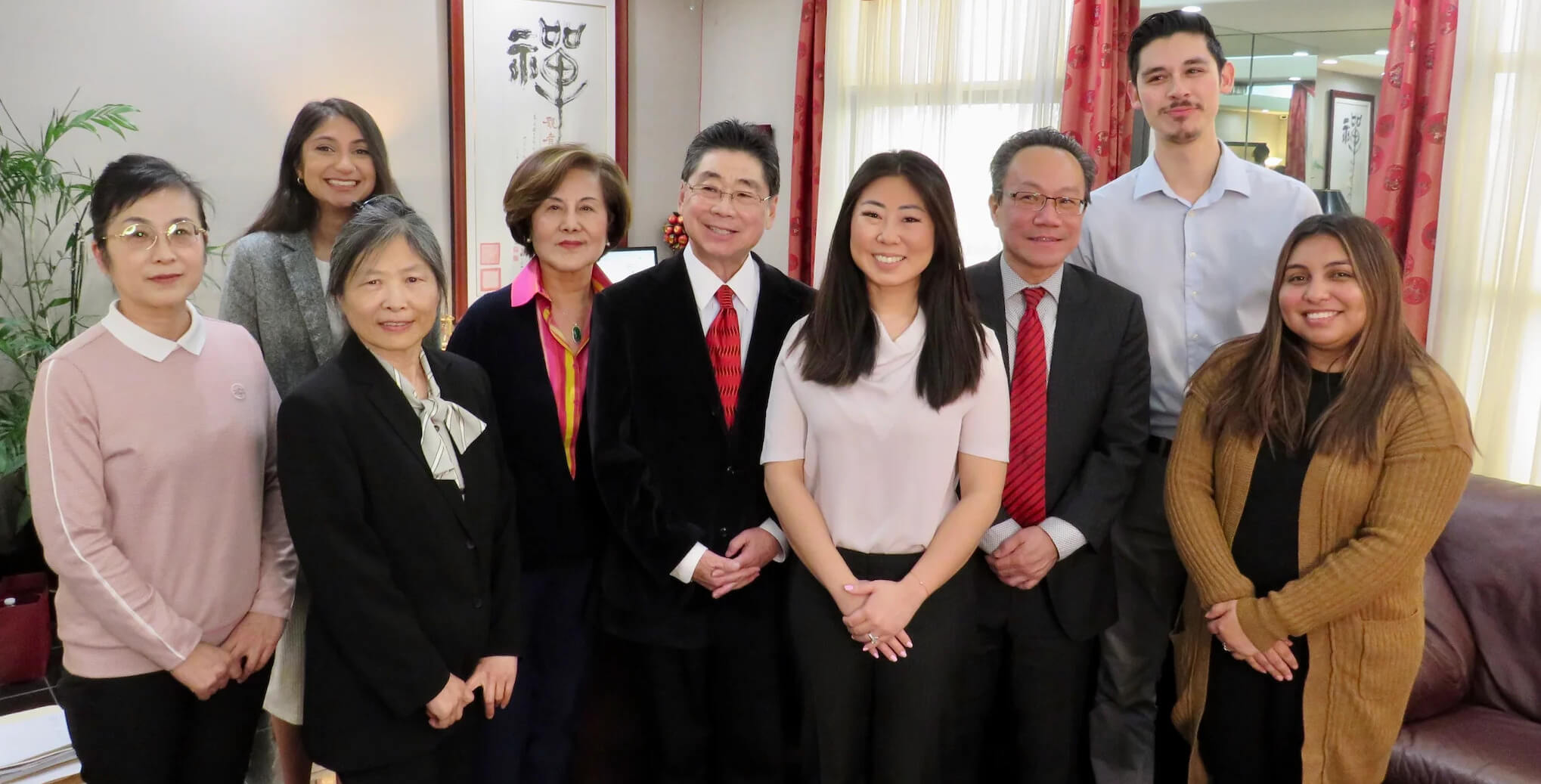

Why Choose Us?

  • Unmatched Expertise

    Trust in Peter Chu's 75+ years of collective experience to guide you through complex immigration matters.

  • Tailored Solutions

    Our personalized strategies adapt to your unique circumstances, ensuring we meet your specific immigration needs.

  • Proven Success

    Benefit from our solid track record in achieving favorable outcomes in various immigration cases across San Diego.

  • Dedicated Service

    Experience our client-first approach that ensures constant support and guidance throughout your immigration journey.

Berkeley's diverse economy — anchored by the University of California, Berkeley and a growing tech sector that includes over 400 biotech and clean energy startups — creates a steady flow of multinational executives and specialized managers seeking permanent residency through the EB-1C visa pathway. For foreign nationals currently working for a U.S. subsidiary, branch office, or affiliate of their international employer in Berkeley, CA, the difference between a successful EB-1C petition and a Request for Evidence often depends on whether the petition demonstrates qualifying managerial or executive capacity under USCIS standards before filing. The Law Office of Peter Darwin Chu has guided multinational companies and their transferring executives through the EB-1C petition process, addressing evidentiary requirements specific to the L-1A to EB-1C transition pathway.

Book a Consultation

The Law Office of Peter Darwin Chu is a California-licensed immigration law firm serving Berkeley residents seeking EB-1C multinational manager visa representation — providing petition preparation, evidence compilation, and USCIS response services for executives and managers transferring permanently to U.S. operations. The firm focuses exclusively on employment-based and family-based immigration matters, ensuring every EB-1C case receives specialized attention to the managerial/executive capacity documentation that USCIS adjudicators require.

EB-1C Attorney Berkeley Available Across Berkeley and Surrounding Areas

The Law Office of Peter Darwin Chu represents EB-1C visa applicants throughout Berkeley, CA, including residents and employers in North Berkeley, South Berkeley, West Berkeley, the Downtown Berkeley corridor, and the Claremont neighborhood (zip codes 94701, 94702, 94703, 94704, 94705). All California residents with qualifying multinational employment relationships are eligible for representation regardless of county, and the firm regularly handles cases for employers headquartered in the San Francisco Bay Area whose transferring managers reside in Berkeley.

What Berkeley Residents Can Access

EB-1C Petition Preparation and Filing

The EB-1C visa category allows multinational companies to transfer executives and managers from foreign offices to U.S. operations as permanent residents — without the labor certification (PERM) process required for EB-2 and EB-3 cases. The Law Office of Peter Darwin Chu prepares Form I-140 petitions documenting the qualifying relationship between the foreign and U.S. entities, the beneficiary's one year of qualifying employment abroad within the prior three years, and the managerial or executive nature of both the foreign and U.S. positions. Berkeley employers benefit from a petition strategy that anticipates common RFE triggers: insufficient organizational charts, vague job descriptions, and failure to demonstrate that the U.S. position supervises professional staff rather than performing operational tasks directly.

L-1A to EB-1C Transition Strategy

Many Berkeley-based EB-1C applicants are currently in the U.S. on L-1A nonimmigrant status and seek to transition to permanent residency before their L-1A maximum duration expires. The firm advises on timing considerations — including whether to file the EB-1C petition while the L-1A is still valid or after the beneficiary has been in the U.S. role long enough to demonstrate sustained managerial capacity. This assessment is particularly important for managers whose U.S. operations are still in startup phase, where USCIS may question whether the organization has reached sufficient size to support a true executive or managerial role.

USCIS Response and RFE Defense

EB-1C petitions receive Requests for Evidence at rates exceeding 40% in recent adjudication cycles, often challenging whether the beneficiary's role is truly managerial or whether the U.S. entity has sufficient operational scale. The Law Office of Peter Darwin Chu responds to RFEs with supplemental evidence — updated organizational charts, detailed statements of duties, financial documentation showing company growth, and affidavits from subordinate staff — designed to satisfy the specific deficiencies identified in the RFE notice. For Berkeley clients, prompt RFE response within the 87-day deadline is critical to avoid denial and the need to refile.

Get clear, expert legal guidance tailored to your visa, green card, or citizenship needs.

Licensed California Immigration Counsel

The Law Office of Peter Darwin Chu is licensed to practice immigration law in California and maintains active membership with the American Immigration Lawyers Association (AILA). All EB-1C representations are governed by California Rules of Professional Conduct Rule 1.4 (client communication) and Rule 1.5 (fee agreements), ensuring that Berkeley clients receive written fee agreements, regular case updates, and clear explanations of filing timelines and approval probability before representation begins. The firm carries professional liability coverage as required under California State Bar regulations and maintains client trust accounts in compliance with IOLTA requirements.

Inquire now to check if you qualify

What If My Berkeley-Based Startup Is Still Growing — Can I Still Qualify for an EB-1C Visa?

Yes, but USCIS scrutinizes EB-1C petitions for new or small U.S. operations more closely to ensure the beneficiary will function in a true managerial or executive capacity rather than performing operational tasks. In Berkeley's startup environment, the key is demonstrating that your U.S. entity has grown beyond the point where you personally perform the majority of day-to-day tasks. This typically requires showing that you supervise at least two professional-level employees, that the company has sufficient revenue or funding to support a managerial structure, and that your job duties focus on setting policy and directing operations rather than executing them. Many Berkeley EB-1C petitions for startup executives include business plans, capitalization documents, and organizational charts showing planned growth over the next 12 months to satisfy USCIS concerns about organizational capacity.

What If I've Been in the U.S. on L-1A Status for Three Years — Do I Need to Return to My Home Country Before Filing EB-1C in Berkeley?

No. There is no requirement to return to your home country before filing an EB-1C petition — you can file for permanent residency while physically present in Berkeley on valid L-1A status. In fact, filing while your L-1A is still valid is often strategic: it allows you to maintain work authorization throughout the EB-1C adjudication period and file for adjustment of status (Form I-485) concurrently if a visa number is immediately available (which it typically is for EB-1C, as the category is current for most countries). The one-year foreign employment requirement refers to employment within the three years preceding the EB-1C petition, not immediately before filing, so your current U.S. tenure on L-1A does not disqualify you.

What If My EB-1C Petition Gets an RFE Asking for More Evidence of Managerial Duties in Berkeley?

Respond within the 87-day deadline with detailed, specific evidence addressing each deficiency identified in the RFE. Common managerial capacity RFEs ask for organizational charts showing reporting relationships, breakdowns of how you allocate your weekly work hours among managerial versus operational tasks, and evidence that your subordinates are professionals performing specialized work rather than clerical staff. For Berkeley-based managers, the response should include updated job descriptions for your direct reports, financial statements showing company growth since the initial petition, and a detailed affidavit explaining how your role has evolved as the U.S. operation matured. Do not submit boilerplate responses — USCIS adjudicators are looking for case-specific evidence that your position meets the regulatory definition of 'managerial capacity' under 8 CFR 214.2(l)(1)(ii)(B).

What If My Company Has Multiple U.S. Locations — Does It Matter That I Work Primarily in Berkeley for EB-1C Purposes?

For EB-1C petition purposes, what matters is the qualifying relationship between the U.S. petitioning entity and the foreign entity, and that your role in the U.S. operation is managerial or executive — physical work location within the U.S. is less critical. However, your petition should clearly identify which U.S. legal entity is filing the I-140 (the parent company, a subsidiary, or a specific branch) and demonstrate that this entity has the organizational structure to support your managerial position. If your company operates multiple California offices and you manage teams across Berkeley and other Bay Area locations, the petition should describe the full scope of your U.S. responsibilities and the total number of employees you supervise nationwide, as this strengthens the argument that your role is genuinely managerial in scale.

Why Berkeley Multinational Managers Choose Specialized Immigration Counsel Over General Practice Attorneys

EB-1C petitions are adjudicated under a distinct evidentiary standard — managerial or executive capacity, qualifying corporate relationship, and one year of foreign employment within three years — that differs fundamentally from family-based immigration or even other employment-based categories like EB-2. General practice immigration attorneys may handle EB-1C cases as part of a broad practice portfolio, but they often lack the petition-drafting precision and RFE response experience that comes from concentrated focus on employment-based executive transfers. Here's the honest answer: the cost of an attorney who does not specialize in EB-1C is often measured not in higher fees, but in the months of delay and additional evidence requests that result from a petition that failed to anticipate adjudicator concerns before filing.

ApproachManagerial Capacity EvidenceRFE RateCorporate Relationship DocumentationBottom Line
Specialized EB-1C CounselDetailed org charts, duty breakdowns, subordinate affidavits before filingLower — proactive evidence submissionForeign and U.S. entity ownership structure, stock certificates, affiliate agreementsAddresses common denial reasons before USCIS raises them
General Immigration PracticeResume and job description submittedHigher — reactive to RFE requestsBasic corporate documents without relationship analysisOften requires RFE response to clarify what should have been in initial petition
In-House HR/Legal TeamInternal job postings and performance reviewsHighest — lacks immigration-specific framingCorporate records prepared for business purposes, not USCIS standardsExpertise in employment law does not translate to immigration petition strategy

The Law Office of Peter Darwin Chu limits its practice to employment-based and family-based immigration, ensuring every Berkeley EB-1C case benefits from petition strategies developed across multiple adjudication cycles and RFE patterns specific to multinational manager cases.

Frequently Asked Questions

Find answers to common questions about our services

  • USCIS processing times for EB-1C petitions filed at California Service Center currently average 6 to 10 months for regular processing, though this varies based on caseload and adjudicator assignment. Premium processing (Form I-907) is available for EB-1C

  • L-1A is a nonimmigrant (temporary) visa allowing multinational companies to transfer executives and managers to U.S. operations for up to 7 years, while EB-1C is an immigrant visa (green card) providing permanent residency for the same category of workers

  • Yes, but the petition must demonstrate that the qualifying corporate relationship still exists after the acquisition or restructuring. If your U.S. employer was acquired by another company, you must show that the new parent entity is related to your forei

  • Not necessarily — the EB-1C category includes both 'personnel managers' (who supervise employees) and 'function managers' (who manage an essential function within the organization without direct reports). However, function manager cases are more difficult

  • EB-1C attorney fees in the San Francisco Bay Area — including Berkeley — typically range from $8,000 to $15,000 depending on case complexity, whether premium processing is used, and whether the firm anticipates RFE likelihood requiring additional work. Th

  • If your EB-1C petition is denied, your underlying L-1A nonimmigrant status is not automatically revoked — you can continue working under your L-1A until it expires (up to the 7-year maximum for managers). However, a denied EB-1C creates complications for

  • Yes. Your spouse and unmarried children under 21 are eligible for derivative EB-1C status and can apply for permanent residency at the same time as you (either through consular processing abroad or adjustment of status if already in the U.S.). If you file

  • USCIS requires documentation proving a qualifying relationship — that the U.S. and foreign entities are related as parent and subsidiary, branch offices, or affiliates under common ownership or control. Acceptable evidence includes stock certificates show

Need Personalized Immigration Guidance?

The Law Office of Peter Darwin Chu provides EB-1C attorney services to Berkeley multinational managers and their U.S. employers through petition preparation, evidence compilation, and USCIS response services focused exclusively on executive and managerial permanent residency cases under California immigration law.

Berkeley residents exploring permanent residency pathways for multinational executives may also benefit from understanding related visa categories handled by the firm. For managers currently in L-1A nonimmigrant status, review the L-1A Visa Executive Transfer page for information on the initial nonimmigrant petition process. Those considering alternative employment-based green card categories should explore the EB-1A Visa option for individuals with extraordinary ability, the EB-1B Visa pathway for outstanding professors and researchers, and the EB-2 Visa category for advanced degree professionals. Additional EB-1C resources are available on the firm's location-specific pages: EB-1C Visa Law Office, EB-1C Visa Los Angeles, EB-1C Visa Long Beach, and EB-1C Visa Anaheim. For a consultation on your EB-1C eligibility and petition strategy, contact the firm directly.

Get in touch