
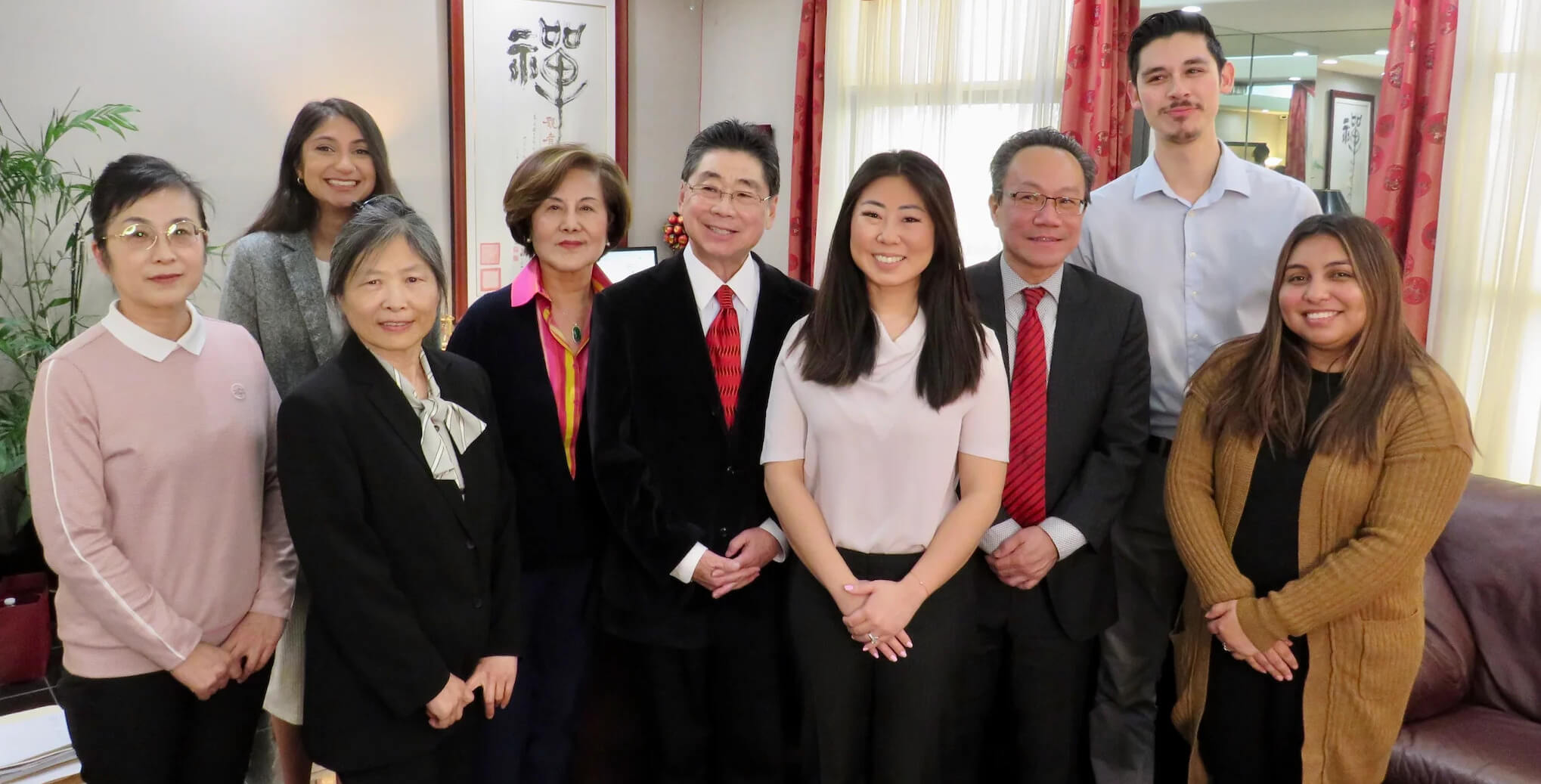
Why Choose Us?
-

Unmatched Expertise
Trust in Peter Chu's 75+ years of collective experience to guide you through complex immigration matters.
-

Tailored Solutions
Our personalized strategies adapt to your unique circumstances, ensuring we meet your specific immigration needs.
-

Proven Success
Benefit from our solid track record in achieving favorable outcomes in various immigration cases across San Diego.
-

Dedicated Service
Experience our client-first approach that ensures constant support and guidance throughout your immigration journey.


Get clear, expert legal guidance tailored to your visa, green card, or citizenship needs.

Inquire now to check if you qualify
EB-1C Attorney Boston vs. General Immigration Practitioners vs. Corporate HR Departments
Boston multinational employers choosing EB-1C counsel typically evaluate three options: specialized employment-based immigration attorneys, general immigration practitioners handling all visa categories, and internal corporate HR or legal departments preparing petitions without outside counsel. Each carries distinct advantages and risks.
Here's the honest answer: general immigration practitioners who handle family-based cases, asylum, and deportation defense alongside employment visas lack the depth of USCIS adjudication pattern recognition that specialized EB-1C counsel develop through repeated filings in this single visa category. Corporate HR departments, even those with experienced immigration coordinators, cannot provide the attorney-client privilege protection or represent the beneficiary's interests independently of the employer's interests — a critical distinction when RFEs question job duties or when the beneficiary may need to port under AC21. Law office of Peter Darwin Chu limits its practice to employment-based visas, ensuring that every EB-1C petition benefits from counsel who has seen how Vermont Service Center and Texas Service Center adjudicators interpret 'managerial capacity' across dozens of cases — not just the one or two a general practitioner files annually.
| Factor | Specialized EB-1C Attorney | General Immigration Firm | Corporate HR Self-Filing |
|---|---|---|---|
| USCIS Precedent Knowledge | Cites AAO decisions and policy memos specific to EB-1C managerial capacity disputes | May lack current case law in niche employment categories | No legal research capability |
| RFE Response Quality | Attorney-drafted legal briefs with supplemental evidence strategy | Often form-letter responses without case-specific analysis | Non-attorney responses lack legal argument |
| Attorney-Client Privilege | Full privilege protects beneficiary communications | Privilege applies but may be shared across multiple case types | No privilege — HR works for employer only |
| Professional Assessment | Boston EB-1C cases require counsel who knows how to distinguish personnel management from function management in petition narratives — a distinction that determines approval in close cases | May not recognize this nuance until after denial | Cannot provide legal analysis of statutory definitions |
Frequently Asked Questions
Find answers to common questions about our services
-
Standard I-140 processing at Vermont Service Center currently averages 4–6 months from filing to decision, though this fluctuates based on USCIS workload. Premium processing (Form I-907) guarantees a decision within 45 calendar days for an additional gove
-
USCIS does not publish approval rates by geographic location, but national EB-1C approval rates for I-140 petitions average approximately 75–82% based on USCIS statistical reports through fiscal year 2025. Denial reasons most commonly cited include failur
-
Not based solely on a pending I-140 petition. However, once you file Form I-485 (adjustment of status) and it is pending for more than 150 days, your spouse can file Form I-765 for employment authorization as a derivative beneficiary. This EAD (Employment
-
No. EB-1C and L-1A share similar qualifying requirements (managerial or executive capacity, one year of foreign employment, qualifying relationship between entities), but holding L-1A status is not a prerequisite for EB-1C eligibility. Many Boston EB-1C b
-
USCIS requires documentation proving that the U.S. petitioning employer and the foreign entity maintain one of four qualifying relationships: parent, subsidiary, affiliate, or branch. This typically includes corporate formation documents (articles of inco
-
Yes. Your unmarried children under age 21 are eligible as derivative beneficiaries on your I-140 petition and can be included on your Form I-485 (if adjusting status in the U.S.) or DS-260 (if processing through a U.S. consulate abroad). However, children
-
Attorney fees for EB-1C representation vary based on case complexity but typically range from $8,000 to $15,000 for I-140 preparation and filing, not including government fees. Government filing fees for Form I-140 are $715 as of 2026, plus $2,805 for pre
-
If your I-140 has been approved for at least 180 days and you have a pending Form I-485, the withdrawal does not affect your ability to continue with adjustment of status under INA Section 204(j) portability. You retain your priority date and can port to
Need Personalized Immigration Guidance?

