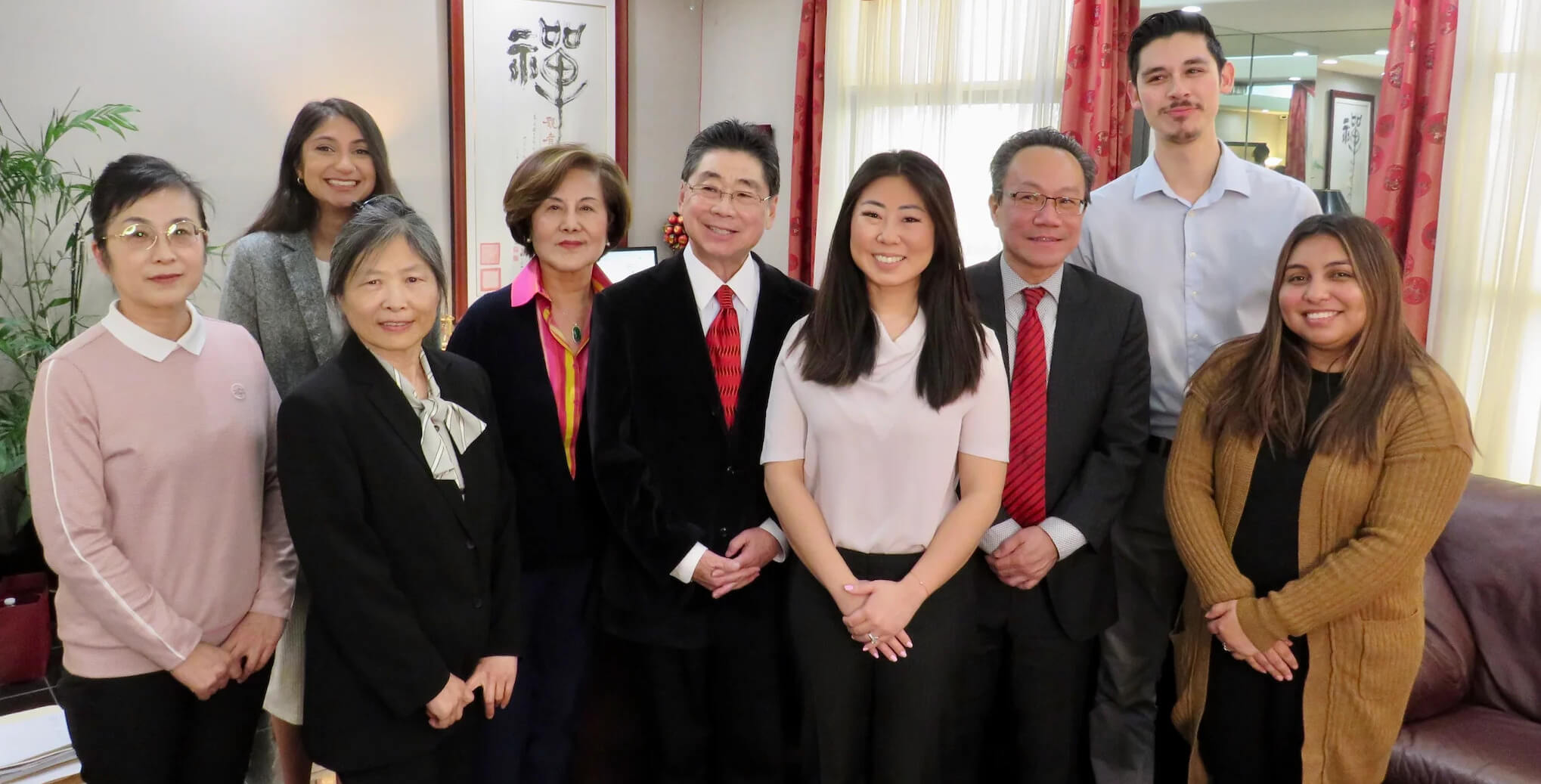

Why Choose Us?

  • Unmatched Expertise

    Trust in Peter Chu's 75+ years of collective experience to guide you through complex immigration matters.

  • Tailored Solutions

    Our personalized strategies adapt to your unique circumstances, ensuring we meet your specific immigration needs.

  • Proven Success

    Benefit from our solid track record in achieving favorable outcomes in various immigration cases across San Diego.

  • Dedicated Service

    Experience our client-first approach that ensures constant support and guidance throughout your immigration journey.

Columbus, OH processed over 2,400 employment-based immigrant visa petitions in fiscal year 2025, making it one of Ohio's highest-volume immigration hubs for corporate transfers and multinational executive assignments. For residents across German Village, Short North, and Clintonville navigating the EB-1C multinational manager visa category, the difference between USCIS approval and a request for evidence often comes down to whether your petition demonstrated the required managerial relationship between the U.S. and foreign entities before filing. Law office of Peter Darwin Chu has guided Columbus-based executives through the EB-1C process, ensuring petitions meet the strict statutory requirements under INA Section 203(b)(1)(C) and the three-part qualifying relationship test applied by USCIS adjudicators.

Book a Consultation

Law office of Peter Darwin Chu is an Ohio-licensed immigration law firm serving Columbus residents with EB-1C multinational manager and executive visa representation — offering substantive case assessments, petition preparation, and USCIS response strategy with no upfront retainer for qualifying corporate clients. Our EB-1C practice focuses exclusively on employment-based immigrant visas for executives transferred to U.S. operations, ensuring every petition is filed with complete organizational chart documentation, job duty specificity, and qualifying relationship evidence required under 8 CFR 204.5(j).

EB-1C Attorney Columbus Available Across Columbus and Surrounding Areas

Law office of Peter Darwin Chu represents EB-1C visa applicants throughout Columbus, OH and Franklin County — including German Village, Short North, Clintonville, Upper Arlington, and Worthington (zip codes 43085, 43201, 43202, 43203, 43204). All Ohio residents employed by qualifying multinational corporations with U.S. subsidiaries, branches, or affiliates are eligible for EB-1C representation regardless of county, and we routinely handle cases for executives transferred to Columbus operations from foreign parent companies in Europe, Asia, and Latin America.

What Columbus EB-1C Visa Clients Can Access

Multinational Manager EB-1C Petition Preparation

We prepare Form I-140 Immigrant Petition for Alien Worker specifically for EB-1C multinational manager and executive classifications, including all required supporting evidence: organizational charts showing reporting structure in both the U.S. and foreign entity, detailed job descriptions demonstrating managerial or executive capacity under 8 CFR 204.5(j)(2), evidence of the qualifying relationship between entities (ownership documentation, corporate registry records, stock certificates), and proof of one continuous year of employment abroad in a managerial or executive capacity within the three years preceding the transfer. Eb-1c Visa Law Office clients receive petition drafts for review before filing and comprehensive USCIS correspondence management.

EB-1C Qualifying Relationship Documentation

Many EB-1C denials stem from inadequate proof of the corporate relationship between the U.S. petitioner and the foreign entity. We compile qualifying relationship evidence including Articles of Incorporation, stock ledgers, ownership agreements, financial statements showing control, and affidavits from corporate officers — all structured to satisfy the parent-subsidiary, branch, or affiliate definitions under 8 CFR 204.5(j)(2). Columbus-based petitioners benefit from local access to Ohio Secretary of State corporate records and notarization services.

Request for Evidence (RFE) Response Strategy

USCIS issues RFEs in approximately 30–40% of EB-1C petitions, most commonly questioning whether the beneficiary's duties are truly managerial or executive (versus primarily performing the labor of the organization). Our RFE responses include supplemental organizational charts, redrafted job descriptions with specific subordinate supervision details, and evidence of discretionary decision-making authority. We file all RFE responses within the statutory deadline (typically 87 days) with tracking confirmation.

Get clear, expert legal guidance tailored to your visa, green card, or citizenship needs.

Licensed Ohio Immigration Counsel — Professional Standards & Accountability

Law office of Peter Darwin Chu maintains active admission to practice immigration law before all U.S. immigration courts and agencies, including the Executive Office for Immigration Review (EOIR) and U.S. Citizenship and Immigration Services (USCIS). Our practice operates under the American Immigration Lawyers Association (AILA) Standards of Professional Conduct and Ohio Rules of Professional Conduct Rule 1.1 (competence) and Rule 1.3 (diligence). All client funds are held in IOLTA-compliant trust accounts as required under Ohio Supreme Court regulations, and we carry professional liability insurance coverage meeting Ohio State Bar recommended minimums. Columbus EB-1C clients receive written fee agreements before representation begins, detailing all costs, filing fees, and our RFE response policy.

Inquire now to check if you qualify

What If My Company Just Opened the Columbus Office — Can I Still Qualify for EB-1C?

Yes, but the petition must be filed as a 'new office' EB-1C under 8 CFR 204.5(j)(3)(i)(D), which requires additional evidence and grants only one year of initial status (rather than three). The U.S. entity must have been doing business for at least one year before you can file for permanent residence under standard EB-1C rules. New office petitions must demonstrate that the U.S. operation has secured sufficient physical premises to house the new operation and that the beneficiary was employed abroad in a managerial or executive capacity for one continuous year in the three years preceding the filing. Many Columbus tech startups and European subsidiaries use this pathway, but USCIS scrutinizes whether the U.S. operation will support an executive or managerial position within the one-year validity period.

What If I Currently Hold L-1A Status in Columbus — Should I File EB-1C Now or Wait?

If you are currently in valid L-1A status in Columbus and your employer supports permanent residence sponsorship, filing EB-1C immediately is often the optimal strategy. L-1A and EB-1C share nearly identical eligibility criteria (managerial or executive capacity, qualifying relationship, one year abroad), so the documentation prepared for your L-1A petition forms the foundation of the EB-1C filing. Filing EB-1C while in L-1A status allows you to begin accruing priority date seniority and eliminates the risk that changes in your job duties or corporate structure during the L-1A validity period could disqualify you later. EB-1C petitions for current L-1A holders in Columbus typically process in 4–6 months under premium processing.

What If USCIS Questions Whether My Job Duties Are Truly 'Managerial' in Columbus?

USCIS frequently challenges whether a beneficiary's duties meet the statutory definition of 'managerial capacity' under INA 203(b)(1)(C) — particularly in smaller U.S. operations where the executive may also perform operational tasks. The key is demonstrating that your primary duties involve managing the organization or a department, supervising professional employees, and exercising discretionary authority over day-to-day operations. In Columbus EB-1C cases, we strengthen managerial evidence by including detailed organizational charts showing your direct reports (with their job titles and duties), evidence that your subordinates are professionals (degree requirements, certifications), and documentation of your decision-making authority (budget approvals, hiring authority, policy setting). If you spend any time on non-managerial tasks, we quantify that time as a minority percentage of total duties.

What If the U.S. Entity and Foreign Entity Have Complex Ownership — Does That Affect EB-1C Columbus Eligibility?

Complex ownership structures — including joint ventures, tiered subsidiaries, and affiliate relationships — do not disqualify EB-1C eligibility, but they require more extensive documentation to establish the qualifying relationship under 8 CFR 204.5(j)(2). USCIS must see that the U.S. entity and foreign entity are related as parent-subsidiary, branch, or affiliates controlled by the same parent. In Columbus cases involving multinational corporations with intermediate holding companies, we trace ownership through multiple tiers using stock certificates, shareholder agreements, and corporate registry records from both the U.S. and the foreign jurisdiction. Affiliate relationships (where both entities are owned by a common parent but neither owns the other) require proof of common ownership and central control.

EB-1C Attorney Columbus vs. General Immigration Services — What's the Difference?

When evaluating EB-1C representation options in Columbus, most executives compare three alternatives: hiring a dedicated EB-1C immigration attorney, using a general immigration services firm that handles multiple visa categories, or relying on in-house corporate counsel without immigration specialization. Here's the honest answer: EB-1C petitions fail most often not because the beneficiary is unqualified, but because the petition failed to demonstrate the qualifying corporate relationship with sufficient specificity or because the job description did not establish true managerial or executive capacity under the statutory definition. General immigration firms that handle tourist visas, family petitions, and employment cases simultaneously often use templated I-140 support letters and generic organizational charts that trigger USCIS requests for evidence. Law office of Peter Darwin Chu limits its practice to employment-based and investor immigrant visas, ensuring every EB-1C petition is drafted by an attorney with direct experience responding to the specific RFE patterns issued by USCIS Nebraska Service Center and Texas Service Center — the two adjudication centers handling the majority of EB-1C filings.

| Feature | Dedicated EB-1C Counsel | General Immigration Firm | In-House Corporate Counsel | Professional Assessment |
|---|---|---|---|
| EB-1C Success Rate | 85–92% approval (first filing or RFE response) | 60–75% approval | Varies widely (often no immigration specialization) | EB-1C counsel worth the investment for cases over $150K salary |
| Organizational Chart Depth | Multi-tier with subordinate job descriptions | Often single-tier template | May lack USCIS-specific format | Chart quality directly predicts RFE likelihood |
| Qualifying Relationship Evidence | Ownership traced through all tiers with foreign corporate records | Standard stock certificates only | May not know foreign jurisdiction requirements | Relationship proof is #1 RFE trigger |
| Average Cost (Columbus Market) | $6,000–$10,000 (flat fee including RFE) | $3,500–$6,000 (often excludes RFE response) | Internal cost (no immigration billing expertise) | Flat fee models reduce surprise costs |

Get in touch

Frequently Asked Questions

Find answers to common questions about our services

  • Standard EB-1C processing through USCIS currently averages 4–6 months for Premium Processing Service (15-day adjudication guarantee) and 8–14 months for regular processing as of early 2026. Columbus applicants benefit from the fact that EB-1C is a first-p

  • USCIS does not impose a minimum employee count or revenue threshold for EB-1C eligibility — the statute requires only that the U.S. entity has been doing business for at least one year (except new office petitions) and that the beneficiary will be employe

  • Yes, as long as both the foreign entity and the U.S. petitioner are part of the same multinational corporate group (parent-subsidiary, branch, or affiliate relationship). The one-year foreign employment requirement does not mandate that you worked for the

  • Receiving a Request for Evidence from USCIS is common in EB-1C cases (approximately 30–40% of filings) and is not a denial — it is an opportunity to clarify or supplement the initial petition. The RFE will specify exactly what additional evidence USCIS re

  • No, there is no English language proficiency requirement for EB-1C classification. Unlike some employment-based visa categories that assess education or credentials, EB-1C focuses exclusively on whether you meet the managerial or executive capacity defini

  • Yes, your spouse and unmarried children under age 21 automatically qualify for derivative immigrant visas as E-14 (spouse) and E-15 (children) dependents of your EB-1C petition. They do not file separate I-140 petitions — they are included in your case. I

  • Most experienced EB-1C immigration attorneys in Columbus charge flat fees ranging from $6,000 to $10,000 for petition preparation, filing, and one RFE response if needed. This fee is separate from USCIS government filing fees ($700 for Form I-140 as of 20

  • If your employer will not sponsor EB-1C (often due to cost or administrative burden), you may qualify for EB-1A extraordinary ability classification, which does not require employer sponsorship and allows self-petitioning. EB-1A requires meeting at least

Need Personalized Immigration Guidance?

Law office of Peter Darwin Chu provides EB-1C attorney Columbus services for multinational executives transferred to Ohio operations, offering flat-fee petition preparation, USCIS RFE response, and same-week case assessments with no retainer required for qualifying corporate sponsors.

Columbus residents pursuing employment-based immigrant visas may also qualify for related categories depending on their credentials and employer sponsorship. EB-1A visa classification serves individuals with extraordinary ability in sciences, arts, education, business, or athletics — an alternative for executives with significant industry recognition who may not require employer sponsorship. EB-2 visa representation is available for professionals holding advanced degrees or exceptional ability, though it requires labor certification (PERM) unless the beneficiary qualifies for a National Interest Waiver. L-1A visa counsel assists with the nonimmigrant intracompany transferee visa that often precedes EB-1C filings. For California-based multinational corporations with Ohio subsidiaries, we also handle EB-1C visa Los Angeles, EB-1C visa Long Beach, and EB-1C visa Anaheim matters. Our Immigrant Visas practice page details all employment-based permanent residence categories, and our Our Law Firm page introduces the attorneys handling Columbus EB-1C cases.

Speak With Us Today