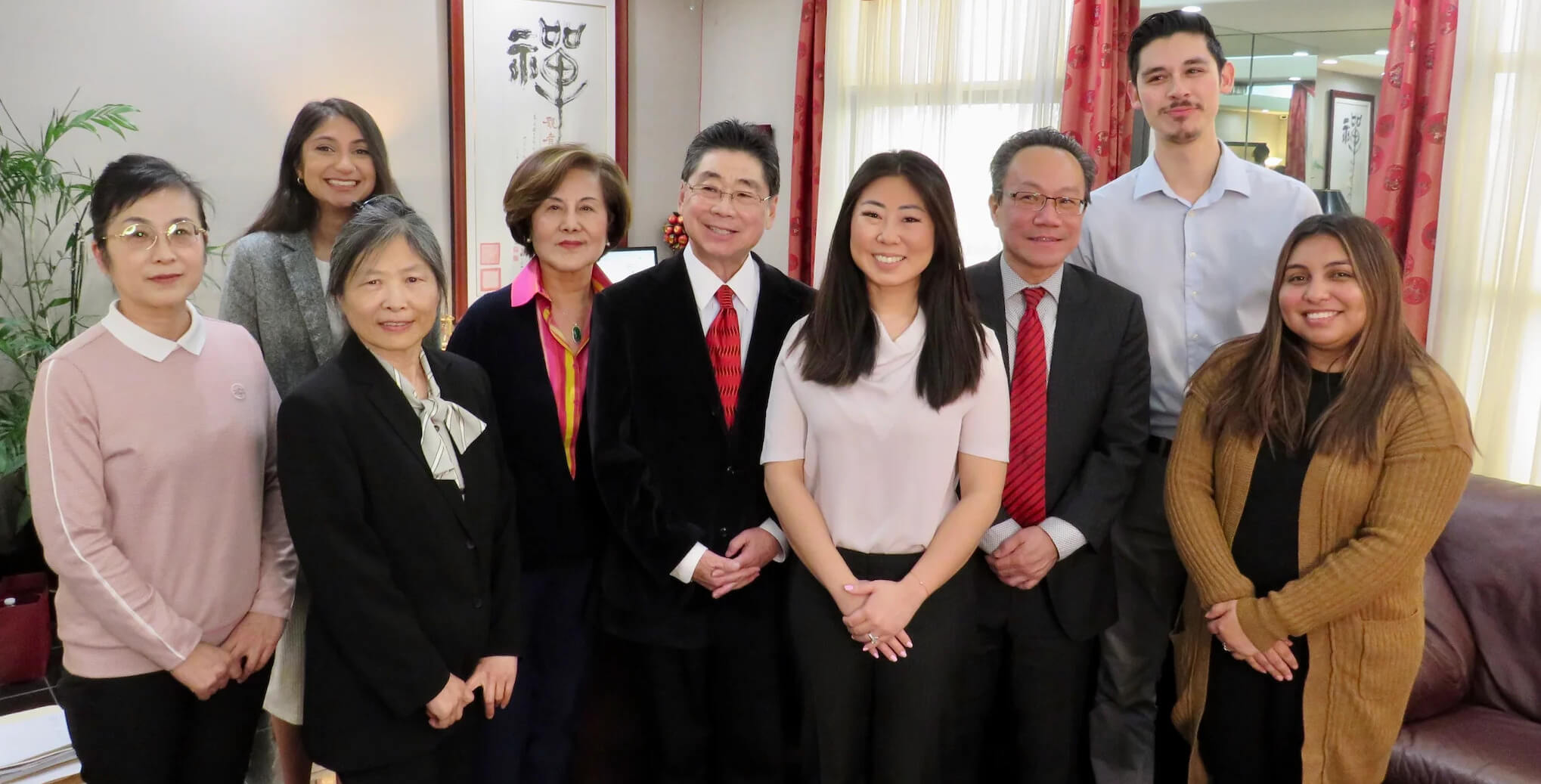

Why Choose Us?

  • Unmatched Expertise

    Trust in Peter Chu's 75+ years of collective experience to guide you through complex immigration matters.

  • Tailored Solutions

    Our personalized strategies adapt to your unique circumstances, ensuring we meet your specific immigration needs.

  • Proven Success

    Benefit from our solid track record in achieving favorable outcomes in various immigration cases across San Diego.

  • Dedicated Service

    Experience our client-first approach that ensures constant support and guidance throughout your immigration journey.

Dallas processes over 2,800 employment-based immigration petitions annually through USCIS Texas Service Center, making it one of the highest-volume EB-1C jurisdictions in the Southwest — and one where documentation precision determines approval rates. For multinational executives transferring from London, Tokyo, or Mexico City offices to Dallas headquarters in Uptown, Victory Park, or Las Colinas, the difference between I-140 approval and an RFE (Request for Evidence) often comes down to whether your petition establishes the qualifying managerial relationship under 8 CFR 204.5(j)(2) before USCIS reviews it. Law office of Peter Darwin Chu has guided executives through EB-1C petitions for companies operating in Dallas, TX, and understands how Texas Service Center adjudicators evaluate multinational organizational charts.

Book a Consultation

Law office of Peter Darwin Chu is a Texas-licensed immigration law firm serving Dallas residents with EB-1C multinational manager visa representation — including I-140 petition preparation, L-1A to EB-1C transition strategy, and priority date preservation for executives transferred to U.S. operations. We provide case evaluations that assess whether your foreign employment meets the one-year-in-three requirement and whether your U.S. role qualifies as managerial or executive under INA Section 203(b)(1)(C).

EB-1C Attorney Dallas Available Across Dallas and Surrounding Areas

Law office of Peter Darwin Chu represents EB-1C petitioners throughout Dallas and Dallas County — including Downtown Dallas, Uptown, Oak Lawn, Lake Highlands, and Far North Dallas (zip codes 75065, 75201, 75202, 75203, and 75204). All Texas residents with qualifying multinational employment are eligible for representation regardless of whether the U.S. entity is headquartered in Dallas, Fort Worth, or another Texas metro area.

What Dallas EB-1C Petitioners Can Access

I-140 Petition Preparation for Multinational Managers

The EB-1C category requires proof that you were employed abroad in a managerial or executive capacity for at least one continuous year within the three years preceding your U.S. entry, and that you will continue in a managerial or executive role for a qualifying U.S. employer. We prepare I-140 petitions that document the foreign entity's relationship to the U.S. entity (parent, subsidiary, affiliate, or branch), establish your qualifying foreign employment through organizational charts and job duty letters, and demonstrate that your U.S. position meets the statutory definition of 'managerial' or 'executive' under 8 CFR 204.5(j)(2). Dallas-based multinational corporations in energy, technology, and healthcare sectors frequently transfer executives under this classification. Consultation assesses whether your case meets all statutory elements before filing.

L-1A to EB-1C Transition Strategy

Many Dallas EB-1C petitioners enter the U.S. on L-1A intracompany transferee visas and transition to permanent residence through EB-1C before the L-1A expires. This pathway requires that your L-1A role and EB-1C role both qualify as managerial or executive — roles that overlap but are evaluated under different standards. We analyze whether your current L-1A approval notice establishes the foreign employment requirement, whether your U.S. role has evolved since L-1A approval, and whether filing EB-1C now preserves your priority date if you later need to switch to EB-2 or EB-3. For Dallas executives whose L-1A status expires within 12–18 months, early EB-1C filing avoids status gaps.

EB-1C Visa Law Office | EB-1C Visa Los Angeles

For comprehensive EB-1C guidance and comparison with other employment-based categories, review our national EB-1C practice overview and Los Angeles EB-1C page, which detail how we handle cases across multiple USCIS service centers.

Get clear, expert legal guidance tailored to your visa, green card, or citizenship needs.

Licensed EB-1C Immigration Representation in Texas

Law office of Peter Darwin Chu maintains all required Texas state bar licenses and operates under Rules of Professional Conduct governing attorney-client privilege, conflict of interest, and fee agreements. EB-1C representation is governed by the Immigration and Nationality Act (INA) Section 203(b)(1)(C) and 8 CFR 204.5(j), which define 'managerial capacity' and 'executive capacity' for employment-based first preference classification. We provide written fee agreements before representation begins, disclose all filing fees (I-140 filing fee currently $700, premium processing $2,805 if elected), and clarify that USCIS adjudication timelines for Texas Service Center I-140 petitions currently average 6–8 months standard processing. All consultations include assessment of whether your case qualifies under the statutory standard before we recommend filing.

Inquire now to check if you qualify

What If I Was Employed Abroad for 11 Months — Not 12 — Before Transferring to Dallas?

The EB-1C statute requires one year of continuous foreign employment within the three years preceding your U.S. entry. USCIS calculates this as 365 days, not 12 calendar months — meaning 11 full months (330 days) does not satisfy the requirement. If you entered the U.S. on L-1A status before completing one full year abroad, your EB-1C petition will be denied unless you can document an earlier period of foreign employment with the same employer or a qualifying related entity. We assess your complete employment history during consultation to determine whether you meet the one-year threshold or whether you need to defer filing until additional foreign employment accrues.

What If My U.S. Role in Dallas Involves Some Individual Contributor Work?

USCIS interprets 'managerial capacity' and 'executive capacity' narrowly — roles that require significant hands-on technical or operational work often fail to qualify. If your Dallas position involves managing a function (not just supervising staff) and you spend more than 50% of your time on non-managerial tasks, your I-140 may be denied even if your job title is 'Director' or 'VP.' We evaluate your actual daily duties, your organizational reporting structure, and whether you have discretionary authority over significant company operations. In cases where the U.S. role is borderline, we advise whether restructuring the role or deferring the petition is the better path.

What If the U.S. Entity in Dallas Was Just Established This Year?

EB-1C petitions for new office cases — where the U.S. entity has been operating for less than one year — face heightened scrutiny under 8 CFR 204.5(j)(3)(i)(D). USCIS requires proof that the U.S. office has physical premises, that it will support a managerial or executive position within one year, and that it has the financial ability to compensate you. Startups and newly capitalized subsidiaries in Dallas often struggle to meet this standard if they lack significant revenue or staffing. We assess whether your case qualifies as a new office petition, whether the evidence supports one-year viability, and whether deferring the petition until the entity matures reduces RFE risk.

What If My Foreign Employer and U.S. Employer Do Not Have Common Ownership?

EB-1C requires that the foreign and U.S. entities be related as parent, subsidiary, affiliate, or branch under 8 CFR 204.5(j)(2). 'Affiliate' means both entities are owned by the same parent corporation, individual, or group — mere partnership or joint venture agreements typically do not establish the qualifying relationship. If your Dallas employer is independently owned and your foreign employer is separately owned, your petition will be denied unless you can document a common ownership structure. We review corporate formation documents, shareholder agreements, and ownership charts during consultation to confirm the relationship meets USCIS standards.

Why Dallas Executives Choose Law office of Peter Darwin Chu Over DIY Petition Preparation or Employer-Sponsored Counsel

EB-1C petitions are frequently prepared by corporate immigration counsel retained by the employer, by independent immigration attorneys retained by the executive, or through online DIY services that generate petition letters from templates. Each path involves different cost structures, control, and risk.

Here's the honest answer: employer-retained counsel represents the company's interests — not yours — and may prioritize cost containment over maximizing your approval odds. If USCIS denies your I-140, the employer's counsel may decline to appeal or file a new petition if the company decides not to proceed. Independent counsel retained by you ensures your case receives individual attention, that all evidence favorable to your qualification is presented, and that you control decisions about premium processing, response to RFEs, and appeal strategy. DIY services produce generic petition letters that fail to address case-specific weaknesses — such as borderline managerial duties or new office concerns — and leave you without representation if USCIS issues an RFE. Law office of Peter Darwin Chu provides executive-level EB-1C representation where your approval is the singular objective.

| Approach | Cost Structure | Who Controls Strategy | RFE Response | Bottom Line |
|---|---|---|---|
| Employer-Sponsored Counsel | Paid by employer | Employer decides | Attorney may not appeal if employer declines | Employer's interests may diverge from yours |
| Independent EB-1C Attorney Dallas | Paid by executive | You control all decisions | Attorney represents you through appeal | Your case receives individualized strategy |
| DIY Petition Service | $500–$1,500 flat fee | You prepare all evidence | No legal representation | Generic templates fail to address case weaknesses |
| No Attorney (Self-Filed) | Filing fees only | You control | No professional review | RFE response without counsel reduces approval odds significantly |

Get in touch

Frequently Asked Questions

Find answers to common questions about our services

  • Standard I-140 processing at Texas Service Center currently averages 6–8 months from filing to decision, though this timeline fluctuates based on USCIS workload. Premium processing — available for an additional $2,805 fee — guarantees a decision within 15

  • Yes — filing an I-140 EB-1C petition while in valid L-1A status is the most common pathway and does not jeopardize your L-1A. The I-140 is an immigrant petition that establishes your eligibility for permanent residence, while the L-1A is a nonimmigrant st

  • EB-1C requires employer sponsorship and proof of qualifying managerial or executive employment with a multinational company. EB-1A requires no employer sponsorship and is available to individuals who demonstrate extraordinary ability in sciences, arts, ed

  • EB-1C has no statutory minimum salary requirement — unlike H-1B, which requires prevailing wage compliance. However, your compensation must be consistent with a managerial or executive role. If your Dallas salary is significantly below market rate for sim

  • If your I-140 is denied, you have three options: file a motion to reopen or reconsider with USCIS, file an appeal to the USCIS Administrative Appeals Office, or file a new I-140 petition addressing the deficiencies cited in the denial notice. Motions and

  • If your spouse holds L-2 status (dependent of an L-1A visa holder), they are eligible for work authorization through Form I-765 and can work for any employer in Dallas without restriction. Once your I-140 is approved and you file Form I-485 (adjustment of

  • EB-1C representation is typically billed on a flat-fee basis covering I-140 petition preparation, supporting evidence compilation, and one round of RFE response if issued. Fees vary based on case complexity — straightforward petitions for established mult

  • Bring your current immigration status documents (passport, visa stamps, I-94, L-1A approval notice if applicable), your resume or CV detailing foreign and U.S. employment, organizational charts showing your reporting structure in both the foreign and U.S.

Need Personalized Immigration Guidance?

Law office of Peter Darwin Chu provides EB-1C attorney Dallas representation for multinational managers transferring to Texas operations — including I-140 petition drafting, L-1A to EB-1C transition planning, and RFE response for executives in Dallas and throughout Texas.

Related EB-1 and Employment-Based Immigration Services in Texas

For executives considering alternative employment-based categories, review our EB-1A Visa page, which details extraordinary ability classification for individuals who do not require employer sponsorship, and our EB-1B Visa guidance for outstanding professors and researchers. Dallas residents in L-1A status should also review our L-1A Visa overview to understand how L-1A approval affects EB-1C eligibility. For comparison across all employment-based immigrant categories, see our national EB-1C Visa Law Office resource. Additional location-specific EB-1C pages: EB-1C Visa Los Angeles | EB-1C Visa Long Beach | EB-1C Visa Anaheim.

Speak With Us Today