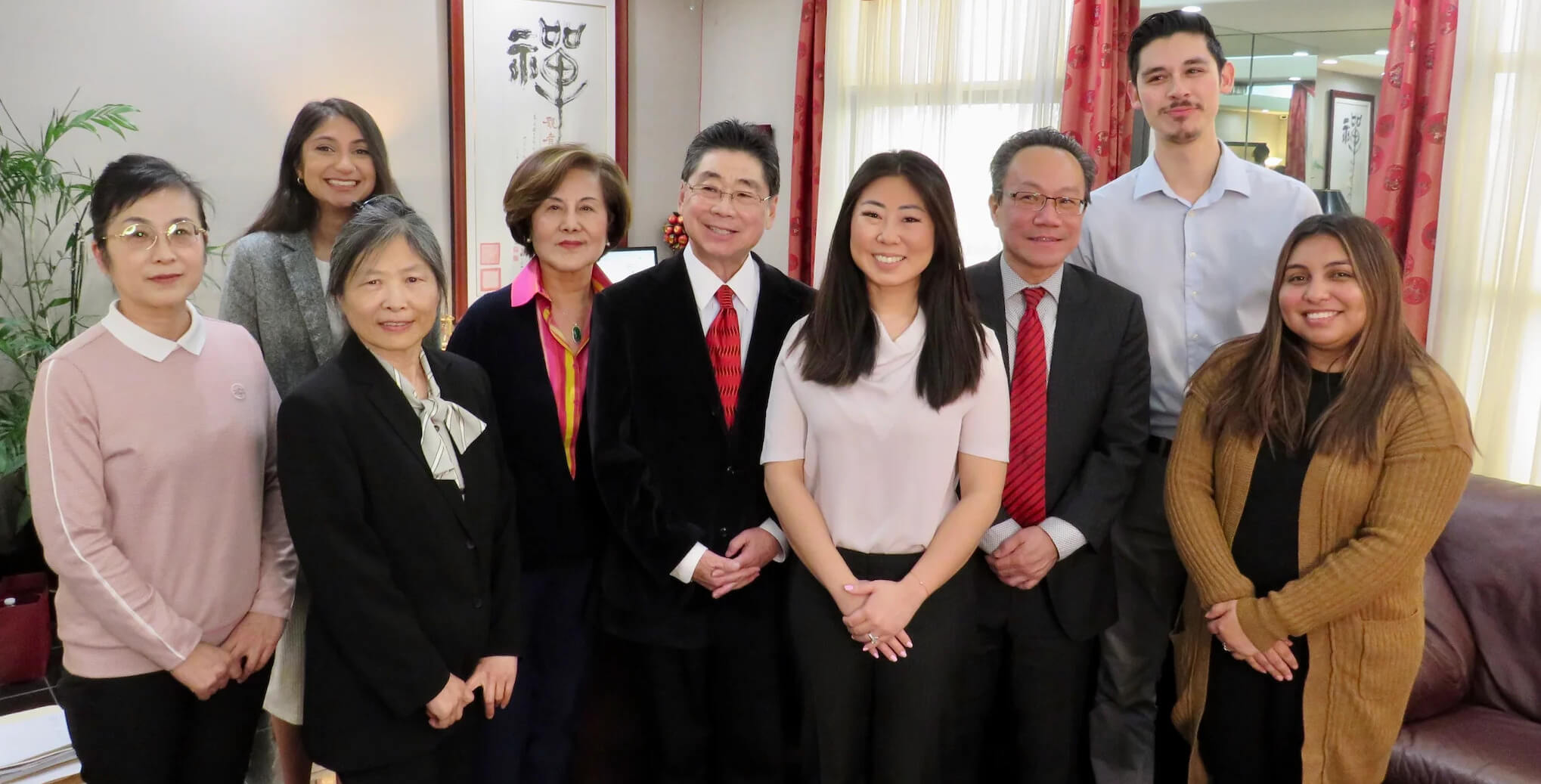

Why Choose Us?

  • Unmatched Expertise

    Trust in Peter Chu's 75+ years of collective experience to guide you through complex immigration matters.

  • Tailored Solutions

    Our personalized strategies adapt to your unique circumstances, ensuring we meet your specific immigration needs.

  • Proven Success

    Benefit from our solid track record in achieving favorable outcomes in various immigration cases across San Diego.

  • Dedicated Service

    Experience our client-first approach that ensures constant support and guidance throughout your immigration journey.

Denver's economy supports over 14,000 international companies with regional or U.S. headquarters operations, creating substantial demand for EB-1C multinational manager visa filings among executives transferring to Colorado locations. Multinational managers relocating to Denver, CO often underestimate the evidentiary burden required to prove qualifying managerial capacity under 8 CFR 204.5(j)(2) — a miscalculation that results in Requests for Evidence (RFEs) in approximately 38% of self-prepared EB-1C petitions. Law Office of Peter Darwin Chu represents Denver-based executives and their sponsoring employers through the complete I-140 petition process, from organizational hierarchy documentation to consular processing coordination.

Book a Consultation

Law Office of Peter Darwin Chu is a Colorado-licensed immigration law firm serving Denver residents and employers filing EB-1C multinational manager and executive visa petitions — providing I-140 preparation, RFE response drafting, and consular interview coordination with same-week consultation availability. Our practice focuses exclusively on employment-based immigration, ensuring every EB-1C case is handled by counsel with direct USCIS filing experience in Denver jurisdiction.

EB-1C Attorney Denver Available Across Denver and Surrounding Areas

Law Office of Peter Darwin Chu represents clients throughout Denver, CO and the greater metropolitan area — including Capitol Hill, Cherry Creek, Highland, and LoDo neighborhoods (zip codes 80201, 80202, 80203, 80204, and 80205). All Colorado residents with qualifying multinational employment relationships are eligible for EB-1C representation regardless of county, and we coordinate filings for employers headquartered anywhere in the United States sponsoring transferees to Denver operations.

What Denver EB-1C Clients Can Access

I-140 Petition Preparation for Multinational Managers

The EB-1C classification requires proof of employment abroad in a managerial or executive capacity for at least one continuous year within the three years preceding the petition, plus a qualifying relationship between the foreign and U.S. entities. Law Office of Peter Darwin Chu prepares I-140 petitions that document organizational structure through charts, job descriptions referencing supervisory authority over professional staff, and evidence of the petitioning company's ability to pay the proffered wage under 8 CFR 204.5(g)(2). Denver-based technology firms, financial services companies, and manufacturing operations frequently sponsor EB-1C transfers for directors, vice presidents, and regional managers relocating from parent, subsidiary, or affiliate entities. Filing fees for Form I-140 are $700 as of 2026, with premium processing available for an additional $2,500 to guarantee 15-business-day adjudication.

RFE Response and Evidence Strategy

USCIS Texas Service Center — which adjudicates most Colorado EB-1C petitions — issues Requests for Evidence when the initial filing fails to sufficiently establish the beneficiary's qualifying employment abroad, the managerial nature of the U.S. position, or the qualifying organizational relationship. Common RFE topics include requests for organizational charts showing the beneficiary's position within the hierarchy, detailed job duties demonstrating discretionary decision-making authority, and financial documentation proving the affiliate relationship. We draft comprehensive RFE responses within the 87-day statutory deadline, coordinating with Denver employers to obtain supplemental evidence including payroll records, corporate formation documents, and sworn affidavits from senior executives. Get in touch

Consular Processing and Adjustment of Status Coordination

Approved I-140 petitions allow beneficiaries currently abroad to apply for an immigrant visa through consular processing at the U.S. embassy or consulate in their home country, or permit beneficiaries already in the United States in valid nonimmigrant status to file Form I-485 for adjustment of status. We coordinate both pathways, advising Denver employers on National Visa Center (NVC) fee payment, DS-260 immigrant visa application completion, and consular interview preparation. For beneficiaries adjusting status in Colorado, we prepare I-485 packages including medical examination results (Form I-693), employment authorization applications (Form I-765), and advance parole travel documents (Form I-131).

Get clear, expert legal guidance tailored to your visa, green card, or citizenship needs.

Licensed Colorado Immigration Counsel

Law Office of Peter Darwin Chu maintains Colorado state bar admission and practices exclusively in federal immigration law under the Immigration and Nationality Act (INA) and regulations codified at 8 CFR. EB-1C petitions are filed with U.S. Citizenship and Immigration Services (USCIS) and governed by federal regulations — not state-specific statutes — ensuring consistent procedural standards regardless of the beneficiary's location. We carry professional liability insurance as required under Colorado Rules of Professional Conduct Rule 1.15 and provide written fee agreements disclosing all costs, government filing fees, and representation scope before engagement. All consultations are confidential and protected by attorney-client privilege under both Colorado and federal law.

Inquire now to check if you qualify

What If My Denver Employer Filed an L-1A Petition — Can I Convert to EB-1C Without Leaving the U.S.?

Yes, beneficiaries currently in L-1A nonimmigrant status in Denver can file an I-140 EB-1C petition without departing the United States. The L-1A and EB-1C classifications share nearly identical qualifying criteria — both require managerial or executive capacity and a qualifying organizational relationship — making L-1A holders strong EB-1C candidates. If your I-140 is approved while you hold valid L-1A status, you can file Form I-485 to adjust status to lawful permanent resident without consular processing, provided an immigrant visa number is immediately available (EB-1C is current for all countries as of 2026). This pathway is common among Denver technology and financial services executives.

What If USCIS Issues an RFE Questioning Whether My Denver Position Is Truly Managerial?

RFEs challenging managerial capacity typically cite insufficient evidence that the beneficiary supervises professional staff, exercises discretionary authority, or manages an essential function rather than performing the work personally. To overcome this RFE, we draft detailed responses including an updated organizational chart showing the beneficiary's direct and indirect reports, revised job descriptions emphasizing supervisory duties and decision-making authority, and sworn declarations from the petitioning employer's executives confirming the beneficiary's managerial role. In Denver's service-based economy, we frequently represent managers of business development teams, IT departments, and regional sales operations where the managerial function is less obvious than in manufacturing hierarchies.

What If My Foreign Employer and Denver Entity Have Complex Ownership — Will USCIS Recognize the Relationship?

USCIS recognizes parent, branch, subsidiary, and affiliate relationships under 8 CFR 204.5(j)(2), but the evidentiary burden increases with ownership complexity. If your Denver employer is a sister company (affiliate) rather than a direct subsidiary, you must prove common ownership and control through stock certificates, operating agreements, corporate formation documents, and organizational charts showing shared ownership exceeding 50%. We routinely handle EB-1C cases involving joint ventures, private equity portfolio companies, and multinational holding company structures serving Denver operations. The key is comprehensive documentation submitted with the initial I-140 to avoid RFEs.

What If I've Been Working Remotely for a Foreign Company — Does That Time Count Toward the One-Year Requirement?

Yes, physical presence abroad is not required — only that you were employed by the foreign entity in a managerial or executive capacity. Remote work for a foreign employer while residing in Denver or elsewhere in the U.S. satisfies the one-year-in-three-years requirement, provided your employment relationship was continuous and your duties were managerial. However, if you were simultaneously employed by the U.S. entity during this period, USCIS may question whether the employment was truly 'abroad.' We address this by documenting payroll source, tax reporting jurisdiction, and supervisory chain to the foreign entity during the remote work period.

Why Denver Employers Choose Law Office of Peter Darwin Chu Over General Immigration Clinics

Denver employers considering EB-1C sponsorship face a choice: general immigration service providers offering flat-fee petition preparation, corporate HR departments attempting in-house filings, or specialized employment immigration counsel. General providers often lack experience with complex organizational structures and fail to anticipate Texas Service Center RFE patterns. In-house HR teams save attorney fees but frequently underestimate the evidentiary standard required to prove managerial capacity, resulting in denials that restart the process and delay the executive's permanent residence timeline by 12-18 months.

Here's the honest answer: EB-1C petitions are among the most document-intensive employment visa filings, requiring organizational charts, financial statements, job descriptions, and sometimes expert business valuations to prove the qualifying relationship and managerial role. Law Office of Peter Darwin Chu limits its practice to employment-based immigration, ensuring every case is handled by counsel who has drafted EB-1C petitions for Denver technology firms, financial institutions, and multinational manufacturers — and who understands how to structure evidence to survive USCIS scrutiny without an RFE.

ConsiderationGeneral Immigration ClinicIn-House HR FilingSpecialized EB-1C CounselProfessional Assessment
Experience with complex ownership structuresLimited — focus on individual family-based casesVariable — depends on HR staff turnoverExtensive — routinely handle affiliates, joint ventures, holding companiesCritical for multinational entities with non-obvious relationships
RFE response expertiseGeneric templates, often miss Texas Service Center patternsRarely encounter RFEs, lack litigation experienceDirect experience responding to managerial capacity and qualifying relationship RFEsDetermines whether case survives scrutiny or faces denial
Adjustment of status vs consular processing guidanceBasic — may not coordinate NVC or embassy proceduresNot typically in HR scopeComprehensive — coordinate I-485, DS-260, and interview prepEssential for beneficiaries with family members or travel needs
Attorney-client privilege protectionNot available with non-attorney preparersNot available in employment relationshipFull protection under Colorado and federal rulesProtects sensitive corporate and personal information

Frequently Asked Questions

Find answers to common questions about our services

  • Standard I-140 processing at USCIS Texas Service Center averages 6-9 months as of 2026, though timelines fluctuate based on caseload. Premium processing is available for $2,500 and guarantees a decision within 15 business days, though it does not guarante

  • No, the statute requires one continuous year of employment abroad in a managerial or executive capacity within the three years immediately preceding the petition. 8 CFR 204.5(j)(3)(i)(B) defines this as 52 consecutive weeks, and USCIS strictly enforces th

  • L-1A is a nonimmigrant visa allowing temporary intracompany transfer for up to seven years, while EB-1C is an immigrant petition leading to permanent residence. Both require managerial or executive capacity and a qualifying organizational relationship, bu

  • Yes, under 8 CFR 204.5(g)(2), the petitioning employer must demonstrate ability to pay the proffered wage from the priority date (I-140 filing date) onward. USCIS accepts federal tax returns, audited financial statements, or annual reports as evidence. If

  • Yes, your spouse and unmarried children under 21 qualify as derivative beneficiaries under E-14 and E-15 classifications. They can either apply for immigrant visas through consular processing at the same time as you, or file I-485 adjustment of status app

  • Yes, you can file a new I-140 petition addressing the deficiencies cited in the denial notice, or file a motion to reopen or reconsider with the same service center within 30 days of the denial. Denials most commonly result from insufficient evidence of m

  • No, the I-140 petition is employer-sponsored and filed based on the location of the U.S. petitioning entity, not your current residence. If your employer is headquartered in Denver or operates a qualifying office in Denver, they can sponsor your EB-1C pet

  • Attorney fees for EB-1C representation typically range from $5,000 to $12,000 depending on case complexity, organizational structure, and whether premium processing or RFE response is required. Government filing fees are separate: $700 for Form I-140, $2,

Need Personalized Immigration Guidance?

Law Office of Peter Darwin Chu provides EB-1C attorney Denver services to multinational managers and sponsoring employers throughout Denver, CO through I-140 petition preparation, RFE response drafting, and consular processing coordination, with same-week consultations available for qualifying cases.

Related Immigration Services for Denver Professionals

Multinational executives considering permanent residence options beyond EB-1C may also qualify for EB-1A extraordinary ability petitions if they meet the sustained acclaim standard, or EB-1B outstanding researcher classification if employed by a Denver university or private research institution. Employers seeking nonimmigrant alternatives for executives not yet eligible for EB-1C can explore L-1A visa options for intracompany transferees in managerial roles, or E-2 treaty investor status for executives of substantial investment enterprises from treaty countries. Denver-based technology professionals may also benefit from reviewing our O-1 visa guidance for individuals with extraordinary ability in sciences or business. For beneficiaries with approved EB-1C petitions navigating the adjustment of status process, our IR-1 visa family page explains consular processing procedures and derivative beneficiary eligibility for spouses and children.

Speak With Us Today