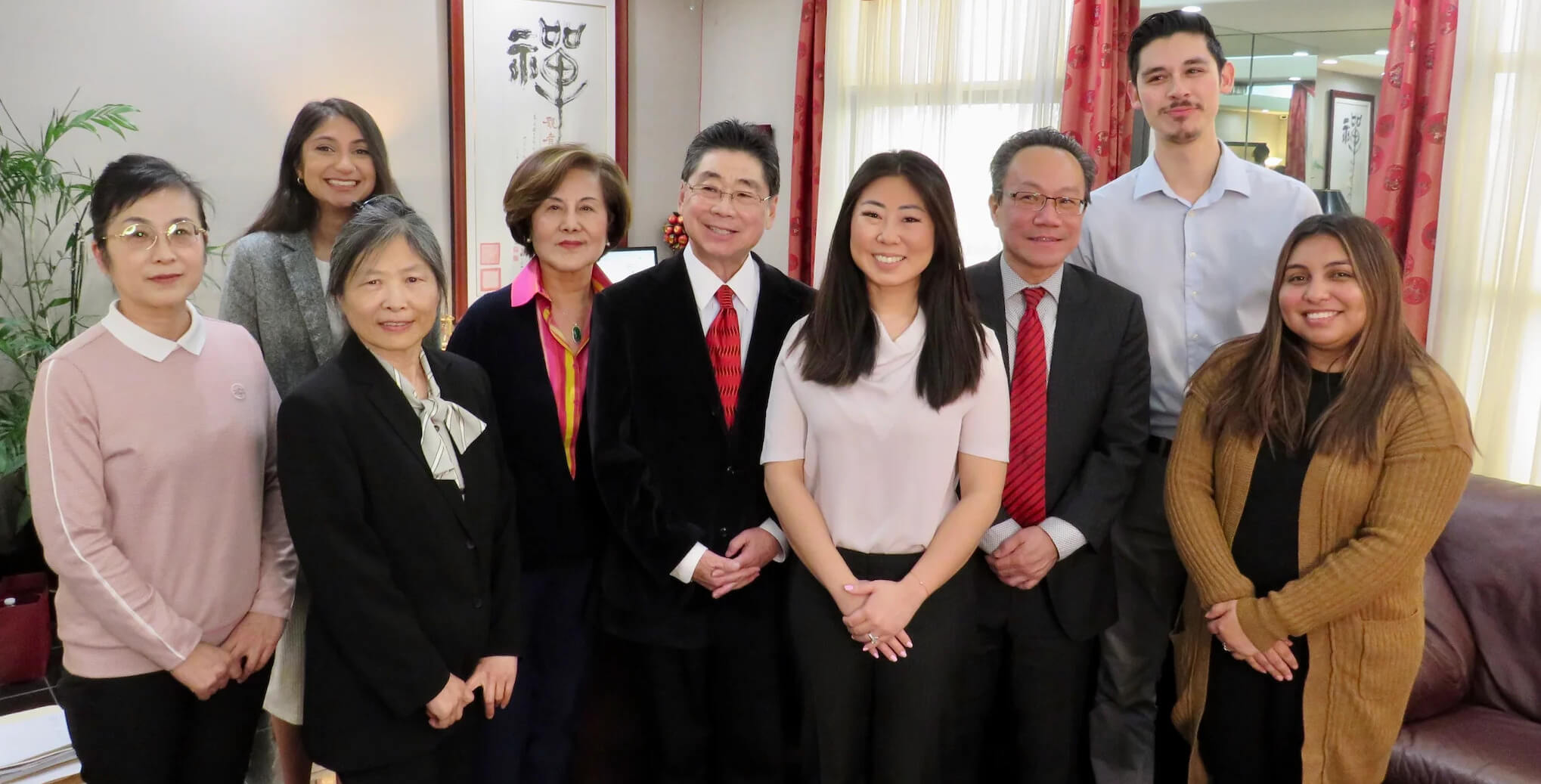

Why Choose Us?

  • Unmatched Expertise

    Trust in Peter Chu's 75+ years of collective experience to guide you through complex immigration matters.

  • Tailored Solutions

    Our personalized strategies adapt to your unique circumstances, ensuring we meet your specific immigration needs.

  • Proven Success

    Benefit from our solid track record in achieving favorable outcomes in various immigration cases across San Diego.

  • Dedicated Service

    Experience our client-first approach that ensures constant support and guidance throughout your immigration journey.

Hayward, CA hosts over 4,200 registered businesses across manufacturing, technology, and healthcare sectors—industries that frequently transfer senior managers and executives from foreign affiliates to U.S. operations under EB-1C multinational manager visas. For employers navigating the complexities of USCIS adjudication standards, the difference between approval and a Request for Evidence often depends on whether your petition demonstrated continuous managerial or executive capacity abroad and in the proposed U.S. role. Law office of Peter Darwin Chu represents Hayward employers and qualifying executives through every phase of EB-1C petitions, from initial eligibility assessment to I-140 filing and adjustment of status.

Book a Consultation

Law office of Peter Darwin Chu is a California-licensed immigration law firm serving Hayward, CA employers and multinational executives seeking EB-1C attorney Hayward representation—offering USCIS petition preparation, priority date tracking, and same-week consultations for qualifying EB-1C multinational manager visa cases. Our representation ensures compliance with 8 CFR 204.5(j) managerial and executive capacity definitions, a critical threshold where unrepresented petitions frequently fail.

EB-1C Attorney Hayward Available Across Hayward and Surrounding Areas

Law office of Peter Darwin Chu represents clients throughout Hayward, CA and surrounding Alameda County communities—including Downtown Hayward, South Hayward, and the Castro Valley border area (zip codes 94540, 94541, 94542, 94543, 94544). All California employers with qualifying multinational operations and managers meeting the one-year foreign employment requirement are eligible for EB-1C representation regardless of county.

What Hayward Employers and Executives Can Access

EB-1C Petition Preparation and USCIS Filing

We draft and file Form I-140 Immigrant Petition for Alien Worker under the EB-1C multinational manager or executive classification, ensuring your petition satisfies the three-part statutory test: (1) the U.S. entity has a qualifying relationship with the foreign employer (parent, subsidiary, affiliate, or branch), (2) the beneficiary was employed abroad in a managerial or executive capacity for at least one continuous year in the three years preceding admission, and (3) the beneficiary will be employed in a managerial or executive capacity in the U.S. We prepare detailed organizational charts, position descriptions, and evidentiary exhibits demonstrating functional management or policy-setting authority—not just supervisory titles. Initial consultations assess whether your role qualifies under 8 CFR 204.5(j)(2) executive definitions or 8 CFR 204.5(j)(3) managerial capacity standards before filing.

EB-1C Multinational Manager Visa Advisory for Hayward Companies

For Hayward companies expanding U.S. operations or opening new offices, we advise on the

Get clear, expert legal guidance tailored to your visa, green card, or citizenship needs.

Licensed California Immigration Representation

Law office of Peter Darwin Chu is licensed to practice immigration law in California and maintains compliance with all State Bar of California Rules of Professional Conduct governing client trust accounts, conflict disclosure, and fee agreements. Our EB-1C representation includes written engagement agreements specifying scope of services, attorney fees, and government filing fees (currently $700 for Form I-140 plus $2,805 for premium processing if elected). We carry professional liability insurance as required under California Business and Professions Code Section 6146 and provide clients with State Bar member numbers upon request.

Inquire now to check if you qualify

What If My Hayward Company Just Opened a New U.S. Office — Can I Still File an EB-1C?

Yes, but new office EB-1C petitions filed under 8 CFR 204.5(j)(5) face heightened scrutiny and shorter initial approval periods. USCIS requires proof that the U.S. entity has secured sufficient physical premises to house the new operation and that the transferred executive or manager will transition to a genuinely managerial or executive role within one year. You must submit a business plan, evidence of the qualifying relationship with the foreign entity, and documentation of financial capacity to compensate the beneficiary and support operations. New office petitions are approved for one year rather than three, and an extension petition must demonstrate that the U.S. company has grown to support the managerial role as projected. Many new office petitions fail because the beneficiary remains the only employee or continues performing non-qualifying operational tasks—early consultation prevents these structural deficiencies.

What If the Foreign Company and U.S. Company Are Both Small — Does That Disqualify My EB-1C in Hayward?

No—there is no statutory minimum size requirement for either entity. However, USCIS will closely scrutinize whether a small organization can support a position that is truly managerial or executive in function rather than title. An executive must primarily direct the management of the organization or a major component, while a manager must supervise professional employees or manage an essential function. If your Hayward company has only two employees and you are one of them, you will need to prove functional management of an essential business operation rather than direct supervision of staff. Many small-company EB-1C petitions succeed by documenting that the beneficiary manages critical business functions (finance, sales strategy, vendor relations) even without subordinate employees—but the petition must include evidence of organizational complexity and the beneficiary's policy-making authority.

What If I Was Transferred to Hayward on an L-1A Visa — Should I Apply for EB-1C or Wait?

If you are already in Hayward on an L-1A intracompany transferee visa in a managerial or executive capacity, you are an ideal EB-1C candidate—the evidentiary requirements substantially overlap. The one-year foreign employment requirement and qualifying relationship are identical; the primary difference is that EB-1C leads to lawful permanent residence rather than temporary status. Filing an EB-1C petition does not affect your L-1A status, and approval provides a pathway to a green card without labor certification. The strategic advantage of filing sooner rather than later is priority date preservation: even though EB-1 is generally current, beneficiaries from India and China may face retrogression in future years, so establishing an early priority date protects your place in line.

What If USCIS Issues a Request for Evidence on My Hayward EB-1C Petition — What Does That Mean?

A Request for Evidence (RFE) means USCIS has identified gaps in the initial petition and is providing an opportunity to submit additional documentation before making a final decision. Common EB-1C RFE topics include insufficient evidence of the qualifying relationship between entities, unclear job duties that appear operational rather than managerial, lack of organizational charts showing reporting structure, or inconsistencies between the foreign role and the U.S. role. RFE response deadlines are typically 87 days from the notice date, and the quality of your response often determines approval or denial. We draft comprehensive RFE responses with supplemental declarations, revised position descriptions, and documentary exhibits directly addressing each USCIS concern—unrepresented petitioners who submit incomplete or defensive responses see significantly higher denial rates.

Comparing EB-1C Representation Options in Hayward

Employers and executives seeking EB-1C multinational manager visa representation in Hayward typically evaluate three pathways: retaining an experienced immigration attorney, using an online document preparation service, or attempting a pro se (self-filed) petition. Each option presents trade-offs in cost, risk, and approval probability.

Here's the honest answer: USCIS adjudicators apply strict scrutiny to managerial and executive capacity determinations, and a petition that fails to distinguish between supervisory duties and true managerial authority—or that conflates an executive title with executive function—will be denied regardless of the beneficiary's credentials. Online services generate templated position descriptions and organizational charts that do not account for industry-specific operational structures or the regulatory nuances of new office petitions versus established entity petitions. Self-filed petitions frequently omit required evidence of the qualifying relationship (stock certificates, partnership agreements, corporate resolution authorizing the transfer) or fail to demonstrate one year of continuous foreign employment in the required capacity within the statutory three-year window.

OptionManagerial Capacity AnalysisRFE Response QualityProfessional Assessment
Immigration Attorney (Law office of Peter Darwin Chu)Detailed functional analysis of actual duties under 8 CFR 204.5(j)(3), industry-specific organizational structureComprehensive evidentiary submissions with declarations and supplemental exhibits addressing each USCIS concernHighest approval rate—particularly for complex new office petitions and small company structures
Online Document ServiceTemplated position descriptions, generic organizational chartsLimited or no RFE response supportHigh risk of denial—no case-specific statutory analysis
Self-Filed (Pro Se)Beneficiary or HR department drafts job duties without regulatory frameworkApplicant submits defensive or incomplete RFE responsesLowest success rate per USCIS data—frequent denials on managerial capacity grounds

Get in touch

Frequently Asked Questions

Find answers to common questions about our services

  • Yes, but new office EB-1C petitions filed under 8 CFR 204.5(j)(5) face heightened scrutiny and shorter initial approval periods. USCIS requires proof that the U.S. entity has secured sufficient physical premises to house the new operation and that the tra

  • No—there is no statutory minimum size requirement for either entity. However, USCIS will closely scrutinize whether a small organization can support a position that is truly managerial or executive in function rather than title. An executive must primaril

  • If you are already in Hayward on an L-1A intracompany transferee visa in a managerial or executive capacity, you are an ideal EB-1C candidate—the evidentiary requirements substantially overlap. The one-year foreign employment requirement and qualifying re

  • A Request for Evidence (RFE) means USCIS has identified gaps in the initial petition and is providing an opportunity to submit additional documentation before making a final decision. Common EB-1C RFE topics include insufficient evidence of the qualifying

  • Standard I-140 processing times for EB-1C petitions filed at USCIS California Service Center currently average 4.5 to 7.5 months, though this varies by service center workload and case complexity. Employers may elect premium processing for an additional $

  • Possibly, but remote work complicates the one-year foreign employment requirement under 8 CFR 204.5(j)(3)(i)(B). USCIS requires that the beneficiary was employed abroad—meaning physically outside the United States—for one continuous year in the three year

  • Both classifications require managerial or executive capacity and a qualifying relationship between a foreign and U.S. entity, but EB-1C leads to lawful permanent residence (a green card) while L-1A provides temporary work authorization for up to seven ye

  • No—there is no statutory minimum employee count. However, USCIS will scrutinize whether the organizational structure supports a genuinely managerial or executive role. A company with two employees where the beneficiary performs operational tasks alongside

  • Under 8 CFR 204.5(j)(3), managerial capacity means the position primarily involves managing the organization, a department, subdivision, function, or component; supervising and controlling the work of other supervisory, professional, or managerial employe

  • Yes—family ownership does not disqualify the petition, but USCIS will closely examine whether the employment relationship is bona fide and whether the beneficiary was genuinely employed in a managerial or executive capacity abroad for the required one-yea

Need Personalized Immigration Guidance?

Law office of Peter Darwin Chu provides EB-1C attorney Hayward services to multinational executives and Hayward employers through USCIS petition preparation, priority date tracking, and RFE response representation—ensuring compliance with managerial and executive capacity regulations under 8 CFR 204.5(j).

Related Immigration Services and Location Pages

Employers and executives exploring EB-1C representation may also benefit from our EB-1A Visa services for individuals with extraordinary ability, EB-1B Visa representation for outstanding professors and researchers, or EB-1C Visa Law Office guidance for multinational companies nationwide. For Hayward residents and employers requiring other employment-based immigration pathways, we also offer EB-2 Visa and EB-3 Visa petition services. Executives currently in the U.S. on temporary work authorization may explore our L-1A Visa Executive Transfer and H-1B Visa Guidance pages for complementary pathways.

Speak With Us Today