
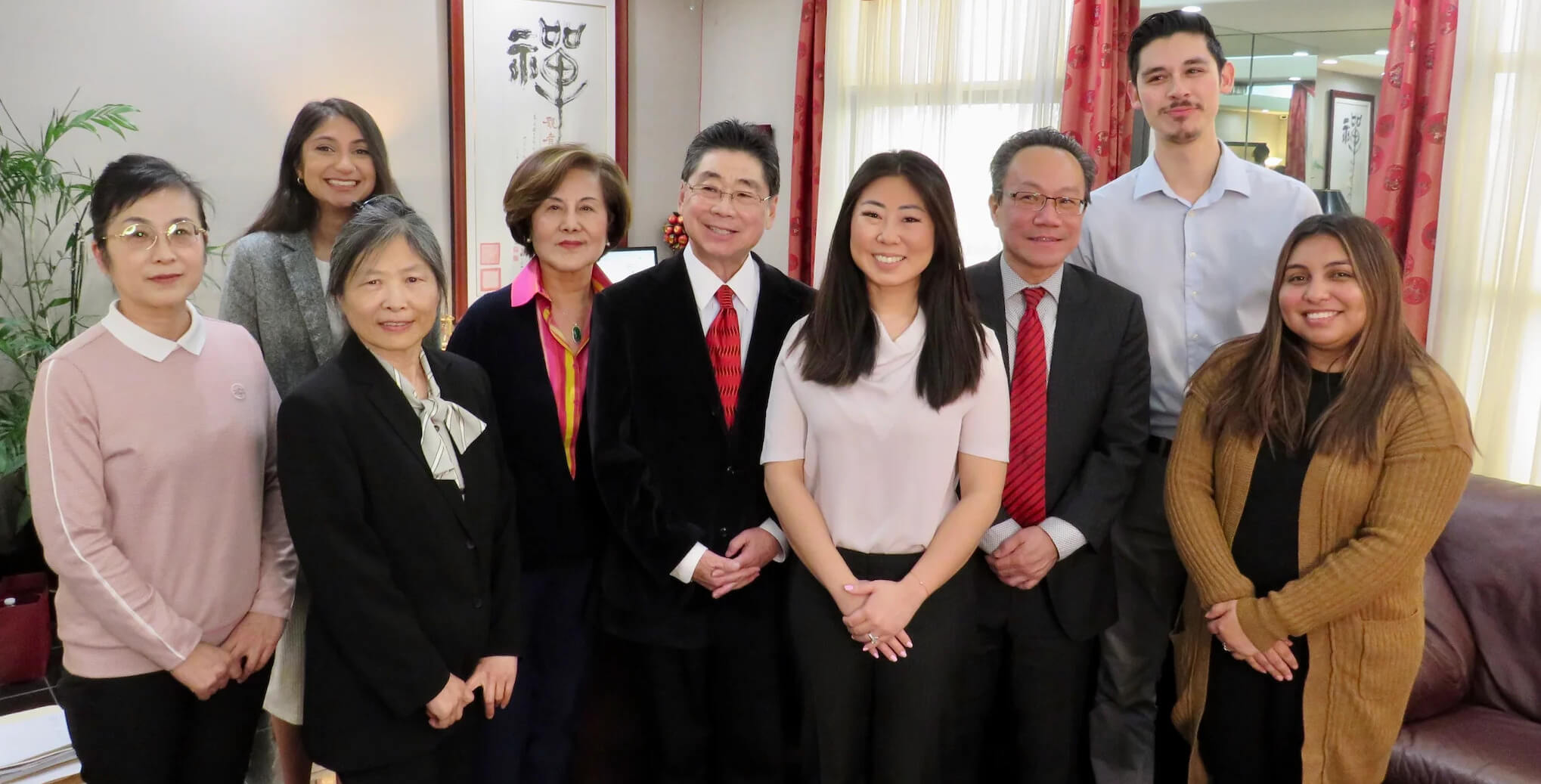
Why Choose Us?
-

Unmatched Expertise
Trust in Peter Chu's 75+ years of collective experience to guide you through complex immigration matters.
-

Tailored Solutions
Our personalized strategies adapt to your unique circumstances, ensuring we meet your specific immigration needs.
-

Proven Success
Benefit from our solid track record in achieving favorable outcomes in various immigration cases across San Diego.
-

Dedicated Service
Experience our client-first approach that ensures constant support and guidance throughout your immigration journey.


Get clear, expert legal guidance tailored to your visa, green card, or citizenship needs.

Inquire now to check if you qualify
Why La Habra Companies Choose Law office of Peter Darwin Chu Over General Business Immigration Firms
EB-1C petitions are one of the most documentation-intensive employment-based immigration categories—requiring corporate structure analysis, foreign employment verification, and managerial capacity evidence that general immigration practices often under-prepare. Here's the honest answer: firms that handle all visa categories equally rarely invest in the EB-1C-specific expertise required to preempt common RFE triggers like insufficient organizational charts, vague position descriptions, or incomplete qualifying relationship documentation. Law office of Peter Darwin Chu focuses on employment-based immigrant petitions and knows the evidentiary standards that separate approved EB-1C cases from those stuck in RFE cycles.
| Selection Factor | General Immigration Firm | EB-1C Attorney La Habra (Law office of Peter Darwin Chu) | Professional Assessment |
|---|---|---|---|
| Corporate Structure Documentation | Standard org chart and ownership statement | Detailed entity relationship analysis, stock certificates, shareholder agreements, and USCIS-compliant qualifying relationship memo | EB-1C petitions are denied when the qualifying relationship is unclear—our documentation eliminates ambiguity before filing |
| Managerial Capacity Evidence | Job description and offer letter | Percentage-of-time duty breakdown, subordinate professional credentials, decision-making authority documentation, and AAO case law citations | USCIS expects quantified proof that duties are primarily managerial—we build that record from the start |
| RFE Response Strategy | Generic supplemental evidence submission | Targeted legal brief addressing the specific deficiency cited, expert declarations when warranted, and precedent decision citations | RFE responses that merely add documents without legal argument rarely succeed—we litigate the issue |
| New Office EB-1C | Avoid or refer out | Business plan review, one-year operational timeline, and extension petition preparation included in representation | New office petitions require multi-year planning—we structure the initial filing for long-term approval |
Frequently Asked Questions
Find answers to common questions about our services
-
With premium processing (Form I-907, currently $2,500), USCIS adjudicates EB-1C petitions within 15 calendar days of receipt. Without premium processing, standard I-140 processing times vary by USCIS service center—currently averaging 4.5 to 9.5 months fo
-
Yes—EB-1C beneficiaries' spouses and unmarried children under 21 are eligible for derivative E-14 and E-15 immigrant visas or adjustment of status applications filed concurrently or subsequently to the principal's I-140 approval. Derivative beneficiaries
-
L-1A is a nonimmigrant visa for temporary intracompany transfers of managers and executives, valid for up to seven years, while EB-1C is an immigrant petition leading to lawful permanent residence (green card). Many La Habra executives enter on L-1A and l
-
No—EB-1C petitions are exempt from the labor certification (PERM) requirement that applies to most EB-2 and all EB-3 employment-based petitions. This exemption significantly accelerates the immigration process because PERM recruitment can take 8 to 18 mon
-
Yes, you may refile if the denial was based on insufficient evidence rather than a legal bar to eligibility. Common reasons for EB-1C denials include inadequate documentation of the qualifying relationship, failure to establish that the position is primar
-
Yes—EB-1C petitions can be filed while you are in the United States on another nonimmigrant status such as H-1B, L-1A, E-2, or O-1. Filing EB-1C does not invalidate your current status, and you may continue working under your nonimmigrant visa while the I
-
Initial case assessment requires your resume or CV, a detailed description of your current and prior foreign position duties, organizational charts for both the U.S. and foreign entities, corporate formation documents establishing the relationship between
-
EB-1C is part of the employment-based first preference category, which historically has had no visa backlog and immediate visa number availability for all countries, including India and China. However, visa bulletin priority date retrogression can occur d
Need Personalized Immigration Guidance?

