
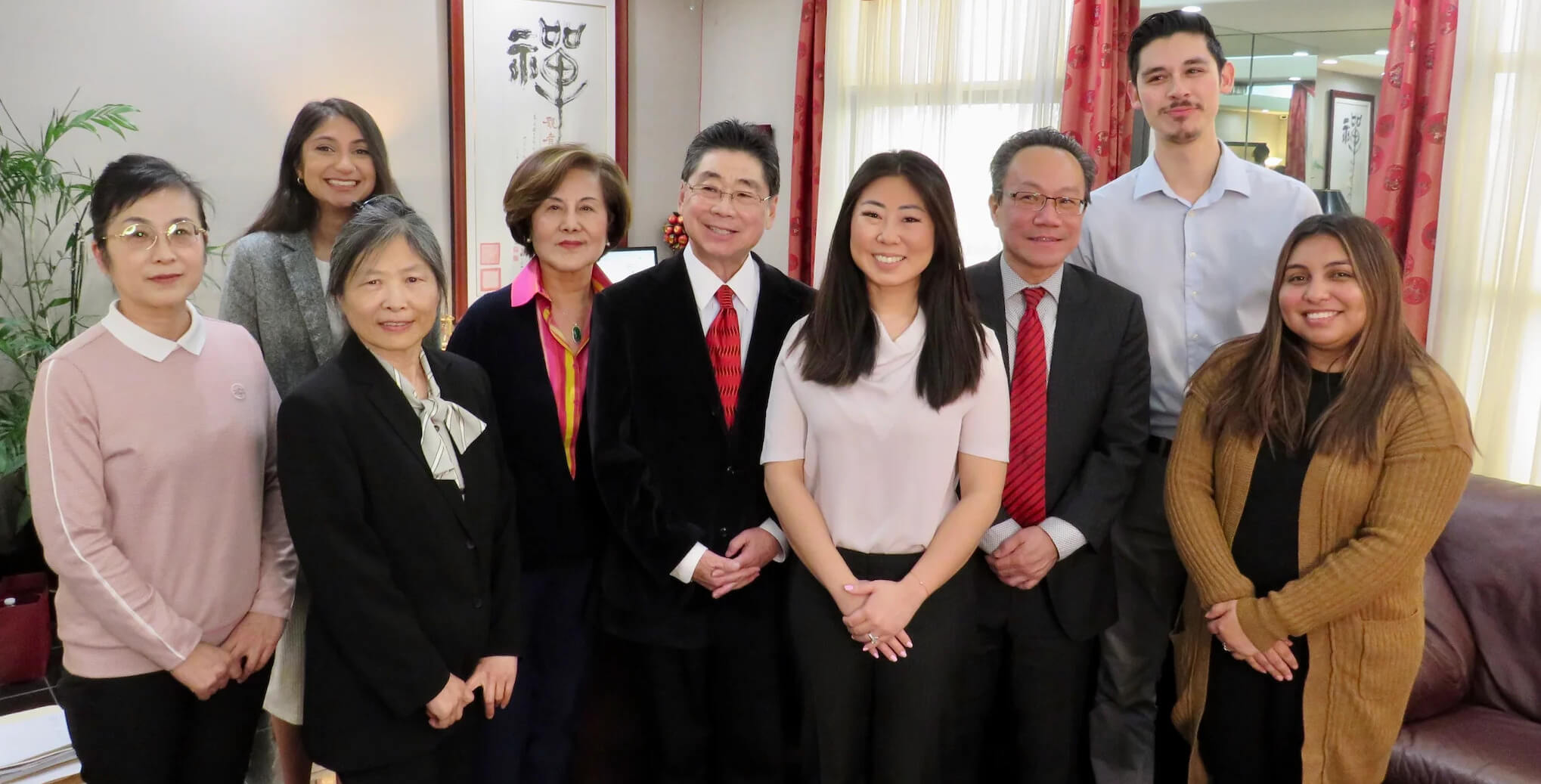
Why Choose Us?
-

Unmatched Expertise
Trust in Peter Chu's 75+ years of collective experience to guide you through complex immigration matters.
-

Tailored Solutions
Our personalized strategies adapt to your unique circumstances, ensuring we meet your specific immigration needs.
-

Proven Success
Benefit from our solid track record in achieving favorable outcomes in various immigration cases across San Diego.
-

Dedicated Service
Experience our client-first approach that ensures constant support and guidance throughout your immigration journey.


Get clear, expert legal guidance tailored to your visa, green card, or citizenship needs.

Inquire now to check if you qualify
Comparing Your EB-1C Representation Options in Livermore
Livermore businesses seeking to transfer international executives face three primary paths: retaining a California immigration attorney specializing in employment-based visas, using a general business attorney who occasionally handles immigration, or attempting self-filing with USCIS forms and instructions. Here's the honest answer: EB-1C petitions have one of the highest RFE rates among employment-based immigrant visa categories because USCIS scrutinizes whether the qualifying relationship is genuine, whether the role is truly managerial, and whether both entities are financially viable — distinctions that hinge on case law interpretation, not form completion. A general business attorney may draft corporate documents but lack familiarity with precedent AAO decisions defining 'function manager' versus 'first-line supervisor.' Self-filing risks structural errors that cannot be corrected after submission.
| Option | Qualifying Relationship Documentation | Managerial Capacity Evidence | RFE Response Experience | Professional Assessment |
|---|---|---|---|---|
| California EB-1C Immigration Attorney | Corporate records, org charts, financial statements structured to USCIS standards | Detailed position descriptions citing INA Section 101(a)(44) definitions | Precedent-based legal briefs, supplemental evidence coordination | Required for complex multi-entity structures and high-value transfers |
| General Business Attorney | Basic corporate filings, may lack immigration-specific formatting | Generic job descriptions without regulatory citation | Limited immigration case law knowledge | Risky unless attorney has EB-1C track record |
| Self-Filing | User relies on USCIS instructions and online forums | Descriptive narrative without legal framework | No professional guidance during RFE — often results in denial | Not recommended — EB-1C denial is permanent for that petition |
Frequently Asked Questions
Find answers to common questions about our services
-
From I-140 filing to approval, standard USCIS processing currently averages 6–10 months at California Service Center, though premium processing (15 calendar days for an additional $2,805 fee) is available for EB-1C petitions. After I-140 approval, adjustm
-
L-1A is a temporary nonimmigrant visa allowing up to seven years in the U.S., while EB-1C is an immigrant visa leading directly to permanent residency. Both require managerial or executive capacity and a qualifying relationship between U.S. and foreign en
-
Yes, but USCIS scrutiny increases significantly for smaller organizations. The key issue is demonstrating that the beneficiary's role is genuinely managerial — either supervising professional employees or managing an essential function — rather than perfo
-
No. EB-1C is exempt from the PERM labor certification process required for EB-2 and EB-3 categories, saving 12–18 months of processing time and eliminating the need to prove no qualified U.S. workers are available. This exemption makes EB-1C one of the fa
-
If USCIS denies the I-140, the beneficiary cannot adjust status through that petition, though they may remain in the U.S. on any existing valid nonimmigrant status such as L-1A or H-1B. Denials are often based on insufficient evidence of qualifying relati
-
Yes. The spouse and unmarried children under 21 are eligible for derivative immigrant visas in the same preference category, allowing them to adjust status concurrently with the principal EB-1C beneficiary. They do not need separate employment sponsorship
-
Initial documentation includes articles of incorporation for both U.S. and foreign entities, organizational charts, the beneficiary's resume and foreign employment verification, corporate tax returns for both entities, evidence of the qualifying relations
-
It must be one continuous year — meaning 12 consecutive months of full-time employment abroad within the three years immediately preceding the I-140 filing or the beneficiary's admission to the U.S. in L-1 status. Brief trips to the U.S. for business duri
Need Personalized Immigration Guidance?

