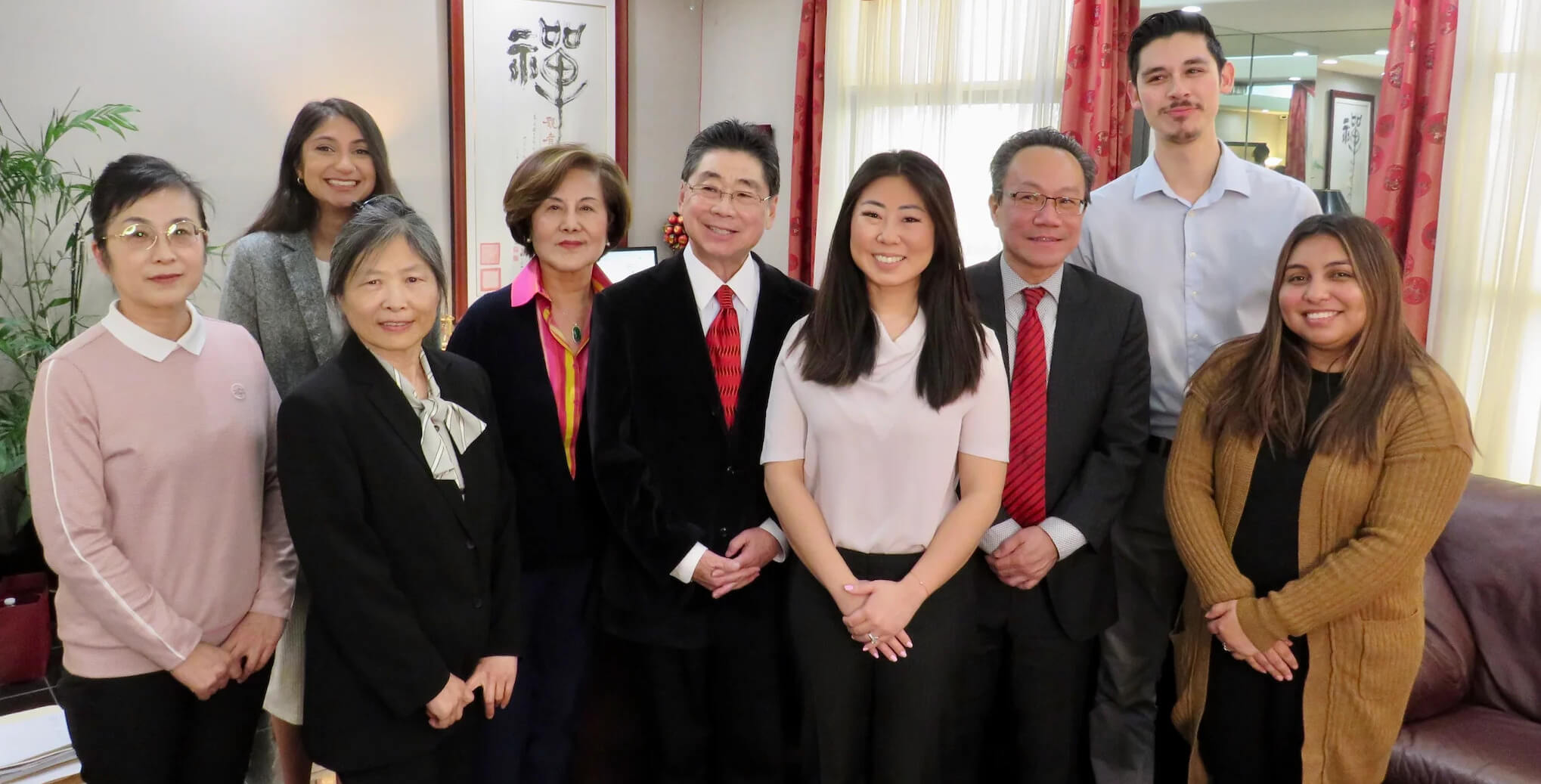

Why Choose Us?

  • Unmatched Expertise

    Trust in Peter Chu's 75+ years of collective experience to guide you through complex immigration matters.

  • Tailored Solutions

    Our personalized strategies adapt to your unique circumstances, ensuring we meet your specific immigration needs.

  • Proven Success

    Benefit from our solid track record in achieving favorable outcomes in various immigration cases across San Diego.

  • Dedicated Service

    Experience our client-first approach that ensures constant support and guidance throughout your immigration journey.

Miami's position as the gateway to Latin America drives over 1,200 multinational corporations to establish U.S. operations here annually, making it one of the nation's most active EB-1C visa markets. For executives and managers transferring from foreign affiliates to Miami-based entities, the difference between USCIS approval and a Request for Evidence often comes down to how precisely the petitioner documented the qualifying managerial relationship under 8 CFR 204.5(j)(3). Law office of Peter Darwin Chu has guided multinational transfers through Miami, FL immigration channels, ensuring every EB-1C petition meets the statutory requirements before submission.

Book a Consultation

Law office of Peter Darwin Chu is a Florida-licensed immigration law firm serving Miami residents with EB-1C attorney Miami representation — providing multinational manager and executive visa petitions, employer compliance review, and priority date strategy consultations available within the same week. Our EB-1C practice focuses exclusively on employment-based immigrant visa categories, ensuring every case benefits from direct experience with USCIS Administrative Appeals Office decisions and Miami field office adjudication patterns.

EB-1C Attorney Miami Available Across Miami and Surrounding Areas

Law office of Peter Darwin Chu represents clients throughout Miami and Miami-Dade County — including Downtown Miami, Brickell, Coral Gables, and Coconut Grove (zip codes 33101, 33102, 33107, 33109, 33110) — as well as multinational employers operating across South Florida. All Florida residents with qualifying managerial or executive employment relationships are eligible for EB-1C representation regardless of county, provided the U.S. employer maintains a qualifying relationship with a foreign affiliate as defined under Immigration and Nationality Act Section 203(b)(1)(C).

What Miami Residents Can Access

EB-1C Petition Preparation and Filing

We prepare Form I-140 Immigrant Petition for Alien Worker specifically for multinational managers and executives, documenting the qualifying relationship between the U.S. petitioner and foreign entity, evidence of continuous employment in a managerial or executive capacity abroad for at least one year within the preceding three years, and the offer of employment in a similar capacity in the United States. Miami-area petitioners benefit from our familiarity with common RFE patterns issued by the USCIS Texas Service Center, which adjudicates the majority of EB-1C cases. Our EB-1C miami representation includes preparation of detailed organizational charts, job duty breakdowns that distinguish managerial functions from operational tasks, and corporate documentation proving the qualifying relationship under 8 CFR 204.5(j)(2). Get in touch

Employer Compliance and Regulatory Guidance

Multinational employers in Miami must satisfy specific corporate structure requirements to sponsor EB-1C beneficiaries: the U.S. entity must be doing business (regularly, systematically, and continuously providing goods or services) and must maintain a qualifying relationship as a parent, branch, subsidiary, or affiliate of the foreign employer. We conduct pre-filing assessments to determine whether the relationship qualifies, whether the beneficiary's role abroad met the managerial or executive definition, and whether the proposed U.S. role satisfies those same criteria. For companies establishing new offices in Miami, we advise on the distinct requirements under the EB-1C new office provisions, which require demonstrated capacity to support the executive or managerial position within one year.

EB-1C Visa Law Office Consultation and Case Assessment

Initial consultations are substantive 60-minute evaluations of your EB-1C eligibility, reviewing your employment history, the corporate structure, and the proposed U.S. role to determine whether the case meets the statutory definition before any filing occurs. Miami-based multinational managers often benefit from understanding how their role compares to AAO published decisions, which provide binding precedent on what qualifies as "managerial" versus "supervisory" capacity under the Immigration and Nationality Act.

Get clear, expert legal guidance tailored to your visa, green card, or citizenship needs.

Licensed Immigration Representation in Miami, FL

Law office of Peter Darwin Chu operates under the professional standards established by the Florida Bar and the American Immigration Lawyers Association (AILA), ensuring all EB-1C petitions comply with current USCIS Policy Manual guidance and Administrative Appeals Office precedent decisions. We maintain professional liability coverage and adhere to attorney-client privilege protections under Florida Rules of Professional Conduct. Every EB-1C case is handled by an attorney admitted to practice immigration law in federal court, not by paralegals or notarios. Miami clients receive written fee agreements disclosing all costs before representation begins, and all filings are submitted with attorney signature under 8 CFR 103.2(a)(3), establishing our responsibility for the accuracy of every petition.

Inquire now to check if you qualify

What If My Miami Employer Just Opened the U.S. Office — Can I Still Apply for EB-1C?

Yes, under EB-1C new office provisions. USCIS allows multinational employers to sponsor executives and managers for newly established U.S. offices, but the petition receives initial approval for only one year (rather than the standard three-year validity). To qualify, the U.S. entity must have been doing business for at least one year, must have secured physical premises for the new office, and the beneficiary must have been employed abroad in a managerial or executive capacity for one continuous year within the preceding three years. At the end of the first year, the employer must file a petition extension demonstrating that the U.S. operation has grown sufficiently to support the executive or managerial position on a sustained basis — this typically requires showing staffing increases, revenue generation, and office infrastructure that was not required at the initial filing stage.

What If I Was Promoted to a Managerial Role Less Than One Year Before Transfer to Miami?

The one-year foreign employment requirement under EB-1C must be satisfied in a managerial or executive capacity — time spent in a non-qualifying role does not count toward the statutory period. If you were promoted to manager six months before the U.S. transfer, you do not yet meet the threshold. However, the one-year period does not need to be immediately preceding the filing — it must occur within the three years before you enter the United States to assume the managerial position. Some multinational employers structure transfers so the beneficiary continues in the managerial role abroad until the full year is satisfied, then files the EB-1C petition while still employed overseas. Consulting an EB-1C attorney in Miami before accepting a transfer offer is the only way to ensure the timing will not disqualify the case.

What If My Miami Role Involves Some Operational Tasks — Does That Disqualify Me?

Not automatically, but it creates risk. USCIS evaluates whether the position is "primarily" managerial or executive — occasional performance of operational tasks does not disqualify you, but if the majority of your duties are operational, the petition will be denied. The distinction is critical in smaller U.S. offices where managers often perform hybrid roles. AAO decisions have consistently held that "first-line supervisors" who oversee non-professional staff performing routine tasks do not qualify as managers unless the supervisory role itself is complex and requires independent judgment. Miami-based startups and new branch offices are particularly vulnerable to RFEs on this issue, as USCIS scrutinizes whether the organizational structure genuinely requires a managerial position or whether the beneficiary is simply filling an operational gap during the early growth phase.

What If the U.S. Entity in Miami Is Structured as an LLC — Does That Affect EB-1C Eligibility?

No, the corporate form does not determine EB-1C eligibility — what matters is the qualifying relationship between the U.S. entity and the foreign employer. An LLC can sponsor an EB-1C beneficiary as long as it maintains a parent, branch, subsidiary, or affiliate relationship with the foreign entity and both are actively doing business. However, USCIS will scrutinize ownership structure more carefully in LLC cases to confirm that the relationship meets the definitions in 8 CFR 204.5(j)(2). For example, if the U.S. LLC and the foreign company share common ownership but operate independently without financial or managerial integration, USCIS may determine they are not qualifying affiliates. Proper documentation of ownership percentages, operating agreements, and inter-company business activities is essential before filing.

Why Miami Employers Choose Law office of Peter Darwin Chu Over General Immigration Practitioners

Miami's immigration services market includes general practitioners who handle EB-1C cases alongside family-based petitions, asylum applications, and deportation defense — creating a risk that your multinational manager petition will be treated as a routine filing rather than the complex employment-based case it is. Here's the honest answer: EB-1C petitions are among the most document-intensive immigrant visa categories, requiring corporate records, organizational charts, financial statements, and detailed job duty evidence that many general practitioners do not routinely prepare. Law office of Peter Darwin Chu focuses specifically on employment-based immigrant visas, ensuring every EB-1C case benefits from familiarity with current AAO precedent decisions, USCIS Policy Manual updates, and the specific evidentiary standards that distinguish a managerial role from a supervisory one.

ApproachGeneral Immigration PractitionerEB-1C Specialty FirmProfessional Assessment
Case volume focusFamily petitions, asylum, removal defenseEmployment-based immigrant visas (EB-1, EB-2, EB-3)Specialty firms see EB-1C RFE patterns repeatedly; generalists do not
Pre-filing assessmentBrief eligibility screeningDetailed organizational analysis, job duty breakdown, qualifying relationship reviewThorough pre-filing prevents RFEs that delay adjudication by 3-6 months
Corporate documentationStandard I-140 supporting documentsTailored evidence packages addressing AAO precedent on managerial vs. operational rolesGeneric filings generate RFEs; precedent-based filings anticipate USCIS scrutiny
New office provisionsMay not distinguish from standard EB-1CSeparate strategy for new office cases, addressing one-year growth requirementsNew office EB-1C petitions have distinct evidentiary burdens that generalists miss

Get in touch

Frequently Asked Questions

Find answers to common questions about our services

  • Standard I-140 processing at USCIS Texas Service Center currently averages 4.5 to 6 months, though Premium Processing Service (Form I-907) guarantees a response within 15 calendar days for an additional $2,500 fee. Miami applicants already in the United S

  • L-1A is a temporary non-immigrant visa allowing intra-company transfers of executives and managers for up to seven years, while EB-1C is a permanent immigrant visa (green card pathway) for the same category of workers. Many multinational employees enter t

  • Yes, provided you meet the qualifying criteria: you must have been employed abroad by a qualifying foreign entity in a managerial or executive capacity for at least one continuous year within the three years preceding your entry to the United States, and

  • USCIS requires evidence demonstrating that the U.S. petitioner and the foreign employer are related as a parent, branch, subsidiary, or affiliate as defined in 8 CFR 204.5(j)(2). Acceptable evidence includes stock certificates, ownership agreements, annua

  • No. EB-1C is exempt from the PERM labor certification process that governs EB-2 and EB-3 immigrant visa categories. This exemption significantly reduces processing time and eliminates the need to test the U.S. labor market or obtain a prevailing wage dete

  • An RFE means USCIS requires additional documentation or clarification before making a decision on your I-140 petition. Common RFE issues in EB-1C cases include insufficient evidence that the U.S. role is primarily managerial or executive (rather than oper

  • Yes. Your spouse and unmarried children under 21 are eligible for derivative green cards as your dependents under EB-1C classification. They can file for Adjustment of Status concurrently with your I-485 if you are in the United States, or apply for immig

  • EB-1C is generally current for most countries, meaning visa numbers are immediately available and priority date retrogression is rare. However, beneficiaries from countries with high demand (historically India and China) may experience retrogression, requ

Need Personalized Immigration Guidance?

Law office of Peter Darwin Chu provides EB-1C attorney Miami services to multinational managers and executives transferring to Florida, with case preparation focused on USCIS Policy Manual compliance, AAO precedent alignment, and same-week consultation availability for urgent transfer timelines.

Related Immigration Services in Miami and Beyond

Multinational employers often benefit from understanding the full range of employment-based visa options available for intra-company transfers and specialized workers. Our EB-1A Visa practice serves individuals with extraordinary ability who may qualify independently of employer sponsorship, while our EB-2 Visa guidance addresses advanced degree professionals and those eligible for National Interest Waiver. For temporary intra-company transfers, our L-1A Visa representation covers executives and managers on non-immigrant status, and our L-1B Visa practice addresses specialized knowledge employees. Miami-area employers expanding operations to other regions can access our EB-1C Visa Los Angeles, EB-1C Visa Long Beach, EB-1C Visa Anaheim, and EB-1C Visa Law Office resources for multi-location immigration compliance.

Speak With Us Today