
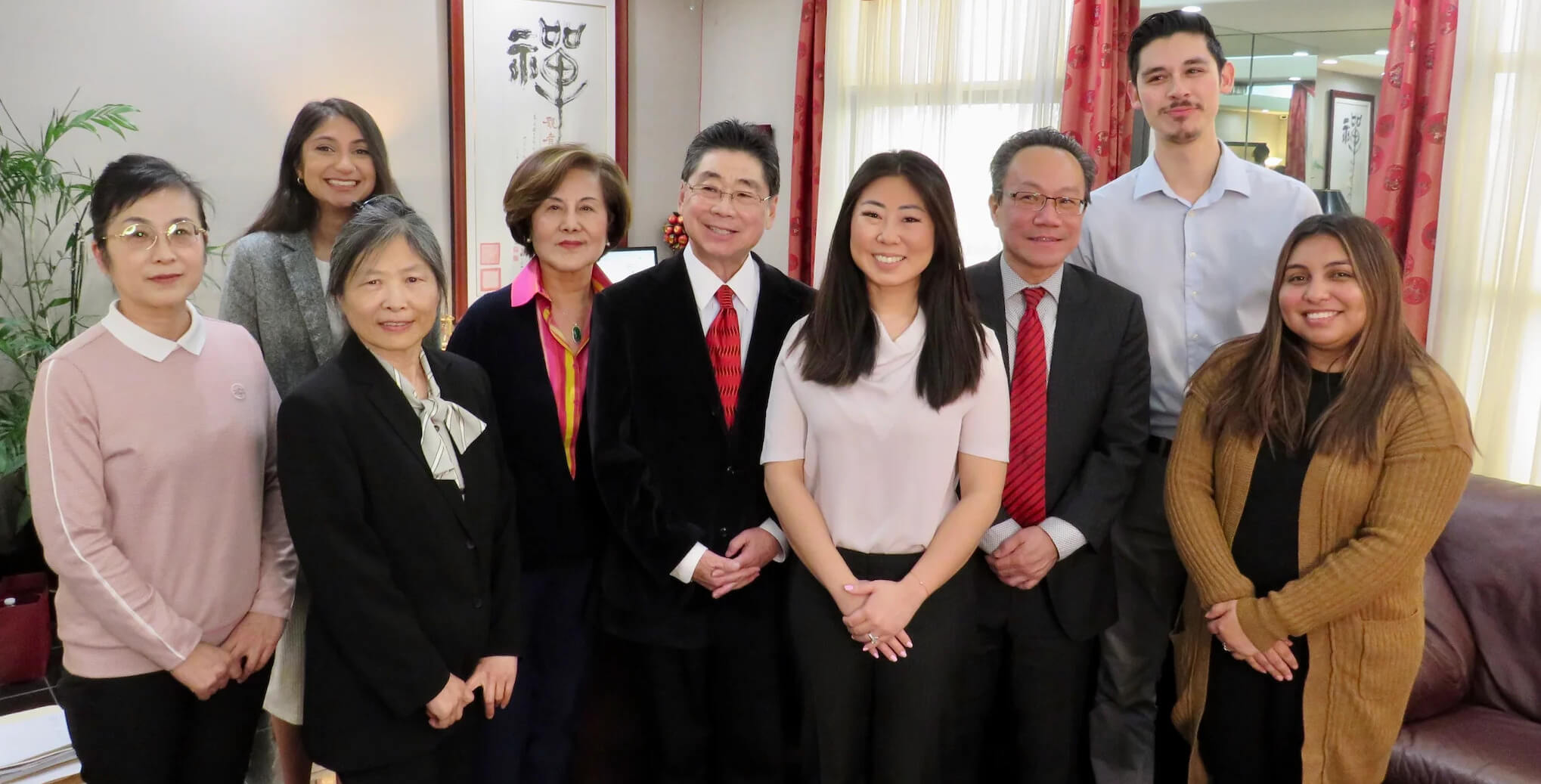
Why Choose Us?
-

Unmatched Expertise
Trust in Peter Chu's 75+ years of collective experience to guide you through complex immigration matters.
-

Tailored Solutions
Our personalized strategies adapt to your unique circumstances, ensuring we meet your specific immigration needs.
-

Proven Success
Benefit from our solid track record in achieving favorable outcomes in various immigration cases across San Diego.
-

Dedicated Service
Experience our client-first approach that ensures constant support and guidance throughout your immigration journey.


Get clear, expert legal guidance tailored to your visa, green card, or citizenship needs.

Inquire now to check if you qualify
Comparing EB-1C Representation Options for Milpitas Executives
Milpitas executives seeking permanent residence through multinational manager visas face three representation paths: in-house corporate immigration counsel, general immigration attorneys, or EB-1C-specialized firms. Corporate counsel offers convenience but often lacks bandwidth for individualized petition strategy, general immigration attorneys handle EB-1C petitions alongside family-based cases without concentrated expertise, and specialized firms focus exclusively on employment-based immigrant visa categories and understand the evidentiary standards USCIS applies to managerial capacity determinations.
Here's the honest answer: EB-1C petitions succeed or fail based on how persuasively the initial petition documents managerial duties, organizational complexity, and the qualifying relationship — not on how aggressively an attorney 'fights' after an RFE is issued. Firms that treat EB-1C as one case type among dozens often submit generic petitions that trigger RFEs, then charge hourly fees to respond. Law office of Peter Darwin Chu prepares petitions to USCIS evidentiary standards from the outset, reducing RFE rates and avoiding the cycle of deficiency-response-delay that characterizes poorly prepared filings.
| Approach | Strength | Limitation | Professional Assessment |
|---|---|---|---|
| Corporate In-House Counsel | Familiar with company structure | High caseload limits individualized strategy | Best for routine transfers in large multinationals with established USCIS precedent |
| General Immigration Attorney | Handles multiple visa types | Limited depth in EB-1C evidentiary requirements | Suitable only if attorney has recent EB-1C approval history in similar industries |
| EB-1C-Specialized Firm | Focused expertise in managerial visa petitions | Higher upfront cost than general practitioners | Recommended for executives with complex roles, smaller organizations, or prior RFE history |
Frequently Asked Questions
Find answers to common questions about our services
-
Standard USCIS processing for EB-1C I-140 petitions currently averages 6–9 months from filing to decision, though processing times vary by service center. Premium processing is available for an additional $2,805 fee and guarantees a decision within 15 cal
-
The USCIS I-140 petition filing fee is $715 as of 2026. If premium processing is selected, an additional $2,805 fee applies. These fees are paid to USCIS and are separate from attorney fees. Law office of Peter Darwin Chu provides transparent fee agreemen
-
No, EB-1C petitions require the foreign employer and U.S. petitioning employer to share a qualifying relationship — parent, subsidiary, branch, or affiliate. You cannot use foreign employment with an unrelated company to satisfy the one-year foreign emplo
-
EB-1C petitions do not impose English language requirements — USCIS evaluates managerial or executive capacity, qualifying relationships, and foreign employment history regardless of language proficiency. However, beneficiaries who cannot communicate effe
-
If USCIS denies an EB-1C I-140 petition, you may file a motion to reopen, a motion to reconsider, or appeal to the USCIS Administrative Appeals Office within 30 days of the denial notice. Alternatively, you may file a new I-140 petition with corrected or
-
Yes, EB-1C principal beneficiaries' spouses and unmarried children under 21 are eligible for derivative green cards as dependents. Derivative beneficiaries are included on the principal's I-140 petition and file adjustment of status (Form I-485) or consul
-
EB-1C petitions do not require labor certification (PERM), making them significantly faster than EB-2 petitions, which require proving no qualified U.S. workers are available for the role — a process adding 12–18 months. However, EB-1C requires a qualifyi
-
L-1A is a temporary nonimmigrant visa allowing multinational managers to work in the U.S. for up to seven years, while EB-1C is an immigrant visa petition leading to lawful permanent residence (green card). Both require managerial or executive capacity an
Need Personalized Immigration Guidance?

