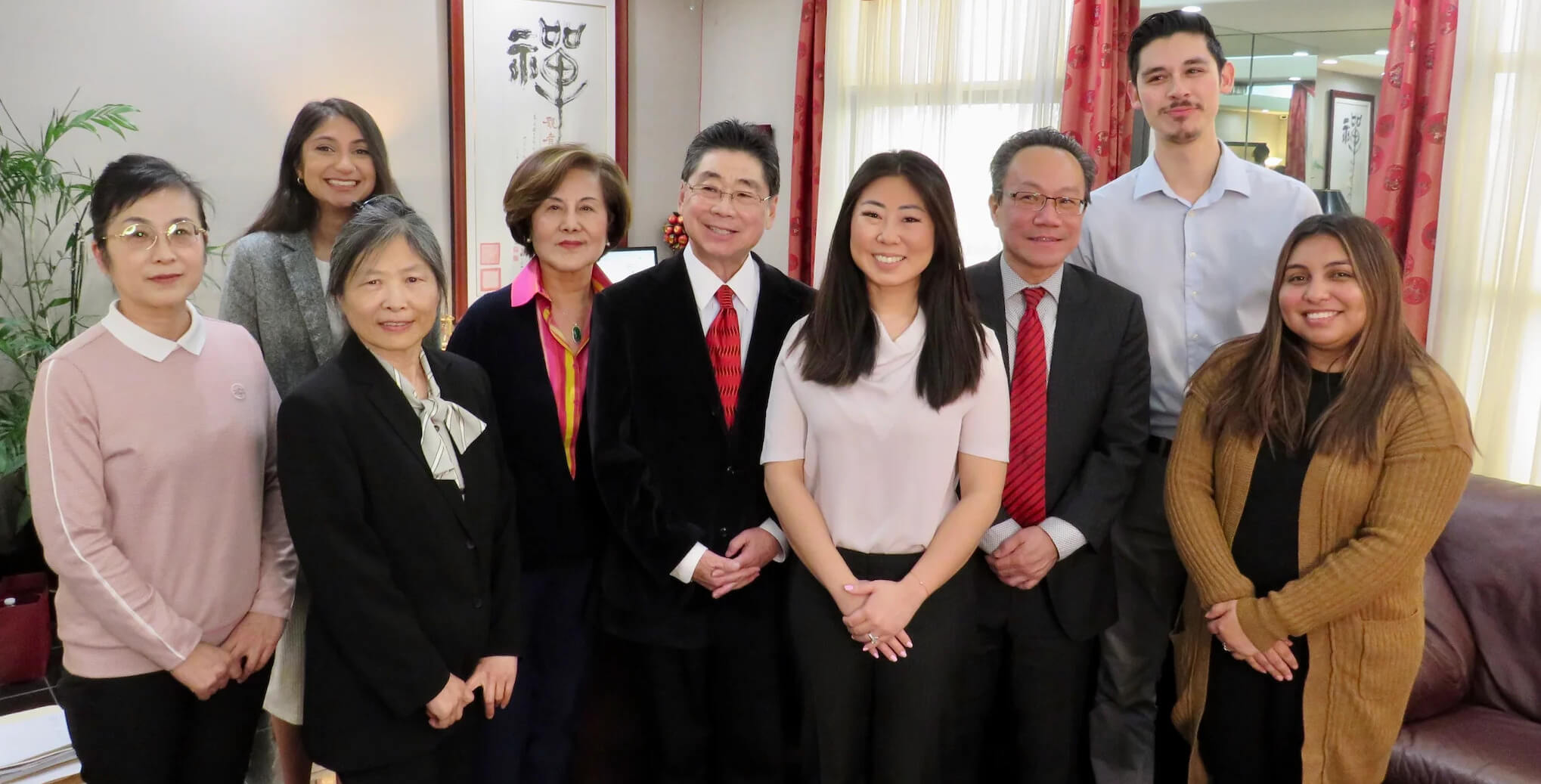

Why Choose Us?

  • Unmatched Expertise

    Trust in Peter Chu's 75+ years of collective experience to guide you through complex immigration matters.

  • Tailored Solutions

    Our personalized strategies adapt to your unique circumstances, ensuring we meet your specific immigration needs.

  • Proven Success

    Benefit from our solid track record in achieving favorable outcomes in various immigration cases across San Diego.

  • Dedicated Service

    Experience our client-first approach that ensures constant support and guidance throughout your immigration journey.

Over 18,000 employment-based green card petitions are filed annually in California's Inland Empire, where Ontario serves as a critical logistics and corporate hub for multinational companies managing cross-border executive transfers. For Ontario, CA residents navigating EB-1C multinational manager visa Ontario processes, the difference between approval and a Request for Evidence often comes down to whether your petition demonstrated qualifying managerial capacity under 8 CFR 204.5(j)(2) before USCIS review began. Law Office of Peter Darwin Chu has guided Ontario-based executives and their sponsoring employers through every stage of the EB-1C visa petition process — from initial eligibility assessment to consular processing or adjustment of status filing in California.

Book a Consultation

Law Office of Peter Darwin Chu is a California-licensed immigration law firm serving Ontario residents with EB-1C multinational manager and executive visa petitions — offering case evaluations, petition preparation, and USCIS response representation with no upfront retainer for qualifying corporate clients. The firm handles both adjustment of status applications filed through USCIS California Service Center and consular processing cases coordinated with U.S. embassies abroad, ensuring Ontario employers and transferring executives meet the continuous one-year foreign employment requirement and U.S. managerial role criteria before filing.

EB-1C Attorney Ontario Available Across Ontario and Surrounding Areas

Law Office of Peter Darwin Chu represents Ontario, CA clients throughout zip codes 91758, 91761, 91762, 91764, and 91798 — including residents near Ontario Mills, Ontario Ranch, and the Ontario International Airport corridor. The firm serves multinational corporations with U.S. operations in Ontario and executives relocating to managerial positions in San Bernardino County. All California residents with qualifying EB-1C petitions are eligible for representation regardless of county of residence or worksite location.

What Ontario EB-1C Visa Clients Can Access

EB-1C Eligibility Assessment and Petition Strategy

Before filing, the firm conducts a detailed review of your foreign employment history, organizational charts, and proposed U.S. role to determine whether you meet the statutory definition of 'managerial capacity' or 'executive capacity' under INA Section 101(a)(44). Ontario clients receive written assessments identifying documentation gaps — such as missing foreign payroll records or unclear reporting structures — that would trigger USCIS Requests for Evidence. This pre-filing audit is critical: EB-1C petitions denied for failing to demonstrate qualifying managerial duties cannot be easily refiled without material changes to the role.

Corporate Compliance and Qualifying Relationship Documentation

EB-1C petitions require proof that the U.S. and foreign entities share a qualifying corporate relationship (parent, subsidiary, affiliate, or branch) and that both were operational during your one-year foreign employment period. For Ontario-based corporations, the firm prepares and organizes corporate formation documents, stock certificates, annual reports, and financial statements demonstrating continuous business operations. These requirements are non-negotiable: USCIS adjudicators routinely issue denials when qualifying relationship evidence is ambiguous or incomplete.

EB-1C Visa Law Office Petition Preparation and Filing

The firm drafts Form I-140 petitions with supporting legal briefs that pre-emptively address the most common RFE triggers: whether the U.S. position is truly managerial (not simply supervisory), whether the foreign role was continuous and qualifying, and whether the U.S. entity has the organizational complexity to support an executive function. Ontario clients benefit from petition packages that cite relevant Administrative Appeals Office precedent decisions and provide organizational context USCIS officers need to approve without further inquiry.

Adjustment of Status and Consular Processing Coordination

Once the I-140 is approved, executives already in the U.S. on valid nonimmigrant status can file Form I-485 adjustment of status applications concurrently with their dependents, while those abroad proceed through consular processing at U.S. embassies. The firm coordinates both paths, ensuring Ontario families understand processing timelines, medical examination requirements, and visa interview preparation procedures specific to their country of nationality.

Get clear, expert legal guidance tailored to your visa, green card, or citizenship needs.

Licensed California Immigration Counsel Serving Ontario

Law Office of Peter Darwin Chu is licensed to practice immigration law in California and operates under California State Bar Rules of Professional Conduct governing attorney-client confidentiality, conflict of interest disclosure, and trust account management. The firm maintains professional liability insurance as required for California-licensed attorneys and adheres to American Immigration Lawyers Association (AILA) ethics standards. All EB-1C petitions are prepared in compliance with USCIS Policy Manual Volume 6, Part F guidance on employment-based first preference categories and 8 CFR 204.5 regulatory requirements. Ontario clients receive written fee agreements before representation begins, clearly stating petition preparation costs, government filing fees, and any additional charges for RFE responses or appeal representation.

Inquire now to check if you qualify

What If My EB-1C Petition Is Denied — Can I Refile in Ontario?

Yes, you can refile an EB-1C petition after a denial, but only if you can demonstrate material changes to the facts that caused the original denial. If USCIS denied your petition because your U.S. role was found to be non-managerial, simply resubmitting the same evidence with a different legal argument will not succeed — you must show that your job duties, reporting structure, or organizational context has substantively changed. In Ontario cases, this often means restructuring your role to include more strategic decision-making authority, hiring additional subordinates to supervise, or providing updated organizational charts showing expanded managerial scope. Refiling without addressing the denial reasons wastes time and filing fees and can create negative precedent in your immigration file.

What If I Was Promoted to a Managerial Role in Ontario After Entering the U.S. on an L-1 Visa?

If you entered the U.S. on an L-1A visa and were subsequently promoted to a higher managerial role in Ontario, you can still file an EB-1C petition based on your original qualifying foreign employment — the petition is not invalidated by a promotion. However, your I-140 petition must demonstrate that you held a qualifying managerial or executive role abroad for at least one continuous year within the three years preceding your L-1 entry, and that your current U.S. role (even if different from your initial L-1 role) remains managerial or executive in nature. Ontario clients in this scenario benefit from filing the EB-1C petition early in their L-1 validity period, as delays can create complications if the L-1 expires before the I-140 is approved.

What If My Ontario Employer's U.S. Office Has Fewer Than 10 Employees — Does That Disqualify My EB-1C Petition?

No, there is no minimum employee threshold for EB-1C petitions, but smaller U.S. offices face heightened scrutiny. USCIS adjudicators are trained to question whether a small U.S. entity can support a true managerial or executive function — or whether the beneficiary is primarily performing day-to-day operational tasks rather than managing others. For Ontario employers with fewer than 10 U.S. employees, the petition must include detailed organizational charts showing clear reporting lines, evidence that the beneficiary supervises professional staff (not just entry-level workers), and documentation that the role involves strategic decision-making rather than individual contributor work. Many small-office EB-1C petitions are approved, but they require more robust evidence of managerial capacity than petitions from large multinational corporations.

What If I Need to Travel Internationally While My EB-1C Adjustment of Status Is Pending in Ontario?

If you file Form I-485 adjustment of status after your EB-1C I-140 approval, you can travel internationally using advance parole (Form I-131) rather than your underlying nonimmigrant visa. However, leaving the U.S. without an approved advance parole document before your I-485 is adjudicated will cause USCIS to deem your application abandoned, forcing you to start the process over through consular processing abroad. Ontario residents should apply for advance parole at the same time they file I-485 and wait for the physical document — typically issued within 3-6 months — before making any international travel plans. If you must travel urgently before receiving advance parole, consular processing (rather than adjustment of status) may be the safer path.

Why Ontario Executives Choose Specialized EB-1C Immigration Counsel Over General Practice Firms

Ontario-based multinational companies have three primary options when sponsoring an executive for permanent residence: retain a general business immigration firm that handles all visa categories, use an in-house corporate immigration department, or work with counsel specializing in employment-based first preference (EB-1) categories. Here's the honest answer: general business immigration firms often treat EB-1C petitions as routine I-140 filings without recognizing that the 'managerial capacity' analysis is the most scrutinized element of the petition — leading to avoidable RFEs and denials when job descriptions are vague or organizational charts fail to show true supervision of professional staff. In-house corporate departments provide cost efficiency for high-volume filers but rarely provide the individualized legal argument and precedent citation needed when a petition is borderline or the U.S. office is small. Specialized EB-1C counsel — like immigration attorney Ontario practices focused on executive transfers — invest the time to distinguish your managerial role from a senior individual contributor role before USCIS questions it.

FactorGeneral Immigration FirmIn-House Corporate CounselSpecialized EB-1C AttorneyProfessional Assessment
EB-1C Managerial Capacity AnalysisTemplate-driven job descriptionsStandardized across all employeesCustomized legal argument citing AAO precedentCritical for small-office petitions
RFE Response ExperienceMulti-category practice, limited EB-1 depthRarely handles RFEs personallyExtensive EB-1C RFE and appeal historyDetermines approval likelihood
Qualifying Relationship DocumentationStandard corporate formation docsCompliance-focused, minimal legal narrativeProactive structuring to meet 8 CFR 204.5(j)(3)Essential for complex corporate structures
Fee StructureHourly billing, unpredictable costIncluded in corporate retainerFlat fee per petition, transparentBudget certainty for employers

Get in touch

Frequently Asked Questions

Find answers to common questions about our services

  • An L-1A visa is a temporary nonimmigrant visa allowing multinational executives to work in the U.S. for up to seven years, while an EB-1C visa is a permanent residence (green card) petition based on similar qualifying criteria. Both require one year of co

  • EB-1C petition processing times vary based on whether you file under premium processing and which path you take to permanent residence. Form I-140 petitions filed without premium processing currently average 6-12 months at USCIS California Service Center,

  • Yes, your spouse and unmarried children under age 21 are eligible for derivative green cards based on your approved EB-1C petition without needing separate employment sponsorship. They are classified as E-14 and E-15 dependents respectively and can file a

  • A Request for Evidence (RFE) means USCIS needs additional documentation or clarification before approving your petition — it is not a denial. Common EB-1C RFEs question whether your U.S. role is managerial (versus primarily technical or operational), whet

  • Yes, your sponsoring U.S. employer must demonstrate the ability to pay the proffered wage from the I-140 filing date forward, typically using annual reports, federal tax returns, or audited financial statements. Unlike PERM labor certification cases, EB-1

  • Yes, you can file an EB-1C petition while in the U.S. on another valid nonimmigrant status such as L-1, H-1B, E-2, or O-1, and you can file adjustment of status (Form I-485) concurrently if a visa number is immediately available in the EB-1 category. Beca

  • The government filing fee for Form I-140 is currently $715, and premium processing (optional) adds $2,805. Attorney fees for EB-1C petition preparation vary but typically range from $5,000 to $12,000 depending on case complexity, whether an RFE response i

  • Not immediately. If your I-140 petition is denied while you are in valid nonimmigrant status in Ontario (such as L-1A, H-1B, or E-2), your underlying visa status remains valid until its expiration date — the denial does not automatically terminate your la

Need Personalized Immigration Guidance?

Law Office of Peter Darwin Chu provides EB-1C attorney Ontario services to multinational executives and their sponsoring employers across Ontario, CA — offering flat-fee petition preparation, USCIS response representation, and adjustment of status coordination with transparent pricing and no upfront retainer for qualifying corporate clients.

Ontario clients pursuing other employment-based visa categories may benefit from reviewing related immigration pathways. Executives who do not yet meet the one-year foreign employment requirement for EB-1C may qualify for L-1A Visa Executive Transfer nonimmigrant status, which allows up to seven years in the U.S. while accruing qualifying managerial experience abroad. Professionals with advanced degrees or exceptional ability may explore EB-2 Visa petitions, which offer similar permanent residence benefits without the multinational corporation requirement. For individuals with extraordinary ability in business, sciences, or arts, EB-1A Visa petitions provide self-sponsored green card options independent of employer sponsorship. Ontario residents seeking immigrant visa guidance for family members should review IR-1 Visa Family processes for spousal reunification. Additional location-specific EB-1C guidance is available for clients in EB-1C Visa Los Angeles, EB-1C Visa Long Beach, EB-1C Visa Anaheim, and EB-1C Visa Riverside.

Speak With Us Today