
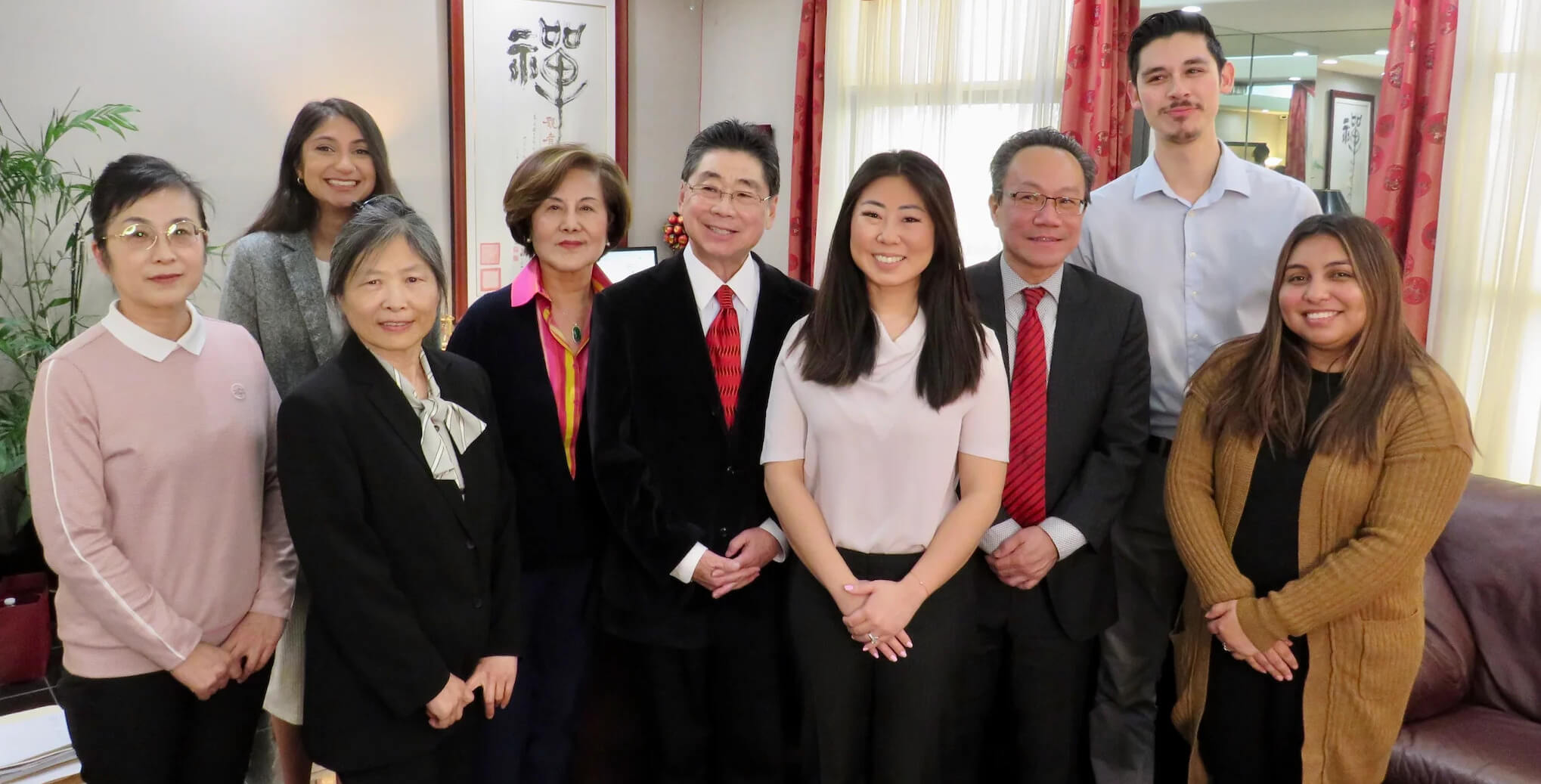
Why Choose Us?
-

Unmatched Expertise
Trust in Peter Chu's 75+ years of collective experience to guide you through complex immigration matters.
-

Tailored Solutions
Our personalized strategies adapt to your unique circumstances, ensuring we meet your specific immigration needs.
-

Proven Success
Benefit from our solid track record in achieving favorable outcomes in various immigration cases across San Diego.
-

Dedicated Service
Experience our client-first approach that ensures constant support and guidance throughout your immigration journey.


Get clear, expert legal guidance tailored to your visa, green card, or citizenship needs.

Inquire now to check if you qualify
Comparing Your EB-1C Immigration Options in Palo Alto
Multinational managers and executives transferring to Palo Alto may consider filing EB-1C petitions independently, retaining general practice immigration firms, or engaging EB-1C-focused counsel. Independent filings risk denial when petitioners misinterpret the managerial capacity standard or fail to establish the qualifying corporate relationship under 8 CFR 204.5(j)(2). General practice firms may lack specific experience responding to RFEs challenging whether a technology or startup role qualifies as managerial — a distinction that requires citing AAO precedent decisions. The Law Office of Peter Darwin Chu prepares petitions with documentation standards derived from USCIS Policy Manual guidance and AAO case law.
Here's the honest answer: not every intracompany transfer qualifies for EB-1C, and filing a petition without meeting the one-year foreign employment requirement or demonstrating true managerial capacity wastes filing fees and creates a denial record. We will tell you during consultation if your role does not meet the statutory standard — it is not in our interest to file petitions likely to be denied. EB-1C petitions are complex, but they are also one of the fastest paths to permanent residence for qualifying executives, bypassing labor certification entirely.
| Approach | Managerial Capacity Analysis | Corporate Relationship Documentation | RFE Response Experience | Professional Assessment |
|---|---|---|---|---|
| Independent Filing | Generic job description, no cite to 8 CFR or AAO precedent | Articles of incorporation only, no ownership structure analysis | Limited ability to distinguish managerial vs. operational duties | High denial risk — lack of regulatory precision |
| General Immigration Firm | Standard template petition, minimal customization | Basic corporate documents, may miss complex subsidiary relationships | Variable experience with EB-1C-specific RFEs | Moderate risk — generalist approach to specialist category |
| Law Office of Peter Darwin Chu | Detailed function analysis citing 8 CFR 204.5(j)(2) and AAO decisions | Complete ownership tracing, control documentation, and subsidiary agreements | Precedent-based responses addressing USCIS's specific managerial capacity objections | Regulatory compliance and case law application |
Frequently Asked Questions
Find answers to common questions about our services
-
USCIS processing times for Form I-140 EB-1C petitions filed under California Service Center jurisdiction currently average 4.5 to 7.5 months for regular processing. Premium processing (Form I-907) guarantees a 15-business-day adjudication for an additiona
-
Yes — EB-1C petitions do not require that the beneficiary currently hold L-1A status. The statutory requirement under INA 203(b)(1)(C) is that the beneficiary was employed abroad by a qualifying organization in a managerial or executive capacity for one c
-
L-1A is a nonimmigrant visa allowing multinational managers and executives to work temporarily in the U.S. for up to seven years. EB-1C is an immigrant visa (green card) category for the same population. Many beneficiaries enter the U.S. on L-1A and then
-
Denied I-140 petitions may be appealed to the Administrative Appeals Office (AAO) within 30 days of the denial notice. Appeals require a detailed legal brief addressing the specific grounds for denial and citing relevant case law and regulatory authority.
-
There is no statutory minimum salary for EB-1C petitions, but USCIS evaluates whether the proffered wage is consistent with a managerial or executive role. A Palo Alto technology executive with a salary significantly below market norms for similar roles m
-
Yes — approved EB-1C beneficiaries may include their spouse and unmarried children under 21 as derivative beneficiaries on the same I-140 petition. Derivative beneficiaries are classified as E-14 and E-15 immigrants and receive green cards simultaneously
-
The most frequent RFE issues in EB-1C petitions are insufficient evidence that the beneficiary's foreign and U.S. roles qualify as managerial or executive under 8 CFR 204.5(j)(2), inadequate documentation of the qualifying corporate relationship between t
-
EB-1C falls within the EB-1 preference category, which receives approximately 40,000 visa numbers annually (plus unused family-sponsored and other employment-based numbers from prior years). The EB-1 category is current for most countries, meaning visas a
Need Personalized Immigration Guidance?

