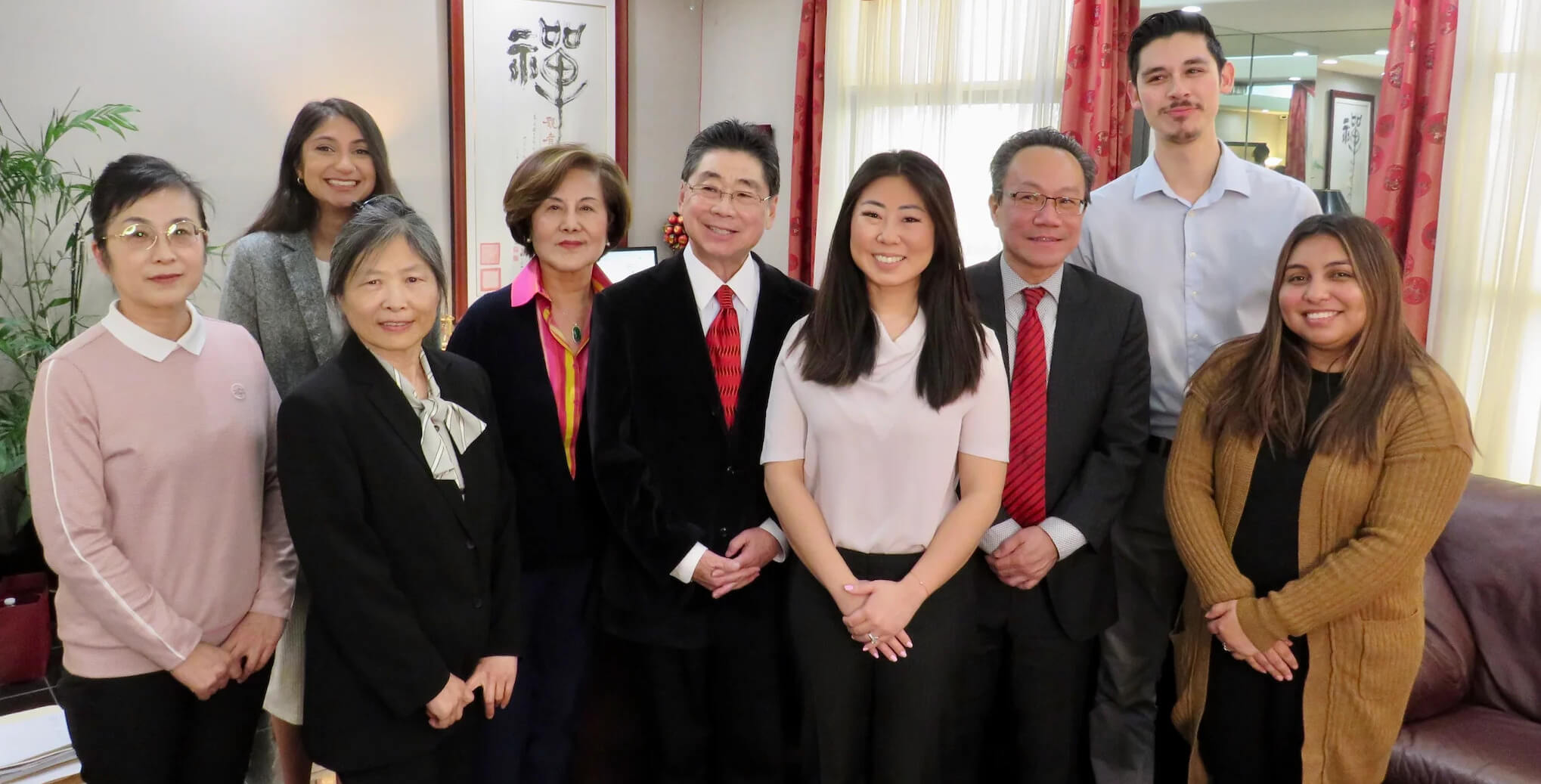

Why Choose Us?

  • Unmatched Expertise

    Trust in Peter Chu's 75+ years of collective experience to guide you through complex immigration matters.

  • Tailored Solutions

    Our personalized strategies adapt to your unique circumstances, ensuring we meet your specific immigration needs.

  • Proven Success

    Benefit from our solid track record in achieving favorable outcomes in various immigration cases across San Diego.

  • Dedicated Service

    Experience our client-first approach that ensures constant support and guidance throughout your immigration journey.

Redlands, CA is home to over 72,000 residents and serves as a regional hub for logistics, healthcare, and technology employers — many with international parent companies requiring intracompany transferee visas. Multinational managers and executives seeking EB-1C classification in Redlands face a two-stage burden: proving the qualifying relationship between U.S. and foreign entities under 8 CFR 204.5(j)(2), and demonstrating one year of continuous executive or managerial employment abroad within the three years preceding the petition. Law office of Peter Darwin Chu has guided California-based EB-1C petitioners through USCIS adjudication, including cases involving startups, holding company structures, and requests for evidence challenging the managerial capacity of the beneficiary.

Book a Consultation

Law office of Peter Darwin Chu is a California-licensed immigration law practice serving Redlands residents seeking EB-1C multinational manager and executive visa petitions — offering case assessments, I-140 petition preparation, and RFE response strategy with no upfront government filing fees until petition submission. The firm handles intracompany transferee classification for both new office petitions and established U.S. operations under Immigration and Nationality Act Section 203(b)(1)(C).

EB-1C Attorney Redlands Available Across Redlands and Surrounding Areas

Law office of Peter Darwin Chu represents EB-1C petitioners throughout Redlands, CA, including the University of Redlands district, Lugonia, and the historic downtown corridor (zip codes 92373, 92374, 92375). California residents employed by qualifying multinational organizations in San Bernardino County and the Inland Empire are eligible for representation regardless of company headquarters location.

What Redlands EB-1C Petitioners Can Access

EB-1C Eligibility Assessment and Organizational Structure Review

Before filing, we evaluate whether your U.S. and foreign entities meet the qualifying relationship test — parent, subsidiary, affiliate, or branch — as defined in 8 CFR 204.5(j)(2). We review corporate documents, ownership percentages, and operational control to determine if the petitioner qualifies as a U.S. employer. Many Redlands-based petitions involve holding company structures or joint ventures that require precise documentation of control and beneficial ownership. For new office petitions, we assess whether the U.S. entity has secured physical premises and has the financial ability to commence business within one year. Consultations typically last 60–90 minutes and include a written eligibility opinion. EB-1C Visa Law Office cases require this foundational analysis before petition preparation begins.

I-140 Petition Preparation for Multinational Managers and Executives

We prepare Form I-140 petitions with supporting evidence that establishes your role as a manager or executive under INA 203(b)(1)(C). Managerial capacity requires supervising professional employees or managing an essential function; executive capacity requires directing the organization or a major component. We draft detailed job descriptions, organizational charts, and function statements that respond to common USCIS scrutiny points — including whether the beneficiary performs primarily non-managerial duties and whether the U.S. operation is sufficiently staffed. For Redlands employers in logistics or distribution, we address how warehouse or operations managers qualify under the 'function manager' definition when they oversee essential business operations rather than supervising staff. EB-1C Visa Los Angeles and EB-1C Visa Anaheim petitions follow the same USCIS adjudication standards.

RFE Response and Appeal Strategy for Denied EB-1C Petitions

USCIS issues Requests for Evidence in approximately 30–40% of EB-1C petitions, most commonly challenging the qualifying relationship, the beneficiary's managerial or executive capacity, or the employer's ability to pay. We respond with supplemental evidence — financial statements, payroll records, contracts, and affidavits — structured to address the specific deficiency cited in the RFE. For denied petitions, we evaluate appeal prospects under 8 CFR 103.3 and may recommend filing a motion to reopen or reconsider if new evidence is available. Redlands petitioners with RFEs concerning 'new office' status benefit from evidence demonstrating business growth, staffing plans, and lease commitments that satisfy the regulatory requirement to commence operations within one year.

Get clear, expert legal guidance tailored to your visa, green card, or citizenship needs.

Licensed California Immigration Counsel Serving Redlands EB-1C Petitioners

Law office of Peter Darwin Chu operates under California State Bar regulations and maintains professional liability coverage as required under California Rules of Professional Conduct Rule 1.15. All EB-1C petitions are prepared in compliance with USCIS Policy Manual Volume 6, Part F, Chapter 2, which governs multinational manager and executive classification. We provide written fee agreements before representation begins, itemizing petition preparation fees, government filing fees, and estimated costs for premium processing or consular processing if applicable. Redlands clients receive case status updates through USCIS online account access and direct attorney communication — not paralegal-only contact.

Inquire now to check if you qualify

What If My Redlands Employer Is a Startup With Fewer Than Five U.S. Employees?

Your EB-1C petition is still viable under the 'new office' provisions of 8 CFR 204.5(j)(3)(i), but you must demonstrate that the U.S. entity has secured physical premises, that you were employed abroad in a managerial or executive capacity for one continuous year within the preceding three years, and that the U.S. operation will support an executive or managerial position within one year of petition approval. USCIS scrutinizes new office petitions more heavily, often issuing RFEs requesting evidence of business plan feasibility, capitalization, and staffing projections. Redlands startups in logistics, technology, or healthcare services should prepare detailed financial projections and organizational growth charts before filing. If the U.S. entity has been operational for less than one year at the time of filing, initial EB-1C approval is typically limited to one year, after which you must file an extension petition demonstrating that the operation has matured as projected.

What If I Work Remotely for a Foreign Parent Company But Live in Redlands?

Physical presence in Redlands while employed by the foreign entity does not automatically disqualify your EB-1C petition, but it creates documentation challenges. USCIS requires one year of continuous employment abroad in a managerial or executive capacity within the three years preceding the I-140 filing. If you were physically present in the U.S. on a nonimmigrant visa (such as L-1A or B-1) while performing managerial duties for the foreign entity, that time may not count toward the one-year abroad requirement unless you can demonstrate that your role was executed from and supervised operations in the foreign location. Redlands-based remote workers should document foreign travel, foreign office reporting relationships, and payroll sourcing to establish that the employment relationship was genuinely foreign-based.

What If USCIS Questions Whether My Role Is Truly Managerial in Redlands?

USCIS commonly challenges whether EB-1C beneficiaries spend the majority of their time on managerial or executive duties versus operational or technical tasks. In Redlands cases involving small or mid-sized operations, adjudicators scrutinize whether the beneficiary directly supervises professional staff or manages an essential function of the organization. If you manage a function rather than people, we document how that function is critical to the business, how you exercise discretion over its operation, and how you are relieved from performing the function yourself. For example, a Redlands logistics manager who oversees vendor relationships, contract negotiations, and supply chain strategy — while delegating warehouse operations to subordinates — qualifies as a function manager. We respond to this scrutiny with detailed organizational charts, job duty breakdowns showing time allocation, and subordinate job descriptions that establish your supervisory or discretionary authority.

What If My Redlands Employer and Foreign Parent Company Have Complex Ownership Structures?

EB-1C petitions involving holding companies, joint ventures, or indirect ownership require precise documentation of the qualifying relationship under 8 CFR 204.5(j)(2). USCIS must be satisfied that the U.S. and foreign entities are related as parent, subsidiary, affiliate, or branch, and that both are or will be doing business. If your Redlands employer is owned by an intermediate holding company that is itself owned by the foreign entity, we submit corporate documents tracing the ownership chain, stock certificates, shareholder agreements, and operating agreements that establish control. Indirect ownership qualifies if the parent company owns or controls at least 50% of the U.S. entity through intermediate entities. Affiliate relationships — where both entities are owned by the same parent or shareholders — require evidence of common ownership and control, which is more complex to document than direct parent-subsidiary structures.

Choosing an EB-1C Attorney in Redlands: What Sets Counsel Apart

Redlands-based multinational managers and executives face three primary options when pursuing EB-1C classification: retaining a California immigration attorney with EB-1C trial experience, engaging a general business immigration firm that handles multiple visa categories, or attempting a self-prepared I-140 petition using online templates. Here's the honest answer: EB-1C petitions have the highest RFE rate among employment-based immigrant visa categories because USCIS applies subjective standards to 'managerial capacity' and 'qualifying relationship' that are not defined with bright-line rules. Pro se petitioners and generalist firms often fail to anticipate adjudicator scrutiny of organizational charts, functional management definitions, and new office feasibility — issues that require familiarity with unpublished Administrative Appeals Office decisions and Policy Manual guidance. Law office of Peter Darwin Chu structures every Redlands EB-1C petition with RFE-prevention strategies built into the initial filing, including preemptive documentation of staffing levels, duty breakdowns, and corporate relationship diagrams that directly address the most common deficiency notices.

ApproachManagerial Capacity DocumentationQualifying Relationship ProofRFE Response CapabilityProfessional Assessment
California EB-1C Immigration AttorneyDetailed organizational chart, function statements, time allocation analysis, subordinate job descriptionsCorporate documents with ownership tracing, stock certificates, control evidenceFull regulatory response with supplemental affidavits and expert evidenceRequired for complex or new office petitions; worth the cost for RFE avoidance
General Business Immigration FirmTemplate job description, basic org chartStandard corporate formation documentsLimited; often refers complex RFEs to specialist counselAdequate for straightforward petitions with established U.S. operations and clear managerial roles
Self-Prepared PetitionJob description without functional analysis or time breakdownFiled documents without ownership tracing or control narrativeNo counsel available for RFE; often results in denialHigh risk; only viable for beneficiaries with legal drafting experience and low-scrutiny fact patterns

Get in touch

Frequently Asked Questions

Find answers to common questions about our services

  • Standard I-140 processing at USCIS California Service Center averages 6–12 months, though timelines vary by case complexity and RFE issuance. Premium processing is available for an additional $2,805 government fee and guarantees 15-day adjudication, thoug

  • Attorney fees for EB-1C petition preparation typically range from $8,000 to $15,000 depending on case complexity, whether the petition is for a new office, and whether the qualifying relationship involves complex corporate structures. Government filing fe

  • Yes, L-1A visa holders are the most common EB-1C petitioners because both classifications require managerial or executive capacity. However, the evidentiary standards differ: L-1A requires proof of employment abroad and the qualifying relationship at the

  • A denied I-140 petition may be appealed to the USCIS Administrative Appeals Office within 30 days, though appeals are rarely successful unless the denial was based on clear legal error rather than factual findings. Alternatively, you may file a motion to

  • Yes, the petitioning U.S. employer must demonstrate the ability to pay the proffered wage from the priority date forward under 8 CFR 204.5(g)(2). USCIS evaluates ability to pay using the employer's federal tax returns, audited financial statements, or evi

  • Yes, your spouse and unmarried children under 21 qualify as derivative beneficiaries under EB-1C classification. They may apply for immigrant visas or adjustment of status simultaneously with your I-140 approval or afterward once your priority date is cur

  • EB-1C requires employer sponsorship and proof of a qualifying multinational relationship, while EB-1A is self-petitioned and requires proof of extraordinary ability in your field through sustained national or international acclaim. EB-1A beneficiaries mus

  • EB-1C classification allows U.S. employers to sponsor foreign nationals who have worked abroad in managerial or executive roles for a related foreign entity — parent company, subsidiary, affiliate, or branch — for at least one continuous year within the p

Need Personalized Immigration Guidance?

Law office of Peter Darwin Chu provides EB-1C attorney services to Redlands multinational managers and executives through I-140 petition preparation, RFE response, and new office case strategy — licensed in California with contingency-free flat fee agreements available for qualifying petitions.

Related Immigration Services for Redlands Professionals and Employers

Redlands-based executives and managers may also qualify for L-1A Visa intracompany transferee status if immediate U.S. work authorization is needed before EB-1C petition adjudication. Employers with specialized knowledge employees should explore L-1B Visa options for technical staff transfers. For entrepreneurs and investors, E-2 Visa Investment and EB-5 Visa programs offer alternative paths to U.S. immigration status. EB-1A Visa classification may be appropriate for Redlands professionals with extraordinary ability in business, science, or technology who do not require employer sponsorship. We also assist with EB-2 Visa National Interest Waiver petitions and EB-3 Visa professional and skilled worker cases for San Bernardino County employers. For additional location-specific EB-1C guidance, see our EB-1C Visa Long Beach, EB-1C Visa Anaheim, and EB-1C Visa Riverside practice pages.

Speak With Us Today