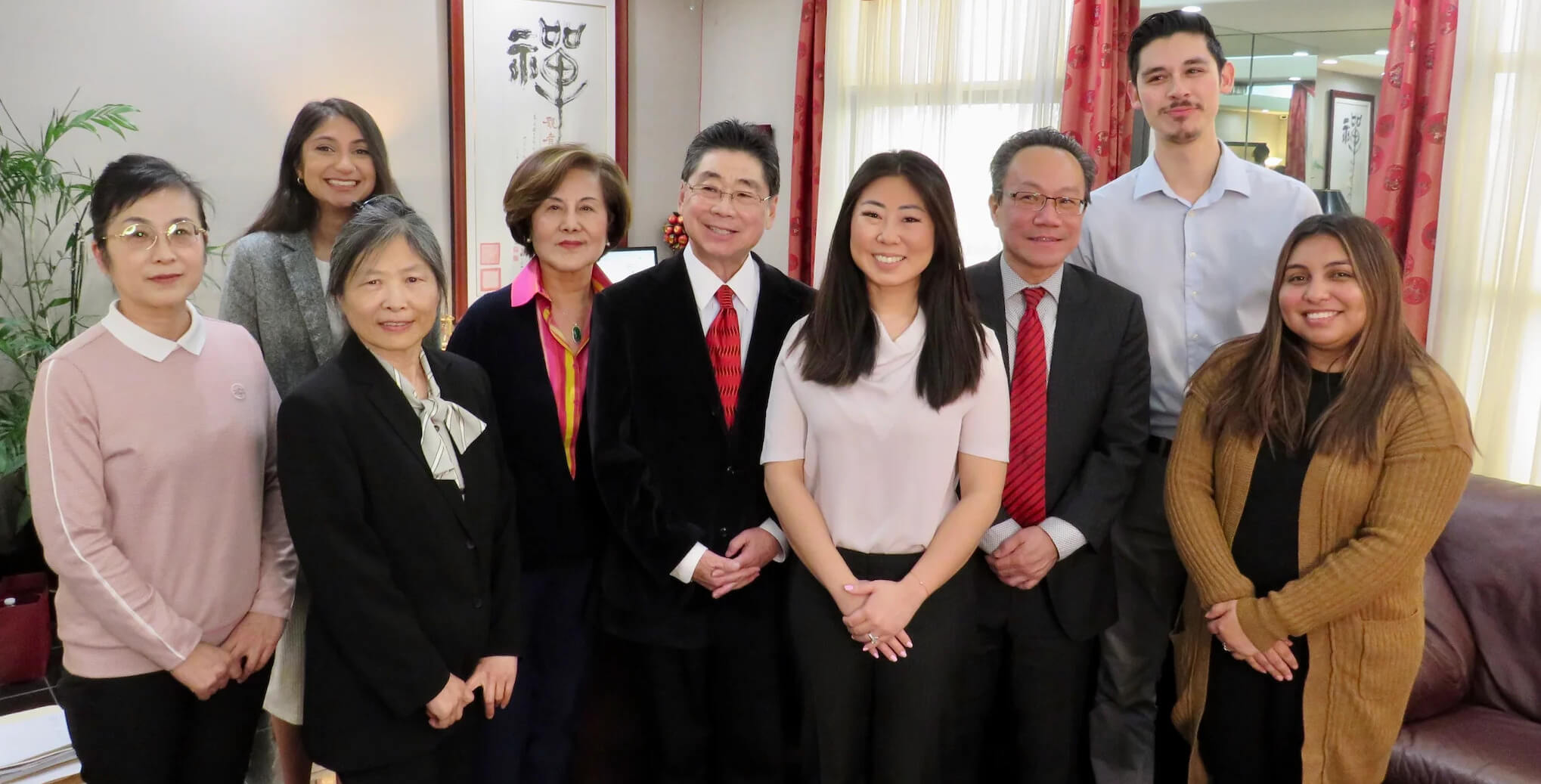

Why Choose Us?

  • Unmatched Expertise

    Trust in Peter Chu's 75+ years of collective experience to guide you through complex immigration matters.

  • Tailored Solutions

    Our personalized strategies adapt to your unique circumstances, ensuring we meet your specific immigration needs.

  • Proven Success

    Benefit from our solid track record in achieving favorable outcomes in various immigration cases across San Diego.

  • Dedicated Service

    Experience our client-first approach that ensures constant support and guidance throughout your immigration journey.

Over 800 multinational corporations maintain regional operations within California's Central Valley agricultural corridor, making Tulare County a critical hub for EB-1C multinational manager visa petitions filed by executives transferring from foreign parent companies to U.S. subsidiaries. For Tulare, CA residents navigating USCIS Form I-140 employment-based immigrant visa petitions—particularly those in agricultural technology, food processing, and international distribution—the difference between approval and a Request for Evidence often comes down to whether you retained a California-licensed EB-1C attorney before submitting organizational charts and executive function documentation. Law office of Peter Darwin Chu has handled multinational manager visa petitions across Tulare County and understands the unique documentation requirements for family-owned international agribusiness operations common to this region.

Book a Consultation

Law office of Peter Darwin Chu is a California-licensed immigration law firm serving Tulare residents with EB-1C multinational manager visa representation—providing I-140 petition preparation, organizational structure documentation, and USCIS response services with consultations available same week. We specialize in employment-based immigrant visa cases for executives transferring from foreign affiliates to U.S. operations, focusing on agricultural sector multinationals prevalent in Tulare County.

EB-1C Attorney Tulare Services Across Tulare County

Law office of Peter Darwin Chu represents clients throughout Tulare and surrounding Tulare County communities, including downtown Tulare commercial districts, East Tulare residential neighborhoods, and agricultural industrial zones serving zip codes 93274 and 93275. California residents with qualifying multinational manager roles—including those employed by companies headquartered in Latin America, Europe, or Asia with U.S. subsidiary operations in the Central Valley—are eligible for EB-1C petition representation regardless of current visa status.

What Tulare EB-1C Visa Applicants Can Access

I-140 Petition Preparation for Multinational Managers

EB-1C visa petitions require documentary proof that you served in a managerial or executive capacity for the foreign entity for at least one continuous year within the three years preceding your U.S. transfer, and that you will assume a similar role with the U.S. affiliate. Law office of Peter Darwin Chu prepares USCIS Form I-140 packages that include corporate organizational charts, foreign employment verification, job duty breakdowns that satisfy 8 CFR 204.5(j)(2) executive function definitions, and evidence of qualifying corporate relationship (parent-subsidiary, branch, or affiliate) under Immigration and Nationality Act Section 203(b)(1)(C). This service includes pre-filing legal review to identify documentation gaps before submission.

Organizational Structure Documentation

Tulare agribusiness clients frequently require specialized documentation proving the qualifying relationship between foreign parent entities and U.S. agricultural operations—particularly when corporate structures involve complex family ownership, joint ventures, or franchise arrangements. We compile stock ownership records, corporate bylaws, IRS tax identification verification, and business registration filings that demonstrate the foreign and domestic entities maintain the same ownership structure required under USCIS policy manual guidance for EB-1C classification.

EB-1C Visa Law Office Response Services

Request for Evidence (RFE) responses are issued in approximately 23% of EB-1C petitions according to USCIS data, most frequently challenging whether the beneficiary's duties qualify as truly 'managerial' or whether the U.S. entity has sufficient staffing to relieve the beneficiary of non-managerial tasks. Law office of Peter Darwin Chu drafts RFE responses within the statutory 87-day deadline, supplementing original petitions with additional affidavits, staffing charts, and legal argument addressing USCIS concerns specific to small-to-midsize multinational operations common in Tulare County.

Get clear, expert legal guidance tailored to your visa, green card, or citizenship needs.

California Immigration Law Compliance and Professional Standards

Law office of Peter Darwin Chu maintains active membership with the California State Bar and operates under California Rules of Professional Conduct Rule 1.5 governing attorney fee agreements and client fund handling. We carry professional liability insurance as required for immigration practitioners and provide written fee agreements that specify the scope of representation, anticipated costs for USCIS filing fees (currently $700 for Form I-140 plus $2,805 if requesting Premium Processing), and procedures for case updates. Every EB-1C petition undergoes internal legal review before filing to ensure compliance with current USCIS adjudication standards, which have evolved significantly following 2024 policy guidance clarifying what constitutes a 'new office' petition versus standard EB-1C classification. Tulare clients receive case status access and copies of all filed documentation for their records.

Inquire now to check if you qualify

What If My Tulare Company Is a Startup with Fewer Than 10 Employees—Can I Still Qualify for EB-1C?

Yes, but you will face heightened USCIS scrutiny under the 'new office' provisions of 8 CFR 204.5(j)(3)(i), which apply to U.S. entities operating for less than one year. New office EB-1C petitions in Tulare require proof that the U.S. operation has secured physical premises sufficient to house the enterprise, that the foreign entity has the financial ability to compensate you and commence business in the U.S., and that within one year of approval you will support an executive or managerial position. Tulare agricultural technology startups and food export companies establishing U.S. distribution arms frequently meet these criteria by demonstrating forward purchase orders, lease agreements for warehouse space, and capitalization from the foreign parent entity. Law office of Peter Darwin Chu structures new office petitions to address staffing concerns before USCIS issues an RFE, often by including detailed hiring timelines and organizational growth projections specific to the Central Valley market.

What If I Previously Worked for the Foreign Company on an L-1A Visa in Tulare—Does That Help My EB-1C Case?

Prior L-1A approval creates a favorable evidentiary foundation but does not guarantee EB-1C approval, as the two visa categories evaluate managerial capacity under different standards. L-1A petitions (nonimmigrant intracompany transferee visas) require proof of managerial duties but are approved for shorter increments and allow for 'new office' cases with less stringent staffing requirements. EB-1C petitions, as immigrant visa classifications, demand more rigorous proof that the U.S. entity is staffed adequately to relieve you of non-executive tasks and that your position represents a permanent managerial role rather than a temporary setup assignment. Tulare clients transitioning from L-1A to EB-1C often require supplemental evidence showing growth in the U.S. operation's staffing and revenue since the L-1A approval—documentation Law office of Peter Darwin Chu compiles as part of the adjustment of status or consular processing strategy.

What If the Tulare Subsidiary and Foreign Parent Company Have Different Business Activities?

Different business activities do not automatically disqualify EB-1C eligibility, provided both entities remain engaged in the regular, systematic, and continuous provision of goods or services, and the corporate relationship (ownership or control) satisfies USCIS requirements under INA 203(b)(1)(C). A common Tulare scenario involves a foreign agricultural equipment manufacturer opening a U.S. distribution and after-sales service subsidiary—while the foreign entity manufactures, the U.S. entity distributes and services. USCIS will approve such arrangements if you can prove functional managerial oversight across both operations and that the U.S. role requires executive decision-making authority over significant aspects of the business. Law office of Peter Darwin Chu has successfully represented Tulare clients where the foreign and domestic entities operate in vertically integrated sectors, using detailed business plans and market analysis to demonstrate operational coherence.

What If USCIS Issues an RFE Questioning Whether My Tulare Job Duties Are Truly Managerial?

This is the most common RFE category in EB-1C cases and requires a detailed factual response, not merely legal argument. USCIS defines 'managerial capacity' under 8 CFR 204.5(j)(2) as primarily directing the organization or a department/function, managing professional employees or an essential function, and exercising discretionary authority over daily operations. If your RFE claims you spend substantial time on operational tasks—such as personally processing invoices, handling customer complaints, or performing technical duties—you must demonstrate either that those tasks are temporary due to business stage, that they represent high-level oversight rather than execution, or that recent staffing additions have shifted those duties to subordinates. Law office of Peter Darwin Chu responds to Tulare RFEs by supplementing original petitions with updated organizational charts, revised job duty breakdowns using time-allocation percentages, and affidavits from supervisory board members or foreign executives confirming your decision-making authority and span of control.

Choosing an EB-1C Attorney in Tulare vs. Other Options

Tulare residents pursuing EB-1C multinational manager visas face a choice: retain a California immigration attorney experienced in employment-based petitions, attempt self-filing using USCIS online forms, or hire a general business attorney unfamiliar with USCIS adjudication standards. Each path carries distinct trade-offs.

Here's the honest answer: EB-1C petitions are among the most document-intensive employment-based visa categories, and USCIS adjudicators expect legal briefs that cite case law, policy manual provisions, and regulatory definitions—not merely completed forms with attached letters. Self-filed petitions succeed when the multinational employer is a large, publicly traded entity with established HR immigration teams; they fail at high rates when filed by family-owned businesses or agricultural companies where corporate structures are complex and managerial duties overlap with operational responsibilities. A general business attorney can draft corporate documents but typically lacks familiarity with USCIS Administrative Appeals Office precedent decisions that govern how 'managerial capacity' and 'qualifying relationship' are interpreted. Law office of Peter Darwin Chu focuses exclusively on immigration law, and our EB-1C practice includes regular monitoring of USCIS policy updates and AAO decisions that shape current adjudication trends.

ApproachManagerial Capacity DocumentationRFE Response ExperienceTulare Agribusiness ContextProfessional Assessment
California Immigration Attorney (Law office of Peter Darwin Chu)Legal briefs with 8 CFR citations, organizational charts, duty breakdowns using regulatory languageDrafted responses to 23% RFE rate with supplemental affidavits and case lawDirect experience with Central Valley family-owned multinationals and ag sector corporate structuresBest for serious applicants—worth the upfront cost to avoid denial
Self-Filing via USCIS Online PortalForm I-140 completion, employer letter, basic org chartNo legal expertise; relies on re-filing if deniedNo local context; generic templatesHigh risk unless Fortune 500 employer with in-house immigration team
General Business AttorneyCorporate governance documents but limited immigration law knowledgeUnfamiliar with AAO precedent and USCIS policy manual guidanceCan draft subsidiary agreements but not visa strategyHelpful for corporate setup, insufficient for visa adjudication
Notario or Visa ConsultantNon-attorney; cannot provide legal advice or represent you before USCISNo legal standing to file briefs or appeal denialsMay misunderstand qualifying relationship requirementsAvoid—unauthorized practice of immigration law in California

Get in touch

Frequently Asked Questions

Find answers to common questions about our services

  • Standard EB-1C processing through USCIS California Service Center averages 8–12 months from Form I-140 filing to approval, though timelines vary based on case complexity and whether you request Premium Processing Service (15-day adjudication for an additi

  • Attorney fees for EB-1C representation in Tulare typically range from $5,000 to $10,000 depending on case complexity, whether the U.S. entity qualifies as a 'new office,' and whether Premium Processing or RFE response is required. This fee covers legal an

  • Yes—your spouse and unmarried children under age 21 qualify for derivative E-14 and E-15 immigrant visa status based on your approved EB-1C petition. Derivative beneficiaries can accompany you to the U.S. or follow to join after your admission, and your s

  • You can still file an EB-1C petition under 'new office' provisions if the U.S. entity has been doing business for less than one year, but you must satisfy heightened evidentiary requirements under 8 CFR 204.5(j)(3)(i). USCIS requires proof that the U.S. o

  • No—USCIS does not require the U.S. entity to be profitable, only that it is actively 'doing business' as defined by 8 CFR 204.5(j)(2): the regular, systematic, and continuous provision of goods or services. Startups, expansion operations, and turnaround s

  • L-1A is a nonimmigrant (temporary) visa allowing intracompany transfer of executives or managers for up to seven years, while EB-1C is an immigrant visa (green card pathway) for multinational executives assuming permanent roles in the U.S. Both require on

  • Yes—if your I-140 is denied, you have three procedural options: file a motion to reopen or reconsider with the same USCIS office (deadline: 30 days), appeal to the USCIS Administrative Appeals Office (deadline: 30 days), or file a new petition addressing

  • EB-1C falls under the employment-based first preference category, which receives approximately 40,000 annual visa numbers—but unlike EB-2 and EB-3, the EB-1 category has not faced significant backlogs for most countries of birth in recent years. As of 202

Need Personalized Immigration Guidance?

Law office of Peter Darwin Chu provides EB-1C attorney services for Tulare multinational managers through California-licensed representation, offering I-140 petition preparation, RFE response, and organizational documentation services with consultations available within one business week.

Related Immigration Services for Tulare County Residents

Beyond EB-1C multinational manager representation, Law office of Peter Darwin Chu assists Tulare clients with related employment-based and family-sponsored immigration matters. If your foreign executive team includes individuals with extraordinary ability credentials, review our EB-1A Visa guidance for researchers and industry leaders, or explore EB-1B Visa options for outstanding professors transferring to U.S. academic institutions. Business owners seeking investor visa alternatives should consult our E-2 Visa Investment page, while managers on temporary status may benefit from L-1A Visa Executive Transfer services. For clients in nearby metropolitan areas, we maintain dedicated pages for EB-1C Visa Los Angeles, EB-1C Visa Long Beach, EB-1C Visa Anaheim, and EB-1C Visa Riverside. Immediate family members of EB-1C beneficiaries qualify for derivative status—contact us to discuss your spouse's work authorization and children's education planning during the adjustment of status process.

Speak With Us Today