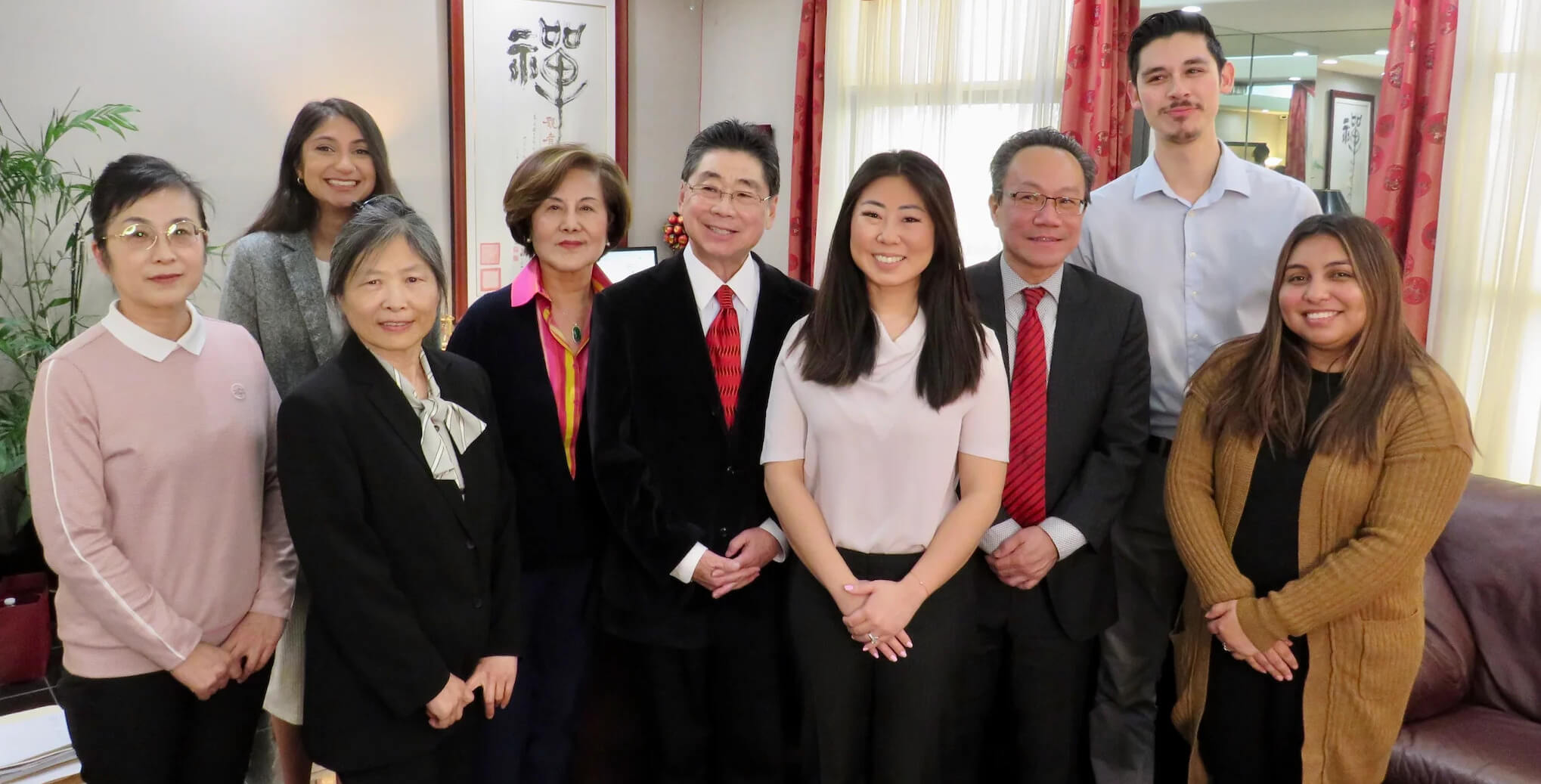

Why Choose Us?

  • Unmatched Expertise

    Trust in Peter Chu's 75+ years of collective experience to guide you through complex immigration matters.

  • Tailored Solutions

    Our personalized strategies adapt to your unique circumstances, ensuring we meet your specific immigration needs.

  • Proven Success

    Benefit from our solid track record in achieving favorable outcomes in various immigration cases across San Diego.

  • Dedicated Service

    Experience our client-first approach that ensures constant support and guidance throughout your immigration journey.

Austin's tech sector employed over 180,000 workers in 2025, making it the second-largest technology hub in Texas and a major destination for multinational corporations transferring executives and managers to U.S. operations. For executives relocating to Austin, TX through intracompany transfers, the EB-1C visa pathway offers permanent residency without labor certification — but only if the petition demonstrates qualifying managerial capacity under USCIS guidelines and documents the required one-year foreign employment relationship. Law office of Peter Darwin Chu represents multinational managers and executives throughout Austin, providing EB-1C visa guidance from initial eligibility assessment through green card approval.

Book a Consultation

Law office of Peter Darwin Chu is a Texas-licensed immigration law firm serving Austin residents for EB-1C multinational manager visa petitions — handling cases from initial L-1A to EB-1C transition, managerial capacity documentation, and USCIS Response to Evidence submissions. We provide consultations within one business week and maintain active representation throughout the I-140 adjudication process. Our practice focuses exclusively on employment-based immigration, ensuring every EB-1C case receives specialized attention from an attorney familiar with USCIS Texas Service Center processing standards.

EB-1C Lawyer Austin Available Across Austin and Surrounding Areas

Law office of Peter Darwin Chu represents EB-1C visa applicants throughout Austin and Travis County — including Downtown Austin, West Lake Hills, and Barton Creek (zip codes 73301, 73344, 78701, 78702, 78703) — as well as executives relocating to corporate offices across the greater Austin metropolitan area. All Texas residents employed by qualifying multinational organizations are eligible for EB-1C representation regardless of current visa status or county of residence.

What Austin EB-1C Visa Applicants Can Access

EB-1C Eligibility Assessment and Case Strategy

We evaluate whether your role meets the USCIS definition of managerial or executive capacity under INA Section 203(b)(1)(C), assess the qualifying relationship between your foreign and U.S. employer entities, and determine if your one-year foreign employment satisfies continuity requirements. Austin-based multinational companies often transfer managers who supervised functional departments abroad but now oversee smaller teams domestically — a structural change that requires careful petition drafting to demonstrate continued managerial authority. Initial consultations include a detailed review of your organizational charts, job duties, and corporate ownership structure before we advise on filing timeline.

I-140 Petition Preparation and Documentation

EB-1C petitions require evidence that the U.S. entity maintains a qualifying relationship with the foreign employer (parent, subsidiary, affiliate, or branch), that you were employed abroad in a managerial or executive role for at least one continuous year within the three years preceding your U.S. entry, and that your U.S. position involves similar responsibilities. We prepare detailed support letters, compile organizational documentation, and structure evidence to align with the precedent decisions cited in USCIS Policy Manual Volume 6, Part F. For Austin tech executives, this often means documenting your authority over budget allocation, strategic planning, and personnel decisions rather than day-to-day technical tasks.

L-1A to EB-1C Transition and Adjustment of Status

Many Austin EB-1C applicants are currently in L-1A status and seeking permanent residency without returning to their home country. We coordinate the I-140 filing timeline with your L-1A expiration, prepare concurrent I-485 adjustment applications when visa numbers are current, and advise on maintaining valid status throughout the green card process. Texas Service Center currently processes I-140 petitions in 4-6 months under standard processing, though premium processing (15 calendar days) is available for an additional $2,805 filing fee as of 2026.

USCIS Request for Evidence (RFE) Response

EB-1C petitions receive RFEs in approximately 30-40% of cases, most commonly challenging whether the U.S. position qualifies as managerial, whether the petitioner has demonstrated a qualifying relationship, or whether the beneficiary's foreign employment was continuous. We respond to RFEs with supplemental organizational charts, detailed job duty breakdowns, and third-party corporate documentation. Austin cases filed with Texas Service Center benefit from our familiarity with the specific evidentiary standards applied by adjudicators at that facility.

Get clear, expert legal guidance tailored to your visa, green card, or citizenship needs.

Licensed Immigration Representation in Texas

Law office of Peter Darwin Chu maintains all required Texas state bar licenses and operates in compliance with American Immigration Lawyers Association (AILA) professional standards. Our EB-1C practice adheres to USCIS Policy Manual guidance, Texas Rules of Professional Conduct, and federal immigration regulations under 8 CFR Part 204. We provide written fee agreements before representation begins, maintain client trust accounts in compliance with state bar rules, and carry professional liability coverage. All case communications are protected by attorney-client privilege under Texas law, and we do not guarantee petition approval — we represent that every case will receive thorough preparation and comply with applicable filing requirements.

Inquire now to check if you qualify

What If My U.S. Office in Austin Is Smaller Than My Foreign Office — Does That Disqualify Me from EB-1C?

No — the U.S. office does not need to match the size of the foreign entity. USCIS evaluates whether your U.S. role is managerial or executive based on the nature of your duties, not the size of your team. Many Austin tech startups and branch offices qualify for EB-1C even when the U.S. operation employs fewer people than the foreign headquarters, as long as you exercise discretionary authority over significant organizational functions. What matters is whether you manage professional-level employees, set goals and policies, or have authority over a critical function — not whether you supervise the same number of people you managed abroad.

What If I Was Transferred to Austin on an L-1A Visa — How Soon Can I File EB-1C?

You can file an EB-1C petition immediately after entering the U.S. on an L-1A visa, as long as you meet the one-year foreign employment requirement before your U.S. entry. There is no mandatory waiting period between L-1A approval and EB-1C filing. Many Austin executives file within the first six months of their L-1A admission to begin the green card process while their role and organizational structure are well-documented. Filing early also provides a buffer if USCIS issues an RFE, ensuring you have time to respond before your L-1A status expires.

What If My Austin Employer Is a Subsidiary of a Foreign Parent Company — Does That Qualify?

Yes — a U.S. subsidiary qualifies as long as the foreign parent company owns a controlling interest (typically 50% or more) in the U.S. entity. USCIS requires documentation proving the ownership relationship through corporate registration documents, stock certificates, or partnership agreements. Austin-based subsidiaries of multinational corporations commonly use EB-1C to transfer executives, and the qualifying relationship extends to parent-subsidiary, subsidiary-parent, affiliate, or branch structures. What USCIS scrutinizes is whether the relationship is genuine and whether the U.S. entity is actively doing business — not operating solely as a shell company for visa purposes.

What If I Spent Part of My Foreign Employment Year on Temporary U.S. Assignments — Does That Break Continuity?

Short-term business trips to the U.S. during your one-year foreign employment period do not automatically disqualify you. USCIS evaluates whether your employment abroad was continuous, not whether you were physically outside the U.S. for every single day. Temporary assignments, training sessions, or business development trips totaling a few weeks are typically acceptable. However, extended stays in the U.S. — particularly if you worked for the U.S. entity for several months — can create continuity issues that require detailed explanation in the petition. We document your travel history and clarify that your primary employment remained with the foreign entity throughout the qualifying period.

Why Austin Executives Choose Specialized EB-1C Representation Over General Immigration Firms

Here's the honest answer: not all immigration attorneys handle EB-1C cases with the same depth of preparation. General practice immigration firms that process high volumes of family-based petitions and naturalization applications often lack the corporate immigration experience to structure an EB-1C petition that anticipates adjudicator scrutiny of managerial capacity. EB-1C cases require detailed organizational analysis, familiarity with USCIS precedent decisions interpreting "managerial" and "executive" roles, and the ability to draft support letters that align job duties with regulatory definitions. Law office of Peter Darwin Chu focuses exclusively on employment-based immigration, ensuring every EB-1C petition reflects the specialized knowledge required to address the most common grounds for RFEs and denials.

ApproachTimelineDocumentation DepthRFE RiskBottom Line
DIY Petition Filing1-2 monthsMinimal organizational contextHighRarely demonstrates managerial capacity persuasively
General Immigration Firm2-3 monthsStandard template lettersModerateMay overlook USCIS Policy Manual nuances
EB-1C Specialized Attorney3-4 monthsDetailed organizational charts and precedent-based analysisLowAnticipates adjudicator concerns before filing
Corporate In-House CounselVariesStrong corporate documentation, less USCIS petition experienceModerateExcellent business records, weaker immigration law expertise

Get in touch

Frequently Asked Questions

Find answers to common questions about our services

  • The I-140 petition currently takes 4-6 months under standard processing at Texas Service Center, which handles most Texas filings. Premium processing is available for $2,805 and guarantees a decision within 15 calendar days. After I-140 approval, adjustme

  • The I-140 petition filing fee is $715 as of 2026. If you elect premium processing, add $2,805. Adjustment of status (I-485) filing adds $1,440 per applicant, plus $85 biometrics fee. Attorney fees vary by case complexity but typically range from $6,000 to

  • Yes, but new office petitions face additional scrutiny. USCIS requires evidence that the U.S. entity has been doing business for at least one year, has the financial ability to pay your salary, and has sufficient staffing to support a managerial or execut

  • Self-filing is legally permitted but carries significant risk. EB-1C petitions require detailed legal arguments demonstrating that your role meets the regulatory definition of 'managerial' or 'executive' under 8 CFR 204.5(j)(2), supported by organizationa

  • L-1A is a temporary nonimmigrant visa allowing intracompany transfers of executives and managers for up to seven years. EB-1C is a permanent resident (green card) petition based on similar eligibility criteria but resulting in lawful permanent residence r

  • Yes. Your spouse and unmarried children under 21 are eligible for derivative green cards through your approved I-140 petition. They file adjustment of status (I-485) concurrently with your application or after your I-140 approval if visa numbers are curre

  • An RFE (Request for Evidence) gives you 87 days to submit additional documentation addressing USCIS concerns — most commonly about managerial capacity, the qualifying corporate relationship, or continuity of foreign employment. We respond with supplementa

  • If you are in the U.S. on H-1B, L-1A, or another valid status, your employer files the I-140 EB-1C petition while you maintain that status. Once the I-140 is approved and a visa number is available (EB-1C is current with no backlog as of 2026), you file I

Need Personalized Immigration Guidance?

Law office of Peter Darwin Chu provides EB-1C multinational manager visa representation for Austin executives transferring to Texas operations, offering comprehensive I-140 petition preparation, RFE response, and adjustment of status coordination with consultations available within one business week.

Related Immigration Services for Austin Multinational Employees

If you are exploring employment-based immigration options beyond EB-1C, Law office of Peter Darwin Chu also represents Austin clients in EB-1A Visa cases for individuals with extraordinary ability, EB-2 Visa petitions requiring advanced degrees or exceptional ability, and L-1A Visa intracompany transfer applications. For executives managing related visa categories, we handle EB-1C Visa Law Office matters nationwide, as well as EB-1C Visa Los Angeles and EB-1C Visa Long Beach cases for California-based affiliates. Our Immigrant Visas practice ensures that every employment-based green card petition receives the detailed preparation required for USCIS adjudication.

Speak With Us Today