
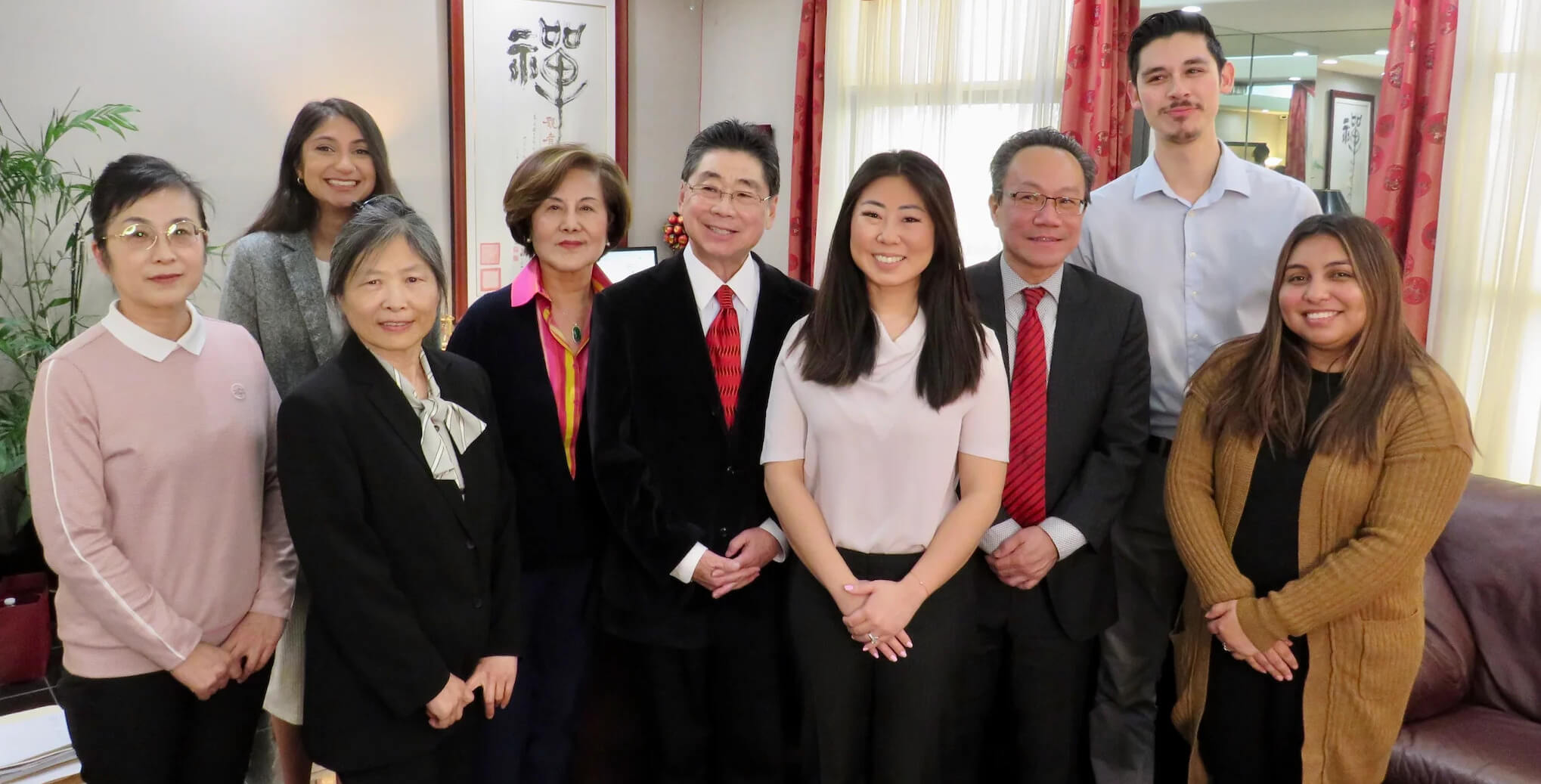
Why Choose Us?
-

Unmatched Expertise
Trust in Peter Chu's 75+ years of collective experience to guide you through complex immigration matters.
-

Tailored Solutions
Our personalized strategies adapt to your unique circumstances, ensuring we meet your specific immigration needs.
-

Proven Success
Benefit from our solid track record in achieving favorable outcomes in various immigration cases across San Diego.
-

Dedicated Service
Experience our client-first approach that ensures constant support and guidance throughout your immigration journey.


Get clear, expert legal guidance tailored to your visa, green card, or citizenship needs.

Inquire now to check if you qualify
Why Downey Professionals Choose Specialized EB-1C Counsel Over General Practice Firms
EB-1C petitions fail for reasons that general immigration practitioners—handling everything from family-based adjustment to asylum—often miss during initial case assessment. Here's the honest answer: the difference between an approved I-140 and a denial frequently comes down to whether your attorney understands California Service Center's interpretation of 'managerial capacity' versus 'first-line supervisor' roles, knows how to structure organizational charts to satisfy 8 CFR §204.5(j)(2) qualifying relationship requirements, and has experience responding to RFEs citing Matter of Mars and Matter of Church Scientology. Law office of Peter Darwin Chu limits its practice to employment-based immigrant and nonimmigrant visas—every Downey EB-1C case is handled by attorneys who regularly file these petitions and track AAO decisions interpreting the regulatory framework.
| Factor | General Practice Firm | Solo Immigration Attorney | Law office of Peter Darwin Chu | Professional Assessment |
|---|---|---|---|---|
| EB-1C case volume | 2–5 per year | 10–15 per year | Focused EB-1C practice | Volume indicates specialization—not every immigration attorney files enough EB-1C petitions to recognize adjudication patterns |
| RFE response experience | Generic templates | Case-by-case | Targeted AAO precedent briefs | Effective RFE responses cite specific regulatory interpretations and precedent decisions—not boilerplate language |
| Qualifying relationship documentation | Corporate articles only | Standard org charts | Multi-entity structure evidence per 8 CFR §204.5(j)(2) | USCIS requires proof of common ownership or control—missing subsidiary agreements or affiliate documentation is the #2 RFE cause |
| Managerial capacity analysis | Job description review | Duty percentage breakdown | Matter of Mars functional management framework | First-line supervisors do not qualify even if they supervise employees—true managers must exercise discretion over operations |
Frequently Asked Questions
Find answers to common questions about our services
-
Current processing times at California Service Center—which adjudicates most EB-1C petitions filed by California employers—average 4.5 to 7.5 months for Form I-140 without premium processing. With premium processing (Form I-907), USCIS renders a decision
-
Under 8 CFR §204.5(j)(2), the U.S. petitioning employer must be the same employer, a subsidiary, an affiliate, or a parent company of your foreign employer. USCIS requires documentation proving common ownership or control—typically stock certificates, cor
-
Yes—business owners and majority shareholders can file EB-1C petitions if they meet all regulatory requirements. However, USCIS applies heightened scrutiny to owner-beneficiary cases, often issuing RFEs questioning whether the role is truly managerial or
-
You have three options after an I-140 denial: file a motion to reopen or reconsider with USCIS within 30 days, appeal to the Administrative Appeals Office within 30 days, or file a new petition with additional evidence addressing the denial grounds. Motio
-
No—L-1A nonimmigrant status and EB-1C immigrant classification are separate and independent. You can qualify for EB-1C even if you have never held L-1A status, as long as you meet the statutory requirements: one year of managerial employment abroad with a
-
EB-1C requires employer sponsorship, a qualifying multinational relationship, and proof of managerial capacity—but no PERM labor certification. EB-2 National Interest Waiver allows self-petitioning without employer sponsorship or labor certification, but
-
Yes—your spouse and unmarried children under 21 qualify for derivative green cards as EB-1C dependents. They are included on your Form I-485 adjustment application (if already in the U.S.) or apply for immigrant visas at a U.S. consulate abroad after your
-
The top three denial reasons are: insufficient evidence of managerial capacity (beneficiary performing operational tasks rather than managing), failure to prove qualifying relationship between foreign and U.S. entities (missing corporate documentation or
Need Personalized Immigration Guidance?

