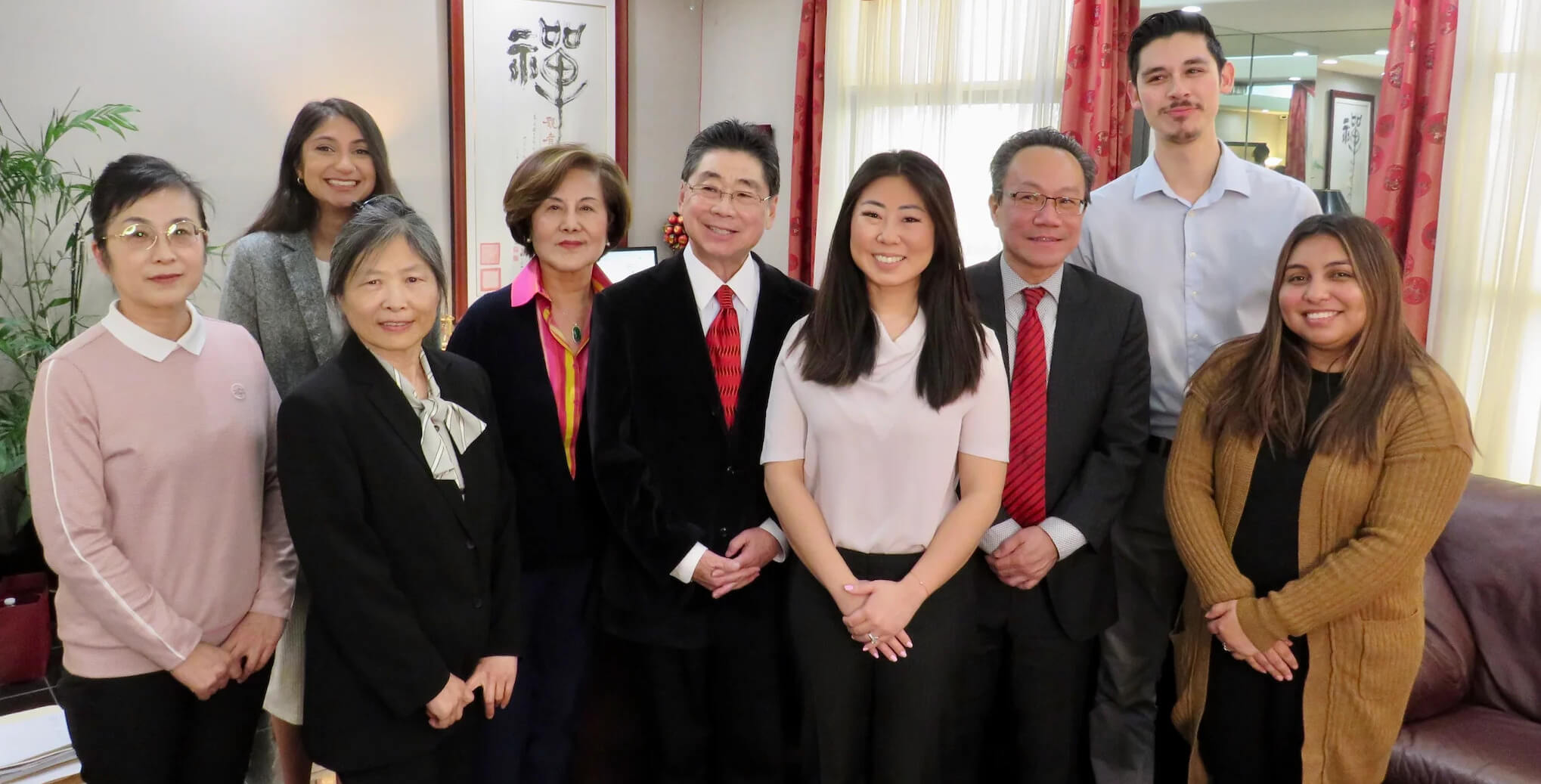

Why Choose Us?

  • Unmatched Expertise

    Trust in Peter Chu's 75+ years of collective experience to guide you through complex immigration matters.

  • Tailored Solutions

    Our personalized strategies adapt to your unique circumstances, ensuring we meet your specific immigration needs.

  • Proven Success

    Benefit from our solid track record in achieving favorable outcomes in various immigration cases across San Diego.

  • Dedicated Service

    Experience our client-first approach that ensures constant support and guidance throughout your immigration journey.

Miami processes over 40,000 employment-based immigration petitions annually through USCIS's Miami Field Office, making it one of the highest-volume EB-1C jurisdictions in Florida — and one where petition quality and USCIS precedent knowledge matter as much as case merit. For multinational managers and executives relocating to Miami, Brickell, or Coral Gables, the difference between approval and a Request for Evidence often comes down to whether your EB-1C lawyer Miami petition correctly demonstrated the qualifying managerial relationship under 8 CFR 204.5(j)(2). Law office of Peter Darwin Chu has handled EB-1C multinational manager visa cases for Miami-based corporations and understands this jurisdiction.

Book a Consultation

Law office of Peter Darwin Chu is a Florida-licensed immigration law firm serving Miami residents with EB-1C multinational manager visa representation — available for same-week consultations, USCIS petition preparation, and Request for Evidence responses. We limit our practice to employment-based and nonimmigrant visa categories, ensuring every EB-1C case is handled by an attorney with direct USCIS filing experience in Miami, FL.

EB-1C Lawyer Miami Available Across Miami and Surrounding Areas

Law office of Peter Darwin Chu represents EB-1C petitioners throughout Miami-Dade County — including Downtown Miami, Brickell, Coral Gables, Coconut Grove, and Kendall (zip codes 33101, 33102, 33107, 33109, 33110) — as well as multinational companies with Florida operations in Fort Lauderdale and West Palm Beach. All Florida residents and corporations with qualifying foreign affiliates are eligible for EB-1C representation regardless of county, provided the beneficiary meets the managerial or executive capacity requirements under INA 203(b)(1)(C).

What Miami EB-1C Petitioners Can Access

EB-1C Petition Preparation & USCIS Filing

We prepare Form I-140 petitions for multinational managers and executives transferring to Miami-based U.S. operations, including organizational chart development, managerial capacity documentation, and qualifying relationship evidence required under 8 CFR 204.5(j). Miami petitions filed through USCIS Texas Service Center typically receive initial review within 4–6 months absent premium processing. We advise clients on the L-1A to EB-1C transition strategy when applicable.

Request for Evidence (RFE) Response

When USCIS issues an RFE questioning managerial duties, beneficiary supervision scope, or the qualifying relationship between foreign and U.S. entities, we prepare technical responses with supplemental organizational evidence, detailed position descriptions, and precedent case citations. RFE response deadlines in EB-1C cases are typically 87 days — missing this window results in petition denial.

Premium Processing & Adjustment of Status Coordination

For Miami executives requiring expedited adjudication, we file Form I-907 premium processing requests (15-calendar-day USCIS response) and coordinate concurrent Form I-485 adjustment of status filing when the beneficiary is maintaining valid nonimmigrant status in the United States. Florida-based EB-1C beneficiaries eligible for adjustment avoid consular processing entirely.

Get in touch

Get clear, expert legal guidance tailored to your visa, green card, or citizenship needs.

Licensed Florida Immigration Counsel

Law office of Peter Darwin Chu operates under the jurisdiction of the Florida Bar and maintains professional liability coverage as required under Florida Rules of Professional Conduct Rule 4-1.5. Our EB-1C practice adheres to USCIS Policy Manual Volume 6, Part F, Chapter 4 (Employment-Based First Preference – EB-1) and American Immigration Lawyers Association (AILA) ethical guidelines. We provide written fee agreements specifying scope of representation, government filing fees (I-140 base fee: $700; premium processing: $2,500 as of 2026), and RFE response costs before representation begins. We do not guarantee petition approval outcomes — USCIS adjudication is discretionary — but we provide transparent case assessments based on current Miami Field Office processing patterns and published USCIS precedent decisions.

Inquire now to check if you qualify

What If My Miami Company Was Only Incorporated Last Year — Can I Still File EB-1C?

Yes, but the petition faces heightened scrutiny. USCIS requires that the U.S. entity has been doing business for at least one year before filing the EB-1C petition under 8 CFR 204.5(j)(3)(i)(D). If your Miami corporation was incorporated 14 months ago but only began revenue-generating operations 8 months ago, USCIS may question whether the 'doing business' requirement is satisfied. We document this timeline with corporate bank statements, vendor contracts, payroll records, and evidence of continuous business operations. New-entity EB-1C cases in Miami require stronger organizational charts showing that the beneficiary will supervise professional staff, not just entry-level workers.

What If I Was on L-1A Status in Miami — Does That Guarantee EB-1C Approval?

No. While many EB-1C beneficiaries transition from L-1A status, the standards differ. L-1A requires proof of managerial capacity for the most recent year abroad and the prospective U.S. role; EB-1C requires proof that you were employed abroad in a managerial capacity for at least one continuous year in the three years before filing and that the U.S. role is managerial or executive. USCIS reviews EB-1C petitions more stringently because they lead directly to permanent residence. If your Miami L-1A was approved based on a functional manager role supervising projects rather than personnel, your EB-1C petition may require additional evidence of personnel supervision or executive-level discretion to satisfy the higher standard.

What If the Foreign Parent Company Has No Physical Office — Only Remote Workers?

USCIS increasingly questions whether a fully remote foreign entity constitutes a bona fide qualifying organization under 8 CFR 204.5(j)(2). If your foreign parent company operates exclusively through remote workers and has no lease, business registration, or physical presence in its country of incorporation, we must document the company's legitimacy through incorporation certificates, tax filings, payroll records, and client contracts demonstrating continuous business operations. Miami-based EB-1C petitions involving remote foreign affiliates require detailed organizational structure evidence showing the beneficiary exercised managerial authority over the remote workforce.

What If I'm Managing the Miami Office But Also Performing Technical Tasks?

This is the most common EB-1C denial scenario. USCIS requires that your primary duties be managerial or executive — not a combination of managerial oversight and hands-on technical work. If you manage three employees at your Miami office but also write code, draft contracts, or handle client accounts yourself, USCIS may determine you are a 'first-line supervisor' or 'combination manager/producer,' which does not qualify under EB-1C standards. We mitigate this by documenting that your technical work is incidental (less than 50% of weekly hours), that you delegate operational tasks to subordinates, and that your role involves discretionary authority over company policy and budget. For smaller Miami offices, we often recommend delaying the EB-1C petition until additional staff are hired.

Comparing Your Miami EB-1C Filing Options

Miami executives considering EB-1C immigration have three primary options: file pro se (self-petition without attorney representation), retain a high-volume immigration mill that processes hundreds of cases per month, or work with a firm focused on employment-based visa categories. Here's the honest answer: EB-1C self-filing is legally permissible but tactically unwise. USCIS does not provide instruction on how to demonstrate 'managerial capacity' or 'qualifying relationship' under agency precedent — these terms are defined through Administrative Appeals Office (AAO) decisions and Policy Manual guidance that most petitioners encounter for the first time when their case is denied. High-volume immigration mills often delegate EB-1C drafting to paralegals who have never read the Policy Manual sections governing multinational manager classification, resulting in boilerplate organizational charts and generic position descriptions that fail to address the specific evidence requirements USCIS applies to Miami-based petitions.

Filing ApproachManagerial Capacity DocumentationRFE Response RateTimeline TransparencyProfessional Assessment
Pro Se (Self-Filing)Generic job duties list, no precedent citations60–70% (AILA estimate)No advance notice of weak evidence areasHigh risk for new filers — USCIS does not coach petitioners through deficiency corrections
High-Volume Immigration MillTemplate organizational chart, minimal company-specific customization40–50%Standard processing only — no strategic case planningCost-effective but impersonal — you are one of 500 monthly filings
Specialized EB-1C CounselCompany-specific org chart, AAO precedent analysis, USCIS Policy Manual alignment15–25% (when filed with complete initial evidence)Premium processing available, adjustment coordination planned in advanceRecommended for executives with complex foreign affiliate structures or roles blending management and technical work

Speak With Us Today

Frequently Asked Questions

Find answers to common questions about our services

  • Standard I-140 processing through USCIS Texas Service Center (which adjudicates Miami-filed EB-1C petitions) currently averages 4–6 months. Premium processing (Form I-907, $2,500 fee) guarantees a 15-calendar-day response — either approval, denial, RFE, o

  • L-1A is a temporary nonimmigrant work visa allowing multinational managers to work in the U.S. for up to seven years; EB-1C is a permanent residence (green card) petition. Both require proof of managerial capacity, but EB-1C has a higher evidentiary stand

  • Yes, but majority ownership requires additional scrutiny. USCIS will question whether you are 'employed' by the U.S. company or simply self-employed. We must demonstrate that the U.S. entity has a board of directors or ownership structure that exercises g

  • No. The statute requires one year of foreign managerial employment within the three years preceding the filing date — not the most recent year. If you worked for the foreign parent company in London from 2023–2024, transferred to Miami in January 2025, an

  • An RFE (Request for Evidence) means USCIS identified deficiencies in the initial petition — most commonly insufficient proof of managerial capacity, unclear qualifying relationship between entities, or lack of evidence that the U.S. company is doing busin

  • Yes, but small-office EB-1C petitions face heightened scrutiny. USCIS does not impose a minimum employee count, but the agency requires proof that your role is primarily managerial — not a combination of management and hands-on operational work. If your M

  • Attorney fees for EB-1C representation in Miami typically range from $8,000–$15,000 depending on case complexity, whether the foreign affiliate structure requires detailed legal analysis, and whether premium processing or concurrent adjustment of status i

  • USCIS does not publish jurisdiction-specific approval rates, but agency-wide EB-1C approval rates fluctuate between 68%–78% depending on the year and USCIS service center. EB-1C petitions have lower approval rates than EB-1A (extraordinary ability, 80%+)

Need Personalized Immigration Guidance?

Law office of Peter Darwin Chu provides EB-1C lawyer Miami services for multinational managers and executives relocating to Florida, offering USCIS I-140 petition preparation, premium processing filing, and same-week consultation availability for Miami-based corporations with qualifying foreign affiliates.

Related Immigration Services in Miami and Beyond

Executives exploring EB-1C classification may also qualify for EB-1A Visa (extraordinary ability) or EB-2 Visa (advanced degree professional) categories depending on individual credentials. Miami professionals currently on L-1A Visa status should evaluate EB-1C timing to maximize green card priority date advantage. We also represent clients in O-1 Visa (extraordinary ability in business), E-2 Visa (treaty investor), and H-1B Visa matters when EB-1C classification is premature due to insufficient managerial tenure. For more information on our full range of services, visit Our Law Firm, explore Immigrant Visas, and review our Non-immigrant Visas practice areas.

Book a Consultation