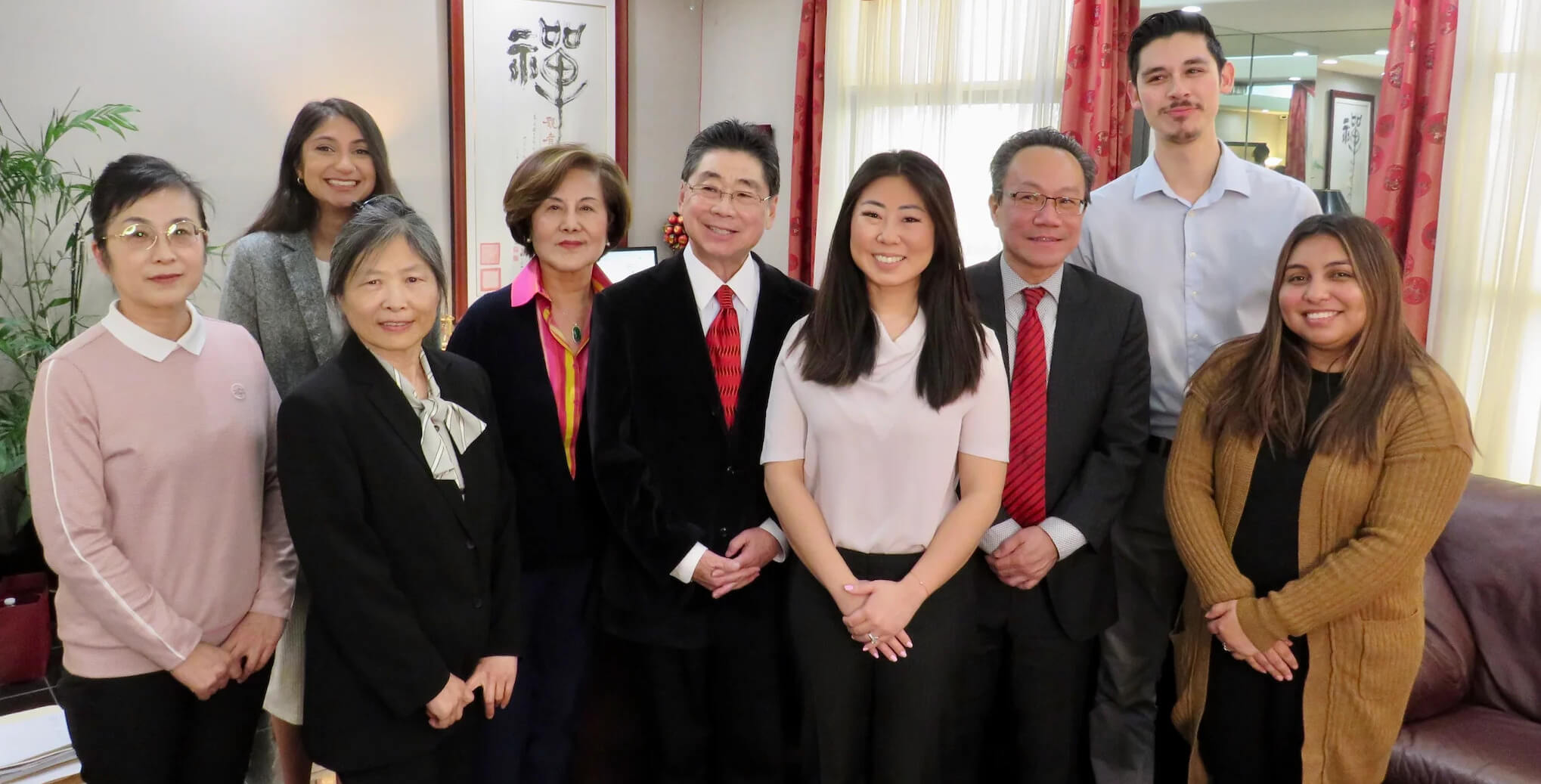

Why Choose Us?

  • Unmatched Expertise

    Trust in Peter Chu's 75+ years of collective experience to guide you through complex immigration matters.

  • Tailored Solutions

    Our personalized strategies adapt to your unique circumstances, ensuring we meet your specific immigration needs.

  • Proven Success

    Benefit from our solid track record in achieving favorable outcomes in various immigration cases across San Diego.

  • Dedicated Service

    Experience our client-first approach that ensures constant support and guidance throughout your immigration journey.

Orange, California's diverse business landscape — home to over 140,000 residents and a growing number of international corporate operations — creates consistent demand for executive transfer immigration services. For multinational managers seeking permanent residency through the EB-1C visa category, the difference between a successful I-140 petition and a Request for Evidence often depends on how counsel structures the initial managerial capacity evidence and establishes qualifying employment relationships. Law office of Peter Darwin Chu represents Orange, CA executives navigating EB-1C petitions, consular processing, and adjustment of status applications through USCIS California Service Center.

Book a Consultation

Law office of Peter Darwin Chu is a California-licensed immigration law firm serving Orange residents with EB-1C multinational manager and executive visa petitions — offering I-140 preparation, evidence compilation, and consular processing support for qualifying foreign executives transferring to U.S. operations. We handle petitions filed through USCIS California Service Center and represent clients in consular interviews at U.S. embassies worldwide.

EB-1C Lawyer Orange Available Across Orange and Surrounding Areas

Law office of Peter Darwin Chu represents clients throughout Orange, CA and Orange County — including the neighborhoods of Old Towne Orange, Orange Park Acres, and Villa Park (zip codes 92613, 92664, 92665, 92666, and 92667). All California residents with qualifying multinational executive or managerial employment are eligible for EB-1C representation regardless of county.

What Orange Residents Can Access

EB-1C I-140 Petition Preparation

The EB-1C visa requires proving that you worked abroad for a qualifying foreign employer in a managerial or executive capacity for at least one continuous year within the three years preceding your U.S. transfer, and that you are coming to work for a U.S. entity in a similar capacity. We compile organizational charts, job duty statements, financial records, and evidence of the qualifying relationship between the foreign and U.S. entities — structured to meet the "managerial capacity" standard defined in INA Section 101(a)(44). For Orange-based corporate operations, we assess whether the U.S. position involves true supervisory authority over professional staff or functional management of an essential business function, not just first-line supervision.

EB-1C Visa Law Office Consular Processing Support

After I-140 approval, foreign nationals abroad proceed through consular processing at their home country U.S. embassy. We prepare DS-260 applications, compile civil documents, and conduct pre-interview consultations to address potential issues such as prior visa denials, unlawful presence concerns, or gaps in employment history. Orange clients with approved I-140 petitions receive detailed embassy-specific guidance based on processing times and documentation standards at the relevant consular post.

Adjustment of Status for Orange-Based Executives

Executives already in the United States on L-1A or other valid status may file Form I-485 to adjust status to lawful permanent resident once the I-140 is approved and a visa number is immediately available (EB-1C is current in most periods). We coordinate concurrent filing strategies, work authorization (EAD) and advance parole applications, and address RFEs related to managerial capacity or qualifying relationship evidence.

Get clear, expert legal guidance tailored to your visa, green card, or citizenship needs.

What If My U.S. Company in Orange Has Only Been Operating for One Year — Can I Still Qualify for EB-1C?

Yes, but the evidentiary standard is higher. USCIS applies a "new office" analysis to U.S. entities operating for less than one year, requiring evidence that the business is financially viable, has secured physical premises, and will support an executive or managerial position within a reasonable period. For Orange-based startups or subsidiary openings, we compile business plans, lease agreements, financial projections, and organizational charts showing planned staffing to demonstrate that the U.S. operation will grow beyond the beneficiary performing operational tasks. Many new office EB-1C petitions are approved with 12–18 months of U.S. payroll records and evidence of revenue generation or contract execution.

What If I Was on L-1A Status in Orange and Want to Convert to EB-1C — Do I Need to Leave the U.S.?

No. L-1A intracompany transferees are ideal EB-1C candidates because the managerial or executive capacity requirement is nearly identical. If you are in Orange on valid L-1A status, we can file your I-140 petition while you remain in the United States, and if a visa number is immediately available (which it typically is for EB-1C), file I-485 adjustment of status concurrently or shortly after I-140 approval. You do not need to return to your home country for consular processing unless you prefer that route or are outside the U.S. when the petition is approved.

What If USCIS Issues an RFE Questioning Whether My Orange Position Is Truly Managerial?

RFEs challenging managerial capacity are common in EB-1C petitions, particularly when the U.S. operation is small or the beneficiary's duties include operational tasks. In Orange cases, we respond with detailed organizational charts, revised job duty statements emphasizing supervisory and policy-setting functions, evidence of subordinate staff (resumes, payroll records, org charts), and declarations from company officers explaining the managerial scope. The key is demonstrating that you primarily manage the organization, a department, or a function — not that you perform the work yourself. Most RFEs are overcome with properly structured supplemental evidence.

What If My Foreign Employer and U.S. Employer in Orange Are Related, But the Ownership Structure Is Complex?

Proving the "qualifying relationship" under 8 CFR 204.5(j)(2) requires demonstrating that the foreign and U.S. entities are related as parent, subsidiary, branch, or affiliate through common ownership and control. For complex structures involving holding companies, joint ventures, or layered subsidiaries, we compile stock certificates, articles of incorporation, shareholder agreements, and organizational diagrams showing the ownership chain. Orange clients with multinational corporate structures often require detailed legal analysis to establish that the same corporate entity or group controls both the foreign and U.S. operations — this is a pure documentation exercise that is fully addressable with proper evidence.

Why Orange Executives Choose Specialized EB-1C Immigration Counsel Over General Practice Firms

EB-1C petitions are among the most complex employment-based immigration filings, requiring specialized knowledge of managerial capacity standards, qualifying relationship rules, and USCIS adjudication patterns. General immigration practitioners may file the forms, but they often lack the depth of EB-1C case law and precedent decisions needed to structure evidence preemptively. Here's the honest answer: the EB-1C multinational manager visa Orange category is not a fill-in-the-blank petition — it is a narrative brief that must convince an adjudicator that your position meets statutory and regulatory definitions of "managerial" or "executive" capacity under INA Section 101(a)(44). Firms without dedicated EB-1C experience frequently trigger RFEs or denials that could have been avoided with better initial evidence compilation.

ConsiderationGeneral Immigration FirmsEB-1C-Focused CounselSelf-Filing (DIY)Professional Assessment
Managerial Capacity AnalysisSurface-level job description reviewDetailed functional analysis, org charts, AAO precedent applicationOften misunderstands the legal standardSpecialized counsel structures evidence to preempt RFEs
Qualifying Relationship EvidenceBasic corporate documents submittedOwnership chain analysis, control structure mapping, affiliate definitionsFrequently incomplete or unclearComplex structures require legal interpretation of 8 CFR 204.5(j)(2)
New Office PetitionsStandard filing regardless of U.S. operation ageEnhanced business plan, financial projections, staffing plans for <1 year operationsHigh denial rate without specialized guidanceNew office cases demand heightened evidentiary showing
RFE Response StrategyGeneric supplemental documentsPrecedent-driven legal briefs, targeted evidence, case law citationsOften fatal if initial response is weakExperienced counsel knows which AAO decisions apply to your fact pattern

Get in touch

Frequently Asked Questions

Find answers to common questions about our services

  • I-140 processing times at USCIS California Service Center currently range from 4 to 6 months for standard processing, or 15 business days with premium processing (additional $2,805 fee as of 2026). After I-140 approval, consular processing adds 2–4 months

  • USCIS requires evidence that you primarily manage the organization, a major component, or function — not that you perform the work yourself. For Orange petitions, we compile organizational charts showing reporting structure, detailed job duty statements e

  • Yes, you can refile an EB-1C petition after a denial, but it is critical to address the specific grounds for denial cited in the USCIS decision. Common denial reasons include insufficient evidence of managerial capacity, failure to establish the qualifyin

  • Yes, but new office petitions (U.S. entities operating less than one year) face heightened scrutiny under 8 CFR 204.5(j)(3)(i). USCIS requires evidence that the U.S. operation has secured physical premises, is financially viable, and will support an execu

  • Attorney fees for EB-1C petitions typically range from $8,000 to $15,000 depending on case complexity, whether the U.S. entity is a new office, and whether premium processing or RFE responses are required. Government filing fees include the I-140 fee ($80

Need Personalized Immigration Guidance?

Law office of Peter Darwin Chu provides EB-1C lawyer Orange services to multinational executives and managers transferring to California-based operations, offering I-140 petition preparation, consular processing support, and adjustment of status applications with direct knowledge of USCIS California Service Center adjudication standards.

Orange-based executives may also qualify for related employment-based immigrant visa categories depending on their credentials and business structure. EB-1A visa applicants demonstrate extraordinary ability in their field without requiring employer sponsorship, while EB-2 visa professionals hold advanced degrees or exceptional ability. Executives managing U.S. operations in nearby communities may benefit from our EB-1C Visa Los Angeles, EB-1C Visa Long Beach, EB-1C Visa Anaheim, and EB-1C Visa Riverside location pages. For L-1A visa holders considering permanent residency, our L-1A Visa guidance addresses the transition from nonimmigrant to immigrant status.

Speak With Us Today