
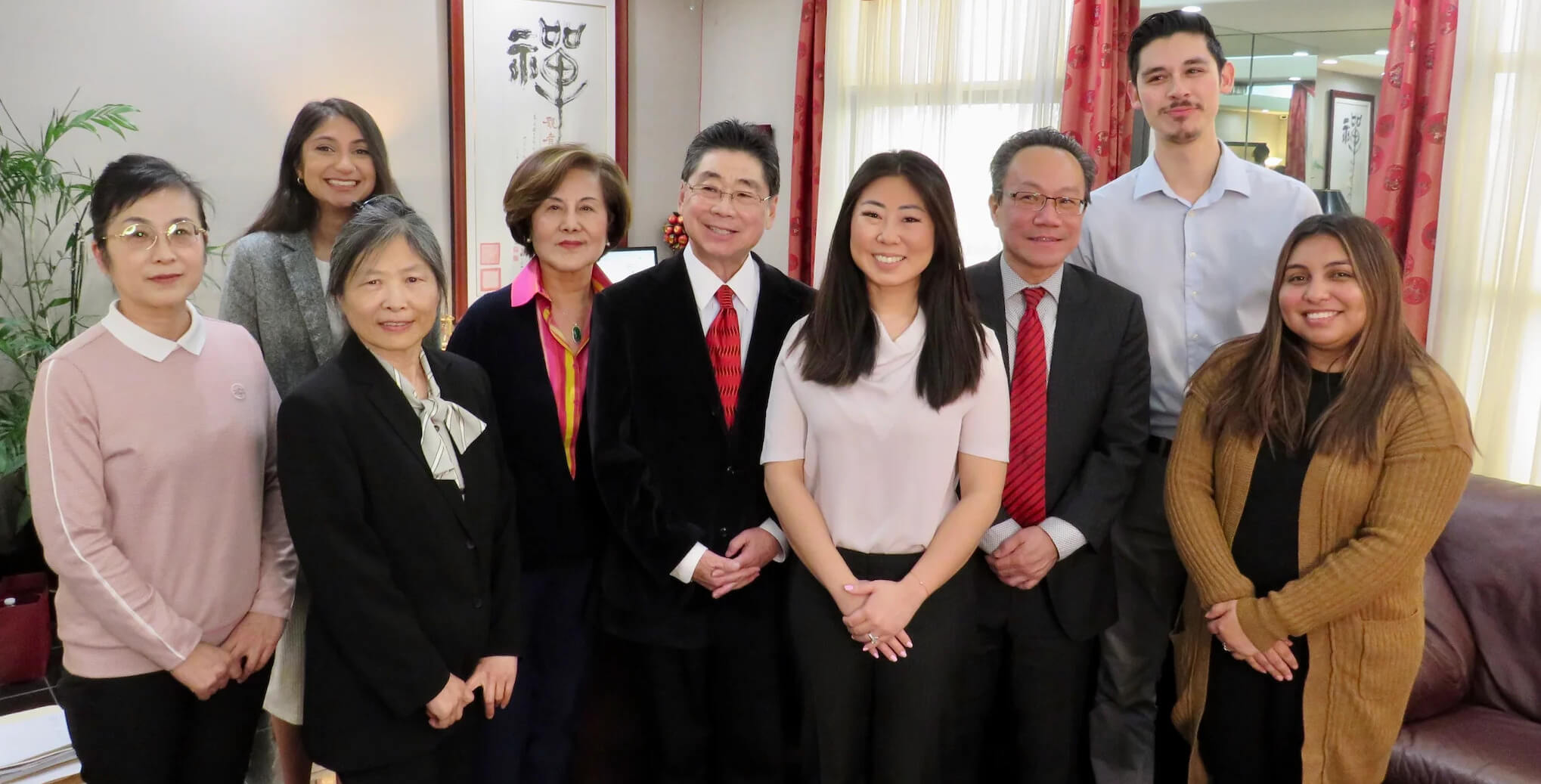
Why Choose Us?
-

Unmatched Expertise
Trust in Peter Chu's 75+ years of collective experience to guide you through complex immigration matters.
-

Tailored Solutions
Our personalized strategies adapt to your unique circumstances, ensuring we meet your specific immigration needs.
-

Proven Success
Benefit from our solid track record in achieving favorable outcomes in various immigration cases across San Diego.
-

Dedicated Service
Experience our client-first approach that ensures constant support and guidance throughout your immigration journey.


Get clear, expert legal guidance tailored to your visa, green card, or citizenship needs.

Inquire now to check if you qualify
EB-2 NIW vs. Standard EB-2 PERM Labor Certification in Austin
Austin professionals pursuing EB-2 green cards face a fundamental choice: pursue the standard PERM labor certification process (requiring employer sponsorship, recruitment advertising, and prevailing wage determination) or self-petition under the National Interest Waiver, eliminating the labor certification step entirely. Here's the honest answer: the NIW is not 'easier'—it shifts the burden from proving no qualified U.S. workers exist to proving your work benefits the United States sufficiently to justify waiving the labor market test. For startup founders, independent researchers, and professionals whose work has clear national-scale impact, the NIW is often faster and does not require employer participation. For those in standard employment with weak national importance arguments, PERM remains the more straightforward path despite the 12–18 month labor certification timeline.
| Factor | EB-2 PERM | EB-2 NIW | Professional Assessment |
|---|---|---|---|
| Employer requirement | Must have sponsoring employer | Self-petition—no employer needed | NIW wins for founders, researchers, and those seeking employment mobility |
| Filing timeline | 12–18 months (PERM) + 6 months (I-140) | 6–12 months (I-140 only) | NIW is faster when Dhanasar evidence is strong |
| Approval standard | Prove no qualified U.S. workers available | Prove work serves national interest under three-prong test | PERM is more predictable; NIW requires stronger evidentiary portfolio |
| Cost | Employer pays PERM + I-140 ($5K–$15K total) | Applicant pays I-140 + legal fees ($3K–$8K total) | NIW is less expensive but risk is borne by applicant |
Frequently Asked Questions
Find answers to common questions about our services
-
Current I-140 processing times at the Texas Service Center—which handles most Austin EB-2 NIW filings—range from 6 to 12 months for regular processing and 45 days for premium processing (available for I-140 as of 2026). Processing time begins when USCIS r
-
The Dhanasar framework—established in Matter of Dhanasar, 26 I&N Dec. 884 (AAO 2016)—requires you to prove three elements: (1) your proposed endeavor has both substantial merit and national importance, (2) you are well-positioned to advance the proposed e
-
Yes—USCIS accepts foreign degrees if they are equivalent to a U.S. master's degree or higher, as determined by a credential evaluation service approved under 8 CFR 214.2(h)(4)(iii)(D). Your evaluation must confirm the degree is a single degree equivalent
-
National importance evidence typically includes expert recommendation letters explaining how your work addresses a challenge of national scope (public health, economic competitiveness, technological innovation, environmental protection, etc.), documentati
-
Filing the I-140 alone does not affect your ability to travel—it is an immigrant petition, not a status application. You continue to travel on your current nonimmigrant visa (H-1B, O-1, F-1, etc.) as long as it remains valid. However, if you file I-485 ad
-
Legal fees for EB-2 NIW petition preparation in Austin typically range from $5,000 to $10,000 depending on case complexity—including initial consultation, credential evaluation coordination, evidence portfolio construction, recommendation letter guidance,
-
Yes—your spouse and unmarried children under 21 are derivative beneficiaries under your I-140 and will receive the same priority date. They do not file separate I-140 petitions. Once your priority date is current and you file I-485 adjustment of status (o
-
I-140 approval establishes your eligibility for EB-2 classification and locks in your priority date—the date USCIS received your petition. However, you cannot file I-485 adjustment of status or apply for an immigrant visa until your priority date becomes
Need Personalized Immigration Guidance?

