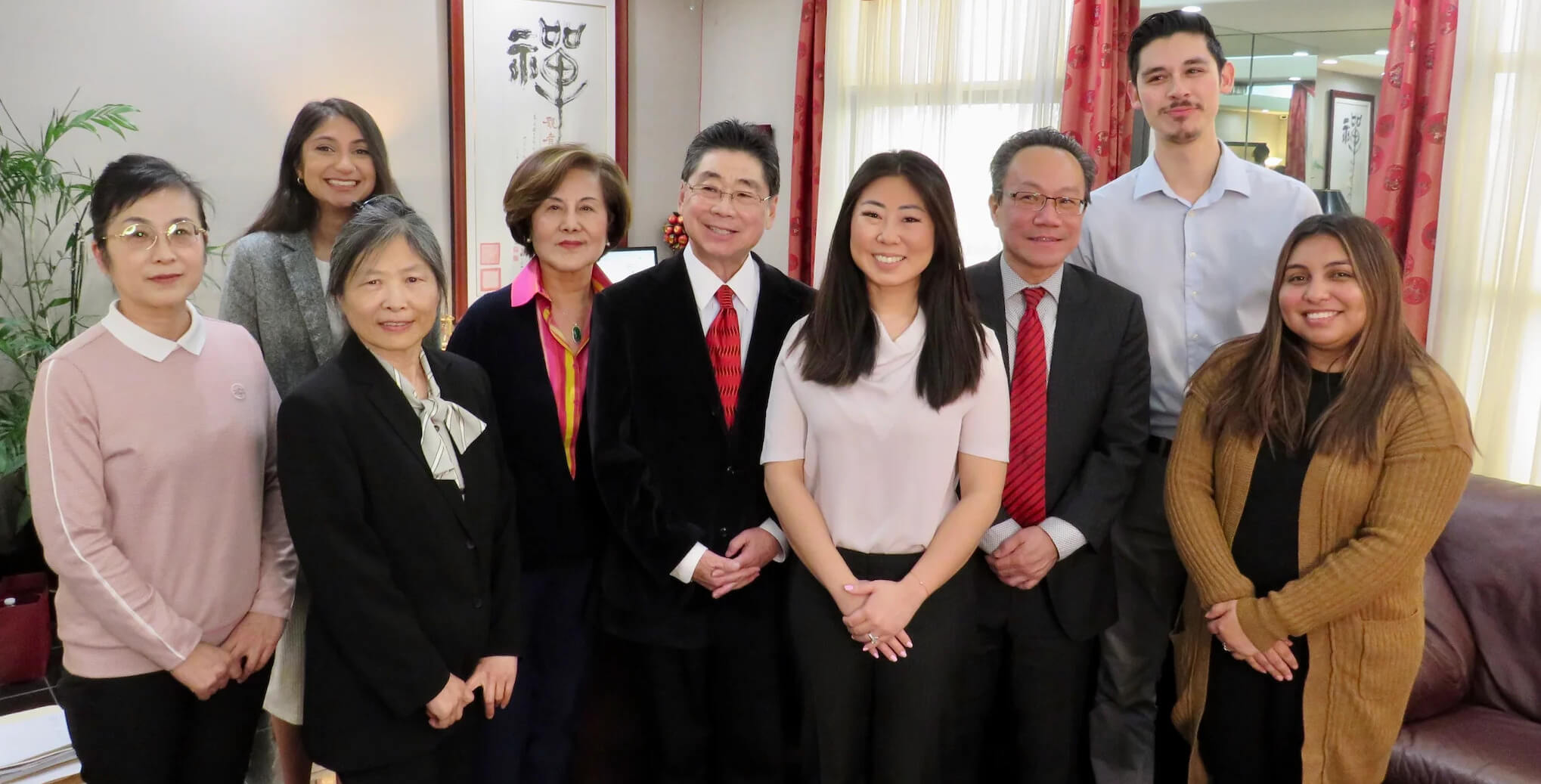

Why Choose Us?

  • Unmatched Expertise

    Trust in Peter Chu's 75+ years of collective experience to guide you through complex immigration matters.

  • Tailored Solutions

    Our personalized strategies adapt to your unique circumstances, ensuring we meet your specific immigration needs.

  • Proven Success

    Benefit from our solid track record in achieving favorable outcomes in various immigration cases across San Diego.

  • Dedicated Service

    Experience our client-first approach that ensures constant support and guidance throughout your immigration journey.

Compton, CA is home to over 96,000 residents, many from immigrant families navigating complex visa processes to reunite with spouses and children. For families pursuing F-2A status. The derivative visa category for spouses and unmarried children under 21 of lawful permanent residents. The difference between approval and denial often hinges on understanding priority date calculations, aging-out protections under the Child Status Protection Act, and proof of bona fide relationship documentation. Law office of Peter Darwin Chu has represented F-2A applicants throughout Los Angeles County since establishing practice, providing Compton families with counsel on consular processing, adjustment of status pathways, and visa bulletin interpretation that directly affects when dependents can join their permanent resident sponsors.

Book a Consultation

Law office of Peter Darwin Chu is a California-licensed immigration law firm serving Compton residents with F-2A attorney services. Representing spouses and unmarried children of lawful permanent residents through adjustment of status and consular processing. We handle priority date tracking, CSPA age-out calculations, and I-485 concurrent filing strategies for families navigating the second-preference family-based visa category with wait times currently averaging 2–3 years depending on country of chargeability.

F-2A Attorney Services Available Across Compton and Surrounding Areas

Law office of Peter Darwin Chu represents F-2A visa applicants throughout Compton, CA, including families in the Central Compton, Enterprise, and Richland Farms neighborhoods across zip codes 90220, 90221, 90222, 90223, and 90224. All California residents with qualifying family-based immigration cases are eligible for representation regardless of county, with particular experience serving Los Angeles County families navigating USCIS service center processing timelines and consular interview preparation.

What Compton F-2A Visa Applicants Can Access

F-2A Spouse Visa Representation

For spouses of lawful permanent residents, we prepare Form I-130 petitions with comprehensive relationship evidence packages. Marriage certificates, joint financial documentation, photographs spanning the relationship timeline, and affidavits from witnesses. Compton applicants benefit from our experience with USCIS fraud detection patterns and common RFE triggers, particularly in cases involving short courtships or significant age disparities. Once priority dates become current under the Department of State Visa Bulletin, we guide families through adjustment of status (Form I-485) if the spouse is already in the United States, or consular processing through the National Visa Center if abroad. Typical F-2A spouse processing timelines range from 24–36 months from petition filing to green card issuance, though this varies by country and USCIS workload.

F-2A Children and CSPA Protection

Unmarried children under 21 of permanent residents face a critical age-out risk: if the child turns 21 before the priority date becomes current, they age out of the F-2A category and fall into F-2B (unmarried adult children), which carries significantly longer wait times. The Child Status Protection Act (CSPA) provides limited relief by freezing the child's age on the date the I-130 petition is approved. Not filed. Minus the number of days the petition was pending. For Compton families, we calculate CSPA age at case intake, advise on the strategic timing of I-130 filing, and monitor visa bulletin movement to maximize the window for timely adjustment or consular processing before the child ages out.

Adjustment of Status vs. Consular Processing Strategy

F-2A beneficiaries already in the United States on valid nonimmigrant status (such as F-1 students or B-1/B-2 visitors) may be eligible to adjust status domestically once their priority date is current and a visa number is available. This path allows the applicant to remain in the U.S. during processing, apply for work authorization (Form I-765) and advance parole travel permission (Form I-131) while the I-485 is pending, and avoid the risks and delays of consular interviews abroad. Alternatively, beneficiaries living outside the U.S. must complete consular processing through a U.S. embassy or consulate in their home country, which involves medical examinations, police certificates, and in-person interviews. We evaluate both pathways based on the applicant's current immigration status, criminal history, prior unlawful presence, and country-specific consular processing timelines to recommend the strategy most likely to succeed.

Get clear, expert legal guidance tailored to your visa, green card, or citizenship needs.

Licensed California Immigration Counsel Serving Compton

Law office of Peter Darwin Chu maintains all required California state bar licenses and professional liability insurance, operating in full compliance with California Business and Professions Code Section 6125 and American Bar Association Model Rules of Professional Conduct governing attorney-client relationships. We provide written fee agreements detailing scope of representation, cost structure, and client obligations before any engagement begins. Compton families benefit from our adherence to USCIS Practice Manual guidelines, Department of State Foreign Affairs Manual consular processing standards, and ethical obligations under 8 CFR Part 1003 governing practice before immigration courts and the Board of Immigration Appeals.

Inquire now to check if you qualify

What if my spouse filed an I-130 for me as an F-2A beneficiary in Compton, but I entered the U.S. without inspection — can I still adjust status?

Entering without inspection (EWI). Crossing the border without presenting yourself to a Customs and Border Protection officer. Generally disqualifies you from adjusting status under INA Section 245(a), even if you have an approved I-130 and a current priority date. The primary exception is INA Section 245(i), which allows adjustment for EWI entrants if an I-130 or labor certification was filed on or before April 30, 2001, and the applicant can prove physical presence in the U.S. on December 21, 2000. Without 245(i) eligibility, F-2A beneficiaries who entered without inspection must typically leave the U.S. and complete consular processing abroad. Which triggers the 3-year or 10-year unlawful presence bars under INA 212(a)(9)(B) if they accrued more than 180 days of unlawful presence. Compton applicants in this situation should consult an attorney before departing the U.S. to evaluate whether an I-601A provisional waiver (filed before departure) can overcome the unlawful presence bar and allow consular processing to proceed.

What if my child turns 21 while we're waiting for the F-2A priority date to become current in Compton?

If your child turns 21 before the priority date becomes current, they 'age out' of the F-2A category and automatically convert to F-2B (unmarried sons and daughters of permanent residents), which has a significantly longer wait. Currently 7+ years depending on country. The Child Status Protection Act (CSPA) provides partial protection: the child's age is frozen at the date the I-130 is approved (not filed), minus the number of days the petition was pending with USCIS. If the CSPA calculation yields an age under 21, the child remains eligible for F-2A even if their biological age exceeds 21. For Compton families, the key strategy is filing the I-130 as early as possible to start the CSPA clock, requesting premium processing if available to shorten approval time, and closely monitoring the Visa Bulletin to file the I-485 or DS-260 the moment the priority date becomes current. Missing this window by even a few weeks can result in aging out.

What if I'm an F-2A visa holder in Compton and my permanent resident sponsor becomes a U.S. citizen — does that help or hurt my case?

When your permanent resident sponsor naturalizes to U.S. citizenship, your case automatically converts from F-2A (second preference family-based) to IR-2 (immediate relative child) or IR-1 (immediate relative spouse), which are numerically unlimited categories with no visa wait times. This conversion is almost always beneficial: immediate relative petitions do not require waiting for priority dates to become current, and processing timelines are substantially shorter. Typically 12–18 months from filing to green card versus 24–36 months for F-2A. However, the conversion requires filing a new I-130 petition under the immediate relative category; the original F-2A petition does not automatically upgrade. USCIS allows you to retain the original priority date, preserving your place in line, but the new petition must be filed and approved before you can proceed. Compton families should notify their attorney immediately when the sponsor naturalizes to initiate the upgraded petition and avoid unnecessary delays.

What if my F-2A application in Compton is delayed because my spouse's green card was obtained through marriage to a previous U.S. citizen spouse?

If your sponsoring permanent resident obtained their green card through marriage to a U.S. citizen and that green card is less than five years old, you face additional scrutiny under the 'widow penalty' provision of INA Section 204(a)(2)(A). USCIS will require evidence that the sponsor's previous marriage was bona fide and terminated by death, divorce, or annulment. Not fraud or immigration violation. Before approving a new I-130 for you. This scrutiny applies even if the sponsor has since remarried and the current marriage to you is clearly legitimate. Compton applicants in this situation should expect longer processing times, potential Requests for Evidence (RFEs) demanding comprehensive documentation of the sponsor's prior marriage and divorce, and possible interviews. The key to overcoming this hurdle is submitting front-loaded evidence at the time of I-130 filing: certified divorce decrees, photographs and travel records from the prior marriage, joint lease or mortgage documents, and affidavits from witnesses who knew both spouses during the prior relationship.

Comparing F-2A Immigration Paths: Attorney Representation vs. DIY Filing vs. Notario Services in Compton

Compton families pursuing F-2A visas face three common paths: hiring a licensed immigration attorney, filing pro se (do-it-yourself), or using unlicensed 'notario' services that advertise low-cost immigration help. Here's the honest answer: F-2A cases involve priority date calculations, CSPA age-out risk management, unlawful presence bar analysis, and consular processing interview preparation. All areas where a single procedural error or missed deadline can delay family reunification by years or trigger permanent inadmissibility. Licensed attorneys provide strategic case evaluation, represent clients before USCIS and immigration courts, and carry professional liability insurance. DIY filing saves upfront cost but places the burden of regulatory interpretation, evidence compilation, and RFE response entirely on the applicant. A viable path for straightforward cases with no complicating factors. Notarios, despite the misleading title, are not attorneys and are prohibited from providing legal advice under California Business and Professions Code Section 6125; many notario fraud cases result in denied petitions, wasted fees, and removal proceedings.

PathLegal RepresentationCSPA CalculationRFE ResponseCostProfessional Assessment
Licensed AttorneyFull representation before USCIS, NVC, consulatesAttorney calculates CSPA age and monitors visa bulletinAttorney drafts legal argument and compiles evidence$2,500–$5,000 + filing feesBest for cases with age-out risk, prior unlawful presence, or consular processing complexity
Pro Se (DIY)None. Applicant represents selfApplicant must interpret CSPA statute and calculate independentlyApplicant drafts response without legal trainingFiling fees only ($535 I-130 + $1,225 I-485)Viable only for simple cases: beneficiary in U.S., no immigration violations, no age-out concern
Notario ServiceUnauthorized practice of law. No legal authorityForm-filling only, no legal analysisCannot provide legal advice or argue before USCIS$500–$1,500 (often results in denials requiring costly fixes)High risk: notario fraud is common in immigrant communities; avoid entirely
Online Form ServicesNo representation. Software generates formsNo case-specific adviceNo RFE support$200–$800 + filing feesUseful only for document organization; does not replace legal counsel

Get in touch

Frequently Asked Questions

Find answers to common questions about our services

  • F-2A processing timelines in 2026 average 24–36 months from I-130 filing to green card issuance, though this varies by country of chargeability and USCIS service center workload. The timeline consists of three phases: I-130 processing (6–12 months), waiti

  • An F-2A spouse petition requires: the sponsor's green card (both sides), marriage certificate with certified English translation if issued abroad, proof of termination of any prior marriages (divorce decrees or death certificates), sponsor's proof of U.S.

  • F-2A beneficiaries cannot work in the United States until they receive employment authorization, which becomes available only after filing Form I-765 (Application for Employment Authorization) concurrently with or after filing Form I-485 (adjustment of st

  • If USCIS denies an I-130 petition, you receive a written denial notice specifying the grounds. Typically insufficient evidence of relationship, fraud concern, or sponsor ineligibility. You have two options: file a motion to reopen or reconsider within 30

  • Consular processing does not require an attorney, but legal representation significantly reduces the risk of visa denial at the embassy interview. Common denial grounds include failure to overcome unlawful presence bars, missing civil documents, insuffici

  • No. The F-2A category covers only unmarried children under 21 of lawful permanent residents. If your child is married or over 21, they fall into category F-2B (unmarried sons and daughters over 21) with wait times of 7+ years, or they are ineligible entir

  • F-2A is the U.S. immigration category for spouses and unmarried children under 21 of lawful permanent residents (green card holders), classified as second preference family-based under INA Section 203(a)(2)(A). This category is numerically limited. Approx

  • CSPA age is calculated as: the child's biological age on the date the I-130 petition is approved, minus the number of days the I-130 was pending with USCIS. If the resulting age is under 21, the child qualifies for F-2A even if their current biological ag

Need Personalized Immigration Guidance?

Law office of Peter Darwin Chu provides F-2A attorney services to Compton families through licensed California immigration counsel, offering adjustment of status and consular processing representation with priority date tracking, CSPA age-out protection analysis, and USCIS RFE response for spouses and children of lawful permanent residents.

Related Immigration Services for Compton Families

Compton families navigating family-based immigration often benefit from exploring related visa categories and legal services. If you're a U.S. citizen (rather than permanent resident) petitioning for a spouse or child, review our IR-1 Visa Family and IR-2 Visa Unification pages for immediate relative petitions with no priority date wait. Permanent residents seeking naturalization to upgrade their family petitions to immediate relative status can consult our Citizenship services. For F-2A beneficiaries currently in the U.S. on student status, see our F-1 Visa page for maintaining lawful status during the adjustment of status process. Additional location-specific resources include our National City Citizenship Attorney and Citizenship Attorney In San Marcos Ca pages for families throughout Southern California.

Speak With Us Today