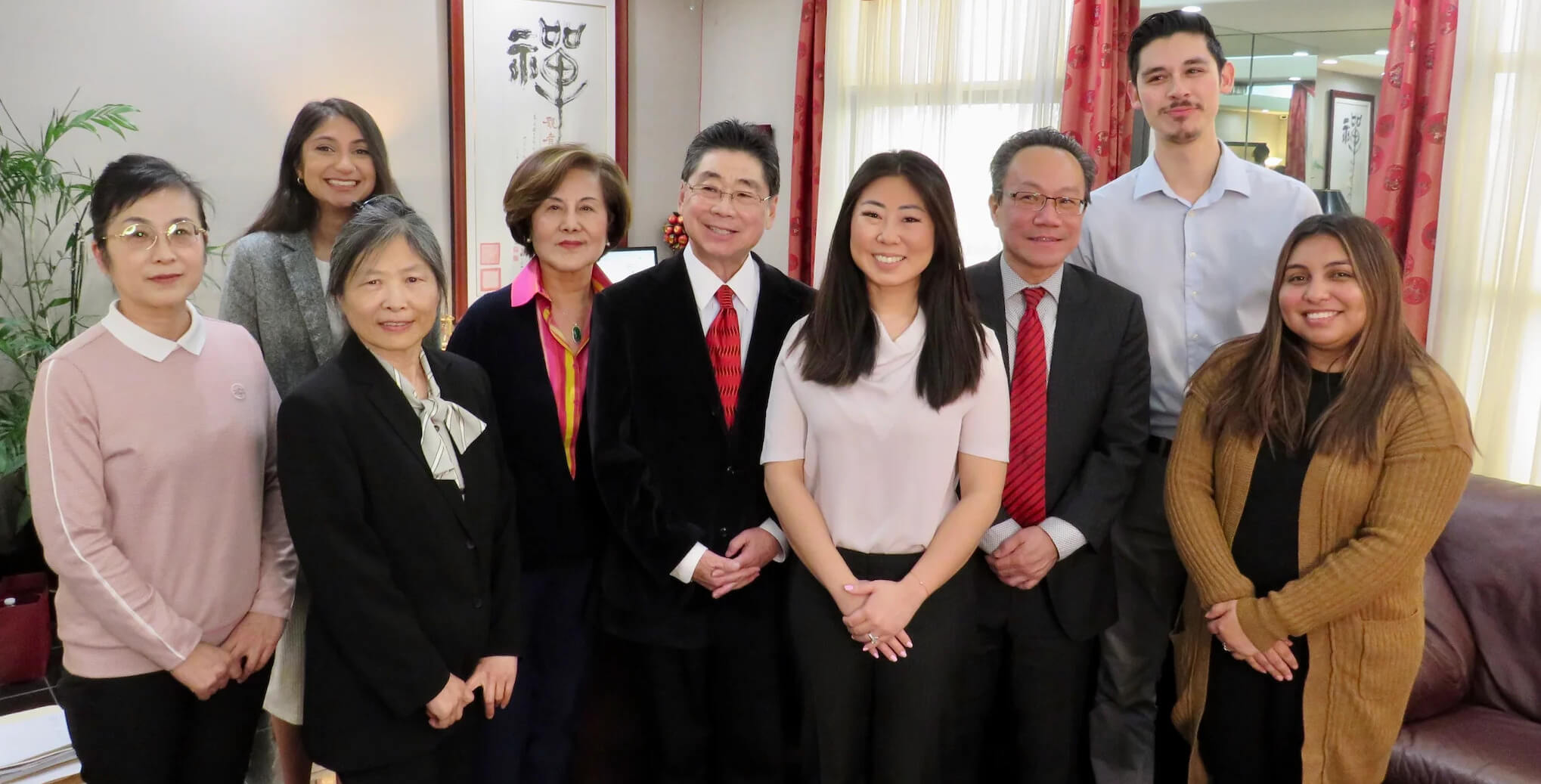

Why Choose Us?

  • Unmatched Expertise

    Trust in Peter Chu's 75+ years of collective experience to guide you through complex immigration matters.

  • Tailored Solutions

    Our personalized strategies adapt to your unique circumstances, ensuring we meet your specific immigration needs.

  • Proven Success

    Benefit from our solid track record in achieving favorable outcomes in various immigration cases across San Diego.

  • Dedicated Service

    Experience our client-first approach that ensures constant support and guidance throughout your immigration journey.

Cupertino, CA is home to over 60,000 residents—many with family members navigating F-2A dependent visa applications to reunite with lawful permanent residents. For families across Cupertino seeking to bring spouses or minor children to the United States under the F-2A category, the difference between approval and administrative delay often hinges on correctly documenting the qualifying relationship and meeting USCIS evidentiary standards. Law office of Peter Darwin Chu has served immigration clients throughout Santa Clara County with precise F-2A petition preparation, priority date tracking, and consular processing support tailored to the unique timelines and documentation requirements of family-based second preference cases.

Book a Consultation

Law office of Peter Darwin Chu provides F-2A attorney services to Cupertino residents—handling dependent visa petitions for spouses and children of lawful permanent residents, with same-week case evaluations, Form I-130 preparation, and consular interview guidance throughout Santa Clara County. Our practice focuses exclusively on immigration law, ensuring every F-2A application meets current USCIS adjudication standards and National Visa Center processing requirements for family reunification cases.

F-2A Attorney Cupertino Services Available Across Cupertino and Surrounding Areas

Law office of Peter Darwin Chu represents F-2A visa applicants throughout Cupertino, CA—including residents in the Monta Vista, Rancho Rinconada, and Cupertino Village neighborhoods (zip codes 95014 and 95015). All California families with qualifying lawful permanent resident petitioners are eligible for representation regardless of county, with dedicated support for Santa Clara County filers navigating the San Jose USCIS field office and consular processing timelines.

What Cupertino Families Seeking F-2A Dependent Visas Can Access

Form I-130 Petition Preparation for F-2A Spouses & Children

The I-130 Petition for Alien Relative is the foundational filing for F-2A cases, establishing the qualifying relationship between the lawful permanent resident petitioner and the dependent spouse or unmarried child under 21. We prepare complete I-130 packets with certified translations of foreign marriage certificates and birth records, USCIS-compliant passport photos, and evidence of the petitioner's lawful permanent resident status—ensuring every documentary element meets adjudication standards before submission. For Cupertino residents filing through the California Service Center, proper I-130 preparation reduces the risk of Requests for Evidence (RFEs) that can delay priority date retention and consular processing scheduling.

Priority Date Tracking & Visa Bulletin Monitoring

F-2A cases are subject to annual numerical limits under INA §203(a)(2), meaning beneficiaries must wait for their priority date (the I-130 filing date) to become current before proceeding to consular processing or adjustment of status. We provide monthly Visa Bulletin monitoring, priority date advancement alerts, and strategic timing guidance for families deciding between consular processing and adjustment of status based on current wait times—critical for Cupertino families managing employment, school enrollment, or housing timelines around expected visa issuance dates.

Consular Processing Support & Interview Preparation

Once the National Visa Center (NVC) schedules a consular interview for the F-2A beneficiary, we provide country-specific interview preparation, DS-260 application review, Affidavit of Support (Form I-864) compliance verification, and pre-interview document checklists tailored to the consular post's known evidentiary preferences. For beneficiaries interviewing at high-volume posts where administrative processing delays are common, we advise on expedite request eligibility and post-interview follow-up procedures to minimize visa issuance delays.

Get clear, expert legal guidance tailored to your visa, green card, or citizenship needs.

Licensed Immigration Counsel Serving Cupertino, CA Families

Law office of Peter Darwin Chu maintains all required California State Bar licenses and operates in full compliance with federal immigration practice standards under 8 CFR §292.1. We provide written fee agreements for all F-2A representation outlining the scope of services, case milestone timelines, and USCIS filing fee responsibilities—ensuring transparency at every stage of the family reunification process. Our practice adheres to confidentiality standards under California Business and Professions Code §6068(e) and maintains professional liability coverage for all immigration matters handled on behalf of Cupertino residents and their dependent family members abroad.

Inquire now to check if you qualify

What if my spouse's F-2A priority date has been current for three months, but we haven't received an NVC case number in Cupertino?

If your F-2A priority date has been current for 90+ days without receiving a National Visa Center (NVC) case number, the most common cause is that USCIS has not yet forwarded your approved I-130 petition to NVC—a transfer that should occur within 30 days of approval but can be delayed during high-volume processing periods. Contact the USCIS Contact Center at 1-800-375-5283 to request a case status inquiry, referencing your I-130 receipt number and the approval notice date. If USCIS confirms the petition was forwarded, contact NVC directly via their public inquiry form to request case number assignment. For Cupertino families facing school enrollment or lease signing deadlines, we escalate unassigned cases through congressional inquiry when administrative delays exceed 120 days, as prolonged NVC intake delays can cause beneficiaries to lose priority date currency if retrogression occurs before visa interview scheduling.

What if my child turns 21 before their F-2A visa interview is scheduled in Cupertino?

If your unmarried child beneficiary turns 21 before their F-2A visa is issued, they may "age out" of the F-2A category and automatically convert to the F-2B category (unmarried adult children of lawful permanent residents), which has significantly longer wait times—currently 7+ years in most cases. However, the Child Status Protection Act (CSPA) may allow the child to retain the earlier F-2A priority date and avoid aging out if the total wait time minus USCIS processing time results in a CSPA age under 21 at the time the priority date became current. CSPA age calculations are complex and jurisdiction-specific; we perform CSPA eligibility analysis for all Cupertino families with beneficiaries approaching their 21st birthday to determine whether adjustment of status or consular processing offers better age-out protection, or whether the petitioner should naturalize to convert the case to the F-1 category (unmarried children of U.S. citizens), which is current in most months.

What if the consulate requests additional financial documentation beyond the I-864 Affidavit of Support for my F-2A case in Cupertino?

Consular officers reviewing F-2A cases have discretion to request supplemental financial evidence if the I-864 sponsor's income appears borderline relative to the 125% of Federal Poverty Guidelines threshold or if the sponsor's tax transcripts show income volatility. Common requests include employer verification letters, recent pay stubs covering the most recent 6 months, bank statements demonstrating liquid assets equal to 5 times the income shortfall, or joint sponsor affidavits if the petitioner's income alone does not meet the threshold. For Cupertino petitioners who are self-employed or earn variable commission income, we recommend submitting business tax returns (Schedule C) and profit-loss statements proactively with the initial I-864 to preempt consular requests. If additional documentation is requested after the interview, you typically have 60–90 days to submit it via the consulate's document upload portal before the case is classified as refused under INA §221(g).

What if my F-2A beneficiary spouse was previously denied a tourist visa—will that affect the immigrant visa application in Cupertino?

A prior B-1/B-2 tourist visa denial does not automatically disqualify your spouse from receiving an F-2A immigrant visa, but the consular officer will review the prior denial reason to determine whether the same grounds of inadmissibility apply. If the tourist visa was denied under INA §214(b) for failure to demonstrate nonimmigrant intent (the most common denial reason), that finding is irrelevant to an F-2A immigrant visa application, where immigrant intent is expected and lawful. However, if the denial was based on misrepresentation, fraud, or a criminal inadmissibility ground, those issues must be resolved—potentially through a waiver application—before the F-2A visa can be issued. For Cupertino families where the beneficiary has any prior visa denial, refusal, or revocation, we request the consular record under the Freedom of Information Act (FOIA) before scheduling the F-2A interview to identify and address any lingering admissibility concerns in advance.

Comparing F-2A Immigration Representation Options for Cupertino Families

Cupertino residents navigating F-2A dependent visa cases face a choice: retain experienced immigration counsel, use a notario or non-attorney document service, or attempt self-filing using USCIS online forms. Here's the honest answer: F-2A cases involving priority date calculations, CSPA age-out risk, or consular processing in countries with high administrative processing rates (India, China, Philippines) require legal analysis that non-attorney services cannot provide—particularly when the beneficiary's eligibility depends on correctly applying the Child Status Protection Act or determining whether the petitioner should naturalize to reclassify the case. Self-filing is appropriate only for straightforward spousal cases where both parties have clean immigration histories, no prior visa denials, and the petitioner's income clearly exceeds 125% of poverty guidelines without needing a joint sponsor.

OptionF-2A ExpertiseCSPA CalculationConsular Processing SupportProfessional Assessment
Experienced Immigration AttorneyExclusive focus on family-based petitions; current with Visa Bulletin retrogression patternsPerforms case-specific CSPA age analysis; advises on naturalization timing to prevent age-outCountry-specific interview prep; expedite request support for administrative processing delaysBest for cases with beneficiaries near age 21, prior visa denials, or joint sponsor requirements
Notario / Document ServiceMay prepare I-130 forms but lacks legal authority to advise on priority date strategy or inadmissibility waiversNo legal training to apply CSPA formula or evaluate naturalization reclassification optionsLimited to form completion; no consular interview preparation or post-interview advocacyHigh risk—unauthorized practice of immigration law under 8 CFR §292.1; cannot represent clients before USCIS or consulates
Self-Filing (DIY)USCIS instructions available but no case-specific guidance on category selection or priority date retentionRequires independent research of INA §203 and CSPA provisions; errors in age calculation are not correctable after filingBeneficiary navigates NVC instructions and consular requirements without legal review; no recourse if documents are rejectedAppropriate only for simple spousal cases with no complicating factors; risky for cases involving minor children or income documentation issues

Get in touch

Frequently Asked Questions

Find answers to common questions about our services

  • F-2A processing timelines in 2026 depend on the beneficiary's country of birth and current Visa Bulletin priority date movement. For most countries, current wait times from I-130 filing to visa issuance range from 18–30 months, though beneficiaries from M

  • F-2A beneficiaries abroad cannot work in the United States while waiting for their immigrant visa—they must remain outside the U.S. until the visa is issued and they complete consular processing. If the beneficiary is already in the United States in valid

  • F-2A applications for unmarried children under 21 require: (1) the approved I-130 petition with USCIS receipt and approval notices, (2) the child's birth certificate showing both parents' names, (3) proof of the petitioner's lawful permanent resident stat

  • Attorney fees for F-2A representation in Cupertino typically range from $2,500–$4,500 for full-service representation covering I-130 preparation, NVC document submission, and consular interview preparation. This is separate from USCIS filing fees ($675 fo

  • If USCIS denies an I-130 petition for an F-2A beneficiary, you receive a written denial notice explaining the reason—most commonly failure to establish the qualifying relationship, inability to prove the petitioner's lawful permanent resident status, or e

  • Yes—if you naturalize as a U.S. citizen while your spouse's F-2A petition is pending or approved but awaiting priority date currency, your spouse automatically converts to the IR-1 immediate relative category (spouses of U.S. citizens), which has no numer

  • Both F-2A categories fall under INA §203(a)(2)—the second preference family-based immigration classification for spouses and unmarried children under 21 of lawful permanent residents. The primary difference is age: F-2A children must be unmarried and unde

  • F-2A beneficiaries can apply for B-1/B-2 tourist visas while their immigrant visa petition is pending, but consular officers apply heightened scrutiny to such applications because the beneficiary has already demonstrated immigrant intent by filing or bein

Need Personalized Immigration Guidance?

Law office of Peter Darwin Chu provides F-2A attorney services to Cupertino, CA families—offering same-week case evaluations, I-130 petition preparation, priority date tracking, and consular processing support for dependent spouses and children of lawful permanent residents throughout Santa Clara County.

Related Immigration Services for Cupertino Residents

Families pursuing F-2A dependent visas may also benefit from our Citizenship services if the lawful permanent resident petitioner is eligible to naturalize—reclassifying the case to the F-1 category and eliminating priority date wait times. For clients with family members in other preference categories, we provide representation for Ir-2 Visa cases (unmarried children of U.S. citizens) and F-1 Visa applications. Cupertino professionals seeking employment-based options can explore our Eb-2 Visa and O-1 Visa Lawyer San Diego services. Additionally, we handle National City Citizenship Attorney, Citizenship Attorney In San Marcos Ca, and J-1 Visa Attorney cases for clients throughout California.

Speak With Us Today