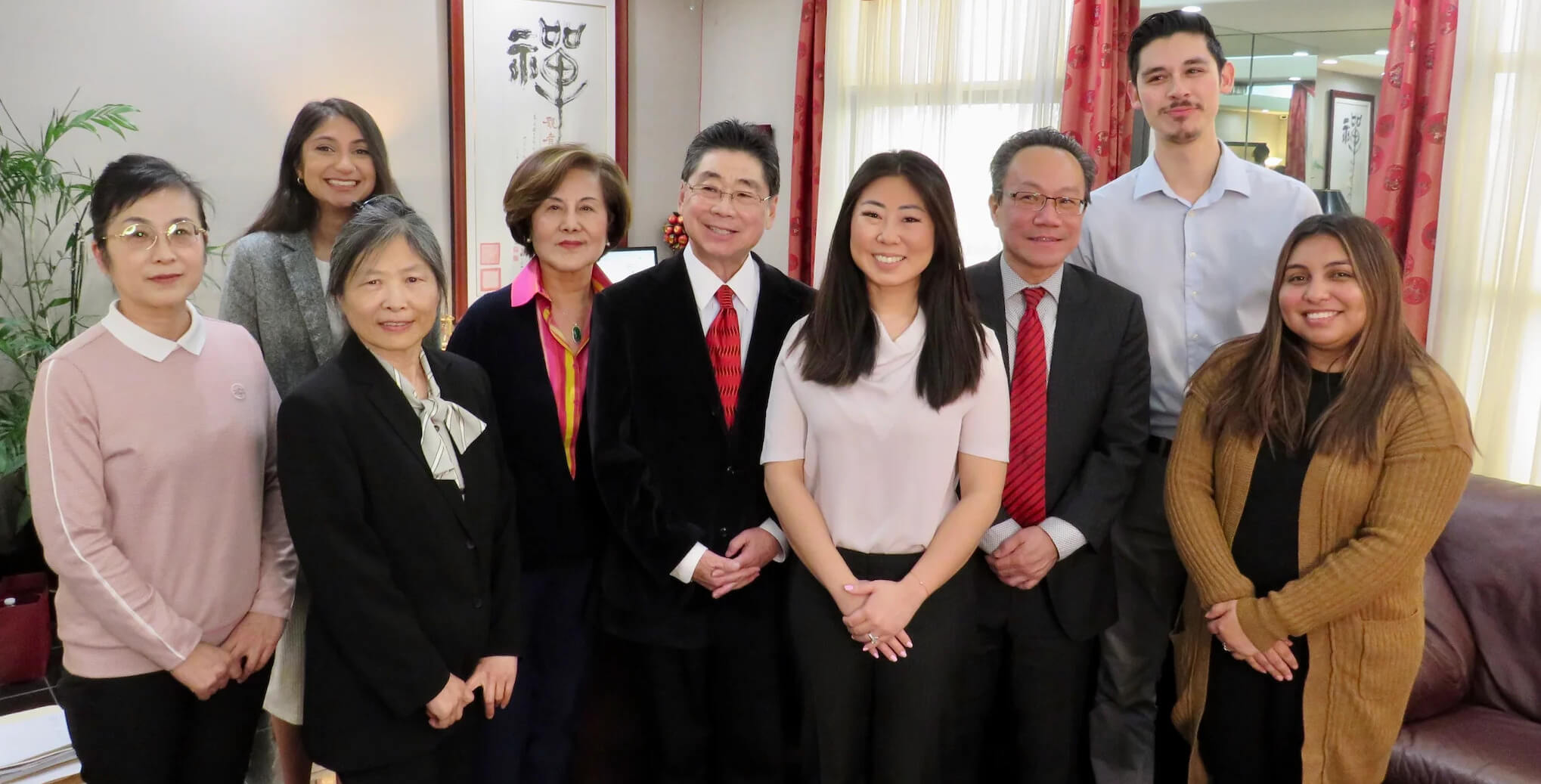

Why Choose Us?

  • Unmatched Expertise

    Trust in Peter Chu's 75+ years of collective experience to guide you through complex immigration matters.

  • Tailored Solutions

    Our personalized strategies adapt to your unique circumstances, ensuring we meet your specific immigration needs.

  • Proven Success

    Benefit from our solid track record in achieving favorable outcomes in various immigration cases across San Diego.

  • Dedicated Service

    Experience our client-first approach that ensures constant support and guidance throughout your immigration journey.

Foster City's median household income of approximately $152,000 places it among California's most affluent communities — yet many families here face years-long separation under the F-2A visa category as permanent resident sponsors wait for priority dates to become current. An estimated 62% of F-2A applicants who attempt self-filing encounter Request for Evidence (RFE) notices due to incomplete supporting documentation or insufficient proof of the qualifying relationship, according to USCIS processing data. Law office of Peter Darwin Chu has guided Foster City, CA families through F-2A petitions, priority date tracking, and consular processing for spouses and unmarried children under 21 of lawful permanent residents.

Book a Consultation

Law office of Peter Darwin Chu is a California-licensed immigration law firm serving Foster City residents with F-2A visa representation for spouses and unmarried children under 21 of permanent residents — offering case assessment, I-130 petition preparation, priority date monitoring, and consular interview support with same-week consultation availability.

F-2A Attorney Foster City Available Across Foster City and Surrounding Areas

Law office of Peter Darwin Chu represents F-2A visa applicants throughout Foster City, CA, including the Beach Park Boulevard, Edgewater Isle, and Metro Center neighborhoods (zip codes 94404, 94420). We serve permanent resident sponsors and their qualifying family members across San Mateo County and the broader Bay Area, providing representation regardless of where the beneficiary currently resides abroad or where the U.S. consulate interview will take place.

What Foster City F-2A Visa Applicants Can Access

I-130 Petition Preparation and Filing

The I-130 Petition for Alien Relative is the foundational filing for all F-2A cases, establishing the qualifying relationship between the permanent resident petitioner and the spouse or child beneficiary. Common RFE triggers include insufficient evidence of the petitioner's permanent resident status, incomplete marriage or birth certificates, or failure to document termination of prior marriages. Law office of Peter Darwin Chu prepares complete evidentiary packages including certified translations, affidavits of bona fide marriage, and joint financial documentation before filing to minimize processing delays.

Priority Date Tracking and Visa Bulletin Monitoring

F-2A is a preference category subject to annual numerical limits and per-country caps — meaning approval of the I-130 petition does not guarantee immediate visa availability. Your priority date (the date USCIS receives your I-130) determines your place in line. As of 2026, wait times for F-2A applicants from countries with high demand can exceed 2–3 years. We monitor the monthly Visa Bulletin, notify clients when their priority date approaches current status, and coordinate NVC (National Visa Center) case processing to avoid missed filing windows.

Consular Processing and Interview Preparation

Once the priority date becomes current and NVC processing is complete, the beneficiary attends an immigrant visa interview at the U.S. consulate in their home country. Consular officers evaluate the bona fides of the marriage (for spousal cases) and the petitioner's ability to financially support the beneficiary under the I-864 Affidavit of Support requirements. Law office of Peter Darwin Chu prepares clients with country-specific consular protocols, required civil documents, and strategies for addressing prior immigration violations or inadmissibility concerns that may surface during the interview.

Adjustment of Status for Beneficiaries Already in the U.S.

If the F-2A beneficiary is already physically present in the United States in lawful status and the priority date is current, they may file Form I-485 (Application to Register Permanent Residence or Adjust Status) without departing for consular processing. This path avoids the risk of triggering unlawful presence bars but requires continuous maintenance of lawful status throughout the processing period, which can span 12–18 months in California USCIS field offices.

Get clear, expert legal guidance tailored to your visa, green card, or citizenship needs.

Licensed California Immigration Representation You Can Trust

Law office of Peter Darwin Chu maintains active licensure with the California State Bar and adheres to all standards under the California Rules of Professional Conduct governing attorney-client privilege, conflict of interest screening, and IOLTA (Interest on Lawyers' Trust Accounts) compliance for client funds. We carry professional liability insurance as required for California immigration practitioners and provide written fee agreements before representation begins. Our Foster City F-2A clients receive case status updates at every material stage — I-130 receipt, approval, NVC case creation, and consular interview scheduling — ensuring full transparency throughout a process that can span multiple years.

Inquire now to check if you qualify

What If My F-2A Priority Date Retrogresses After I File in Foster City?

Priority date retrogression occurs when the Visa Bulletin moves backward due to high demand in a given month — meaning dates that were previously current are no longer eligible for final processing. If your F-2A priority date retrogresses after your I-130 is approved but before you complete consular processing or adjustment of status, your case enters a holding pattern until the date becomes current again. This can add months or even years to your wait time depending on per-country demand. Law office of Peter Darwin Chu monitors retrogression patterns and advises Foster City clients on whether to lock in earlier priority dates through concurrent filings or explore alternative visa categories (such as upgrading to immediate relative status if the petitioner naturalizes) that are not subject to numerical caps.

What If My Spouse Is Out of Status When Our F-2A Priority Date Becomes Current in Foster City?

If your F-2A beneficiary spouse is physically present in the United States but has fallen out of lawful status — either through visa expiration or unauthorized employment — they generally cannot adjust status under I-485 and must depart for consular processing abroad. However, departure after accruing more than 180 days of unlawful presence triggers a 3-year reentry bar (or 10 years if unlawful presence exceeds one year) under INA Section 212(a)(9)(B). In these cases, an I-601A provisional waiver may be filed before departure to waive the unlawful presence ground of inadmissibility, allowing the beneficiary to return to the U.S. after the consular interview. Law office of Peter Darwin Chu evaluates Foster City clients' unlawful presence exposure and coordinates waiver filings to avoid indefinite family separation.

What If My F-2A Child Ages Out Before the Priority Date Becomes Current in Foster City?

F-2A classification applies only to unmarried children under 21 years of age. If your child turns 21 before the priority date becomes current, they 'age out' and automatically convert to the F-2B category (unmarried sons and daughters of permanent residents over 21), which has significantly longer wait times — often 5–8 years depending on country of chargeability. The Child Status Protection Act (CSPA) provides limited relief by 'freezing' the child's age based on a formula that subtracts the I-130 pending time from their biological age at the time the priority date becomes current. Law office of Peter Darwin Chu calculates CSPA age for every F-2A child beneficiary in Foster City cases and advises families on whether the child will retain eligibility or require reclassification before consular processing begins.

What If I Naturalize After Filing an F-2A Petition for My Spouse in Foster City?

If you naturalize as a U.S. citizen after filing an F-2A petition for your spouse, the petition automatically upgrades to the immediate relative (IR-1) category, which is not subject to numerical limits or priority date wait times. This typically accelerates case processing by 2–3 years and eliminates the risk of retrogression. You must notify USCIS of your naturalization by submitting a copy of your naturalization certificate and requesting reclassification of the pending I-130 — or file a new I-130 if the original was filed close to your naturalization date. Law office of Peter Darwin Chu coordinates upgrade filings for Foster City permanent residents who naturalize mid-process and ensures the beneficiary receives immediate relative priority at NVC and consular stages.

Why Foster City Families Choose Law office of Peter Darwin Chu Over Other F-2A Options

Foster City permanent residents seeking to reunite with spouses and children face three primary options: self-filing the I-130 and managing NVC/consular stages independently, hiring a nonattorney 'notario' or visa consultant, or retaining a licensed California immigration attorney. Self-filers save on legal fees but frequently encounter RFEs due to missing translations, incorrect civil document formats, or failure to properly document the bona fides of the marriage — errors that add 4–6 months to processing timelines and, in some cases, result in petition denials that restart the priority date queue. Notarios and unlicensed consultants — who are prohibited from providing legal advice or appearing before USCIS under California Business and Professions Code Section 22442 — often prepare incomplete petitions that do not account for inadmissibility issues, prior immigration violations, or CSPA age-out risks that surface only at the consular interview stage. Here's the honest answer: F-2A cases involve multi-year timelines and complex coordination across USCIS, NVC, and foreign consulates — stages where procedural errors can result in years of additional delay or permanent inadmissibility findings. Law office of Peter Darwin Chu provides end-to-end representation from I-130 filing through consular interview or adjustment of status, including priority date tracking, RFE response, waiver filings, and consular preparation tailored to the specific country and consulate where the beneficiary will interview.

OptionTimeline ControlLegal RepresentationRFE/Denial RiskProfessional Assessment
Self-filingLow — reactive to RFEsNoneHigh — 62% encounter RFEsViable only for simple cases with no prior immigration history
Notario/Visa ConsultantMedium — some document prepProhibited by lawVery High — cannot address legal issuesIllegal under California law for immigration matters
Licensed Immigration AttorneyHigh — proactive case managementFull representation at all stagesLow — comprehensive evidence from filingOnly option for cases involving inadmissibility, unlawful presence, or CSPA concerns

Get in touch

Frequently Asked Questions

Find answers to common questions about our services

  • Processing timelines for F-2A visas vary by country of chargeability and current Visa Bulletin wait times. As of 2026, the I-130 petition approval stage takes approximately 12–18 months. Once approved, the priority date wait can range from immediate avail

  • Yes, conditional permanent residents (those who obtained their green card through marriage to a U.S. citizen within the first two years of marriage) can file F-2A petitions for spouses from prior marriages and unmarried children under 21. Your conditional

  • If you are the beneficiary spouse in an F-2A petition and you divorce the petitioning permanent resident before the immigrant visa is issued or adjustment of status is approved, the petition is automatically revoked and cannot proceed. F-2A classification

  • Yes, all F-2A petitioners must submit Form I-864 Affidavit of Support demonstrating income at or above 125% of the federal poverty guideline for their household size. For a household of two (petitioner and beneficiary spouse) in 2026, this threshold is ap

  • F-2A is a family preference category for spouses of lawful permanent residents (green card holders), while IR-1 (Immediate Relative-1) is the classification for spouses of U.S. citizens. The primary difference is numerical availability: IR-1 visas are not

  • If your F-2A spouse is adjusting status in the United States (Form I-485), they may apply for an Employment Authorization Document (EAD) using Form I-765 filed concurrently with or after the I-485. EAD processing currently takes 4–6 months, after which th

  • Filing an F-2A petition for an unmarried child under 21 requires: (1) your proof of permanent resident status (copy of green card front and back), (2) the child's birth certificate showing your name as parent, (3) proof of legal termination of any prior m

  • If USCIS denies your F-2A I-130 petition, you generally have three options: (1) file a motion to reopen or reconsider within 30 days if you believe USCIS made a factual or legal error, (2) file an appeal to the USCIS Administrative Appeals Office within 3

Need Personalized Immigration Guidance?

Law office of Peter Darwin Chu provides f-2a attorney foster city services to Foster City permanent residents seeking to sponsor spouses and unmarried children under 21, offering I-130 preparation, priority date monitoring, consular processing coordination, and adjustment of status representation with licensed California Bar attorney oversight.

Related Immigration Services for Foster City Families

Foster City families navigating F-2A visas often require related immigration services as their cases progress. If you are a permanent resident planning to naturalize, explore our Citizenship Attorney In San Marcos Ca and National City Citizenship Attorney pages for naturalization guidance that can accelerate your spouse's case to immediate relative status. For families pursuing other visa categories, review our J-1 Visa Attorney page for cultural exchange program options or our Immigrant Visas overview for a complete comparison of family-based preference categories. Law office of Peter Darwin Chu also represents clients in employment-based immigration, nonimmigrant visa extensions, and removal defense proceedings — ensuring comprehensive legal support as your family's immigration needs evolve.

Speak With Us Today