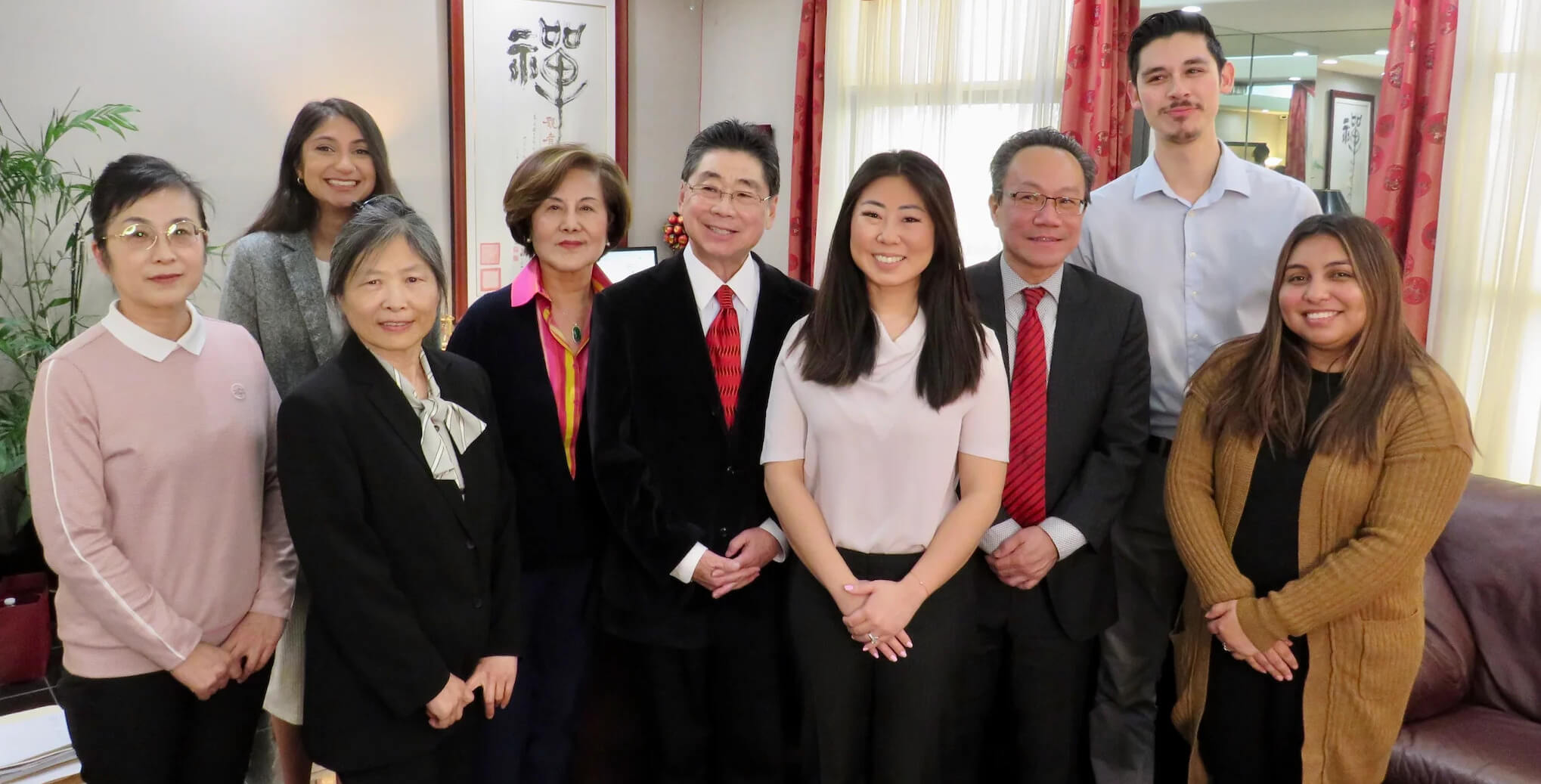

Why Choose Us?

  • Unmatched Expertise

    Trust in Peter Chu's 75+ years of collective experience to guide you through complex immigration matters.

  • Tailored Solutions

    Our personalized strategies adapt to your unique circumstances, ensuring we meet your specific immigration needs.

  • Proven Success

    Benefit from our solid track record in achieving favorable outcomes in various immigration cases across San Diego.

  • Dedicated Service

    Experience our client-first approach that ensures constant support and guidance throughout your immigration journey.

Minneapolis processes over 12,000 immigration filings annually through the Twin Cities USCIS field office, making it Minnesota's highest-volume jurisdiction for family-based immigrant visa petitions. For families navigating F-2A visa processing — the category that reunites spouses and unmarried children under 21 with lawful permanent residents — the difference between approval and Request for Evidence often hinges on documentation precision during initial filing. Law office of Peter Darwin Chu has handled F-2A cases for Minneapolis, MN families across every stage from I-130 petition filing through consular processing and adjustment of status interviews.

Book a Consultation

Law office of Peter Darwin Chu is a Minnesota-licensed immigration law firm serving Minneapolis residents with F-2A visa representation for spouses and children of permanent residents, offering case-specific filing strategy consultations, USCIS form preparation, and consular interview preparation with no upfront retainer required for initial consultations.

F-2A Attorney Minneapolis Available Across Minneapolis and Surrounding Areas

Law office of Peter Darwin Chu represents clients throughout Minneapolis and Hennepin County — including downtown Minneapolis, Uptown, Northeast Minneapolis, and South Minneapolis neighborhoods (zip codes 55400, 55401, 55402, 55403, and 55404) — as well as families across the greater Twin Cities metro area. All Minnesota residents with qualifying F-2A family reunification matters are eligible for representation regardless of county, with consultations available in person or remotely to accommodate work and family schedules.

What Minneapolis F-2A Visa Applicants Can Access

I-130 Petition Filing and Priority Date Protection

The Form I-130 Petition for Alien Relative is the foundation of every F-2A case and establishes the beneficiary's place in the visa queue. In Minneapolis, F-2A petitioners filing in 2026 face an average processing time of 13–18 months at the Nebraska Service Center, with priority date backlogs currently ranging 18–36 months depending on country of chargeability. Law office of Peter Darwin Chu prepares comprehensive I-130 packages that include certified translations of foreign marriage and birth certificates, evidence of the petitioner's permanent resident status, and proof of bona fide relationship documentation designed to survive USCIS scrutiny without triggering Requests for Evidence. Our firm monitors National Visa Center processing timelines specific to Minneapolis-originating cases and advises on case status acceleration options when consular interview backlogs exceed posted timeframes. Learn more about our Immigrant Visas practice.

Adjustment of Status vs. Consular Processing Strategy

F-2A beneficiaries already in the United States face a critical choice: file for adjustment of status domestically under Form I-485, or depart for consular processing at a U.S. embassy abroad. This decision carries immigration consequences that are difficult to reverse once made. Adjustment applicants in Minneapolis file through the Twin Cities field office and typically wait 8–14 months for interview scheduling, but remain in valid status during processing and are eligible for work authorization (Form I-765) and advance parole travel permission (Form I-131). Consular processing applicants return to their home country for visa issuance but face unlawful presence bars if they previously accrued over 180 days of unauthorized stay in the U.S. Law office of Peter Darwin Chu conducts eligibility audits for both pathways and advises Minneapolis families on which route minimizes risk and maximizes timeline efficiency based on the beneficiary's current immigration status and travel history.

F-2A Aging Out Protection and Child Status Protection Act (CSPA)

The single greatest risk in F-2A cases involving children is 'aging out' — when the child turns 21 before visa availability and is reclassified into the slower F-2B category, adding years to the wait. The Child Status Protection Act provides a mathematical formula to 'freeze' the child's age for visa eligibility purposes, but this protection is not automatic and is forfeited if the beneficiary fails to file adjustment or immigrant visa applications within one year of visa availability. Minneapolis families often discover CSPA protection only after receiving National Visa Center notifications, by which time strategic errors may already be locked in. We calculate CSPA age at initial consultation, advise on priority date monitoring, and ensure that every F-2A child beneficiary files required forms within the statutory one-year window to preserve age protection.

Get in touch

Get clear, expert legal guidance tailored to your visa, green card, or citizenship needs.

Licensed Minnesota Immigration Counsel

Law office of Peter Darwin Chu maintains all required Minnesota state and local licenses and professional liability coverage as required under Minnesota Rules of Professional Conduct. Our attorneys are admitted to practice immigration law before the Executive Office for Immigration Review (EOIR) and are authorized representatives in proceedings before USCIS, Immigration and Customs Enforcement (ICE), and U.S. Customs and Border Protection (CBP). All F-2A client consultations are confidential under attorney-client privilege as governed by Minnesota Rule 1.6, and all fee agreements are disclosed in writing before representation begins in compliance with Minnesota Rule 1.5. We do not guarantee visa approval outcomes — immigration decisions rest with USCIS adjudicators and consular officers — but we do guarantee that every Minneapolis F-2A case is handled by an attorney with direct experience in family-based immigrant visa processing under the Immigration and Nationality Act.

Inquire now to check if you qualify

What If My Spouse Just Became a Permanent Resident — How Soon Can I File for F-2A Status in Minneapolis?

You can file Form I-130 the day your spouse receives their green card — there is no waiting period. The sooner you file, the sooner your priority date is established, which determines your place in the visa queue. Filing immediately is especially critical if you have children approaching age 21, since every month of delay increases aging-out risk. Many Minneapolis F-2A petitioners mistakenly believe they must wait until their spouse has held permanent residency for a certain period before filing; this is incorrect. The F-2A category is available to spouses and unmarried children of current lawful permanent residents, regardless of how recently the green card was issued. We recommend filing within 30 days of the petitioner obtaining permanent resident status to protect priority date positioning.

What If I Entered the U.S. Without Inspection — Can I Still Adjust Status in Minneapolis Under F-2A?

In most cases, no. Adjustment of status under Form I-485 requires that the beneficiary was 'inspected and admitted' or 'paroled' into the United States. Entry without inspection (EWI) — crossing the border without presenting yourself to a Customs officer — makes you ineligible for adjustment even if married to a permanent resident, with very limited exceptions under Section 245(i) that apply only to beneficiaries who were the subject of a labor certification or immigrant visa petition filed on or before April 30, 2001. If you entered without inspection, your only path to an F-2A immigrant visa is consular processing abroad, which triggers unlawful presence bars if you accrued more than 180 days of unauthorized stay in the U.S. This is one of the most consequential immigration distinctions, and one where Minneapolis applicants frequently receive incorrect advice from non-attorney preparers. We evaluate your exact entry circumstances and advise on waiver eligibility before any departure decision is made.

What If My F-2A Priority Date Becomes Current While I'm in Minneapolis on a Tourist Visa?

Having a current priority date while in valid B-1/B-2 status does not automatically make you eligible for adjustment of status. USCIS presumes immigrant intent if you entered the U.S. on a nonimmigrant visa and file for adjustment within 90 days of entry, which can result in a finding of visa fraud and denial of the adjustment application. If your priority date becomes current while you are visiting Minneapolis on a tourist visa, the safest course is to depart the U.S. and complete consular processing at the U.S. embassy in your home country, or wait until you have maintained valid B-1/B-2 status for at least 90 days before filing Form I-485. The 90-day rule is a USCIS policy presumption, not a statute, but it carries significant weight in adjudication. We review the timing of your entry, the intent documented at the port of entry, and your activity in the U.S. before advising whether immediate adjustment filing is viable or whether consular processing is the lower-risk path.

What If My Permanent Resident Spouse Naturalizes Before My F-2A Visa Is Approved — Do I Lose My Place in Line?

No, you do not lose your priority date, and in most cases this is an advantageous development. When your spouse naturalizes and becomes a U.S. citizen, you automatically convert from the F-2A category (spouse of permanent resident) to the IR-1/CR-1 category (immediate relative spouse of U.S. citizen), which has no visa quota or waiting period. Your original F-2A priority date is retained for processing purposes, and your case is typically expedited because immediate relative visas are always current. However, if you have children over age 21 listed as derivative beneficiaries on the original I-130 petition, they lose derivative eligibility upon your spouse's naturalization and must be petitioned separately in the F-1 category (unmarried adult children of U.S. citizens), which has a longer wait. Minneapolis families often fail to anticipate this downstream effect when planning naturalization timing. We model both scenarios before advising whether to delay or accelerate the petitioner's naturalization application.

Why Minneapolis Families Choose Experienced F-2A Counsel Over DIY Filing or Notario Services

F-2A petitioners face three main options: self-filing using USCIS forms and instructions, hiring a notario or non-attorney visa consultant, or retaining a licensed immigration attorney. Here's the honest answer: F-2A cases are deceptively simple on the surface — the I-130 form itself is only four pages — but the evidentiary burden is complex, the consequences of error are severe, and the downstream decisions (adjustment vs. consular processing, CSPA age calculation, unlawful presence waiver eligibility) require legal analysis that non-attorneys are not trained to provide and are prohibited by federal law from offering. Notarios in Minneapolis frequently misrepresent their qualifications and provide advice that constitutes unauthorized practice of law under Minnesota Statutes § 481.02, yet families discover this only after receiving denials or Requests for Evidence that could have been avoided with proper legal representation from the outset.

ApproachTimeline to SubmissionLegal Analysis ProvidedError Correction CostProfessional Assessment
Self-Filing1–3 weeksNone — form instructions only$3,000–$8,000 in attorney fees to fix RFEs or denials after the factHigh risk if you have prior immigration violations, unlawful presence, or children near age 21
Notario / Visa Consultant1–2 weeksUnauthorized — illegal under federal lawCase often must be refiled from scratch; original filing fees forfeitedProhibited by law from providing legal advice; high fraud risk
Licensed Immigration Attorney2–4 weeks for comprehensive filingFull eligibility audit, CSPA calculation, unlawful presence analysis, consular vs. adjustment strategyIncluded in representation — errors corrected before filingRequired for cases with any complexity, prior denials, or high aging-out risk
Law office of Peter Darwin Chu2–3 weeks with substantive consultationMinnesota-licensed counsel; case-specific strategy session included; transparent fee agreement under MN Rule 1.5Proactive — we identify and resolve issues during preparation, not after USCIS rejectionBest fit for Minneapolis families seeking experienced, ethical representation with direct attorney access

Frequently Asked Questions

Find answers to common questions about our services

  • Current F-2A processing timelines for Minneapolis-originating cases average 24–40 months from I-130 filing to immigrant visa issuance or adjustment approval, depending on country of chargeability and whether the beneficiary adjusts status domestically or

  • An f-2a attorney minneapolis requires certified copies of the petitioner's green card (front and back), the beneficiary's passport and birth certificate, marriage certificate (if spouse) or birth certificate (if child), and evidence of bona fide relations

  • Yes, if you file Form I-765 (Application for Employment Authorization) concurrently with your Form I-485 adjustment application and USCIS approves it. Current processing times for I-765 work permits in Minneapolis-filed cases average 4–7 months, though re

  • If you are in Minneapolis and your case is processing through consular processing rather than adjustment of status, you will be required to travel to the U.S. embassy or consulate in your home country for the immigrant visa interview. This interview canno

  • Here's the honest answer: not every F-2A case requires attorney representation, but the cost of an initial legal consultation is nearly always lower than the cost of fixing an RFE or denied petition after DIY filing. Straightforward cases with no unlawful

  • F-2A is the category for spouses and unmarried children under 21 of lawful permanent residents (green card holders), while IR-1 is the category for spouses of U.S. citizens. The critical difference is visa availability: IR-1 is an immediate relative categ

  • Yes. Bona fide relationship is only one element USCIS evaluates; F-2A cases can be denied for dozens of other reasons including petitioner's failure to maintain permanent resident status, beneficiary's prior immigration fraud or misrepresentation, crimina

  • Attorney fees for F-2A representation vary based on case complexity but typically range from $2,500 to $5,500 for comprehensive I-130 petition preparation, consular or adjustment filing strategy, and case monitoring through final approval. This fee is sep

Need Personalized Immigration Guidance?

Law office of Peter Darwin Chu provides F-2A attorney services in Minneapolis with licensed Minnesota immigration counsel, offering case-specific filing strategy, USCIS form preparation, and consular processing support for spouses and children of permanent residents seeking family reunification.

Families pursuing F-2A visas in Minneapolis often have related immigration needs that extend beyond the initial I-130 petition. If your spouse is a permanent resident but eligible for naturalization, explore our Citizenship practice to understand how U.S. citizenship can eliminate visa wait times for immediate relatives. For F-2A beneficiaries who may face inadmissibility issues due to prior unlawful presence, our I-601 Waiver services address grounds of inadmissibility before consular interview scheduling. Clients with pending adjustment of status applications in Minneapolis may also benefit from our I-751 Lawyer San Diego resources for conditional residency removal guidance, and those navigating work authorization during F-2A processing can review our general Immigrant Visas overview for employment-based alternatives. Additionally, our Our Law Firm page details attorney credentials and case experience across family-based immigration categories.

Speak With Us Today