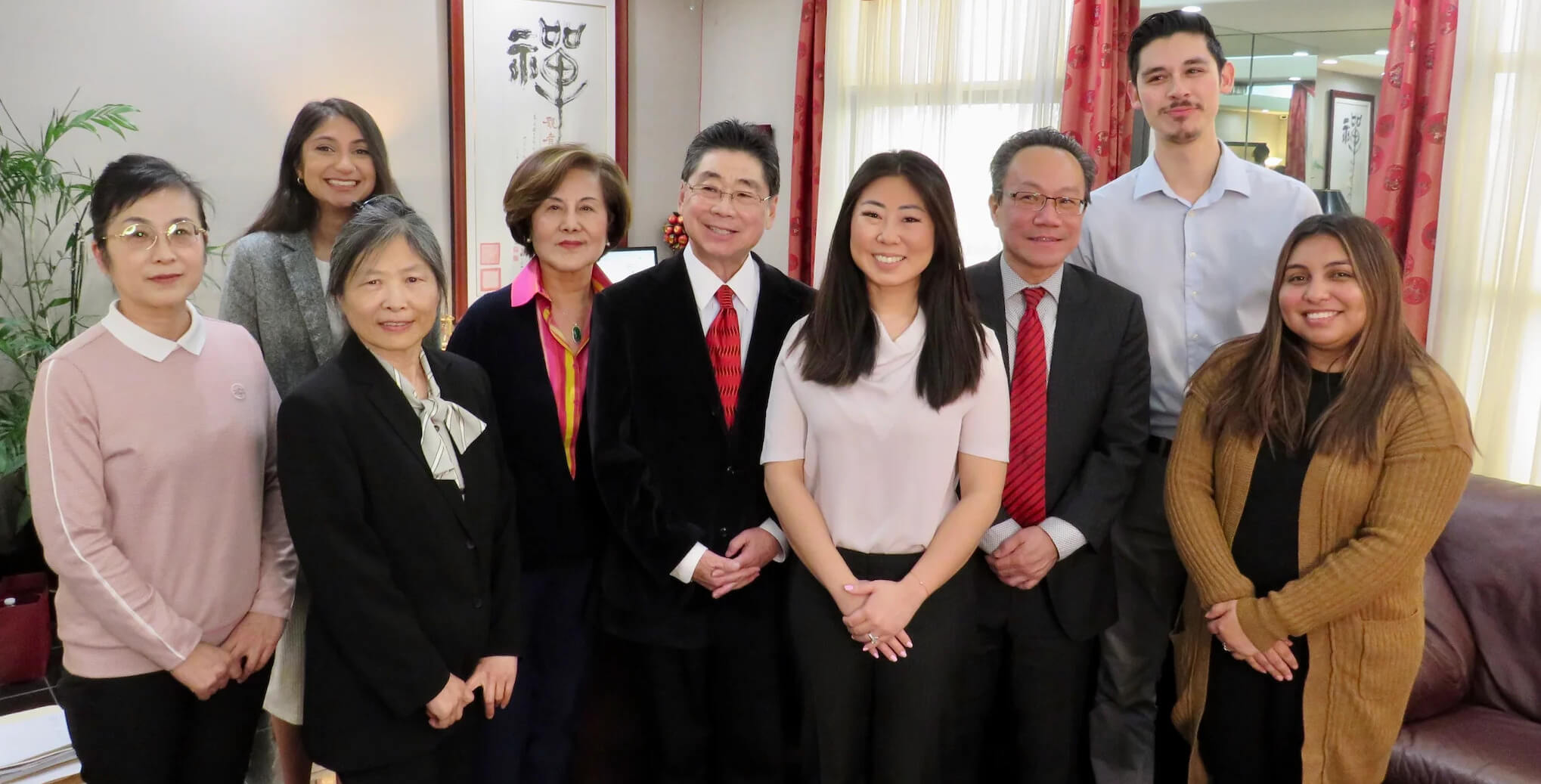

Why Choose Us?

  • Unmatched Expertise

    Trust in Peter Chu's 75+ years of collective experience to guide you through complex immigration matters.

  • Tailored Solutions

    Our personalized strategies adapt to your unique circumstances, ensuring we meet your specific immigration needs.

  • Proven Success

    Benefit from our solid track record in achieving favorable outcomes in various immigration cases across San Diego.

  • Dedicated Service

    Experience our client-first approach that ensures constant support and guidance throughout your immigration journey.

Orange, CA is home to over 140,000 residents, with approximately 38% of the population born outside the United States. Creating one of Southern California's most diverse immigration communities. For families navigating F-2A visa petitions in Orange, the difference between approval and multi-year delays often comes down to documentation quality and filing precision. The Law Office of Peter Darwin Chu has served Orange County immigration clients since 2008, with F-2A petition expertise addressing the specific demands of derivative beneficiary cases where priority date management determines reunification timelines.

Book a Consultation

The Law Office of Peter Darwin Chu provides F-2A attorney services in Orange, CA. Representing spouses and children of lawful permanent residents through the family-based preference system under INA §203(a)(2)(A), with in-person consultations available at our Southern California offices and remote case management for all Orange County zip codes. We specialize in priority date optimization, derivative beneficiary aging-out prevention under the Child Status Protection Act, and adjustment of status timing for F-2A beneficiaries whose priority dates become current.

F-2A Attorney Services Available Across Orange and Surrounding Areas

The Law Office of Peter Darwin Chu serves F-2A immigration clients throughout Orange, California, including the Old Towne Orange Historic District, Orange Park Acres, and East Orange neighborhoods. Zip codes 92613, 92664, 92665, 92666, and 92667. All Orange County residents benefit from the same priority date tracking, I-130 petition preparation, and consular processing coordination that we provide to clients across Southern California's diverse immigration communities.

What Orange Residents Can Access

I-130 Petition for F-2A Beneficiaries

The Form I-130 Petition for Alien Relative is the foundational filing for F-2A cases. Establishing the qualifying family relationship between a lawful permanent resident petitioner and their spouse or unmarried child under 21. For Orange families, the difference between a complete petition and an RFE (Request for Evidence) often lies in documentation quality: civil documents translated and certified to USCIS standards, evidence of the petitioner's continuous LPR status, and proof of bona fide marriage that satisfies USCIS fraud detection protocols. We prepare I-130 petitions with attention to documentary sufficiency that reduces processing delays. National City Citizenship Attorney services include naturalization acceleration for LPR petitioners seeking to upgrade F-2A cases to immediate relative status.

Priority Date Management & Visa Bulletin Tracking

F-2A cases are subject to annual numerical limitations under INA §203(a)(2), creating priority date backlogs that currently exceed two years for beneficiaries from most countries. For Orange families, the critical skill is priority date monitoring. Tracking monthly Visa Bulletin updates to determine when adjustment of status or consular processing becomes available. We provide F-2A clients with proactive priority date tracking, advance notice when dates approach currency, and expedited filing coordination to prevent aging-out for child beneficiaries protected under CSPA calculations.

Child Status Protection Act (CSPA) Analysis

The Child Status Protection Act provides age freeze protections for derivative beneficiaries. But CSPA calculations are complex, time-sensitive, and frequently misunderstood by families filing pro se. For unmarried children of LPR petitioners in Orange, CSPA eligibility depends on the child's age at the time the priority date becomes current, minus the I-130 petition pending time. A child who ages out of F-2A eligibility (turning 21 or marrying) before the priority date becomes current may lose derivative beneficiary status entirely. Our F-2A Orange practice includes CSPA calculation audits before filing, aging-out risk assessments, and alternative pathway analysis for children approaching the age threshold.

Adjustment of Status vs. Consular Processing

F-2A beneficiaries physically present in the United States in valid nonimmigrant status may be eligible for adjustment of status under INA §245. Avoiding the consular processing pathway and remaining in the U.S. throughout the green card process. For Orange families, the adjustment vs. consular decision depends on the beneficiary's entry history, current status, and CSPA timeline. We counsel F-2A clients on pathway selection, unlawful presence risk, and employment authorization eligibility during adjustment processing. Citizenship Attorney In San Marcos CA resources include naturalization filing for LPR petitioners seeking to convert pending F-2A cases to immediate relative classification.

Get clear, expert legal guidance tailored to your visa, green card, or citizenship needs.

Why Orange Families Trust Our F-2A Practice

The Law Office of Peter Darwin Chu maintains all required California State Bar licenses and professional liability insurance for immigration law practice. Our Orange County F-2A clients benefit from 18 years of family-based immigration experience, including priority date strategy for derivative beneficiaries, consular processing coordination at U.S. embassies worldwide, and motion practice for aged-out beneficiaries seeking CSPA relief. We track all F-2A priority date movement through the Department of State Visa Bulletin, provide written confirmation of filing deadlines, and maintain client communication protocols that prevent missed adjustment windows. Every F-2A petition includes a case management timeline, documentary checklist, and direct attorney access throughout the pendency of the case.

Inquire now to check if you qualify

What if my F-2A priority date in Orange becomes current but my child is about to turn 21?

If your F-2A priority date becomes current in Orange and your child is approaching age 21, immediate CSPA calculation is required to determine whether the child qualifies for age freeze protection. CSPA subtracts the I-130 petition pending time (from filing to approval) from the child's age at the time the priority date becomes current. If the resulting 'CSPA age' is under 21 and the child seeks adjustment or immigrant visa issuance within one year of priority date currency, derivative beneficiary eligibility is preserved. Missing the one-year filing window or miscalculating CSPA age results in loss of F-2A eligibility. We perform CSPA audits for Orange families at the priority date currency threshold, coordinate expedited adjustment filings, and litigate aged-out cases where USCIS has incorrectly applied CSPA protections.

What if the LPR petitioner in my Orange F-2A case naturalizes before the priority date becomes current?

If the lawful permanent resident petitioner in an Orange F-2A case naturalizes to U.S. citizenship before the priority date becomes current, the case automatically converts from F-2A (family preference) to immediate relative classification under INA §201(b). Eliminating the priority date backlog and numerical limitation. For spouses, the case converts to IR-1; for unmarried children under 21, the case converts to IR-2. This conversion requires filing Form I-824 to request automatic conversion or withdrawing the F-2A petition and filing a new immediate relative I-130. Orange families benefit most from strategic naturalization timing. Filing for citizenship as soon as the five-year LPR eligibility period is satisfied to accelerate F-2A beneficiary processing. J-1 Visa Attorney services include waiver representation for J-1 visa holders married to LPRs who are pursuing F-2A classification.

What if my F-2A beneficiary in Orange entered the U.S. without inspection?

If your F-2A beneficiary in Orange entered the United States without inspection (EWI), adjustment of status under INA §245(a) is generally unavailable because EWI entrants do not meet the 'lawful admission' requirement. The primary pathway for EWI F-2A beneficiaries is consular processing abroad. But departure from the U.S. after accruing unlawful presence triggers three-year or ten-year inadmissibility bars under INA §212(a)(9)(B). Orange families in this scenario require unlawful presence calculation, I-601A provisional waiver filing before departure (if the petitioner naturalizes and converts the case to immediate relative), or alternative status pathways such as asylum or U visa that provide adjustment eligibility regardless of entry method. We counsel F-2A Orange clients on EWI pathways, waiver eligibility, and risk mitigation before any international travel.

What if my F-2A petition in Orange receives an RFE for insufficient marriage evidence?

If your F-2A petition in Orange receives a Request for Evidence (RFE) challenging the bona fides of the marriage relationship, USCIS is questioning whether the marriage was entered into for immigration benefit rather than genuine intent to establish a life together. RFE responses require additional documentary evidence: joint bank account statements, lease or mortgage agreements listing both spouses, insurance policies naming the spouse as beneficiary, photographs spanning the relationship timeline, and affidavits from family members with personal knowledge of the marriage. The response deadline is typically 87 days from RFE issuance. Missing the deadline or submitting insufficient evidence results in petition denial and loss of the priority date. We prepare RFE responses for Orange F-2A clients with emphasis on evidentiary sufficiency, fraud indicator rebuttal, and strategic affidavit drafting that satisfies USCIS fraud detection protocols.

Comparing Your Options: F-2A Attorney vs. DIY Filing vs. Notario Services in Orange

Orange families pursuing F-2A immigration visas face three primary options: hiring a licensed immigration attorney, filing pro se using USCIS forms and instructions, or engaging unlicensed 'notario' services common in immigrant communities. Here's the honest answer: F-2A cases involve priority date calculations, CSPA aging-out risk, and adjustment vs. consular pathway decisions that most families filing without counsel misjudge. Resulting in aged-out children, missed filing windows, or unnecessary consular processing delays. Notario services are particularly dangerous: California Business and Professions Code §6125 prohibits non-attorneys from providing legal advice, yet notarios routinely prepare immigration petitions without understanding derivative beneficiary law, charge fees comparable to licensed attorneys, and disappear when cases encounter RFEs or denials. Licensed F-2A counsel in Orange provides priority date strategy, CSPA protection, and accountability through State Bar oversight that no DIY guide or notario can replicate.

OptionCredential VerificationCSPA CalculationPriority Date StrategyProfessional AccountabilityBottom Line
Licensed F-2A Attorney OrangeCA State Bar license, malpractice insurance, USCIS Attorney of RecordFull CSPA audit, aging-out prevention, one-year filing window trackingMonthly Visa Bulletin monitoring, expedited filing coordinationState Bar complaint process, client trust account rulesBest for families with derivative beneficiaries, complex entry history, or aging-out risk
DIY FilingNo credentialSelf-service CSPA calculators (often incorrect)Self-monitoring (high missed-deadline risk)NoneViable only for simple spouse-only cases with no unlawful presence, no prior immigration violations, and no time sensitivity
Notario ServicesNo legal license, prohibited from practicing law under CA B&P §6125None (notarios do not understand CSPA)NoneNo State Bar oversight, no recourse for malpracticeNever recommended. Unlicensed, unaccountable, frequently result in case denial and fee loss

Get in touch

Frequently Asked Questions

Find answers to common questions about our services

  • F-2A visa processing time in Orange depends on two separate timelines: I-130 petition approval (currently 12–18 months at USCIS California Service Center) and priority date wait time (currently 24–30 months from petition filing to priority date currency f

  • F-2A beneficiaries in Orange who file for adjustment of status (Form I-485) after their priority date becomes current may apply for work authorization (Form I-765) as a pending adjustment applicant. Employment Authorization Documents (EADs) are typically

  • F-2A petitions filed in Orange require: proof of the petitioner's lawful permanent resident status (copy of green card front and back), proof of the qualifying relationship (marriage certificate for spouses, birth certificate for children), civil document

  • The F-2A priority date is the date USCIS receives your I-130 petition. It establishes your place in the family preference queue and determines when you become eligible to apply for a green card. Because F-2A visas are subject to annual numerical limits (a

  • F-2A derivative beneficiaries in Orange can attend U.S. colleges while waiting for priority dates to become current, but they must maintain valid nonimmigrant status to do so legally. The most common pathway is F-1 student status, which allows full-time e

  • If an F-2A derivative beneficiary in Orange marries before the green card is issued, the beneficiary immediately loses eligibility under INA §203(a)(2)(A), which limits F-2A classification to unmarried children of lawful permanent residents. Marriage term

  • F-2A cases in Orange do not legally require an attorney. USCIS accepts pro se filings. But the complexity of priority date calculations, CSPA aging-out risk, and adjustment vs. consular pathway decisions means that unrepresented families frequently make e

  • F-2A beneficiaries in Orange who have not yet filed for adjustment of status may travel internationally without jeopardizing the I-130 petition, provided they maintain valid nonimmigrant status and do not trigger unlawful presence bars under INA §212(a)(9

Need Personalized Immigration Guidance?

The Law Office of Peter Darwin Chu provides F-2A attorney services to Orange, California families. Representing spouses and children of lawful permanent residents through I-130 petition filing, priority date tracking, and adjustment of status coordination, with licensed immigration counsel and case management for all Orange County zip codes.

Related Immigration Services for Orange County Families

Orange families navigating F-2A cases may also benefit from our Immigrant Visas practice, which includes all family-based preference categories and employment-based pathways. For LPR petitioners considering naturalization to accelerate F-2A processing, our Citizenship services provide five-year and three-year naturalization filing with N-400 preparation. Clients seeking nonimmigrant alternatives for derivative beneficiaries can explore our Non-immigrant Visas guidance, including F-1 student visas and B-2 visitor status. Additional resources include F-1 Visa representation for children pursuing U.S. education while F-2A petitions are pending, I-601 Waiver services for F-2A beneficiaries with inadmissibility grounds, and Ir-1 Visa Family counsel for cases that convert to immediate relative status after petitioner naturalization.

Speak With Us Today