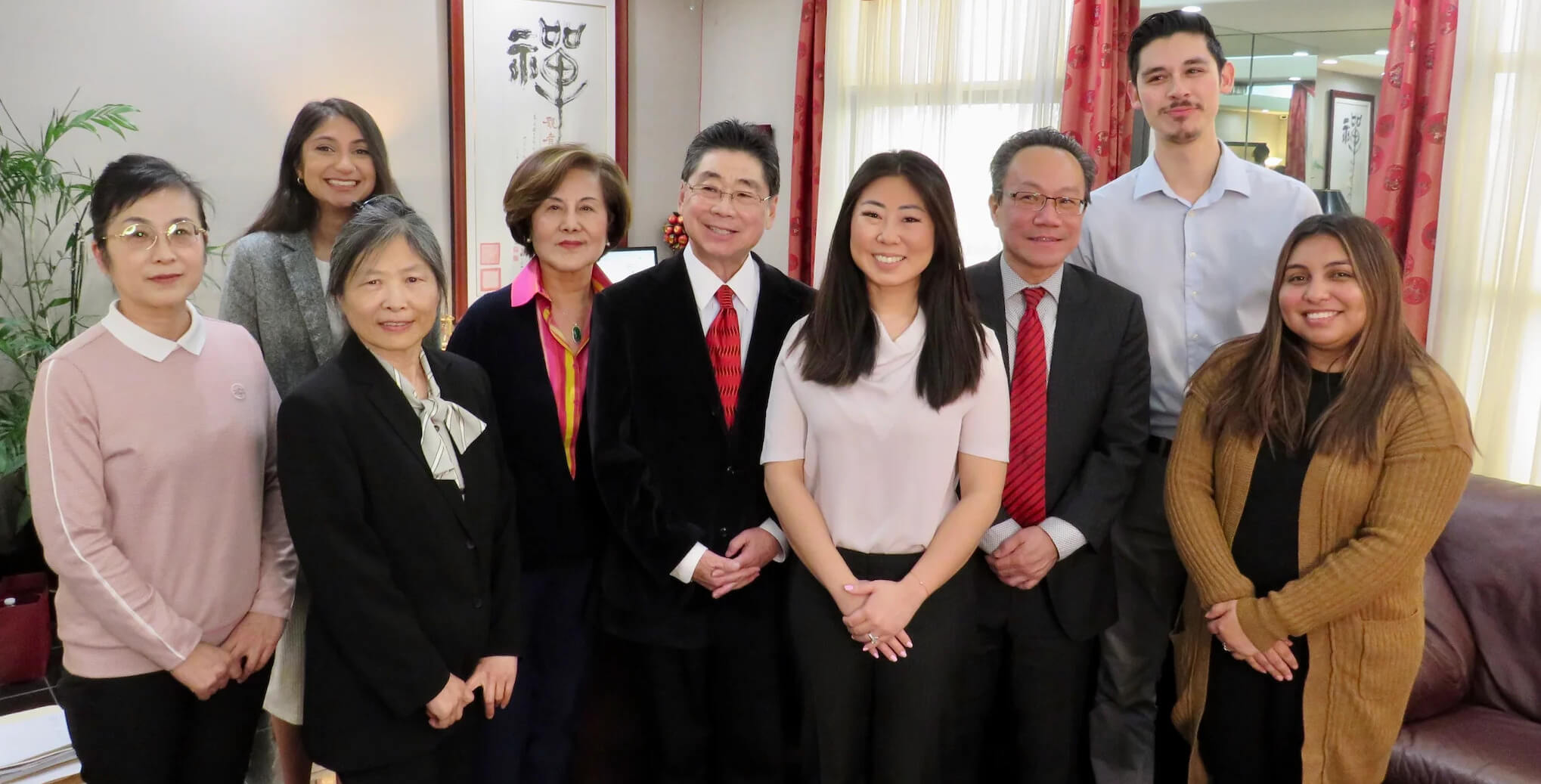

Why Choose Us?

  • Unmatched Expertise

    Trust in Peter Chu's 75+ years of collective experience to guide you through complex immigration matters.

  • Tailored Solutions

    Our personalized strategies adapt to your unique circumstances, ensuring we meet your specific immigration needs.

  • Proven Success

    Benefit from our solid track record in achieving favorable outcomes in various immigration cases across San Diego.

  • Dedicated Service

    Experience our client-first approach that ensures constant support and guidance throughout your immigration journey.

Rancho Cucamonga, CA serves as home to over 178,000 residents, with approximately 34% of the population foreign-born according to recent Census estimates. Making family-based visa applications a frequent necessity for permanent residents seeking to reunite with spouses and children abroad. For families navigating f-2a attorney rancho cucamonga services in Rancho Cucamonga, the difference between a smooth approval and a delayed or denied petition often comes down to documentation accuracy and understanding current USCIS processing priorities. Law office of Peter Darwin Chu has handled hundreds of F-2A derivative visa cases for San Bernardino County families, bringing direct experience with California Service Center protocols and consular processing timelines that directly impact Rancho Cucamonga applicants.

Book a Consultation

Law office of Peter Darwin Chu provides f-2a attorney rancho cucamonga services to permanent residents sponsoring spouses and unmarried children under 21. Offering Form I-130 petition preparation, consular processing guidance, and visa interview preparation with same-week consultation availability throughout Rancho Cucamonga, CA. We handle F-2A cases from petition filing through final visa issuance, addressing priority date tracking, consular appointment scheduling, and RFE responses specific to derivative beneficiary classifications.

F-2A Attorney Rancho Cucamonga Available Across Rancho Cucamonga and Surrounding Areas

Law office of Peter Darwin Chu serves F-2A visa applicants throughout Rancho Cucamonga, CA. Including the Terra Vista, Victoria, and Alta Loma neighborhoods spanning zip codes 91701, 91729, 91730, 91737, and 91739. All San Bernardino County permanent residents with qualifying derivative beneficiaries (spouses or unmarried children under 21) are eligible for representation regardless of their specific community within the Inland Empire region.

What Rancho Cucamonga Families Can Access for F-2A Visa Cases

Form I-130 Petition for F-2A Beneficiaries

We prepare and file Petition for Alien Relative (Form I-130) petitions specific to F-2A classification. The derivative visa category for spouses and unmarried children under 21 of lawful permanent residents. Unlike immediate relative petitions which have no annual numerical cap, F-2A petitions are subject to per-country limits and priority date systems, requiring precise documentation to establish the qualifying relationship and the petitioner's permanent resident status. Rancho Cucamonga families typically see I-130 processing times of 12–18 months at California Service Center, though USCIS processing priorities shift based on agency workload. Each petition package includes certified translations of foreign documents, relationship evidence compilations, and Form I-864 Affidavit of Support preparation to demonstrate financial sponsorship capability.

Consular Processing and NVC Case Management

Once USCIS approves the I-130 petition, the case transfers to the National Visa Center (NVC) for document collection and fee processing before scheduling the visa interview at the U.S. consulate in the beneficiary's home country. We manage the entire NVC phase. Submitting civil documents, financial evidence, and Affidavit of Support packages while tracking case status and responding to NVC document requests. For Rancho Cucamonga petitioners with beneficiaries abroad, coordinating time zone differences and understanding country-specific consular procedures (especially for high-volume posts like Ciudad Juárez, Manila, or Guangzhou) directly impacts interview wait times and approval rates. Our representation extends through visa interview preparation, including mock interview sessions and consular-specific documentation checklists.

Priority Date Tracking and Visa Bulletin Monitoring

F-2A cases are subject to the monthly Visa Bulletin published by the Department of State, which establishes current priority dates for visa availability by preference category and country of chargeability. When demand exceeds the annual numerical limit, priority date retrogression occurs. Meaning beneficiaries must wait until their priority date (the date USCIS received the I-130 petition) becomes current before consular processing can proceed. We provide ongoing priority date monitoring for Rancho Cucamonga families, alerting clients when their case becomes documentarily qualified at NVC and when final action dates advance to permit interview scheduling. For petitioners from countries with historically long backlogs (Mexico, Philippines, India, China), this monitoring service prevents missed interview opportunities and ensures families can act immediately when visa numbers become available.

Adjustment of Status for F-2A Beneficiaries in the U.S.

F-2A beneficiaries already present in the United States in valid nonimmigrant status may be eligible to adjust status to lawful permanent resident without returning to their home country for consular processing, provided a visa number is immediately available. We file Form I-485 (Application to Register Permanent Residence) with supporting evidence of lawful entry, relationship proof, medical examination results, and the required Affidavit of Support. Rancho Cucamonga applicants adjusting status typically attend biometrics appointments at the San Bernardino ASC and interviews at the San Bernardino or Los Angeles USCIS field office. Adjustment cases avoid the consular processing timeline but require maintaining lawful status throughout the pending period and demonstrating admissibility at the final interview stage.

Get clear, expert legal guidance tailored to your visa, green card, or citizenship needs.

Trusted Immigration Representation in Rancho Cucamonga, CA

Law office of Peter Darwin Chu maintains active standing with the California State Bar and complies with all ethical standards established by the American Immigration Lawyers Association (AILA) for family-based immigration representation. We carry professional liability insurance and adhere to USCIS Practice Manual guidelines for attorney representation in I-130 petitions and consular processing cases. Our F-2A practice operates under strict confidentiality protocols required by California Business and Professions Code Section 6068, ensuring all client communications and case documents remain privileged throughout the petition and visa issuance process.

Inquire now to check if you qualify

What if my F-2A petition was filed years ago and the priority date still hasn't become current in Rancho Cucamonga?

Priority date wait times for F-2A cases vary significantly by the beneficiary's country of chargeability. Applicants from countries without backlogs (most of the world) typically see current priority dates within 2–3 years, while applicants from Mexico, the Philippines, India, or China face substantially longer waits due to per-country numerical limits. If your I-130 petition was filed years ago and remains pending at NVC awaiting visa availability, the case stays active indefinitely until a visa number becomes available, provided the underlying relationship remains valid (the beneficiary child has not aged out beyond 21 or married, and the marriage remains intact for spouse beneficiaries). In Rancho Cucamonga, we assist families with Child Status Protection Act (CSPA) calculations to determine whether derivative children retain eligibility despite aging, and we monitor Visa Bulletin movements to predict when interviews will become schedulable. In some situations, the petitioner naturalizing to U.S. citizenship can upgrade the case to immediate relative status (no priority date wait), though this triggers a new I-130 filing requirement.

What if my spouse received an F-2A visa but our child turned 21 before the priority date became current in Rancho Cucamonga?

A derivative child who ages out (turns 21) before the priority date becomes current generally loses F-2A eligibility and must be reclassified into the F-2B category (unmarried adult children of permanent residents), which has a separate and typically longer priority date backlog. However, the Child Status Protection Act (CSPA) provides age-out protection by 'freezing' the child's age for immigration purposes if specific conditions are met: the I-130 petition must have been pending at USCIS for a certain number of months, and that pending time is subtracted from the child's biological age at the time the priority date became current. For Rancho Cucamonga families facing this scenario, we perform detailed CSPA calculations to determine whether the child qualifies for continued F-2A processing or must wait under F-2B priority dates. In cases where CSPA protection does not apply, the permanent resident parent can file a new I-130 petition in the F-2B category, though this resets the priority date to the new filing date and extends the overall timeline significantly.

What if the U.S. consulate denied my F-2A visa application after the interview in Rancho Cucamonga?

Consular visa denials for F-2A applicants typically occur under specific grounds of inadmissibility codified in Immigration and Nationality Act Section 212(a). Most commonly related to prior immigration violations, criminal history, misrepresentation, or public charge concerns based on insufficient financial sponsorship. The consular officer issues a written denial stating the specific section of law under which the visa was refused, and that determination is generally final with very limited appeal options. For Rancho Cucamonga petitioners whose beneficiaries received visa denials, the primary recourse depends on the denial ground: if the denial was based on a waivable inadmissibility (such as unlawful presence triggering 3- or 10-year bars under INA 212(a)(9)(B), certain criminal convictions, or fraud/misrepresentation), we can file a waiver application (Form I-601 or I-601A) demonstrating extreme hardship to the U.S. permanent resident petitioner. If the denial was based on insufficient evidence of the qualifying relationship or financial support, we work with the family to supplement the record and request consular reconsideration with additional documentation. Consular denials are time-sensitive. Visa petition validity expires, and delayed responses can result in having to restart the entire I-130 process with a new priority date.

What if I'm a permanent resident in Rancho Cucamonga but my spouse is currently in the U.S. on a tourist visa?

A beneficiary spouse currently in the United States on a B-2 tourist visa can potentially adjust status to permanent resident through the pending F-2A petition if a visa number is immediately available and they maintain lawful nonimmigrant status throughout the adjustment process. However, entering the U.S. on a tourist visa with preconceived intent to remain permanently and adjust status constitutes visa fraud under INA 212(a)(6)(C)(i). USCIS presumes that any adjustment application filed within 90 days of entry was based on misrepresentation of intent at the time of admission, which can result in denial and a permanent bar from future immigration benefits. For Rancho Cucamonga families in this situation, the safer path is consular processing: the beneficiary returns to their home country, completes the visa interview at the U.S. consulate once the priority date becomes current, and enters the U.S. as a lawful permanent resident on an immigrant visa. If the beneficiary cannot depart (due to unlawful presence accrual or other factors), we evaluate waiver options and alternative relief, but adjustment from tourist status within months of entry carries significant legal risk that must be carefully assessed.

Comparing F-2A Representation Options for Rancho Cucamonga Families

Permanent residents filing I-130 petitions for spouses and children face a choice: handle the process independently, hire a general immigration service (often unlicensed notarios), or retain a licensed California attorney specializing in family-based immigration law. Independent filers avoid legal fees but face USCIS's 700+ page Form I-130 instructions, consular processing timelines that vary by country, and priority date systems that require ongoing Visa Bulletin interpretation. Mistakes in initial filings can result in Requests for Evidence (RFEs), denials, or missed interview deadlines that extend family separation by months or years. Notario services and document preparation businesses are unlicensed to provide legal advice under California Business and Professions Code Section 6125, yet frequently misrepresent their authority and provide incorrect guidance that leads to abandoned cases or inadmissibility findings. Here's the honest answer: F-2A cases involve derivative beneficiary classifications, Child Status Protection Act calculations, priority date tracking, and consular-specific procedures that change based on the beneficiary's country. Elements that require legal analysis, not form completion. A licensed attorney provides end-to-end case management from I-130 filing through visa issuance, responds to RFEs and consular document requests with legally sufficient evidence, and monitors your priority date to ensure no interview opportunities are missed during the multi-year process.

Service TypeHandles Priority Date TrackingResponds to NVC/Consular RFEsCSPA Age-Out AnalysisProfessional Assessment
DIY FilingNo. Applicant must self-monitor Visa Bulletin monthlyNo. Applicant interprets requests aloneNo. Applicant calculates manuallyHigh risk for families with derivative children or extended backlogs
Notario/Document ServiceNo. Not legally permitted to advise on priority datesLimited. Prepares documents but cannot advise on legal sufficiencyNo. Lacks legal authority to perform CSPA calculationsIllegal practice of law in California; no recourse if case fails
Licensed F-2A AttorneyYes. Proactive monitoring with case-specific alertsYes. Legal analysis and evidence compilation for all requestsYes. Detailed CSPA calculations with age-out protection strategiesComprehensive representation from petition through visa issuance

Get in touch

Frequently Asked Questions

Find answers to common questions about our services

  • Total F-2A processing time depends on three sequential stages: I-130 petition adjudication at USCIS (currently 12–18 months at California Service Center), priority date wait time until a visa number becomes available (ranges from immediate availability fo

  • Yes. A lawful permanent resident can petition for a stepchild as an F-2A derivative beneficiary if the marriage to the child's parent occurred before the child turned 18 years old, as required by Immigration and Nationality Act Section 101(b)(1)(B). The s

  • F-2A is the visa category for unmarried children under 21 of lawful permanent residents, and it is subject to annual numerical limits and priority date backlogs depending on the child's country of chargeability. IR-2 is the immediate relative category for

  • Yes. Every family-based immigrant visa petition requires the U.S. petitioner to file Form I-864 Affidavit of Support demonstrating sufficient income or assets to support the intending immigrant at 125% of the federal poverty guideline for the petitioner's

  • If the marriage ends in divorce or annulment before the F-2A beneficiary spouse receives the immigrant visa and enters the United States, the I-130 petition is automatically revoked and the case terminates. There is no 'widow/widower' exception for deriva

  • No. F-2A derivative beneficiaries abroad have no work authorization while waiting for the priority date to become current and the visa interview to be scheduled. If the beneficiary is in the United States in valid nonimmigrant status (such as F-1 student

  • An I-130 petition for an F-2A derivative child requires: (1) proof of the petitioner's permanent resident status (copy of green card front and back), (2) the child's birth certificate showing both parents' names, (3) evidence of the parent-child relations

  • Yes, the beneficiary spouse can apply for a B-2 tourist visa to visit the United States while the I-130 petition is pending, but approval is neither guaranteed nor likely once immigrant intent has been established through the I-130 filing. U.S. consular o

Need Personalized Immigration Guidance?

Law office of Peter Darwin Chu delivers f-2a attorney rancho cucamonga services to permanent residents sponsoring derivative beneficiaries. Providing I-130 petition filing, consular processing coordination, and priority date monitoring with same-week consultation scheduling throughout Rancho Cucamonga, CA and San Bernardino County.

Related Immigration Services for Rancho Cucamonga Families

Permanent residents pursuing F-2A visas may also benefit from our Immigrant Visas practice for other family-based petition categories, or explore pathways to Citizenship that can upgrade derivative beneficiaries to immediate relative status and eliminate priority date backlogs entirely. Families navigating consular processing timelines should review our IR-1 Visa and IR-2 Visa resources for immediate relative classification differences. Rancho Cucamonga residents facing inadmissibility issues during F-2A processing can consult our I-601 Waiver guidance for hardship-based relief options. Our team also handles Non-immigrant Visas for beneficiaries seeking temporary status while F-2A priority dates remain pending. Learn more about Our Law Firm and our family-based immigration practice serving California's Inland Empire.

Speak With Us Today