
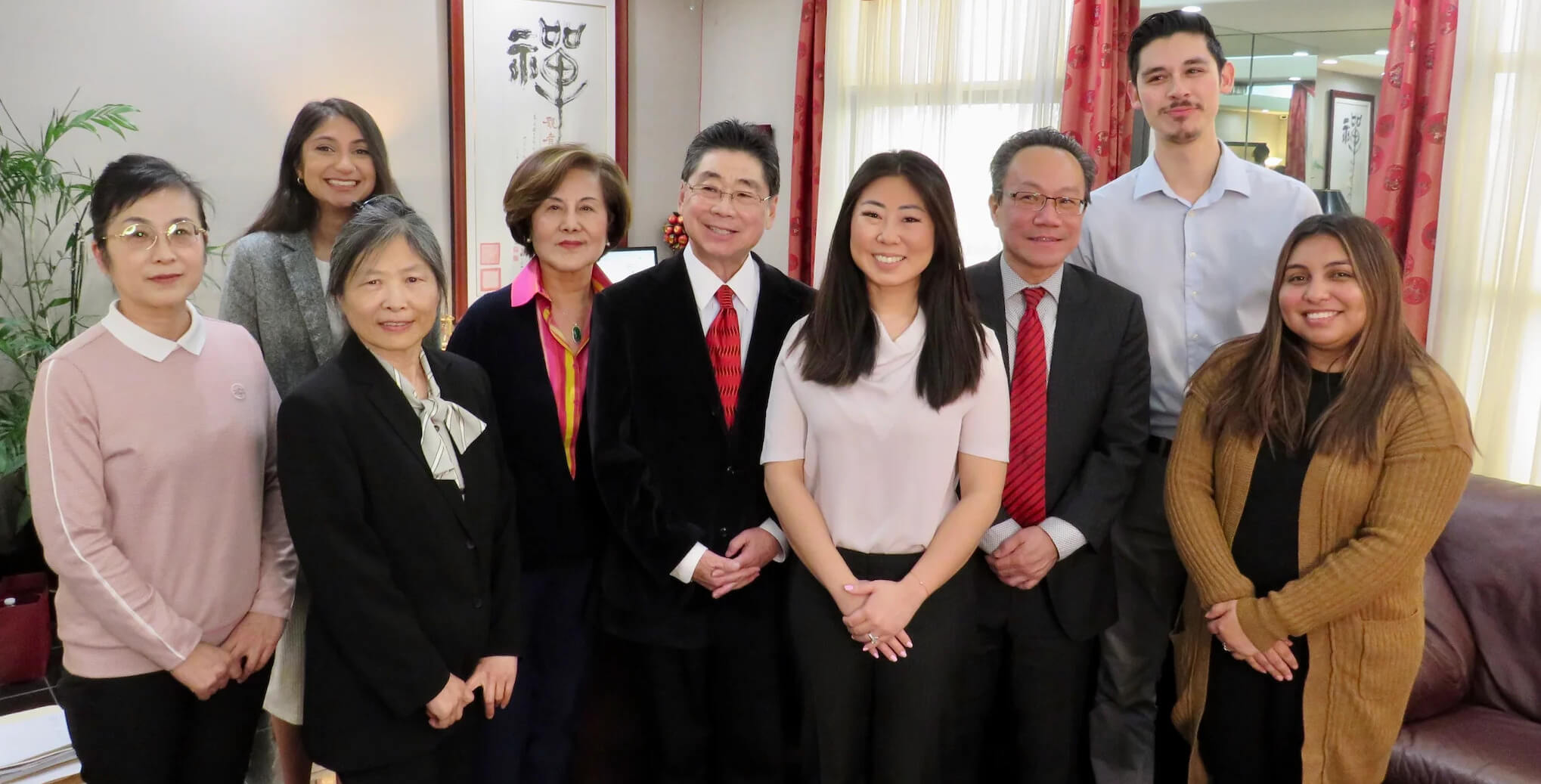
Why Choose Us?
-

Unmatched Expertise
Trust in Peter Chu's 75+ years of collective experience to guide you through complex immigration matters.
-

Tailored Solutions
Our personalized strategies adapt to your unique circumstances, ensuring we meet your specific immigration needs.
-

Proven Success
Benefit from our solid track record in achieving favorable outcomes in various immigration cases across San Diego.
-

Dedicated Service
Experience our client-first approach that ensures constant support and guidance throughout your immigration journey.


Get clear, expert legal guidance tailored to your visa, green card, or citizenship needs.

Inquire now to check if you qualify
Comparing Your F-2A Options: Attorney vs. DIY vs. Notario
F-1 students in Washington DC face three paths when filing F-2A dependent applications: hiring a licensed immigration attorney, self-filing using USCIS forms and instructions, or using unlicensed visa consultants or notarios. Here's the honest answer: F-2A cases have a deceptively simple form (I-539 or DS-160) but require precise documentation of financial support, proof of valid F-1 status, and understanding of dependent eligibility rules under 8 CFR 214.2(f)(15) — areas where a single documentation gap or misstatement of facts triggers RFEs or denials that take months to remedy. Self-filing works for straightforward cases where the F-1 student has clear financial resources and no prior status violations. Notarios and visa consultants are prohibited from practicing immigration law in the United States and cannot represent you before USCIS or at consular interviews — using one creates malpractice risk with no legal recourse.
| Factor | Licensed F-2A Attorney | Self-Filing (DIY) | Unlicensed Consultant | Professional Assessment |
|---|---|---|---|---|
| Legal representation before USCIS | Yes — authorized under 8 CFR 292.1 | No | No — unauthorized practice | Attorney representation is the only pathway with enforceable malpractice liability and bar complaint recourse |
| Financial documentation review | Complete review of I-20, bank statements, sponsor affidavits | Self-review with USCIS instructions | Variable — no licensing standard | Financial sufficiency is the #1 RFE trigger — attorney review identifies gaps before filing |
| Cost | $800–$2,000 (typical range for F-2A cases) | USCIS filing fee only ($370 per I-539 applicant as of 2026) | $300–$800 (no legal protection) | The cost of an RFE response or denied application often exceeds initial attorney fees |
| Outcome guarantee | No ethical attorney guarantees approvals | No recourse if denied | No recourse — and no legal basis for representation | No one can guarantee visa approvals, but only attorneys have enforceable ethical obligations and insurance |
Frequently Asked Questions
Find answers to common questions about our services
-
Consular F-2A visa processing timelines vary by embassy but typically range from 2–8 weeks from interview to visa issuance for straightforward cases. I-539 change-of-status applications filed with USCIS in Washington DC currently average 8–12 months for a
-
Yes — F-2A dependents may engage in full-time or part-time study in the United States without changing status. However, if your spouse wishes to pursue a degree program that requires F-1 status for financial aid, scholarship eligibility, or Curricular Pra
-
USCIS and consular officers require proof that the F-1 student can financially support F-2A dependents without unauthorized employment. Typical documentation includes recent bank statements (last 3–6 months), scholarship or assistantship award letters, sp
-
Yes — multiple F-2A dependents can be included on a single I-539 application with one filing fee plus additional fees per dependent. For consular processing, each F-2A family member must complete a separate DS-160 and pay individual visa fees, but intervi
-
If the F-1 student falls out of status by dropping below full-time enrollment or violating work authorization rules, all derivative F-2A dependents automatically fall out of status as well. There is no grace period for F-2A holders independent of the prin
-
No — F-2A dependents do not receive independent I-20 forms. Their lawful status is derivative of and dependent upon the principal F-1 student's valid I-20 and maintained status. When the F-1 student receives an I-20 extension, F-2A status is automatically
-
No — departing the United States while an I-539 change-of-status application is pending automatically abandons the application. USCIS will issue a denial notice. If your F-2A dependent must travel internationally while I-539 is pending, they must withdraw
-
There is no separate 'F-2A' visa classification in U.S. immigration law — the correct term is F-2, which applies to all dependents of F-1 students regardless of age. The term 'F-2A' is sometimes used informally to distinguish spouses and minor children fr
Need Personalized Immigration Guidance?

