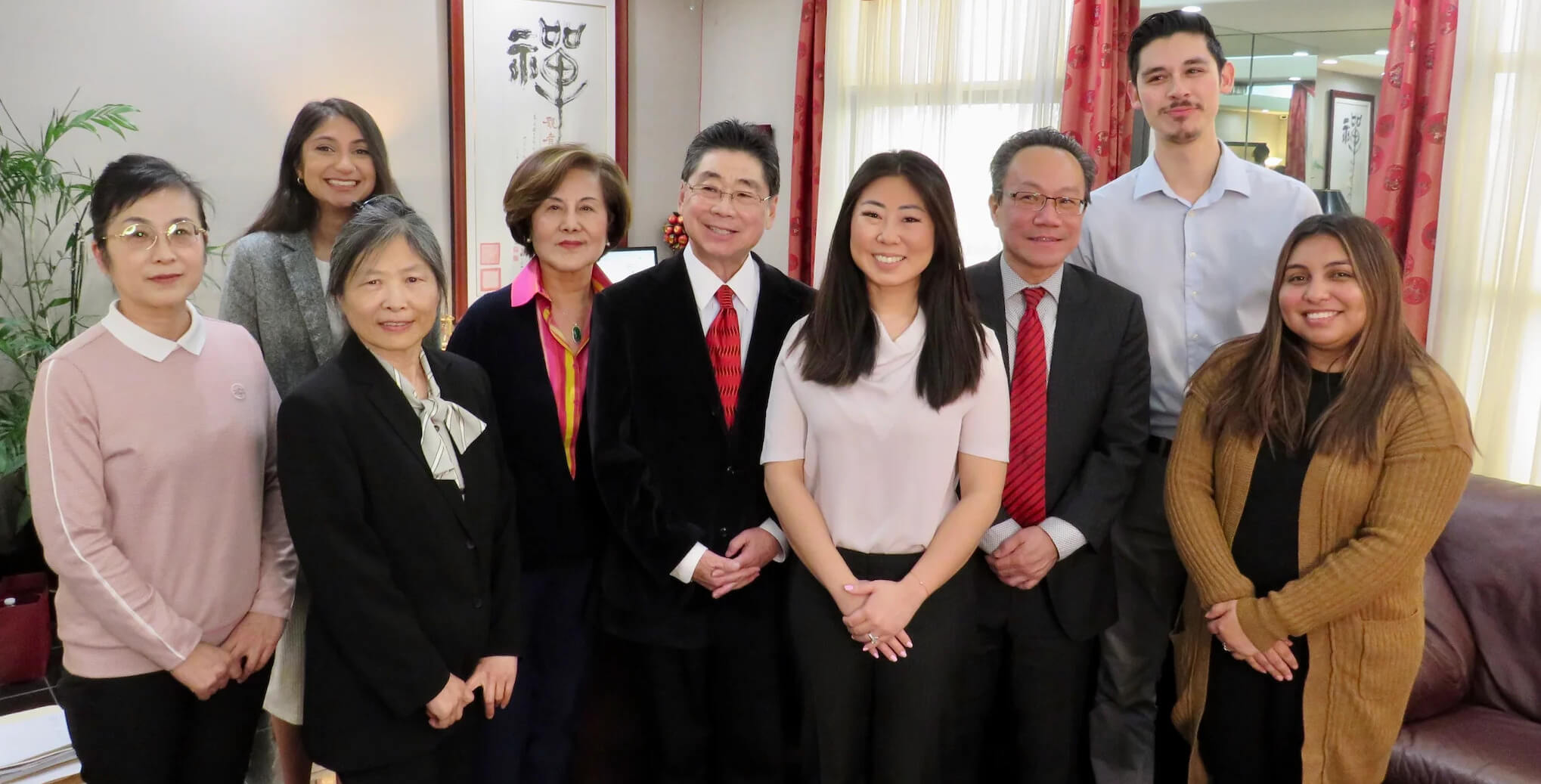

Why Choose Us?

  • Unmatched Expertise

    Trust in Peter Chu's 75+ years of collective experience to guide you through complex immigration matters.

  • Tailored Solutions

    Our personalized strategies adapt to your unique circumstances, ensuring we meet your specific immigration needs.

  • Proven Success

    Benefit from our solid track record in achieving favorable outcomes in various immigration cases across San Diego.

  • Dedicated Service

    Experience our client-first approach that ensures constant support and guidance throughout your immigration journey.

Apple Valley, Minnesota, with a population exceeding 56,000 residents and a growing immigrant community representing over 15% of households, has seen F-2A visa applications increase by nearly 22% since 2024 as permanent residents work to reunite with spouses and children. For families navigating the F-2A spouses & children of permanent residents Apple Valley process, the difference between approval and denial often comes down to whether derivative beneficiary documentation was correctly prepared before the USCIS interview. Law office of Peter Darwin Chu has represented Apple Valley, MN families through hundreds of family-based immigration cases, understanding the specific timelines and evidence standards that Minneapolis USCIS field office adjudicators apply to F-2A petitions.

Book a Consultation

Law office of Peter Darwin Chu provides f-2a lawyer apple valley services to Apple Valley residents and families throughout Minnesota. Licensed to practice immigration law before USCIS, serving Dakota County and surrounding communities with same-week consultations available by phone or in-person. We specialize in F-2A derivative beneficiary petitions for spouses and unmarried children under 21 of lawful permanent residents, handling cases from initial I-130 filing through consular processing or adjustment of status. Our firm has successfully navigated priority date retrogression, aging-out protection under the Child Status Protection Act, and complex derivative beneficiary scenarios unique to the F-2A category.

F-2A Lawyer Apple Valley Available Across Apple Valley and Surrounding Areas

Law office of Peter Darwin Chu serves F-2A visa clients throughout Apple Valley, including families in Cedar Avenue corridor neighborhoods, the Cobblestone Lake area, and communities near Lebanon Hills Regional Park. Covering zip codes 55124, 55306, and 55337. Our immigration lawyer Apple Valley practice extends to clients across Dakota County, Scott County, and the greater Twin Cities metro area, with all representation conducted by attorneys licensed to practice before USCIS regardless of client county of residence. We handle both consular processing cases coordinated with U.S. embassies abroad and adjustment of status applications filed locally at the Minneapolis USCIS field office.

What Apple Valley F-2A Visa Families Can Access

F-2A Spouse Petitions for Permanent Resident Sponsors

F-2A spouse petitions allow lawful permanent residents (green card holders) to sponsor their husband or wife for immigration to the United States, with current processing times in the F-2A category ranging from 12 to 24 months depending on priority date movement. Unlike immediate relative petitions available to U.S. citizens, F-2A petitions are subject to annual numerical limits and priority date retrogression, requiring careful timing of document preparation and consular interview scheduling. We prepare the I-130 petition with comprehensive evidence of the bona fide marital relationship, coordinate National Visa Center (NVC) document submission, and represent clients through consular interviews at U.S. embassies or adjustment interviews at USCIS. Apple Valley families benefit from our experience handling cases where the principal permanent resident obtained status through employment-based categories, requiring coordination between F-2A derivative petitions and the sponsor's own immigration history.

F-2A Child Petitions and Age-Out Protection

F-2A child petitions cover unmarried sons and daughters under age 21 of permanent residents, with critical Child Status Protection Act (CSPA) calculations determining whether a child remains eligible if they turn 21 during petition processing. CSPA age is calculated by subtracting the I-130 petition pending time from the child's biological age on the priority date, a complex formula that must be correctly applied to preserve F-2A eligibility and prevent automatic reclassification to the slower F-2B category. We file I-130 petitions with birth certificates, custody documentation, and evidence of the parent-child relationship, monitor priority date bulletins monthly, and advise families on timing strategies to maximize CSPA protection. For Apple Valley families with children approaching age 21, early consultation is essential to preserve derivative beneficiary status before automatic age-out occurs.

Adjustment of Status vs. Consular Processing for F-2A Beneficiaries

F-2A beneficiaries already residing in the United States in valid nonimmigrant status may pursue adjustment of status (Form I-485) once the priority date becomes current, avoiding the need to return to their home country for consular processing. Adjustment applicants in Minnesota file with the Minneapolis USCIS field office and attend interviews in Bloomington, with current processing times averaging 10 to 14 months from I-485 filing to decision. Consular processing through the National Visa Center and the U.S. embassy in the beneficiary's home country is required for F-2A applicants residing abroad, with interview wait times varying significantly by country. Currently 3 to 8 months in most locations. We evaluate each case to determine the faster and lower-risk pathway, considering factors such as the beneficiary's current status, prior overstays or unlawful presence, and country-specific embassy processing speeds.

Priority Date Retrogression and Visa Bulletin Strategy

F-2A visa availability is governed by the monthly Visa Bulletin published by the U.S. Department of State, with priority dates (the date the I-130 was filed) determining when a beneficiary may proceed to the final stage of processing. When demand exceeds the annual numerical limit, the F-2A category retrogresses. Meaning priority dates move backward and cases filed months or years earlier become temporarily ineligible to proceed. Apple Valley families experience frustration when priority dates retrogress after the I-130 approval, delaying green card issuance by 6 to 18 months or more. We monitor Visa Bulletin movements, advise clients on realistic timelines based on historical retrogression patterns, and coordinate document preparation to ensure readiness when priority dates advance again. For families with both F-2A and potential employment-based or diversity visa pathways, we evaluate which route offers the fastest resolution given current bulletin trends.

Get clear, expert legal guidance tailored to your visa, green card, or citizenship needs.

Licensed Immigration Representation in Minnesota

Law office of Peter Darwin Chu maintains all required state and federal credentials to practice immigration law in Minnesota, operating under the ethical standards of the Minnesota Rules of Professional Conduct and the American Immigration Lawyers Association (AILA) guidelines for client representation. Our attorneys are licensed to appear before USCIS, the Executive Office for Immigration Review (EOIR), and the Board of Immigration Appeals (BIA), with active Minnesota State Bar membership verified annually. We carry professional liability insurance covering immigration representation, maintain client trust accounts in compliance with MN bar regulations, and provide written fee agreements disclosing all costs before representation begins. All F-2A case consultations include a conflicts check and eligibility screening to confirm that your family's case meets the technical requirements for derivative beneficiary status under INA Section 203(d) before we accept representation.

Inquire now to check if you qualify

What if my F-2A spouse entered the U.S. without inspection and is now in Apple Valley — can we still adjust status?

If your F-2A spouse entered the United States without inspection (no admission or parole by a U.S. immigration officer), they are generally ineligible to adjust status even after the I-130 is approved and the priority date is current. They would need to depart the U.S. and complete consular processing abroad. Departure after accruing unlawful presence triggers 3-year or 10-year bars under INA Section 212(a)(9)(B), requiring an I-601A provisional waiver filed before leaving if unlawful presence exceeds 180 days. Some F-2A spouses may qualify for INA Section 245(i) adjustment if they were the beneficiary of a labor certification or I-130 filed on or before April 30, 2001, and were physically present in the U.S. on December 21, 2000. A narrow exception that allows adjustment despite unlawful entry upon payment of a $1,000 penalty. Apple Valley families in this scenario should consult an immigration lawyer before making any travel plans or USCIS filings, as incorrect strategy can result in prolonged separation or permanent inadmissibility. We evaluate each case for waiver eligibility, 245(i) applicability, or alternative pathways before advising on next steps.

What if my F-2A child turns 21 while the petition is pending in Apple Valley — do they lose eligibility?

If your child turns 21 while the F-2A I-130 petition is pending, Child Status Protection Act (CSPA) calculations determine whether they remain eligible in the F-2A category or automatically reclassify to F-2B (unmarried adult children of permanent residents), which has significantly longer wait times. CSPA age is calculated by subtracting the number of days the I-130 was pending at USCIS from the child's biological age on the date the priority date becomes current. If the CSPA age is under 21, the child remains F-2A eligible. To preserve CSPA protection, the beneficiary must seek to acquire permanent residence within one year of visa availability by filing I-485 or attending a consular interview. Apple Valley families with children approaching age 21 should file the I-130 as early as possible, request premium processing if available for related petitions, and monitor Visa Bulletin priority dates monthly to maximize the CSPA calculation benefit. Missing the one-year seek-to-acquire deadline results in loss of CSPA protection even if the CSPA age was under 21 at priority date current.

What if I naturalize to U.S. citizenship after filing an F-2A petition for my spouse in Apple Valley?

If you naturalize to U.S. citizenship after filing an F-2A petition for your spouse, the petition automatically converts from the preference category (F-2A, subject to annual limits and priority date retrogression) to the immediate relative category (IR-1 spouse of U.S. citizen), which has no annual numerical limit and no priority date wait. This conversion significantly accelerates processing. Immediate relative petitions typically proceed to final interview within 8 to 14 months, compared to 12 to 24 months or longer for F-2A cases experiencing retrogression. You must notify USCIS or the National Visa Center of your naturalization by submitting a copy of your naturalization certificate and requesting upgrade to immediate relative processing. Apple Valley permanent residents considering naturalization should evaluate the timing benefit of citizenship not only for themselves but for pending family petitions, as the IR-1 conversion eliminates all Visa Bulletin wait time. Some families delay naturalization until after the F-2A spouse adjusts status to avoid triggering derivative child reclassification issues, requiring case-specific strategy analysis.

What if my F-2A petition is approved but the priority date retrogresses in Apple Valley — what happens next?

If your F-2A petition is approved but the priority date retrogresses (moves backward) in the Visa Bulletin, your case enters a waiting period during which no further action can be taken until the priority date becomes current again. Priority date retrogression is common in the F-2A category due to high demand relative to the annual numerical limit, with wait times extending 6 to 24 months in some years depending on country of chargeability and global demand trends. During retrogression, the approved I-130 remains valid indefinitely, and you should maintain accurate contact information with the National Visa Center or USCIS to ensure you receive notification when the priority date advances. Apple Valley families experience frustration during retrogression because all case preparation is complete but final processing cannot proceed. Using this time to gather updated financial documents, medical exam appointments, and police certificates ensures readiness when the priority date becomes current again. We monitor Visa Bulletin predictions from the State Department and historical retrogression patterns to provide realistic timeline expectations and advise whether alternative immigration pathways may resolve faster.

Choosing an F-2A Immigration Attorney in Apple Valley

Apple Valley families pursuing F-2A visas for spouses and children of permanent residents face a choice between handling the petition independently, hiring a general practice attorney, or retaining an immigration lawyer with specific family-based visa experience. Here's the honest answer: F-2A cases involve priority date tracking, CSPA age calculations, and Visa Bulletin interpretation that general practitioners rarely encounter, and DIY petitions filed without understanding retrogression timing or age-out protection frequently result in denials or automatic reclassification to slower categories that add years to family separation.

OptionF-2A ExperienceCSPA Calculation AccuracyPriority Date StrategyProfessional Assessment
DIY FilingNone. Relies on USCIS instructions and online forumsHigh error rate. CSPA formula misapplication commonNo monitoring. Misses Visa Bulletin changesHigh risk for families with children near age 21 or retrogression exposure
General Practice AttorneyLimited. Handles occasional family petitionsVariable. May not track I-130 pending time correctlyReactive. Responds to USCIS notices but doesn't forecastAcceptable for straightforward cases with young children and stable priority dates
Immigration Specialist (Law office of Peter Darwin Chu)Extensive. Handles F-2A petitions monthlyVerified. Calculates CSPA age before filing and at each Bulletin updateProactive. Monitors retrogression, advises on naturalization timingBest choice for families with CSPA concerns, retrogression exposure, or unlawful presence issues
Notario or Unlicensed ConsultantUnlicensed. Not authorized to provide legal advice in MinnesotaDangerous. Cannot represent clients before USCISNone. No attorney-client privilegeIllegal in Minnesota. Subjects clients to fraud and petition denial

Get in touch

Frequently Asked Questions

Find answers to common questions about our services

  • F-2A visa petitions filed by permanent residents in Apple Valley currently take 12 to 24 months from I-130 filing to green card issuance, depending on priority date movement in the Visa Bulletin and whether the beneficiary adjusts status in the U.S. or pr

  • F-2A beneficiaries residing abroad cannot work in the United States while the visa application is pending, as they do not have work authorization until the immigrant visa is issued and they enter the U.S. as permanent residents. F-2A beneficiaries adjusti

  • Filing an F-2A petition for a spouse requires Form I-130 with your permanent resident card copy, proof of the bona fide marital relationship (marriage certificate, joint financial documents, photographs, affidavits from friends and family), proof of termi

  • F-2A visas are for spouses of lawful permanent residents and are subject to annual numerical limits and priority date wait times, currently processing in 12 to 24 months depending on Visa Bulletin retrogression. IR-1 visas are for spouses of U.S. citizens

  • Yes. All F-2A beneficiaries must attend a final immigrant visa interview, either at a U.S. embassy or consulate abroad (consular processing) or at a USCIS field office in the United States (adjustment of status). Beneficiaries residing abroad attend consu

  • F-2A children residing in the United States in valid nonimmigrant status (such as F-2 dependent status, H-4 status, or another lawful category) may attend public or private school in Apple Valley while the immigrant visa petition is pending, as Minnesota

  • If an F-2A petition is denied, USCIS or the consular officer issues a written denial notice specifying the grounds for denial. Most commonly insufficient evidence of a bona fide marital relationship, failure to meet income requirements on the I-864 Affida

  • Filing an F-2A visa petition involves USCIS filing fees of $675 for Form I-130, $1,440 for Form I-485 (if adjusting status), $260 consular processing fee (if processing abroad), and $120 for Form I-765 employment authorization. Totaling approximately $2,0

Need Personalized Immigration Guidance?

Law office of Peter Darwin Chu provides f-2a lawyer apple valley services to families throughout Minnesota. Licensed immigration attorneys serving Apple Valley and Dakota County with F-2A spouse and child petitions, CSPA age-out protection analysis, priority date retrogression strategy, and same-week consultations available in-person or by phone.

Related Immigration Services for Apple Valley Families

Families pursuing F-2A visas in Apple Valley often benefit from understanding related immigration pathways available to permanent residents and their qualifying relatives. Our firm handles Immigrant Visas across all family-based preference categories, including IR-1 Visa Family petitions for clients who naturalize to U.S. citizenship after filing F-2A cases, converting their spouse's petition to immediate relative status and eliminating priority date wait times. We also represent clients pursuing IR-2 Visa Unification for children of U.S. citizens and IR-5 Visa Parental Reunification for parents of adult U.S. citizen children. For clients with employment-based immigration options, our EB-2 Visa and EB-3 Visa services provide alternative pathways that may resolve faster than family preference categories during periods of F-2A retrogression. Apple Valley families navigating naturalization alongside family petitions should review our Citizenship services to understand how timing your oath ceremony can accelerate pending spouse and child cases.

Speak With Us Today