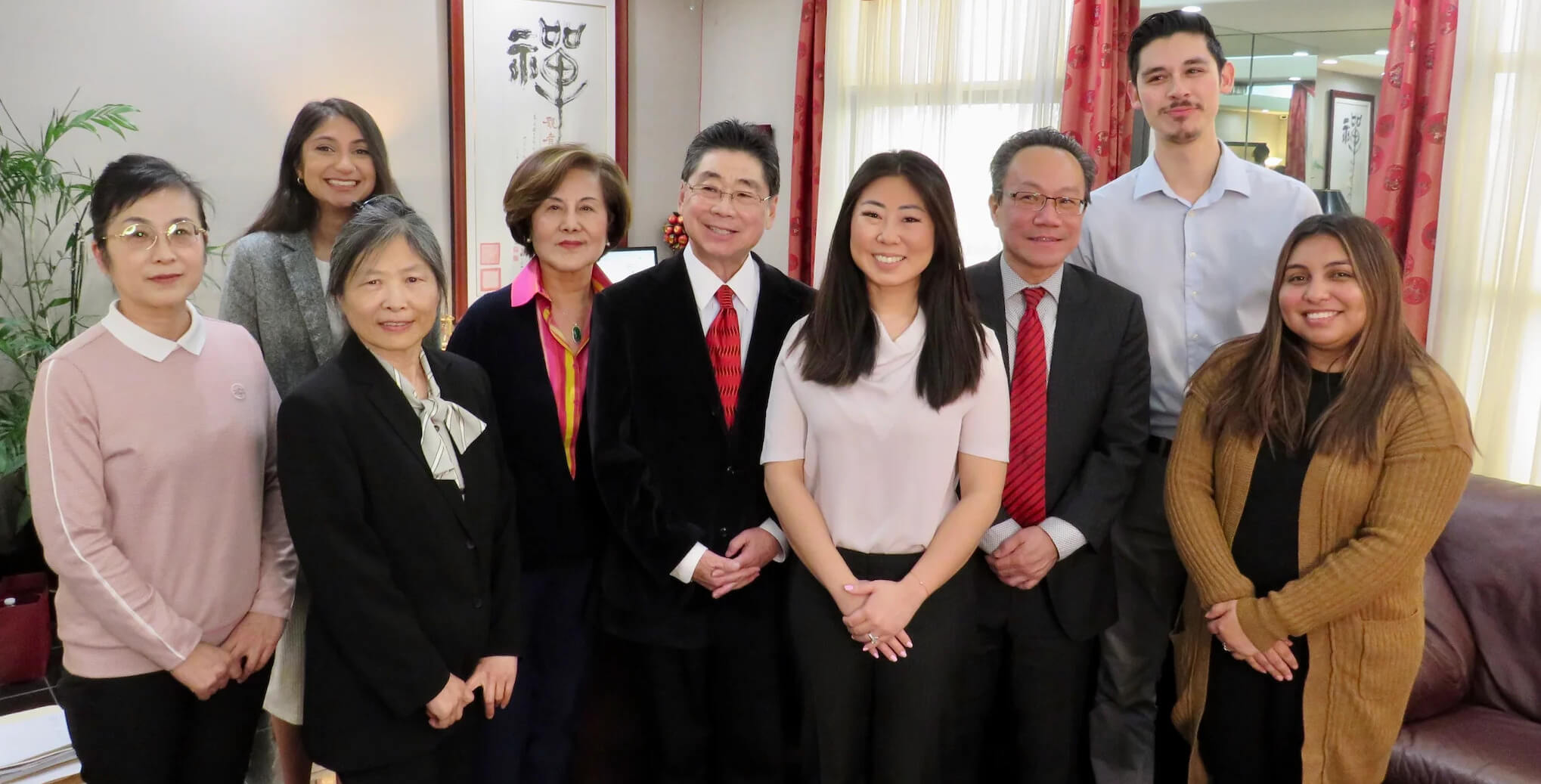

Why Choose Us?

  • Unmatched Expertise

    Trust in Peter Chu's 75+ years of collective experience to guide you through complex immigration matters.

  • Tailored Solutions

    Our personalized strategies adapt to your unique circumstances, ensuring we meet your specific immigration needs.

  • Proven Success

    Benefit from our solid track record in achieving favorable outcomes in various immigration cases across San Diego.

  • Dedicated Service

    Experience our client-first approach that ensures constant support and guidance throughout your immigration journey.

Columbus processes over 12,000 immigration applications annually through its USCIS field office, making it one of Ohio's busiest immigration hubs for family-based visa petitions. For F-2A dependent spouses and children of permanent residents navigating the preference category system, the difference between a smooth approval and a Request for Evidence often comes down to whether the initial application included proper documentation of the qualifying relationship and admissibility evidence. Law office of Peter Darwin Chu has guided Columbus, OH families through F-2A visa applications, understanding both the federal filing requirements and the practical challenges families face during the 2-3 year wait for visa availability.

Book a Consultation

Law office of Peter Darwin Chu is an immigration law practice serving Columbus residents seeking F-2A dependent visas for spouses and children of lawful permanent residents — operating under Ohio state licensing with consultations available same-week and representation through the entire USCIS petition and National Visa Center process. We handle Form I-130 petitions, consular processing preparation, and admissibility assessments for F-2A beneficiaries waiting in the preference category queue.

F-2A Visa Services Available Across Columbus and Surrounding Areas

Law office of Peter Darwin Chu represents F-2A visa applicants throughout Columbus and Franklin County — including German Village, Short North, and Clintonville (zip codes 43085, 43201, 43202, 43203, 43204) — as well as families in Delaware, Worthington, and Westerville. All Ohio residents with qualifying F-2A relationship eligibility are welcome for consultations regardless of county, and we regularly assist clients preparing for consular interviews at U.S. embassies worldwide once their priority dates become current.

What Columbus F-2A Visa Clients Can Access

Form I-130 Petition Preparation and Filing

The foundation of every F-2A case is a properly documented I-130 Immigrant Petition for Alien Relative filed by the U.S. lawful permanent resident petitioner. We prepare petitions that include certified marriage certificates (with translations if issued abroad), birth certificates establishing parent-child relationships, evidence of the petitioner's permanent resident status (typically Form I-551), and proof of legal name changes if applicable. For Columbus families, we conduct initial consultations to assess relationship validity, identify potential admissibility issues before filing, and calculate realistic processing timelines based on current Visa Bulletin wait times — which for F-2A applicants from most countries currently range 24-36 months from petition approval to visa availability. A properly filed I-130 prevents the most common delay: USCIS Requests for Evidence requesting additional relationship documentation months after initial submission.

Consular Processing and NVC Stage Guidance

Once USCIS approves the I-130 petition and the priority date becomes current according to the monthly Visa Bulletin, the case transfers to the National Visa Center for visa processing. We guide Columbus families through NVC document submission — including Form DS-260 completion, Affidavit of Support (Form I-864) preparation, civil documents collection, and police certificate procurement from every country where the beneficiary lived for 12+ months since age 16. The consular interview is the final gate: we prepare clients for standard questions about the relationship's bona fides, the petitioner's ability to financially support the beneficiary under the 125% poverty guideline requirement, and any prior immigration violations or criminal history that might trigger inadmissibility findings under INA Section 212(a).

Inadmissibility Waivers and Adjustment Strategy

F-2A beneficiaries with prior unlawful presence in the U.S., criminal convictions, or misrepresentation on prior visa applications may face inadmissibility bars that require waiver applications before a visa can be issued. We assess waiver eligibility under INA 212(i) for fraud/misrepresentation and INA 212(h) for certain criminal grounds, preparing applications that document extreme hardship to the qualifying U.S. permanent resident petitioner — the legal standard USCIS applies in adjudicating most family-based waivers. Columbus clients benefit from early inadmissibility screening during the I-130 stage rather than discovering a bar at the consular interview when family separation has already occurred.

Get clear, expert legal guidance tailored to your visa, green card, or citizenship needs.

Licensed Immigration Practice Serving Columbus, OH Families

Law office of Peter Darwin Chu maintains all required Ohio state and local business licenses and operates under the ethical standards of the American Immigration Lawyers Association. Every F-2A case is handled with full attorney-client privilege protection, and we provide written fee agreements that outline all costs — including government filing fees (currently $535 for Form I-130 plus $325 NVC processing fee per applicant) — before representation begins. We carry professional liability insurance as required under Ohio legal practice standards and maintain IOLTA accounts for client funds in compliance with state bar trust accounting rules. Our consultations include a substantive review of your priority date, relationship documentation, and admissibility profile — not a brief screening call.

Inquire now to check if you qualify

What If My F-2A Priority Date Has Been Current for Months But I Haven't Heard From NVC in Columbus?

Priority date becoming current in the Visa Bulletin does not automatically trigger NVC contact — you must monitor your case status through the NVC portal and CEAC website. If your I-130 was approved and your priority date is current but NVC has not sent a visa availability notice within 60 days, contact NVC directly through their public inquiry form or by calling the NVC operator. Columbus families often discover that NVC has sent electronic notifications to an outdated email address or that the case is delayed due to missing documents from the I-130 stage. We assist clients in resolving NVC processing delays by submitting congressional inquiries when standard contact channels fail to produce movement after 90+ days of inaction on a current case.

What If My Spouse Entered the U.S. Without Inspection — Can They Still Get an F-2A Visa in Columbus?

Entry without inspection (EWI) creates a permanent bar to adjustment of status inside the U.S. under INA Section 245(a), meaning your spouse cannot adjust to permanent residence in Columbus even after the F-2A priority date becomes current. Instead, they must consular process abroad — but doing so triggers the unlawful presence bars under INA Section 212(a)(9)(B): 3-year bar for 180-364 days of unlawful presence, 10-year bar for 365+ days. If your spouse accrued unlawful presence before departing for the consular interview, they will need an I-601A provisional unlawful presence waiver approved before leaving the U.S., demonstrating that refusal of their immigrant visa would cause extreme hardship to you as the U.S. permanent resident petitioner. This waiver process adds 12-18 months to case timelines and requires substantial hardship evidence — financial, medical, or family care documentation showing why you cannot relocate abroad with your spouse during the bar period.

What If My F-2A Child Will Turn 21 Before the Priority Date Becomes Current in Columbus?

Children who age out (turn 21) before their priority date becomes current lose F-2A eligibility and automatically convert to the F-2B category (unmarried adult children of permanent residents), which has a significantly longer wait time — currently 7-10 years depending on country of origin. However, the Child Status Protection Act (CSPA) allows you to subtract the I-130 approval processing time from your child's actual age to determine their 'CSPA age' at the time the priority date becomes current. If the CSPA calculation keeps your child under 21, they retain F-2A status. Columbus families with children approaching age 21 should request expedited I-130 processing if humanitarian factors exist (serious illness, documented hardship) and must file the DS-260 visa application within one year of visa availability to preserve CSPA protection. We calculate CSPA age during initial consultations to advise whether aging out is likely and whether alternative strategies (such as the permanent resident petitioner naturalizing to U.S. citizenship, which reclassifies the case to immediate relative IR-2 status with no wait time) are viable before the child ages out.

What If I Am the Permanent Resident Petitioner and I Move From Columbus to Another State Before My F-2A Spouse's Interview?

Moving to a different state does not invalidate your I-130 petition or your spouse's F-2A case, but you must update your address with both USCIS and the National Visa Center using Form AR-11 and the NVC contact form to ensure you receive all case correspondence. As the petitioner, you will also need to demonstrate U.S. domicile at the time of your spouse's consular interview by providing evidence that you intend to maintain your principal residence in the U.S. — typically through a lease, mortgage, employment letter, or tax return showing U.S. income. Columbus petitioners who temporarily work abroad or relocate internationally before the consular interview must establish that they will resume U.S. residence when the immigrant visa is issued, which often requires a detailed domicile affidavit and supporting evidence of ongoing ties to the U.S.

Comparing F-2A Representation Options for Columbus Families

Columbus families seeking F-2A visas face three primary paths: DIY petition filing using USCIS instructions and online forums, limited-scope document preparation services that charge flat fees to complete forms without legal advice, or full-scope attorney representation through the entire I-130, NVC, and consular process. Here's the honest answer: F-2A cases with straightforward facts — first marriage, no prior immigration violations, no criminal history, beneficiaries residing abroad in their home country — can often be successfully self-filed if the petitioner is comfortable navigating USCIS form instructions and has time to research document requirements. The risk is not incompetence but incompleteness: forgetting to include a required translation certification, misfiling the Affidavit of Support, or failing to disclose a prior visa denial that later triggers a consular officer's fraud finding. Full-scope representation becomes essential when admissibility issues exist, when the beneficiary has prior U.S. presence that may have accrued unlawful presence, when the relationship has complexity (prior marriages requiring divorce decrees, adopted children, common-law marriages), or when the petitioner cannot afford a Request for Evidence or visa refusal that delays the case by 6-12 months.

PathCostTimeline RiskAdmissibility AssessmentConsular PrepProfessional Assessment
DIY FilingUSCIS fees only ($535-$860)High — RFEs common on incomplete petitionsNone — issues discovered at interviewNoneBest for simple cases, high risk tolerance
Document Prep Service$500-$1,200 + filing feesMedium — forms completed but no legal reviewNoneNoneSuitable if you understand law but want form help
Full Attorney Representation$2,500-$5,000 + filing feesLow — comprehensive review before submissionIncludedIncludedRequired for any admissibility complexity
Law office of Peter Darwin ChuTransparent flat fee + filing costsMinimal — substantive case review at consultationFull waiver eligibility screeningMock interview preparation includedBest for families prioritizing approval certainty over lowest cost

Get in touch

Frequently Asked Questions

Find answers to common questions about our services

  • Current F-2A wait times depend on the beneficiary's country of origin and range from 24-36 months from I-130 filing to visa issuance for most countries, though applicants from Mexico, the Philippines, and certain other high-demand countries face longer ba

  • If your spouse is waiting abroad for F-2A visa availability, they cannot work in the U.S. until the immigrant visa is issued and they enter as a permanent resident. If your spouse is in the U.S. on a separate nonimmigrant visa (such as H-1B, L-1, or E-2),

  • The petitioning permanent resident must demonstrate household income at or above 125% of the Federal Poverty Guidelines for their household size, which in 2026 is approximately $24,650 for a household of two (petitioner plus one F-2A beneficiary). Columbu

  • Yes, but the marriage creating the stepparent-stepchild relationship must have occurred before the child turned 18. If you married the child's parent when the child was 17 years old, the child qualifies as your stepchild for F-2A purposes even if they are

  • Automatic upgrade to immediate relative status, eliminating the wait time entirely. When the F-2A petitioner naturalizes, USCIS reclassifies the spouse's petition to IR-1 (immediate relative spouse) and children's petitions to IR-2 (immediate relative chi

  • Not necessarily — straightforward F-2A cases with clean immigration histories, valid marriages, and beneficiaries residing in their home country can often be successfully self-filed using USCIS instructions and the Department of State's consular processin

  • At minimum: proof of your permanent resident status (copy of green card front and back), certified marriage certificate if filing for a spouse, birth certificate for any children, passport-style photos of each beneficiary, and proof of legal name changes

  • No — each beneficiary requires a separate I-130 petition and separate filing fee. If you are petitioning for your spouse and two children, you file three separate I-130s with three filing fees ($535 each as of 2026). However, derivative beneficiaries can

Need Personalized Immigration Guidance?

Law office of Peter Darwin Chu provides f-2a lawyer columbus representation for Columbus families filing I-130 petitions for dependent spouses and children of permanent residents, offering same-week consultations, consular processing guidance, and inadmissibility waiver assistance from initial petition through visa issuance.

Related Immigration Services for Columbus Families

Families navigating the F-2A process in Columbus often benefit from understanding related visa categories and pathways. If the permanent resident petitioner is eligible to naturalize to U.s. citizenship, the case automatically converts to immediate relative status (IR-1 for spouses, IR-2 for children), eliminating the multi-year preference category wait — learn more about Ir-2 Visa timelines. For families where the beneficiary is already in the U.S. on a valid nonimmigrant visa such as F-1 Visa student status, understanding how to maintain lawful status during the I-130 wait is critical. We also assist Columbus clients with employment-based options including Eb-2 Visa and Eb-3 Visa petitions when family-based categories face long wait times. Explore our Immigrant Visas overview for a comprehensive comparison of all family-based categories, and review our O-1 Visa Lawyer San Diego, Expert H-1 Visa Lawyer San Diego, and E-1 Visa Lawyer San Diego pages if employment or investor visas may offer faster pathways for your family.

Speak With Us Today