
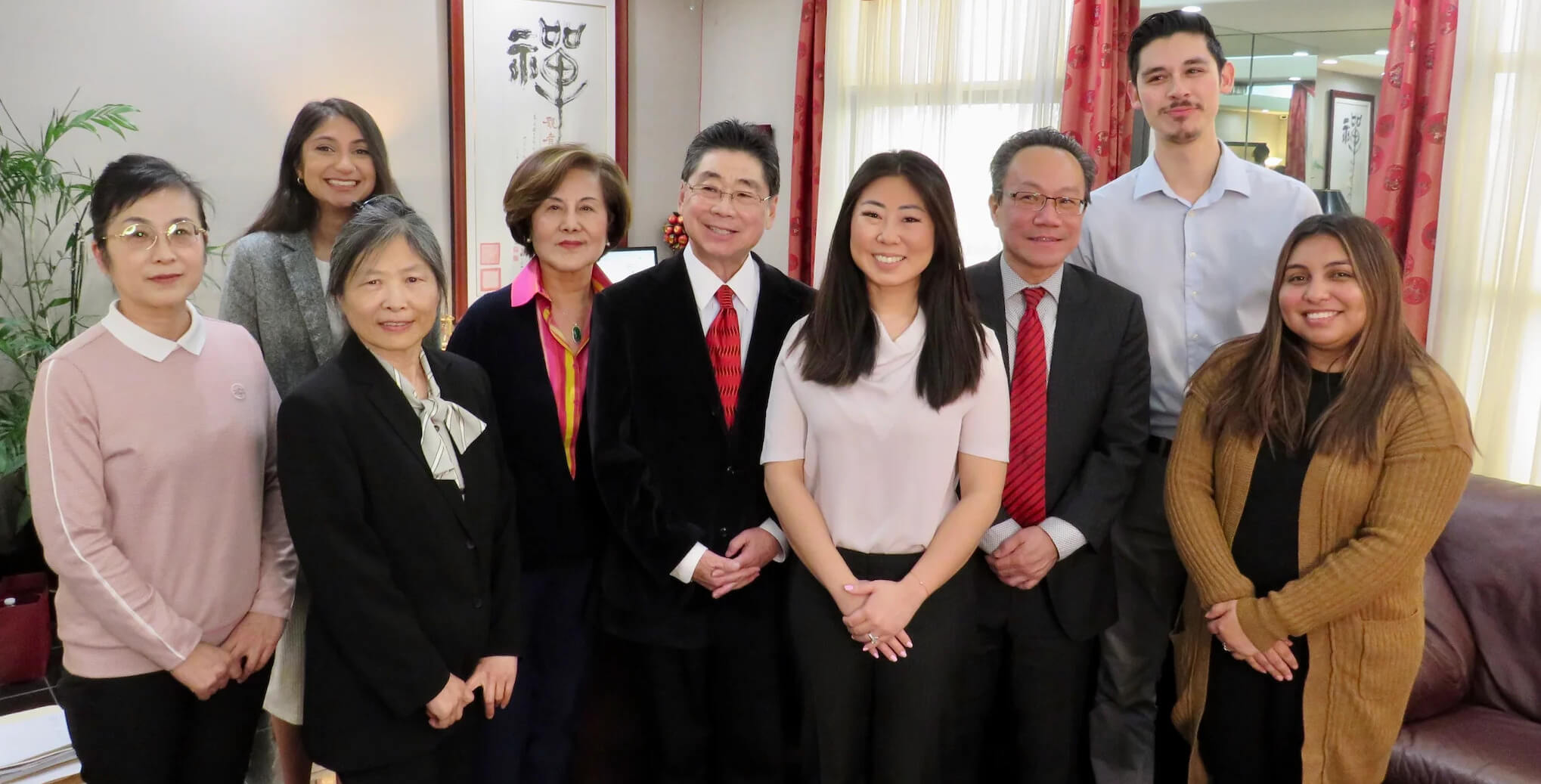
Why Choose Us?
-

Unmatched Expertise
Trust in Peter Chu's 75+ years of collective experience to guide you through complex immigration matters.
-

Tailored Solutions
Our personalized strategies adapt to your unique circumstances, ensuring we meet your specific immigration needs.
-

Proven Success
Benefit from our solid track record in achieving favorable outcomes in various immigration cases across San Diego.
-

Dedicated Service
Experience our client-first approach that ensures constant support and guidance throughout your immigration journey.


Get clear, expert legal guidance tailored to your visa, green card, or citizenship needs.

Inquire now to check if you qualify
Choosing an Immigration Attorney vs. DIY H-1B Filing in Chicago
Chicago employers face three primary options when preparing H-1B petitions: self-filing using USCIS forms and instructions, online immigration form services that generate documents based on questionnaire input, or representation by a licensed immigration attorney. Each path carries distinct risk and cost profiles.
Here's the honest answer: H-1B petitions filed without legal review have measurably higher RFE and denial rates — not because USCIS discriminates against pro se filers, but because specialty occupation determinations require applying complex case law to fact-specific employment scenarios that form templates cannot assess. A $3,500 attorney fee that prevents a $460,000 employee relocation investment from being denied due to inadequate evidentiary support is economically rational risk management. Online form services generate documents but provide no legal analysis of whether your specific position qualifies as a specialty occupation under current USCIS Policy Manual standards — they cannot evaluate whether your degree field matches the position requirements or whether your employer-employee relationship evidence will satisfy increasingly strict RFE standards.
| Filing Method | Specialty Occupation Analysis | RFE Response Capability | Employer-Employee Relationship Evidence | Professional Assessment |
|---|---|---|---|---|
| Licensed Immigration Attorney | Legal analysis of position duties against USCIS precedent decisions and AAO case law | Experienced RFE response with targeted evidentiary strategy | Structured contracts, SOWs, and itineraries meeting regulatory standards | Required for complex cases, consulting arrangements, or positions with non-obvious degree requirements |
| Online Form Services | Questionnaire-driven template population with no legal evaluation | Generic response templates with no case-specific strategy | Basic document upload with no compliance review | High risk for any case beyond straightforward employment |
| Self-Filing (Pro Se) | Employer's own interpretation of specialty occupation criteria | Employer researches and drafts RFE response independently | Employer compiles evidence without regulatory guidance | Appropriate only for clearly qualifying positions with extensive in-house immigration expertise |
Frequently Asked Questions
Find answers to common questions about our services
-
H-1B attorney fees in Chicago typically range from $2,500 to $5,000 per petition depending on case complexity, employer size, and whether the position requires extensive specialty occupation documentation. This fee covers petition preparation, Labor Condi
-
Cap-subject H-1B petitions are filed by for-profit employers and are limited to 65,000 regular cap visas plus 20,000 advanced degree cap visas per fiscal year, allocated through annual lottery registration in March. Cap-exempt petitions are filed by insti
-
The H-1B specialty occupation standard requires that the position normally require a bachelor's degree or higher in a specific specialty, and that you possess the required degree or its equivalent. USCIS evaluates this on a case-by-case basis — there is n
-
H-4 dependent spouses of H-1B visa holders can apply for work authorization only if the H-1B principal beneficiary has an approved I-140 immigrant petition or has been granted H-1B status beyond the 6-year maximum under AC21 provisions. If these condition
-
If your H-1B employment is terminated, you enter a 60-day grace period under 8 CFR 214.1(l)(2) during which you must either find a new H-1B sponsor who files a petition before the grace period ends, change to a different visa status (such as B-2 visitor o
-
Standard H-1B processing currently averages 2 to 4 months from filing date to adjudication, though processing times fluctuate by USCIS service center and petition complexity. Chicago employers filing with the California Service Center or Vermont Service C
-
Yes — H-1B is a dual-intent visa, meaning you can pursue permanent residence while maintaining H-1B status without jeopardizing your nonimmigrant visa. Most H-1B beneficiaries pursue employment-based green cards through the PERM labor certification proces
-
H-1B employers must pay the higher of the actual wage paid to similarly situated employees or the prevailing wage for the occupation in the geographic area of employment as determined by the Department of Labor. For Chicago positions, prevailing wages are
Need Personalized Immigration Guidance?

