
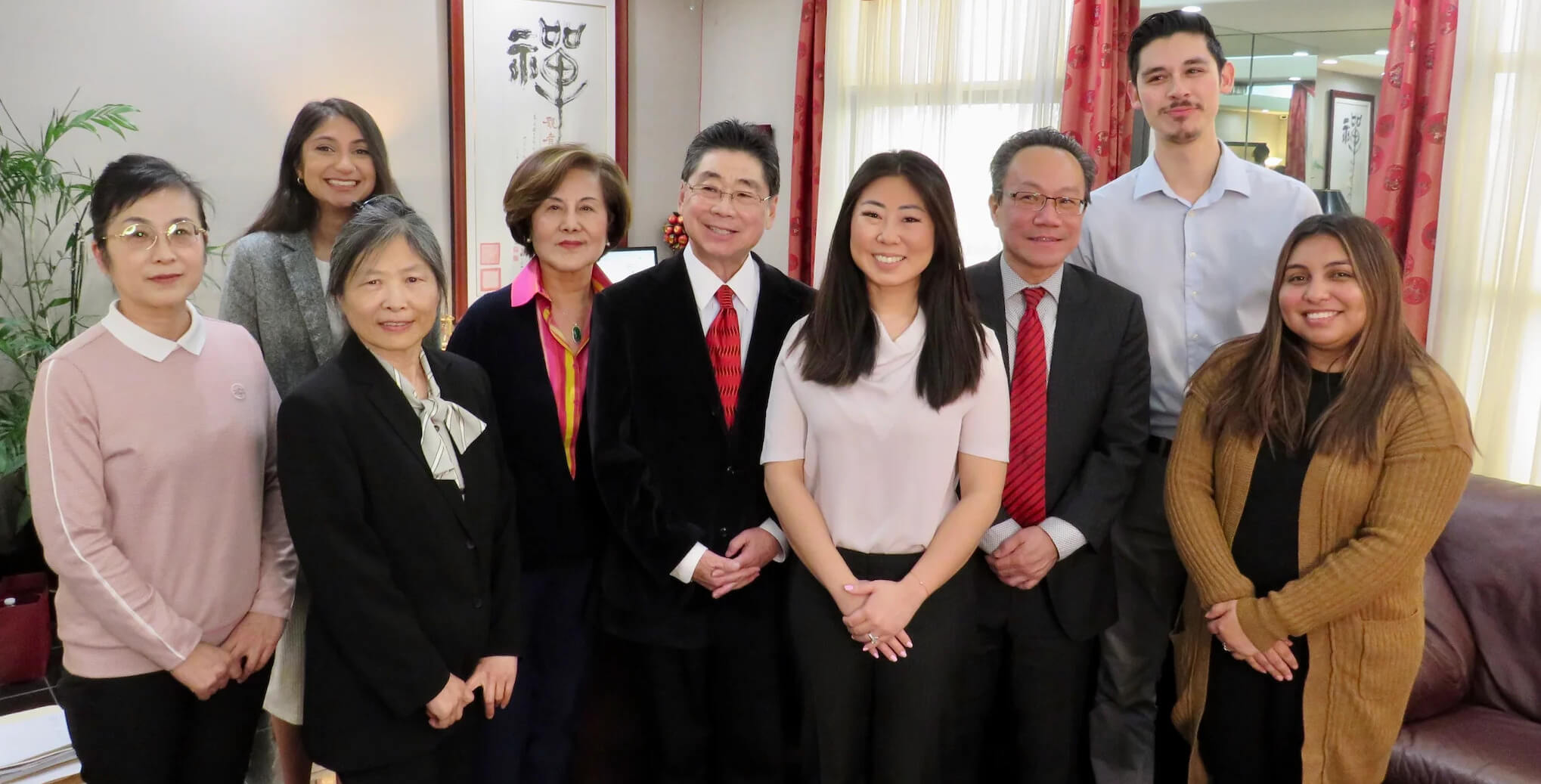
Why Choose Us?
-

Unmatched Expertise
Trust in Peter Chu's 75+ years of collective experience to guide you through complex immigration matters.
-

Tailored Solutions
Our personalized strategies adapt to your unique circumstances, ensuring we meet your specific immigration needs.
-

Proven Success
Benefit from our solid track record in achieving favorable outcomes in various immigration cases across San Diego.
-

Dedicated Service
Experience our client-first approach that ensures constant support and guidance throughout your immigration journey.


Get clear, expert legal guidance tailored to your visa, green card, or citizenship needs.

Inquire now to check if you qualify
Why Austin Families Choose Us Over DIY Filing or Unlicensed Services
Austin families considering IR-2 visa petitions typically evaluate three paths: filing Form I-130 independently using USCIS instructions, hiring a notario or immigration consultant, or retaining a Texas-licensed immigration attorney. Here's the honest answer: notarios and immigration consultants cannot provide legal advice, cannot represent you before USCIS or in immigration court, and are not subject to the ethical rules that govern attorney conduct—yet many charge fees comparable to licensed counsel while offering only form completion services. DIY filing using USCIS guides can succeed in straightforward cases where both parents are U.S. citizens, all documents are in English, and no prior immigration violations exist—but it leaves you without recourse if USCIS issues a Request for Evidence or the consulate raises an inadmissibility concern during the interview.
| Option | Legal Advice Permitted | USCIS Representation | Liability if Error | Professional Assessment |
|---|---|---|---|---|
| TX-Licensed Immigration Attorney | Yes—authorized under State Bar rules | Full representation at all stages | Professional liability insurance + bar discipline | Only option providing privileged legal advice, enforceable ethical duties, and representation if case is denied or contested |
| Notario / Immigration Consultant | No—unauthorized practice of law in Texas | None—can only prepare forms | None—no insurance, no bar oversight | High risk: same cost as attorney, none of the legal protections |
| DIY Using USCIS Forms | No—instructions are general, not case-specific | None—you are unrepresented | You bear all risk of procedural error | Viable only if case is simple, all documents in English, no prior issues |
Frequently Asked Questions
Find answers to common questions about our services
-
USCIS currently processes Form I-130 petitions filed by U.S. citizens for immediate relatives in 10–14 months at the Texas Service Center. After I-130 approval, the National Visa Center (NVC) case processing adds 2–4 months for document review and intervi
-
The core documents for an IR-2 petition include: the petitioner's proof of U.S. citizenship (passport, birth certificate, or naturalization certificate), the child's birth certificate showing the parent-child relationship, proof of termination of any prio
-
Yes—naturalized U.S. citizens have the same immigration petition rights as U.S. citizens by birth. You may file Form I-130 for your unmarried child under 21 as soon as you take the Oath of Allegiance and receive your Certificate of Naturalization. In fact
-
IR-2 is the immediate relative category for unmarried children under 21 of U.S. citizens—it has no visa number cap and no waiting period beyond USCIS and NVC processing times. F2A is the family preference category for spouses and unmarried children under
-
No—consular interviews for IR-2 visa applicants are conducted in the language of the country where the consulate is located, and interpreters are provided if needed. The consular officer's questions focus on confirming the parent-child relationship, verif
-
USCIS rarely grants expedited processing for I-130 petitions, and the criteria are narrow—emergency situations such as severe illness of the petitioner or beneficiary, or urgent humanitarian reasons documented by credible evidence. Expedite requests must
-
If USCIS denies your I-130 petition, the denial notice will specify the reason—most commonly insufficient evidence of the parent-child relationship, failure to prove U.S. citizenship, or a finding that the child does not meet the definition of 'child' und
-
The U.S. citizen petitioner must submit Form I-864 Affidavit of Support demonstrating household income at or above 125% of the federal poverty guidelines for the household size (including the petitioner, the child being sponsored, and all other dependents
Need Personalized Immigration Guidance?

