
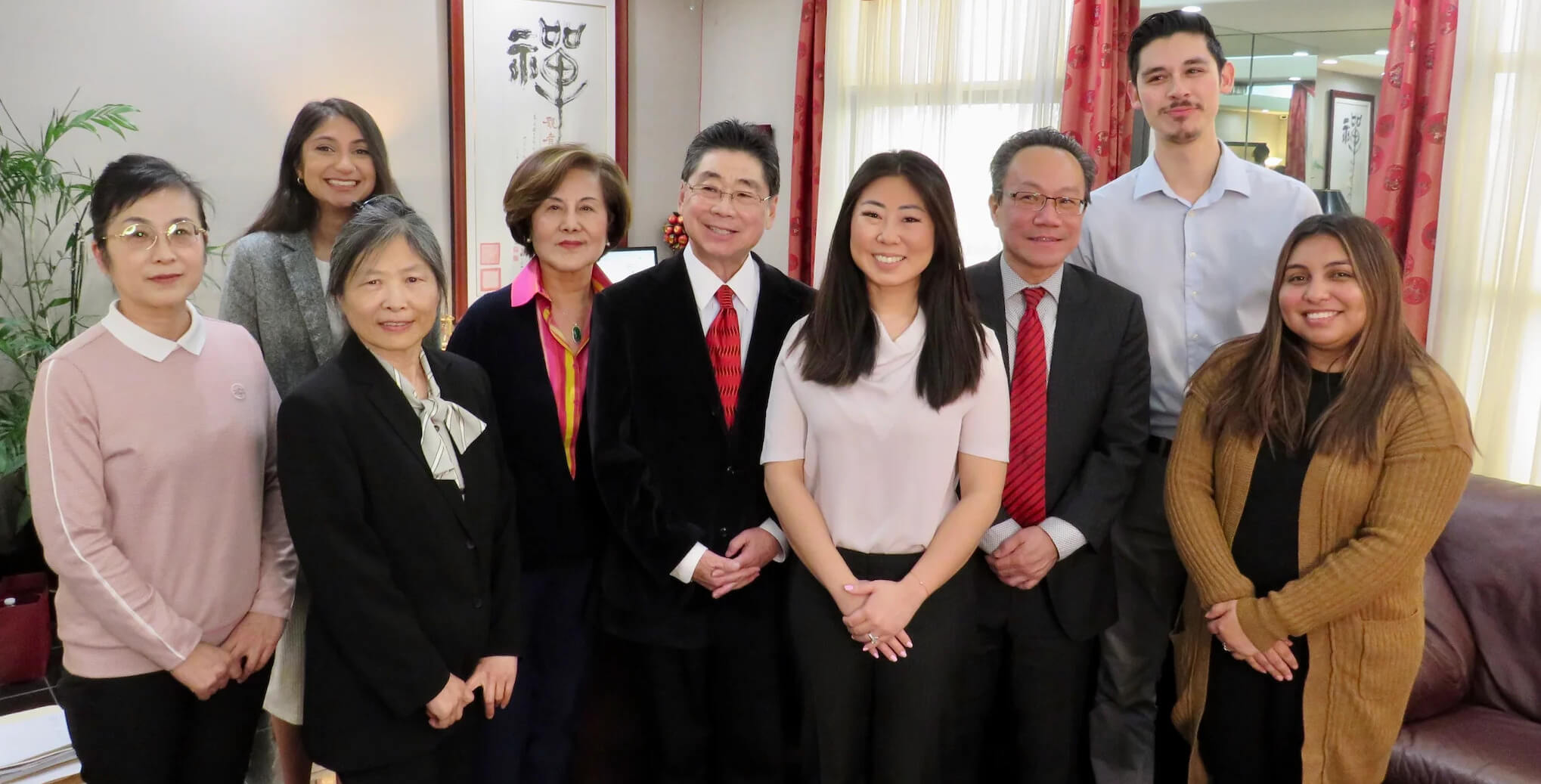
Why Choose Us?
-

Unmatched Expertise
Trust in Peter Chu's 75+ years of collective experience to guide you through complex immigration matters.
-

Tailored Solutions
Our personalized strategies adapt to your unique circumstances, ensuring we meet your specific immigration needs.
-

Proven Success
Benefit from our solid track record in achieving favorable outcomes in various immigration cases across San Diego.
-

Dedicated Service
Experience our client-first approach that ensures constant support and guidance throughout your immigration journey.


Get clear, expert legal guidance tailored to your visa, green card, or citizenship needs.

Inquire now to check if you qualify
How IR-2 Representation in Los Altos Compares to Other Immigration Assistance Options
Los Altos families pursuing IR-2 visas face a choice: licensed attorney representation, notario or immigration consultant services, or self-filing. Each path carries trade-offs in cost, risk, and support quality.
Here's the honest answer: IR-2 petitions are legally straightforward but procedurally unforgiving. A missing translation, an improperly formatted affidavit of support, or a misunderstood CSPA calculation can delay a case by 12–18 months. Notarios and consultants cannot provide legal advice, represent you before USCIS, or correct errors after filing. Self-filing works if every document is perfect and no complications arise. Attorney representation costs more upfront but eliminates the risk of starting over.
| Option | Cost | Legal Advice | Professional Assessment |
|---|---|---|---|
| Licensed Attorney | $2,500–$5,000 flat fee | Yes. Strategy, CSPA calculations, NVC coordination | Best for families with tight timelines, complex family structures, or prior immigration history. Eliminates procedural risk. |
| Notario/Consultant | $500–$1,500 | No. Form preparation only, no legal guidance | High risk. Cannot advise on CSPA, represent you if USCIS requests evidence, or appear at interviews. |
| Self-Filing | USCIS fees only (~$535 + NVC fees) | No. Reliance on instructions and online research | Viable only if all documents are straightforward, no age-out risk, and you can interpret USCIS policy guidance independently. |
Frequently Asked Questions
Find answers to common questions about our services
-
The IR-2 visa timeline from I-130 filing to visa issuance typically ranges from 12 to 18 months, depending on USCIS processing times, NVC processing speed, and consular interview wait times at the beneficiary's country of residence. I-130 approval current
-
An IR-2 petition requires Form I-130, proof of U.S. citizenship (passport, naturalization certificate, or birth certificate), the child's birth certificate showing the parent-child relationship, proof of termination of any prior marriages (divorce decrees
-
No. Each unmarried child under 21 requires a separate Form I-130 petition and separate filing fees. However, if multiple I-130 petitions are approved and the children are from the same family, they can often be scheduled for consular interviews on the sam
-
The petitioning U.S. citizen parent must submit Form I-864 Affidavit of Support demonstrating income at or above 125% of the Federal Poverty Guidelines for their household size. For a household of three in 2026, this threshold is approximately $28,000 ann
-
Yes. IR-2 visa holders are admitted to the United States as lawful permanent residents and receive a green card by mail within 2–4 weeks of entry. The visa stamp in the passport serves as temporary proof of permanent residence until the physical green car
-
Yes. IR-2 visa holders are permanent residents upon admission and may work immediately without restriction. They do not need to apply for an Employment Authorization Document (EAD). The green card itself serves as proof of work authorization for Form I-9
-
If the child marries after the I-130 petition is filed but before the visa is issued, they are no longer eligible for an IR-2 visa, as IR-2 classification requires the child to be unmarried at the time of visa issuance and admission. The petition is autom
-
The Child Status Protection Act (CSPA) protects certain beneficiaries from 'aging out' of IR-2 eligibility when they turn 21 during petition processing. CSPA subtracts the I-130 pending time from the child's age at visa availability. If the resulting 'CSP
Need Personalized Immigration Guidance?

