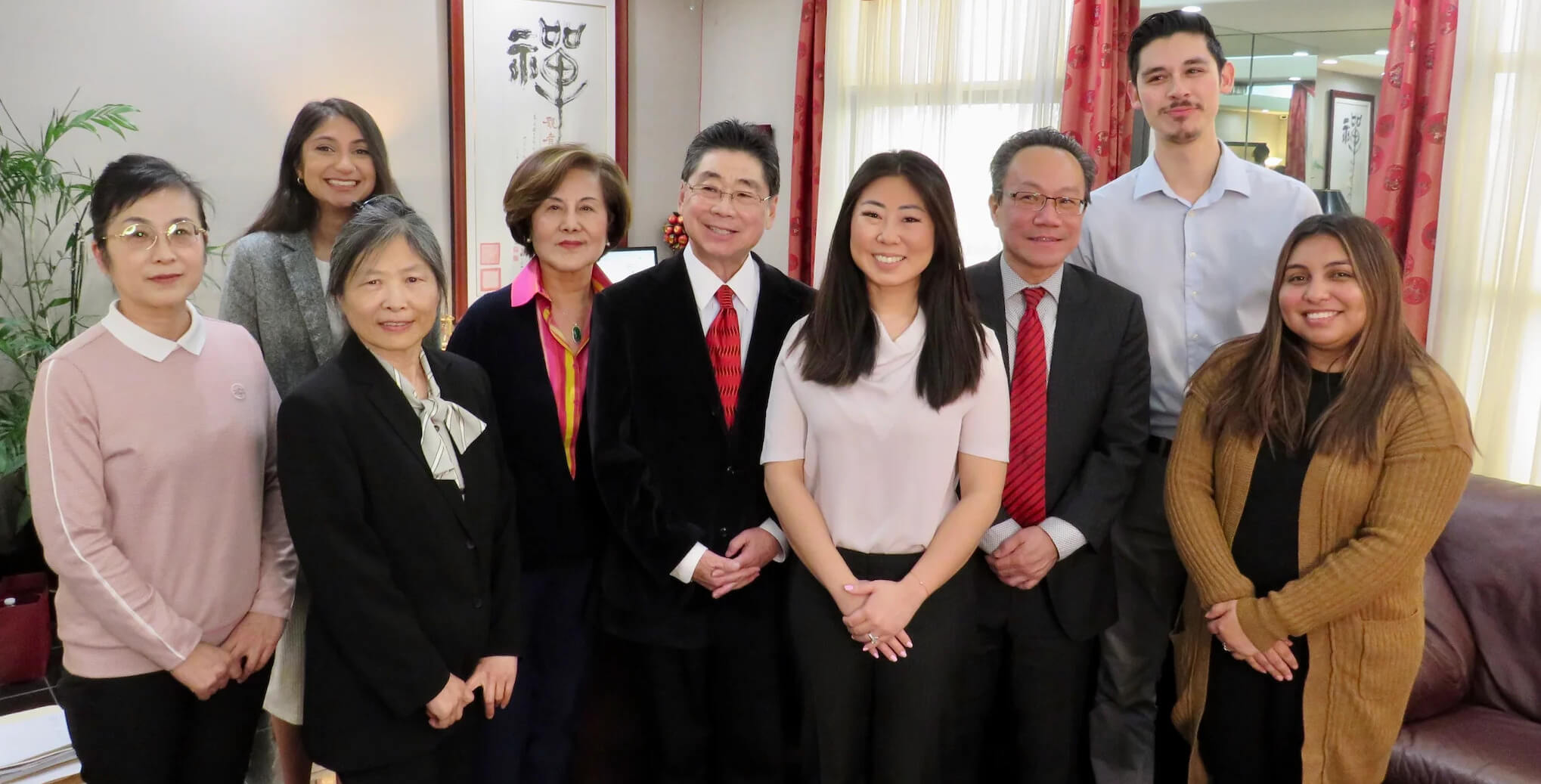

Why Choose Us?

  • Unmatched Expertise

    Trust in Peter Chu's 75+ years of collective experience to guide you through complex immigration matters.

  • Tailored Solutions

    Our personalized strategies adapt to your unique circumstances, ensuring we meet your specific immigration needs.

  • Proven Success

    Benefit from our solid track record in achieving favorable outcomes in various immigration cases across San Diego.

  • Dedicated Service

    Experience our client-first approach that ensures constant support and guidance throughout your immigration journey.

Tampa's foreign-born population reached 18.2% in 2024, making Hillsborough County one of Florida's highest-volume immigration petition venues. Where procedural precision in I-130 family-based petitions determines approval timelines as much as case merit. For families across Ybor City, Westshore, and South Tampa seeking to bring minor children to the United States through IR-2 child visa petitions, the difference between a 12-month approval and a multi-year delay often comes down to whether a licensed FL immigration attorney reviewed your petition before USCIS submission. Law office of Peter Darwin Chu has handled family-based immigration cases throughout Tampa, FL and understands this jurisdiction's specific adjudication patterns.

Book a Consultation

Law office of Peter Darwin Chu is a Florida-licensed immigration law firm serving Tampa residents with IR-2 lawyer Tampa representation. Providing I-130 petition preparation, consular processing guidance, and family reunification counsel for unmarried children under 21. We operate on transparent fee structures with same-week consultations available to assess your child's visa eligibility and petition timeline.

IR-2 Lawyer Tampa Available Across Tampa and Surrounding Areas

Law office of Peter Darwin Chu represents families throughout Tampa, FL and Hillsborough County. Including Hyde Park, Seminole Heights, and Temple Terrace (zip codes 33601, 33602, 33603, 33604, and 33605). As well as families residing in Brandon, Plant City, and Carrollwood. All Florida residents with qualifying IR-2 child visa petitions are eligible for representation regardless of county, and we regularly handle cases originating from the Tampa USCIS Field Office and National Visa Center consular processing.

What Tampa Families Access Through Our IR-2 Immigration Practice

I-130 Petition Preparation for Unmarried Children Under 21

The IR-2 visa category. Immediate relative classification for unmarried biological or legally adopted children under 21 years old. Requires Form I-130 Petition for Alien Relative filed by the U.S. citizen parent, supported by birth certificates, adoption decrees (if applicable), proof of parent's citizenship, and evidence of bona fide parent-child relationship. In Tampa, FL, where family structures often involve blended families or children born abroad during temporary work assignments, establishing the required documentary proof can require apostilled foreign vital records and translated court orders. We prepare the complete I-130 petition package, draft supporting affidavits when documentary gaps exist, and ensure your petition meets the specific evidentiary standards applied by the Tampa USCIS office.

National Visa Center and Consular Processing Coordination

Once USCIS approves your I-130 petition, the case transfers to the National Visa Center (NVC) for immigrant visa processing. Requiring DS-260 online application, civil documents submission, Affidavit of Support (Form I-864), and financial sponsorship documentation. For Tampa families coordinating with U.S. embassies in Latin America, the Caribbean, or Eastern Europe, consular interview preparation becomes critical: one missing document or one poorly answered question about the child's intention to reside with the petitioning parent can delay visa issuance by months. We guide families through every NVC phase and provide interview preparation tailored to the specific consulate handling your child's case. Explore our Ir-2 Visa and Ir-2 Visa Process San Diego resources.

Age-Out Protection and Child Status Protection Act (CSPA) Analysis

The single greatest risk in IR-2 petitions is age-out: if the child turns 21 before visa issuance, they lose immediate relative status and fall into the F1 family preference category (unmarried adult children of U.S. citizens). Adding years to the wait time. The Child Status Protection Act provides limited relief by "freezing" the child's age under specific conditions, but CSPA calculations are complex and jurisdiction-specific. Tampa immigration lawyer Tampa cases involving children aged 19–20 at petition filing require proactive CSPA strategy from day one. We calculate your child's CSPA age, identify processing acceleration strategies, and file expedite requests when humanitarian circumstances justify faster adjudication.

Post-Approval Adjustment and Naturalization Planning

IR-2 visa holders enter the U.S. as lawful permanent residents. Green card status is granted upon admission. For families in Tampa planning long-term citizenship pathways, understanding the naturalization eligibility timeline for your child becomes important: children under 18 who acquire green card status through a U.S. citizen parent may automatically derive citizenship under INA Section 320 once residing in the parent's legal and physical custody. We counsel families on derivative citizenship eligibility, explain when a Certificate of Citizenship application (Form N-600) is advisable, and coordinate naturalization applications once your child meets the five-year (or three-year if applicable) continuous residence requirement.

Get clear, expert legal guidance tailored to your visa, green card, or citizenship needs.

Licensed Florida Immigration Counsel — Transparent Practice Standards

Law office of Peter Darwin Chu maintains all required Florida state bar licenses and complies with American Immigration Lawyers Association (AILA) professional standards for family-based immigration representation. We provide written fee agreements before representation begins, itemized case cost projections that separate attorney fees from USCIS filing fees, and regular case status updates through every petition phase. Our Tampa, FL immigration practice operates under Florida Rules of Professional Conduct governing attorney-client privilege, conflict-of-interest disclosures, and trust account handling. Ensuring your case is managed with the procedural rigor that family reunification matters require.

Inquire now to check if you qualify

What if my child turns 21 during the IR-2 visa process in Tampa?

If your child turns 21 before visa issuance, they age out of the IR-2 immediate relative category and reclassify into the F1 preference category (unmarried adult children of U.S. citizens). A category currently backlogged 7–8 years for most countries. The Child Status Protection Act (CSPA) may preserve immediate relative status if your child's "CSPA age". Calculated by subtracting the I-130 pending time from their biological age. Remains under 21 on the date the visa becomes available. CSPA calculations are technical and unforgiving: a single miscalculation can cost years. Tampa families with children aged 19 or older should consult an immigration attorney Tampa before filing to assess whether IR-2 is the correct pathway or whether expedited processing requests are necessary.

What if my IR-2 petition is delayed by a Request for Evidence in Tampa?

USCIS issues Requests for Evidence (RFEs) when the initial I-130 petition lacks sufficient proof of the parent-child relationship, the petitioner's U.S. citizenship, or the child's eligibility. Common RFE triggers in Tampa IR-2 cases include foreign birth certificates without apostille certification, adoption decrees missing required judicial language, or blended-family scenarios where the petitioner is a stepparent but the marriage to the child's biological parent occurred after the child turned 18. Responding to an RFE requires submitting the exact documents requested. Not similar documents. Within the deadline specified (typically 87 days). A poorly constructed RFE response can lead to petition denial, restarting the entire process. We draft RFE responses that directly address each USCIS concern with supporting legal analysis and supplemental affidavits when documentary evidence is unavailable.

What if my adopted child qualifies for IR-2 status in Tampa?

Adopted children qualify for IR-2 classification only if the adoption was finalized before the child turned 16 (or 18 if adopting a sibling of a child adopted before age 16), the adopting parent had legal custody for at least two years, and the child resided with the adopting parent for at least two years before or after the adoption. For Tampa families who completed international adoptions through Hague Convention procedures, the required documentation includes the final adoption decree, proof of legal custody during the two-year period, and evidence of physical residence. Florida state adoption records and foreign adoption decrees must be authenticated through apostille or consular certification. IR-2 adoption cases involve additional scrutiny because USCIS examines whether the adoption was bona fide or arranged solely for immigration benefit. We prepare narratives and supporting evidence demonstrating genuine parent-child relationships formed before visa consideration.

What if my IR-2 case involves consular processing in a high-refusal embassy near Tampa?

Certain U.S. embassies. Particularly in countries with high visa fraud rates. Apply heightened scrutiny to family-based immigrant visa cases, resulting in higher rates of administrative processing delays and Section 221(g) refusals pending additional documentation. For Tampa families whose children will interview at embassies in countries such as Nigeria, Pakistan, or certain Latin American nations, consular interview preparation becomes the most critical phase of the process. Common refusal triggers include inability to articulate the petitioner's residence and employment in the U.S., inconsistent testimony about the parent-child relationship timeline, or lack of ongoing communication evidence (photos, messages, financial support records). We provide country-specific interview coaching, prepare detailed affidavits addressing anticipated consular concerns, and coordinate with the embassy when additional documentation is requested post-interview. If a visa is denied, we assess whether Administrative Processing Protocol review, consular officer reconsideration, or waiver eligibility (if applicable) provides a path forward.

Comparing IR-2 Child Visa Options for Tampa Families

Families seeking to bring unmarried children under 21 to the United States have several pathways. IR-2 immediate relative petitions filed by U.S. citizen parents, F2A petitions filed by lawful permanent resident parents (currently backlogged 2–3 years), or in limited cases, derivative beneficiary status if the parent is the principal applicant in an employment-based or other family preference petition. Each pathway has different timelines, eligibility rules, and processing requirements. Here's the honest answer: IR-2 is the only truly "immediate" option with no numerical cap or preference category wait time. But only U.S. citizens can file IR-2 petitions. Lawful permanent residents must use the F2A category, which adds years to the process. Many Tampa families mistakenly assume that consular processing is always faster than adjustment of status, but for children already present in the U.S. in valid nonimmigrant status, adjustment can eliminate the need for international travel and foreign consular interviews.

PathwayPetitioner RequirementCurrent Wait TimeAge-Out RiskProfessional Assessment
IR-2 Immediate RelativeU.S. citizen parent12–18 months totalHigh if child near age 21Best option for speed. No visa quota, but CSPA strategy required for older children
F2A PreferenceLawful permanent resident parent2–3 years current backlogModerate to highOnly option for LPR parents. Longer wait increases age-out exposure
Derivative BeneficiaryParent is principal in another petitionDepends on principal caseLow if principal approved quicklyLimited applicability. Works only if parent already has approved I-140 or I-130 as principal
Do-It-Yourself PetitionAny qualifying petitionerSame government processing timeSame age-out riskHigh RFE and denial rate. Missing one document or miscalculating CSPA age can add years to process

Get in touch

Frequently Asked Questions

Find answers to common questions about our services

  • The IR-2 child visa process typically takes 12–18 months from I-130 petition filing to visa issuance. Assuming no Request for Evidence, no administrative processing delays at the consulate, and standard National Visa Center processing times. USCIS process

  • Yes, you can file an I-130 petition for a child present in the United States on a B-2 tourist visa, but whether the child can adjust status to permanent resident without leaving the U.S. depends on whether they entered with immigrant intent. If your child

  • To prepare a complete IR-2 petition, we require: (1) proof of your U.S. citizenship. Naturalization certificate, U.S. birth certificate, or valid U.S. passport; (2) your child's foreign birth certificate with certified English translation and apostille or

  • No, your child does not need to speak English for the immigrant visa interview at the U.S. consulate. Consular interviews for IR-2 child visa applicants are typically brief. The consular officer verifies identity, confirms the parent-child relationship, a

  • If USCIS denies your I-130 petition, the denial notice will specify the reason. Most commonly insufficient evidence of the parent-child relationship, failure to prove your U.S. citizenship, or determination that the child does not meet IR-2 age or marital

  • No, each child requires a separate Form I-130 petition and separate filing fee. USCIS does not allow combined petitions for multiple beneficiaries even if they are siblings. If you are petitioning for three children, you must file three separate I-130 for

  • IR-2 visas are for unmarried children under 21 who are biological or legally adopted children of U.S. citizens. Where the adoption was completed before age 16 and the child resided with the adopting parent for at least two years. IR-3 visas are specifical

  • U.S. immigration law does not require that the petitioning parent have sole legal custody or that the other biological parent consent to the IR-2 petition. Parental rights under family law and immigration petition eligibility are separate issues. However,

Need Personalized Immigration Guidance?

Law office of Peter Darwin Chu provides IR-2 lawyer Tampa representation for families in Tampa, FL through I-130 petition preparation, consular processing coordination, and Child Status Protection Act age-out analysis. With licensed Florida immigration attorneys and same-week consultations available for case evaluation.

Related Immigration Services for Tampa Families

IR-2 child visa petitions are one pathway within the broader immediate relative category. Families may also need guidance on Ir-1 Visa Family petitions for spouses, Ir-5 Visa Parental Reunification for parents of U.S. citizens, or Ir-3 Visa Adoption and Ir-4 Visa Adoption categories for internationally adopted children. For families whose immigration strategy involves employment-based pathways coordinated with family reunification, explore our Eb-2 Visa and Eb-3 Visa practice areas. Tampa residents navigating derivative citizenship questions after green card approval should review our Citizenship services. Additionally, review our core Ir-2 Visa Unification resource for process timelines and requirements.

Speak With Us Today