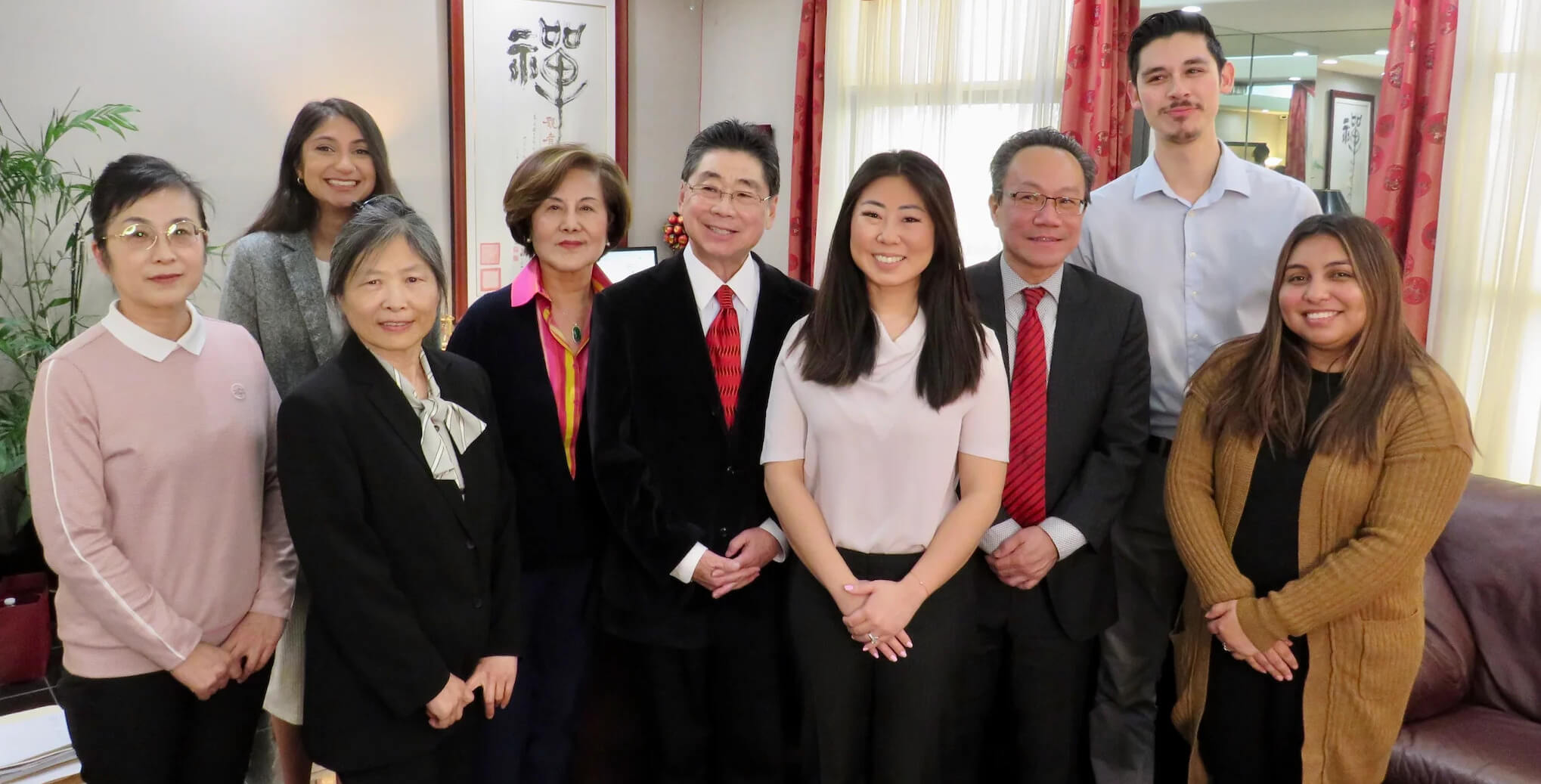

Why Choose Us?

  • Unmatched Expertise

    Trust in Peter Chu's 75+ years of collective experience to guide you through complex immigration matters.

  • Tailored Solutions

    Our personalized strategies adapt to your unique circumstances, ensuring we meet your specific immigration needs.

  • Proven Success

    Benefit from our solid track record in achieving favorable outcomes in various immigration cases across San Diego.

  • Dedicated Service

    Experience our client-first approach that ensures constant support and guidance throughout your immigration journey.

Indianapolis processes over 8,200 family-based immigration petitions annually through the USCIS Indianapolis field office, making it one of the highest-volume immigrant visa venues in the Midwest. For Indianapolis residents seeking to bring parents to the United States through IR-5 parent visas, the difference between approval and denial often comes down to whether documentation meets the strict evidentiary standards set by USCIS adjudicators. The Law Office of Peter Darwin Chu has represented Indianapolis, IN families in IR-5 visa cases since 2005, with a track record of navigating the specific procedural requirements that govern immediate relative immigrant petitions in Indiana.

Book a Consultation

The Law Office of Peter Darwin Chu provides ir-5 attorney indianapolis services to residents throughout Marion County and surrounding areas. Licensed to practice immigration law in Indiana with free initial consultations available within 48 hours of contact. We handle all stages of IR-5 parent visa petitions, from Form I-130 filing through National Visa Center processing and consular interview preparation, with transparent flat-fee pricing disclosed before representation begins.

IR-5 Attorney Services Available Across Indianapolis and Surrounding Areas

The Law Office of Peter Darwin Chu serves clients throughout Indianapolis, IN, including Downtown, Broad Ripple, Fountain Square, and Mass Ave neighborhoods. Covering zip codes 46201, 46202, 46203, 46204, and 46205 across Marion County. All consultations are conducted by Indiana-licensed immigration attorneys familiar with the Indianapolis USCIS field office procedures and documentation standards. We represent petitioners regardless of location within Indiana, with virtual consultation options available for clients outside Marion County.

What Indianapolis Residents Can Access

Form I-130 Petition Preparation and Filing

The I-130 Immediate Relative Petition is the foundation of every IR-5 parent visa case, requiring proof of the parent-child relationship through birth certificates, adoption decrees, or legitimation documents. Indianapolis petitioners often underestimate the evidentiary burden when the birth certificate is in a foreign language or lacks required information. We prepare complete I-130 packages with certified translations, affidavits to overcome document deficiencies, and evidence structured to meet the adjudication standards applied by the USCIS Nebraska Service Center, which processes most Indianapolis-filed I-130 petitions. Our ir-5 parent visa indianapolis service includes a full document review before filing to identify gaps that would trigger a Request for Evidence.

National Visa Center Case Processing and Affidavit of Support

Once USCIS approves the I-130, the case transfers to the National Visa Center for immigrant visa processing, requiring submission of civil documents, police certificates, and the Form I-864 Affidavit of Support. The I-864 income requirement. 125% of the Federal Poverty Guidelines for household size. Is the most common point of failure for Indianapolis petitioners whose income fluctuates or who rely on self-employment income that USCIS scrutinizes more heavily. We prepare I-864 packages with IRS transcripts, joint sponsor arrangements when needed, and asset-based support calculations that comply with the USCIS Policy Manual guidance on acceptable evidence.

Consular Interview Preparation and Post-Decision Support

The final stage of an IR-5 visa case is the consular interview at the U.S. Embassy or Consulate in the parent's home country, where the consular officer reviews all documentation and conducts a brief interview to confirm eligibility. Indianapolis families often lack awareness of country-specific consular processing times and medical examination requirements that vary by location. Our immigration attorney indianapolis team provides interview preparation that covers the questions consular officers routinely ask, the documents the parent must bring to the interview, and the procedures for responding to administrative processing delays or visa denials under Section 221(g) of the Immigration and Nationality Act.

Get clear, expert legal guidance tailored to your visa, green card, or citizenship needs.

Licensed Immigration Representation in Indianapolis

The Law Office of Peter Darwin Chu maintains all required Indiana state bar licenses and professional liability insurance, operating under the ethical standards established by the Indiana Rules of Professional Conduct and the American Immigration Lawyers Association (AILA) Standards of Professional Conduct. Immigration law practice in Indiana does not require a separate state-specific credential beyond bar admission, but requires adherence to federal regulations governing attorney conduct before USCIS under 8 CFR § 292.3. We provide clients with written fee agreements that disclose all costs before representation begins, including USCIS filing fees, translation costs, and any third-party expenses such as medical examinations or police certificates. All client communications are protected by attorney-client privilege under Indiana Evidence Rule 502, and we do not share case information with third parties without written consent.

Inquire now to check if you qualify

What if my parent's birth certificate from their home country doesn't list my name as the child?

Birth certificate deficiencies are among the most common document challenges in IR-5 cases filed from Indianapolis. When a parent's birth certificate omits the petitioner's name, or when no birth certificate exists due to the time and place of birth, USCIS accepts secondary evidence under 8 CFR § 204.1(g). Acceptable alternatives include baptismal certificates issued shortly after birth, school records from early childhood that name both parent and child, or affidavits from individuals with personal knowledge of the parent-child relationship. Indianapolis petitioners often submit affidavits from family members, but USCIS gives these less weight than affidavits from non-relatives such as doctors, teachers, or religious officials who witnessed the relationship during the petitioner's childhood. We prepare secondary evidence packages with multiple forms of corroborating documentation and affidavits drafted to meet the specificity standards USCIS adjudicators expect.

What if I don't meet the income requirement for the I-864 Affidavit of Support in Indianapolis?

The I-864 income requirement for IR-5 cases in Indianapolis requires the petitioner to demonstrate household income at 125% of the Federal Poverty Guidelines, which for a household of two in 2026 is $24,650. If your current income falls below this threshold, three alternatives exist: joint sponsorship by a U.S. citizen or lawful permanent resident who meets the income requirement independently, use of household member income if that person will live with the parent and sign Form I-864A, or asset-based support using assets valued at five times the income shortfall. Indianapolis petitioners with fluctuating income due to self-employment or seasonal work should use the most recent IRS tax transcript as the primary income evidence, supplemented by current pay stubs or contracts showing ongoing income. Joint sponsors are the most common solution for Indianapolis residents whose income is insufficient, and the joint sponsor need not be related to the petitioner or the beneficiary parent.

What if my parent was denied a visa by the U.S. Embassy during the consular interview in Indianapolis?

Consular visa denials in IR-5 cases typically fall into two categories: refusals under Section 221(g) for missing documentation or administrative processing, and denials under Section 212(a) for substantive inadmissibility grounds. A 221(g) refusal is not a permanent denial. It means the consular officer needs additional documentation or time to complete background checks before approving the visa. Indianapolis families whose parents receive 221(g) notices should respond promptly with the requested documents, as delays can extend processing by months. A denial under 212(a). Such as for unlawful presence, criminal history, or public charge grounds. Requires either a waiver of inadmissibility or withdrawal of the application. We represent Indianapolis clients in preparing I-601 waiver applications and navigating the Administrative Processing and Visa Denials section of the State Department's procedures, with realistic timelines for resolution based on the specific inadmissibility ground.

What if USCIS issues a Request for Evidence (RFE) on my I-130 petition filed from Indianapolis?

A Request for Evidence on an I-130 petition signals that USCIS identified a deficiency in the initial filing that must be corrected before approval. Common RFE triggers for IR-5 cases filed from Indianapolis include insufficient proof of the parent-child relationship, lack of certified translations for foreign-language documents, missing proof of the petitioner's U.S. citizenship, or questions about the bona fides of the relationship when the petitioner was born outside the United States. USCIS typically allows 87 days to respond to an RFE, and failure to respond results in automatic denial of the petition. Indianapolis petitioners should treat RFEs as time-sensitive legal deadlines requiring comprehensive responses that directly address every item listed in the USCIS request. We prepare RFE responses with cover letters that organize evidence point-by-point, additional affidavits when needed, and legal arguments citing USCIS Policy Manual guidance when the RFE request exceeds regulatory requirements.

Choosing an IR-5 Attorney in Indianapolis: Understanding Your Options

Indianapolis residents pursuing IR-5 parent visas can choose between full-service immigration attorneys, online document preparation services, or self-filing without legal representation. Online services cost $500–$1,200 but provide only form completion. No legal advice, no representation before USCIS, and no response to Requests for Evidence or consular issues. Self-filing is legally permissible but risky when document deficiencies or income calculation errors trigger denials that delay family reunification by 6–12 months. Here's the honest answer: immigration law practice is not document preparation. It's risk assessment, evidence structuring, and procedural advocacy that changes case outcomes.

OptionLegal AdviceRFE ResponseConsular SupportProfessional Assessment
Immigration AttorneyFull legal analysis and strategyAttorney-prepared responsesInterview prep and post-decision advocacyBest for complex cases, document deficiencies, or prior denials
Online ServiceNone (unauthorized practice if provided)Not includedNot includedAppropriate only for straightforward cases with perfect documentation
Self-FilingNoneDIY researchNoneHigh risk of procedural errors and evidence gaps
Notario or Non-AttorneyIllegal in IndianaN/AN/AUnauthorized practice of law. Avoid entirely

Get in touch

Frequently Asked Questions

Find answers to common questions about our services

  • IR-5 visa processing times for Indianapolis petitioners currently average 12–18 months from I-130 filing to visa issuance, though timelines vary by USCIS service center workload, National Visa Center processing speed, and consular interview wait times at

  • Immigration attorney fees for IR-5 cases in Indianapolis typically range from $2,500 to $4,500 for full representation from I-130 filing through consular interview, with variation based on case complexity and whether document deficiencies require secondar

  • Parents waiting for IR-5 visa processing outside the United States cannot work in the U.S. during the petition process, as they remain in their home country until the immigrant visa is approved and they travel to the U.S. to become lawful permanent reside

  • The consular interview requires the parent to bring their valid passport, the interview appointment letter from the National Visa Center, Form DS-260 confirmation page, two identical passport-style photographs meeting State Department specifications, orig

  • Yes, naturalized U.S. citizens have the same right to petition for parents under IR-5 as U.S. citizens by birth, with no distinction in eligibility or processing. Indianapolis residents who recently naturalized should wait until they receive their Certifi

  • Criminal history does not automatically disqualify a parent from an IR-5 visa, but certain convictions trigger inadmissibility grounds under Section 212(a)(2) of the Immigration and Nationality Act. Crimes involving moral turpitude (fraud, theft, assault)

  • No, each parent requires a separate Form I-130 petition with separate filing fees and separate immigrant visa applications. Indianapolis petitioners sponsoring both parents must file two I-130 petitions. One for the mother and one for the father. Even if

  • IR-5 visas are immediate relative immigrant visas available only to parents of U.S. citizens age 21 or older, with no numerical cap and no waiting period beyond normal processing time. F-3 visas do not exist for parents. Family preference categories (F-1

Need Personalized Immigration Guidance?

The Law Office of Peter Darwin Chu provides ir-5 attorney indianapolis representation to Marion County families seeking to reunite with parents through immediate relative immigrant visas, offering free consultations within 48 hours and transparent flat-fee pricing disclosed before engagement.

Related Immigration Services in Indianapolis

The Law Office of Peter Darwin Chu represents Indianapolis clients across the full spectrum of family-based immigration cases, including Immigrant Visas for all preference categories, IR-1 Spouse Visa petitions for married couples, and IR-2 Visa cases for unmarried children under 21. We also handle Citizenship applications for lawful permanent residents seeking naturalization, I-601 Waiver filings for inadmissibility grounds, and Non-immigrant Visas for temporary work and study. Indianapolis residents navigating multiple family members or employment-based petitions benefit from coordinated strategy across case types to avoid processing conflicts. For comprehensive guidance on your specific immigration situation, contact our Indianapolis immigration law practice today.

Speak With Us Today