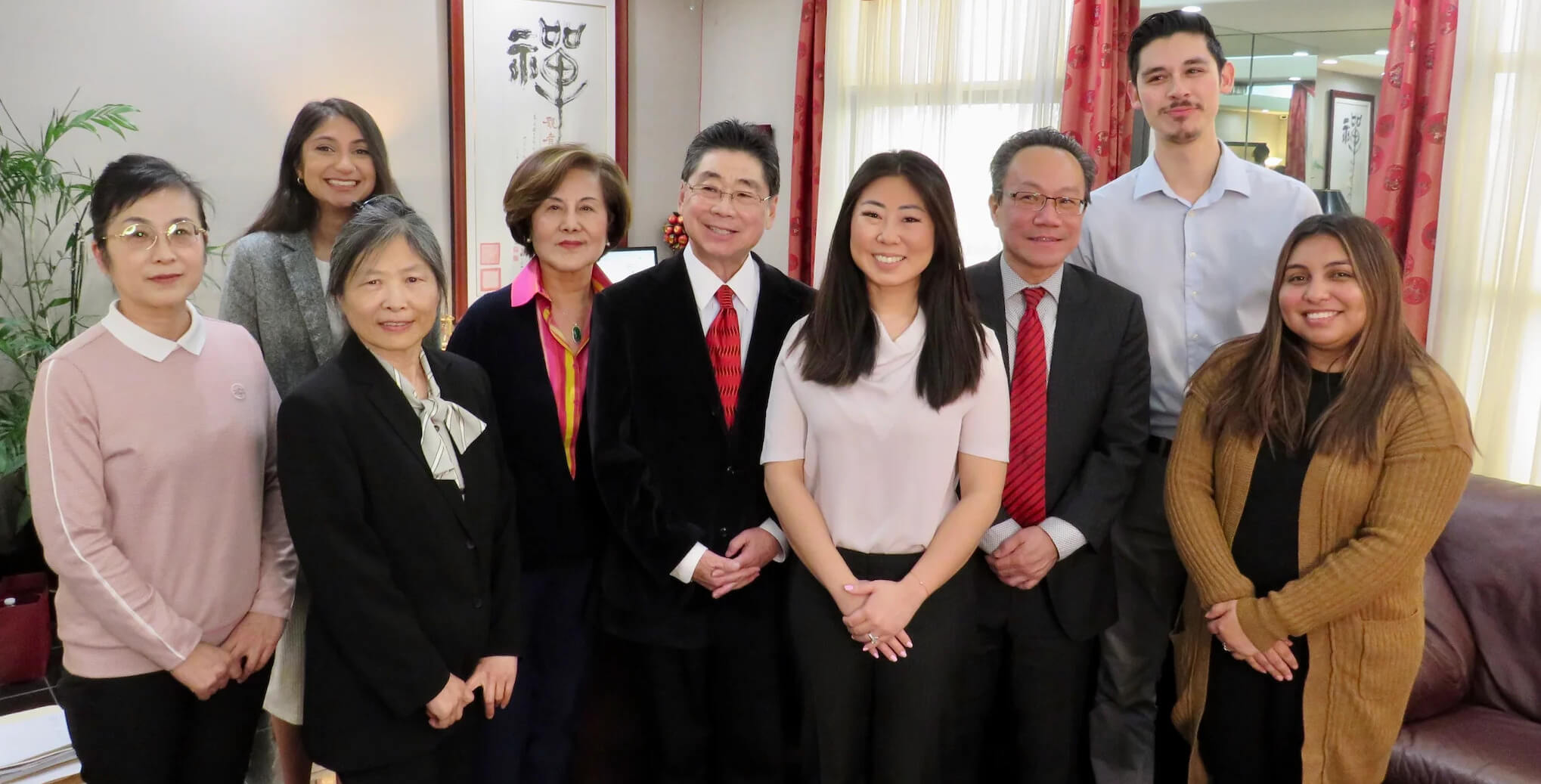

Why Choose Us?

  • Unmatched Expertise

    Trust in Peter Chu's 75+ years of collective experience to guide you through complex immigration matters.

  • Tailored Solutions

    Our personalized strategies adapt to your unique circumstances, ensuring we meet your specific immigration needs.

  • Proven Success

    Benefit from our solid track record in achieving favorable outcomes in various immigration cases across San Diego.

  • Dedicated Service

    Experience our client-first approach that ensures constant support and guidance throughout your immigration journey.

Miami-Dade County processed over 47,000 immigrant visa applications in 2024, making it the highest-volume USCIS field office in Florida and the third-busiest nationwide for family-based immigration petitions. For Miami residents navigating IR-5 parent visa applications. Where a single missed deadline or improperly documented financial relationship can delay reunification by 12–18 months. The difference between approval and extended separation often comes down to whether you had a licensed FL immigration lawyer reviewing your I-130 petition before filing. Law office of Peter Darwin Chu has represented Miami families in IR-5 parent visa cases since our founding, with deep familiarity with the Miami USCIS field office procedures and the unique documentation challenges facing multinational families in South Florida's diverse immigrant communities.

Book a Consultation

Law office of Peter Darwin Chu provides IR-5 lawyer Miami services to Florida residents filing parent visa petitions. Offering I-130 preparation, Affidavit of Support review, consular processing guidance, and RFE response for Miami families seeking to bring parents to the United States. We serve clients throughout Miami-Dade County with consultations available within 48 hours and case representation structured around the specific timeline requirements of immediate relative petitions.

IR-5 Lawyer Miami Available Across Miami and Surrounding Areas

Law office of Peter Darwin Chu represents clients throughout Miami, FL, including Downtown Miami, Brickell, Coral Gables, Little Havana, Wynwood, and Coconut Grove. Zip codes 33101, 33102, 33107, 33109, and 33110. All IR-5 parent visa consultations are conducted by Florida-licensed immigration attorneys familiar with Miami USCIS field office procedures, National Visa Center processing timelines, and the consular interview requirements at U.S. embassies serving the most common countries of origin for Miami's immigrant population.

What Miami Residents Can Access for IR-5 Parent Visa Cases

I-130 Petition Preparation and Filing

The I-130 Petition for Alien Relative is the foundational document in every IR-5 parent visa case, establishing the qualifying relationship between U.S. citizen petitioner and foreign national parent. Our Miami immigration lawyers prepare the full I-130 package. Including certified birth certificates with English translations, proof of petitioner citizenship, and the relationship documentation that USCIS adjudicators in the Miami field office scrutinize most closely. For Miami families where parents were born in countries with unreliable civil registration systems, we coordinate alternative evidence strategies before filing. Most I-130 petitions prepared by our office are filed electronically with USCIS for faster initial processing.

Affidavit of Support (Form I-864) Review

Every IR-5 parent visa case requires an Affidavit of Support demonstrating that the U.S. citizen sponsor meets 125% of the Federal Poverty Guidelines for household size. A threshold that in 2026 requires annual income of at least $27,450 for a two-person household. Our Miami office reviews tax transcripts, employment verification letters, and asset documentation to ensure compliance before the I-864 reaches the National Visa Center, where insufficient financial evidence is the most common reason for case delays. For self-employed sponsors or those with complex income sources common in Miami's gig economy and small business sectors, we structure I-864 submissions with supplemental evidence to preempt RFEs.

Consular Processing Guidance

After USCIS approves the I-130 petition, the case transfers to the National Visa Center and then to the U.S. embassy or consulate in the parent's country of residence for the final immigrant visa interview. Our IR-5 Miami team provides detailed consular processing guidance. Including DS-260 preparation, document collection checklists specific to the assigned embassy, and interview coaching for parents who will face questions in their native language. We monitor case status through the NVC online portal and coordinate with clients to meet document submission deadlines that, if missed, reset the queue position and add months to processing time.

Get in touch

Get clear, expert legal guidance tailored to your visa, green card, or citizenship needs.

Licensed Immigration Representation in Miami, FL

Law office of Peter Darwin Chu maintains all required Florida state and federal immigration practice licenses and carries professional liability insurance covering legal malpractice claims. Our attorneys are members in good standing of the Florida Bar and the American Immigration Lawyers Association (AILA), subject to the Rules Regulating The Florida Bar and bound by client confidentiality requirements under Florida Rules of Professional Conduct 4-1.6. All IR-5 parent visa representation agreements include written fee disclosures, clearly defined scope of services, and the right to case file copies upon request. Transparency requirements we follow in every Miami immigration case we accept.

Inquire now to check if you qualify

What if my parent's birth certificate from their home country has a different name spelling than their current passport when filing an IR-5 parent visa in Miami?

Name discrepancies between birth certificates and current identity documents are among the most common issues in IR-5 parent visa cases processed through Miami, particularly for parents from Latin America, the Caribbean, and countries with non-Latin alphabets. USCIS and the National Visa Center will require a legal name explanation. Either a certified name change document from the issuing country or a sworn affidavit explaining the variation, often combined with secondary identity documents (marriage certificates, school records, or national ID cards) that bridge the name versions. In Miami cases where obtaining a corrected birth certificate from the country of origin would take 6–12 months, we prepare alternative evidence packages using the totality-of-the-evidence standard that USCIS Administrative Appeals Office decisions recognize as permissible when primary documents are unavailable or contain clerical errors. The key is preemptive documentation before USCIS issues an RFE, which adds 60–90 days to case processing.

What if I don't meet the income requirement for the I-864 Affidavit of Support for my parent's IR-5 visa in Miami?

If your individual income doesn't reach 125% of the Federal Poverty Guidelines, you have three options under I-864 rules: use a joint sponsor (any U.S. citizen or lawful permanent resident willing to co-sign), combine household member income (if that person has lived with you for six months and will sign Form I-864A), or use qualified assets to substitute for income at a 5-to-1 ratio. In Miami, where housing costs often consume a large share of income, asset-based sponsorship using home equity, retirement accounts, or investment portfolios is common. But requires professional valuation and documentation that USCIS will accept. Our office calculates whether your specific asset mix qualifies before the I-864 is submitted to avoid the rejection and resubmission cycle that extends IR-5 case timelines by 3–6 months.

What if my parent overstayed a previous visitor visa to the U.S. before we file the IR-5 petition in Miami?

A prior visa overstay does not bar eligibility for an IR-5 immigrant visa, but it creates a consular processing complexity that must be addressed proactively in Miami cases. Your parent will need to depart the U.S. and cannot adjust status domestically, and the overstay period determines whether they face unlawful presence bars under INA Section 212(a)(9)(B). Overstays of 180–364 days trigger a three-year bar, and overstays of 365+ days trigger a ten-year bar, both requiring an I-601A provisional waiver before they can return. However, overstays that occurred before April 1, 1997, or that were accrued while the individual was under age 18, do not count toward unlawful presence calculations. Our Miami immigration attorneys conduct a complete unlawful presence analysis during the initial consultation to determine whether a waiver will be needed and whether filing the I-130 now or deferring until certain conditions change is the optimal strategy.

What if USCIS issues a Request for Evidence (RFE) on our IR-5 petition in Miami?

An RFE in an IR-5 parent visa case typically requests additional proof of the parent-child relationship, clarification of the petitioner's citizenship evidence, or supplemental financial documentation for the I-864 Affidavit of Support. You have 87 days from the RFE issue date to respond. Missing that deadline results in automatic petition denial. Our Miami office has a protocol for RFE responses: we obtain the complete USCIS case file to identify exactly what triggered the request, gather the specific evidence USCIS cited as missing or insufficient, and submit a response that directly addresses each enumerated deficiency with indexed exhibits and a point-by-point cover letter. RFEs are not denials. Most are issued because USCIS needs clarification on a single document or wants to see an updated tax transcript. But the response quality determines whether the I-130 is approved or denied, and whether the case stays on its original timeline or is delayed another 6–9 months.

Comparing IR-5 Parent Visa Representation Options in Miami

Miami families filing IR-5 parent visa petitions typically consider three representation paths: handling the case pro se (self-filing), using a notario or immigration consultant, or retaining a licensed Florida immigration attorney. Here's the honest answer: USCIS does not require legal representation for I-130 petitions, and the forms themselves are publicly available. But the 2024 approval rate for I-130s filed without attorney representation was 72%, compared to 94% for attorney-represented cases, according to USCIS FOIA data analyzed by the American Immigration Council. The gap reflects not form complexity but evidence strategy. Knowing which supporting documents USCIS adjudicators in Miami prioritize, how to structure an I-864 financial package for self-employed sponsors, and how to preempt the most common RFE triggers before submission.

Notarios and immigration consultants. Legal in many Latin American countries but not authorized to practice law in Florida. Can prepare forms but cannot provide legal advice, represent you before USCIS, or respond to RFEs. Florida Statute 817.563 makes it a third-degree felony to falsely represent oneself as qualified to practice immigration law. Licensed attorneys are bound by malpractice insurance, bar discipline, and client privilege protections that consultants do not carry.

OptionCostRFE ResponseProfessional Assessment
Pro se (self-filing)$0 legal fees, $535 USCIS filing feeYou research and draft response within 87 daysViable if case is simple, all documents in English, no prior immigration violations, and sponsor income exceeds 125% guidelines by 50%+
Notario / Consultant$300–$800Not authorized to provide legal advice or represent youHigh risk. Notarios cannot appear before USCIS, cannot file motions, and are not subject to attorney discipline for errors
Licensed FL Immigration Attorney$2,500–$5,000 for full I-130 + consular processing representationAttorney drafts and submits RFE response as part of representation agreementRecommended for any case involving name discrepancies, prior visa denials, complex financial situations, or non-English documents

Speak With Us Today

Frequently Asked Questions

Find answers to common questions about our services

  • The IR-5 parent visa process typically takes 12–18 months from I-130 filing to immigrant visa issuance, though timelines vary by USCIS field office workload and the specific U.S. embassy processing the case. In Miami, I-130 petitions filed with the USCIS

  • No. A pending I-130 petition does not grant work authorization or lawful status in the United States. Your parent must remain in their home country during IR-5 consular processing, or if they are in the U.S. on a valid nonimmigrant visa (such as a B-2 vis

  • IR-5 is the only parent visa category. It is designated for parents of U.S. citizens age 21 or older and is classified as an immediate relative petition under the Immigration and Nationality Act. This means there is no annual numerical cap, no visa waitin

  • Yes. Each parent requires a separate I-130 petition with separate filing fees, even if you are filing for both simultaneously. You will submit two complete I-130 packages with independent evidence of your relationship to each parent. However, once both I-

  • If your parent's country of residence does not have a U.S. embassy or consulate that processes immigrant visas, the National Visa Center will assign the case to a third-country embassy. Typically a nearby regional processing post. For example, U.S. citize

  • You can still sponsor your parent if your income is below 125% of the Federal Poverty Guidelines by using a joint sponsor, combining household member income, or qualifying assets. A joint sponsor must be a U.S. citizen or lawful permanent resident willing

  • The Miami USCIS field office, located at 9999 SW 97th Avenue in Miami, FL 33176, processes I-130 petitions for residents of Miami-Dade, Broward, Monroe, and parts of Palm Beach County. However, most I-130 petitions are now filed electronically through the

  • The core I-130 documentary evidence includes: your U.S. birth certificate (or naturalization certificate if you are a naturalized citizen) to prove your citizenship, your parent's birth certificate showing your name as their child, and if your parent's na

Need Personalized Immigration Guidance?

Law office of Peter Darwin Chu provides IR-5 lawyer Miami services to Florida families filing parent visa petitions. Offering I-130 petition preparation, Affidavit of Support structuring, and consular processing coordination with same-week consultations available for Miami-Dade County residents.

Related Immigration Services for Miami Families

Beyond IR-5 parent visa representation, Law office of Peter Darwin Chu assists Miami residents with IR-1 spouse visa petitions for foreign national spouses, IR-2 visa cases for unmarried children under 21, and citizenship naturalization applications for lawful permanent residents eligible to become U.S. citizens. Families pursuing employment-based options may also benefit from our EB-2 visa and EB-3 visa services. Our team also handles I-601 waiver cases for clients with prior unlawful presence or criminal inadmissibility issues. Contact our law firm to discuss your family's immigration path and determine which visa category best fits your situation.