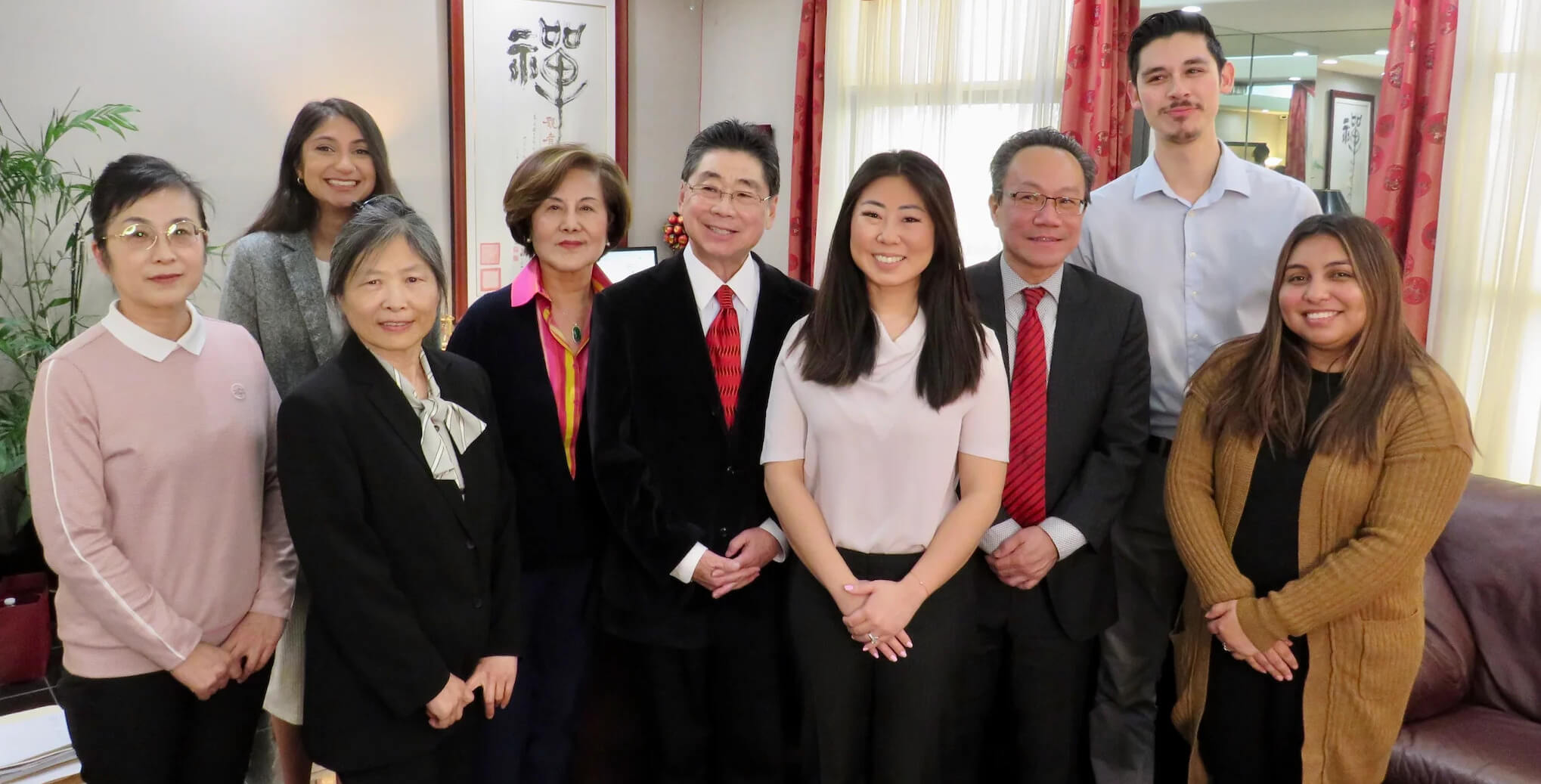

Why Choose Us?

  • Unmatched Expertise

    Trust in Peter Chu's 75+ years of collective experience to guide you through complex immigration matters.

  • Tailored Solutions

    Our personalized strategies adapt to your unique circumstances, ensuring we meet your specific immigration needs.

  • Proven Success

    Benefit from our solid track record in achieving favorable outcomes in various immigration cases across San Diego.

  • Dedicated Service

    Experience our client-first approach that ensures constant support and guidance throughout your immigration journey.

Denver processed over 2,800 K-1 fiancé visa petitions through the Denver Field Office in 2023, making it one of the highest-volume USCIS processing centers in the Mountain West region. And one where petition approval rates vary significantly based on evidence quality and petition presentation. For Denver, CO residents navigating K-1 fiancé visa applications, the difference between approval and a Request for Evidence (RFE) often comes down to whether the initial Form I-129F was reviewed by an immigration attorney before submission. Law Office of Peter Darwin Chu has represented K-1 petitioners throughout Denver and understands the evidentiary standards applied by the Denver USCIS office.

Book a Consultation

Law Office of Peter Darwin Chu provides k-1 attorney denver services to Denver residents and fiancé visa petitioners. Licensed Colorado immigration counsel with USCIS filing support, case evaluation within 48 hours, and representation through petition approval and consular interview preparation. We serve clients across Denver's metro area with remote consultation availability and in-person case reviews for complex filings.

K-1 Attorney Denver Services Available Across Denver and Surrounding Areas

Law Office of Peter Darwin Chu serves K-1 fiancé visa petitioners throughout Denver, CO, including Capitol Hill, Cherry Creek, Highland, LoDo, and Washington Park neighborhoods. Covering zip codes 80201, 80202, 80203, 80204, and 80205. All Colorado residents with qualifying K-1 petitions are eligible for representation regardless of county, and we provide remote consultation for petitioners whose fiancés reside abroad.

What Denver K-1 Fiancé Visa Petitioners Can Access

Form I-129F Petition Preparation and Filing

The K-1 fiancé visa begins with Form I-129F (Petition for Alien Fiancé), filed by the U.S. citizen petitioner with USCIS. Our Denver immigration attorney denver practice reviews your relationship evidence. Including proof of in-person meetings within the past two years, bona fide relationship documentation, and both parties' intent to marry within 90 days of U.S. entry. Before filing. Denver petitioners benefit from pre-filing review that identifies gaps in evidence before USCIS issues an RFE. Initial case evaluation includes document checklist review and timeline projection based on current Denver Field Office processing times.

Consular Interview Preparation for K-1 Beneficiaries

Once USCIS approves the I-129F petition, the case transfers to the National Visa Center and then to the U.S. consulate in the beneficiary's home country for interview scheduling. We prepare beneficiaries for consular interviews by reviewing required documents (DS-160, medical exam results, police certificates), conducting mock interviews, and advising on common interview questions specific to K-1 adjudications. Denver petitioners with fiancés in high-scrutiny countries benefit from country-specific consular practice knowledge that addresses cultural and documentary norms.

RFE and Administrative Processing Response

Requests for Evidence and administrative processing delays are common in K-1 cases involving prior immigration violations, criminal history, or insufficient relationship evidence. Our k-1 denver practice drafts RFE responses with supplemental evidence, legal briefs citing applicable USCIS policy, and sworn affidavits when needed. Response turnaround is typically 10–14 business days, well within USCIS deadlines, and we track case status through USCIS online portals to identify processing delays early.

Adjustment of Status After K-1 Entry

After the beneficiary enters the U.S. on a K-1 visa and the couple marries within 90 days, the beneficiary must file Form I-485 (Application to Adjust Status) to obtain lawful permanent residence. We handle the full I-485 process. Including work authorization (Form I-765), advance parole travel permission (Form I-131), and preparation for the green card interview. Denver-based adjustment cases are processed through the Denver Field Office, and we provide in-person interview preparation and accompaniment when requested.

Get clear, expert legal guidance tailored to your visa, green card, or citizenship needs.

Licensed Immigration Representation in Colorado

Law Office of Peter Darwin Chu maintains all required Colorado state and local licenses and operates under Colorado Rules of Professional Conduct governing attorney-client privilege and ethical representation. We are registered with the American Immigration Lawyers Association (AILA) and maintain professional liability insurance for all immigration cases. All K-1 fiancé visa representation is provided on a flat-fee basis disclosed in writing before engagement, with no hidden costs for routine case communication or status updates. Client confidentiality is protected under attorney-client privilege, and all case files are stored in encrypted systems compliant with Colorado data protection standards.

Get in touch

Inquire now to check if you qualify

What if my fiancé and I haven't met in person within the past two years — can I still file a K-1 petition in Denver?

USCIS requires proof that K-1 petitioners and beneficiaries met in person at least once within the two years immediately preceding the Form I-129F filing. Two narrow exceptions exist: (1) meeting in person would violate strict cultural or religious customs of the beneficiary's country, or (2) meeting in person would result in extreme hardship to the U.S. petitioner. Both exceptions require substantial documentary evidence and legal argument. A waiver request is not a checkbox on the form but a separate brief submitted with the petition. Denver petitioners considering a waiver should consult an immigration attorney before filing, as improperly supported waiver requests result in automatic petition denial without appeal.

What if my fiancé was previously denied a tourist visa — will that affect our K-1 petition in Denver?

A prior B-2 tourist visa denial does not automatically bar K-1 approval, but the reason for the denial matters significantly. If the beneficiary was denied due to failure to demonstrate strong ties to their home country or immigrant intent, those same concerns may resurface during K-1 adjudication. Though the legal standard is different (K-1 allows immigrant intent, B-2 does not). If the denial involved fraud, misrepresentation, or a prior immigration violation, those issues must be disclosed and may require a waiver filing. Denver petitioners with fiancés who have prior visa denials should obtain the consular refusal reason (often available through a Freedom of Information Act request) and consult an immigration attorney to assess waiver eligibility before filing the K-1 petition.

What if we get married before the K-1 visa is approved — can we switch to a spousal visa in Denver?

If you marry your fiancé before the K-1 visa is issued, the K-1 petition becomes legally invalid. USCIS will deny or terminate the petition because the beneficiary is no longer a 'fiancé.' You cannot convert a K-1 petition to a spousal visa petition; you must file a new Form I-130 (Petition for Alien Relative) for an immigrant spousal visa, which follows a different processing timeline and documentary requirements. Denver petitioners who marry abroad while the K-1 is pending should notify their attorney immediately to assess whether to withdraw the K-1 and file an I-130, or to proceed with consular notification. Early marriage is one of the most common procedural errors in fiancé visa cases and can add 6–12 months to the overall immigration timeline.

What if my fiancé has a criminal record — can they still get a K-1 visa to come to Denver?

A criminal record does not automatically disqualify a K-1 beneficiary, but the type of crime, the sentence imposed, and the number of convictions all affect admissibility. Crimes involving moral turpitude (fraud, theft, assault, domestic violence) and controlled substance offenses trigger inadmissibility grounds under INA Section 212(a). Some offenses qualify for a waiver (Form I-601) if the U.S. petitioner can demonstrate extreme hardship, but waivers are discretionary and require substantial evidence. Denver petitioners with fiancés who have criminal history should obtain certified court records, disposition documents, and police certificates before filing the K-1 petition. And should consult an immigration attorney to assess whether a waiver filing is necessary and whether the waiver is likely to be approved.

Choosing Between a K-1 Fiancé Visa and a Spousal Immigrant Visa in Denver

Denver petitioners often ask whether to pursue a K-1 fiancé visa or marry abroad and file for a spousal immigrant visa (CR-1 or IR-1). The choice depends on timeline priorities, travel flexibility, and work authorization needs. Here's the honest answer: K-1 visas allow your fiancé to enter the U.S. faster (typically 6–9 months from filing to entry), but they cannot work or travel internationally until adjustment of status is approved, which adds another 8–12 months. Spousal visas take longer initially (10–14 months from filing to visa issuance) but grant work authorization and travel permission immediately upon U.S. entry as a lawful permanent resident. For Denver couples who want to reunite quickly and are comfortable with restricted employment during adjustment, K-1 is optimal. For couples where the beneficiary has stable employment abroad or needs international travel flexibility, the spousal visa path is often more practical despite the longer initial wait.

FactorK-1 Fiancé VisaSpousal Immigrant VisaDIY FilingProfessional Assessment
U.S. Entry Timeline6–9 months10–14 monthsUnpredictableK-1 faster entry; spousal visa faster total process to green card
Work AuthorizationNot until I-765 approved (8–12 months post-entry)Immediate upon entrySame timelines applySpousal visa provides immediate work authority
CostLower initial filing feesHigher filing fees but no adjustment costsSame fees but high RFE riskSpousal visa lower total cost when adjustment fees included
Evidence BurdenMust prove intent to marry within 90 daysMust prove valid marriage already existsDIY filers often miss key evidence typesBoth require substantial relationship evidence; attorney review reduces RFE rate by 60%+

Frequently Asked Questions

Find answers to common questions about our services

  • The K-1 process from Form I-129F filing to U.S. entry typically takes 6–9 months for Denver petitioners, though timelines vary based on USCIS processing times, consular workload in the beneficiary's country, and whether any RFEs or administrative processi

  • USCIS requires evidence that your relationship is genuine and not solely for immigration purposes. Acceptable evidence includes: photographs together spanning the relationship timeline (with dates and locations documented), travel records showing in-perso

  • No. A pending K-1 petition does not grant any U.S. work authorization or legal status to the beneficiary. The beneficiary remains in their home country with whatever legal status they hold there until the K-1 visa is issued and they travel to the U.S. Aft

  • The K-1 visa is valid for single entry and grants the beneficiary 90 days to marry the petitioner after U.S. entry. This 90-day period cannot be extended under any circumstances. If you do not marry within 90 days, the beneficiary must leave the U.S.. Rem

  • Attorney fees for K-1 representation in Denver typically range from $2,500 to $4,500 for full-service representation covering petition preparation, filing, RFE response if needed, and consular interview preparation. This is separate from USCIS filing fees

  • The K-1 visa is for fiancés who will marry in the U.S. within 90 days of entry; the K-3 visa was designed for spouses of U.S. citizens who married abroad and are waiting for an immigrant visa. In practice, K-3 visas are rarely used anymore because spousal

  • Yes, if your fiancé has unmarried children under age 21, they can apply for K-2 derivative visas to accompany or follow-to-join the K-1 principal beneficiary. The children must be listed on the original Form I-129F petition. Children not listed cannot be

  • If the consular officer denies the K-1 visa, the denial notice will state the reason (typically inadmissibility grounds under INA 212(a), such as prior immigration violations, criminal history, public charge concerns, or fraud). There is no formal appeal

Need Personalized Immigration Guidance?

Law Office of Peter Darwin Chu provides k-1 attorney denver services to fiancé visa petitioners across Denver, CO. Offering licensed immigration representation, USCIS petition filing, consular interview preparation, and adjustment of status support with flat-fee pricing and 48-hour case evaluation turnaround.

Related Immigration Services for Denver Residents

Beyond K-1 fiancé visa representation, Law Office of Peter Darwin Chu handles a full range of family-based and employment-based immigration matters for Denver clients. Our J-1 Visa Attorney practice serves exchange visitors navigating waiver requirements and status changes. For clients pursuing naturalization, our National City Citizenship Attorney and Citizenship Attorney In San Marcos Ca services provide application support and interview preparation. Denver-area residents with questions about other visa categories or immigration status issues are invited to schedule a consultation to discuss eligibility and case strategy.

Speak With Us Today