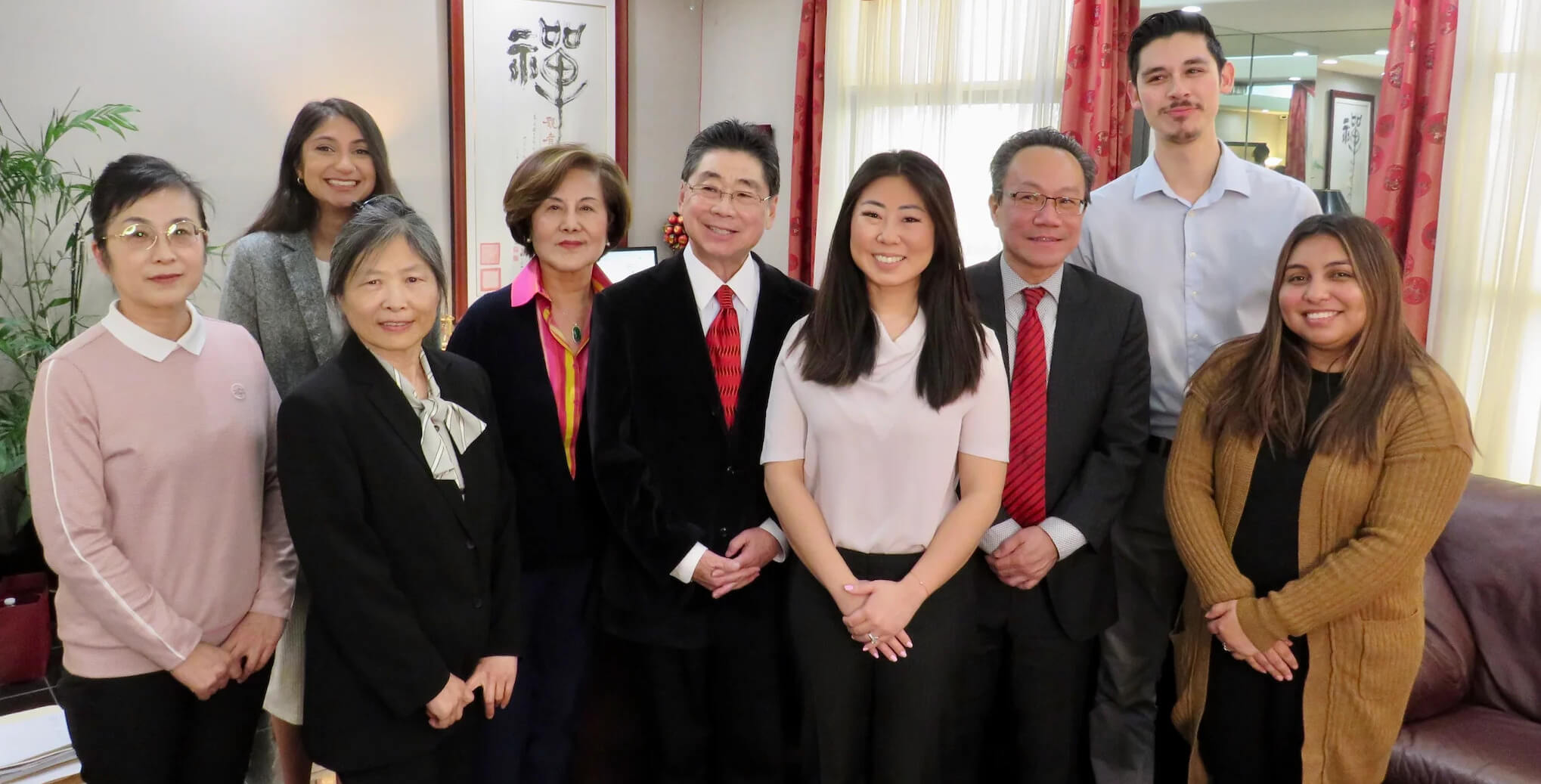

Why Choose Us?

  • Unmatched Expertise

    Trust in Peter Chu's 75+ years of collective experience to guide you through complex immigration matters.

  • Tailored Solutions

    Our personalized strategies adapt to your unique circumstances, ensuring we meet your specific immigration needs.

  • Proven Success

    Benefit from our solid track record in achieving favorable outcomes in various immigration cases across San Diego.

  • Dedicated Service

    Experience our client-first approach that ensures constant support and guidance throughout your immigration journey.

Travis County processed over 3,200 family-based immigration petitions in 2024, making Austin one of the fastest-growing visa processing markets in Texas. And one where K-3 spouse visa timeline precision can mean the difference between 6-month and 18-month separations. For Austin, TX residents navigating the K-3 visa process, the difference between approval and administrative delay often comes down to whether Form I-129F was filed with complete supporting evidence before USCIS issued the first Request for Evidence. Law office of Peter Darwin Chu has represented Austin families in K-3 spouse visa cases since 2008, with expertise in the consular processing requirements specific to Travis County residents petitioning from abroad.

Book a Consultation

Law office of Peter Darwin Chu provides K-3 attorney Austin services to Travis County residents. Licensed under the State Bar of Texas with consultation appointments available within 48 hours for qualifying spouse visa cases. We represent U.S. citizens petitioning for their foreign spouses through the K-3 nonimmigrant visa pathway, handling Form I-129F filing, consular interview preparation, and adjustment of status once the spouse enters the United States.

K-3 Attorney Austin Available Across Austin and Surrounding Areas

Law office of Peter Darwin Chu serves clients throughout Austin, TX, including Downtown Austin, East Austin, South Congress, Hyde Park, and Zilker. Zip codes 73301, 73344, 78701, 78702, and 78703. All Travis County residents with pending or planned K-3 spouse visa petitions are eligible for representation regardless of where the foreign spouse currently resides abroad.

What Austin Residents Can Access

K-3 Spouse Visa Austin Filing and Strategy

The K-3 visa allows U.S. citizens to bring their foreign spouse to the United States while the immigrant visa petition (Form I-130) is pending. Reducing separation time by allowing the spouse to wait in the U.S. rather than abroad. For Austin residents, we prepare and file Form I-129F (Petition for Alien Fiancé(e)), coordinate with the National Visa Center for case forwarding, and prepare clients for consular interviews at the appropriate U.S. embassy or consulate. Austin-area processing timelines for K-3 cases currently average 8–12 months from I-129F filing to visa issuance, though consular backlogs in high-volume countries can extend this window. We provide timeline projections specific to your spouse's country of residence.

Immigration Attorney Austin Consular Processing Support

Once USCIS approves the I-129F petition, the case transfers to the National Visa Center and then to the consular post with jurisdiction over your spouse's residence. We prepare clients for the DS-160 visa application, schedule and brief for the consular interview, and advise on required civil documents (police certificates, marriage certificates, medical exams). Austin clients benefit from our experience with consular posts across Latin America, Asia, and Europe. Each with distinct evidentiary standards and processing speeds.

Adjustment of Status After K-3 Entry

After your spouse enters the United States on a K-3 visa, they may apply for adjustment of status to lawful permanent resident (green card holder) by filing Form I-485. Without returning to their home country for consular processing. For Austin families, this provides significant logistical and financial relief, eliminating international travel costs and allowing the couple to remain together throughout the adjustment process. We handle the full I-485 filing, work permit (EAD) application, and advance parole (travel authorization) for K-3 entrants adjusting status in Texas.

Get clear, expert legal guidance tailored to your visa, green card, or citizenship needs.

Why Austin Residents Choose Law office of Peter Darwin Chu

Law office of Peter Darwin Chu maintains active licensure with the State Bar of Texas and operates in full compliance with American Immigration Lawyers Association (AILA) ethical standards and Texas Disciplinary Rules of Professional Conduct. We have represented immigration clients in Austin since 2008, with documented experience in K-3 spouse visa cases, consular processing, and adjustment of status filings. All consultations are conducted by a licensed attorney. Not paralegals or legal assistants. And every case includes written fee agreements with no hidden costs for routine USCIS correspondence or case status updates.

Inquire now to check if you qualify

What if my I-130 immigrant visa petition is already pending — can I still file a K-3 in Austin?

Yes. The K-3 visa was specifically designed for cases where the I-130 is already filed but not yet approved. You may file Form I-129F (the K-3 petition) as soon as you receive the I-130 receipt notice from USCIS. For Austin residents, filing the K-3 while the I-130 is pending allows your spouse to enter the U.S. on a nonimmigrant visa and wait domestically rather than abroad, often reducing total separation time by 6–12 months. However, if your I-130 is approved before the K-3 visa is issued, USCIS may administratively close the K-3 case and proceed directly with consular processing of the immigrant visa. In which case the K-3 filing served as a timeline hedge but did not result in K-3 issuance.

What if my spouse's K-3 visa expires before we complete adjustment of status in Austin?

K-3 visa validity does not affect your spouse's ability to remain in the United States or adjust status once they have entered. The K-3 is a nonimmigrant visa, but it is specifically designed to allow the holder to apply for adjustment of status (green card) while in the U.S.. Which changes their intent from nonimmigrant to immigrant. As long as the adjustment of status application (Form I-485) is filed before the K-3 status expires, your spouse remains in lawful status throughout the adjudication period, even if that takes 12–18 months. Austin residents should file I-485 within 90 days of K-3 entry to avoid any status gaps or questions about intent at the time of entry.

What if USCIS issues a Request for Evidence (RFE) on my K-3 petition in Austin?

An RFE on a K-3 petition typically requests additional proof of the bona fide marital relationship. Joint financial documents, photographs, correspondence, or affidavits from family members who attended the wedding. For Austin residents, the response deadline is typically 87 days from the date of the RFE, and failure to respond results in automatic denial of the petition. We prepare comprehensive RFE responses that include narrative explanations of the relationship timeline, certified translations of foreign-language documents, and affidavits tailored to USCIS evidentiary standards. A well-prepared RFE response resolves most adjudication concerns and returns the case to normal processing within 60–90 days.

What if my spouse was previously denied a tourist visa — does that affect the K-3 in Austin?

A prior B-2 (tourist) visa denial does not automatically disqualify your spouse from K-3 approval, but the consular officer will review the prior denial reason during the K-3 interview. Common B-2 denial grounds. Such as inability to demonstrate nonimmigrant intent or ties to the home country. Are not relevant to K-3 adjudication, because the K-3 is explicitly for spouses of U.S. citizens who intend to immigrate. However, if the prior denial was based on fraud, misrepresentation, or a criminal inadmissibility ground, those issues will carry over to the K-3 case and may require a waiver. Austin residents in this situation should disclose the prior denial in the initial consultation so we can assess whether additional filings (such as a fraud waiver or criminal rehabilitation application) are necessary before proceeding with the K-3.

K-3 Attorney Austin vs. DIY Filing vs. Online Petition Mills

Austin residents considering K-3 spouse visa representation have three main paths: hiring a licensed immigration attorney, filing the petition independently using USCIS instructions, or using an online document preparation service. Each carries distinct risk and cost profiles.

Here's the honest answer: DIY K-3 filings work for straightforward cases with U.S.-born petitioners, first marriages, and spouses from low-fraud countries with no prior visa denials. But any deviation from that profile (prior immigration violations, marriages under two years old, marriages performed abroad without family present, spouses from high-scrutiny countries) dramatically increases the RFE and denial risk. Online petition services generate forms but provide no legal advice, no consular interview preparation, and no representation if USCIS issues an RFE or the consular officer denies the visa. Leaving Austin families with half-completed cases and no recourse. Licensed immigration attorneys handle the full lifecycle: petition strategy, evidence compilation, RFE response, consular prep, and post-entry adjustment of status. And are bound by Texas Rules of Professional Conduct with malpractice insurance coverage.

ApproachTimelineRFE RiskConsular SupportAdjustment SupportProfessional Assessment
Licensed Attorney8–12 monthsLow (comprehensive evidence)Full interview prep + country-specific briefingIncluded in representationBest for non-straightforward cases, prior denials, high-scrutiny countries
DIY Filing8–14 monthsModerate to High (common evidence gaps)None (self-research only)Must hire separatelyViable only for first-marriage, low-complexity cases with strong English skills
Online Petition Mill10–16 months (no RFE response service)High (form accuracy only, no legal review)NoneNoneNot recommended. Generates forms but provides no legal protection or consular guidance

Get in touch

Frequently Asked Questions

Find answers to common questions about our services

  • K-3 visa processing for Austin residents currently averages 8–12 months from Form I-129F filing to visa issuance, though this timeline varies by consular post workload and the spouse's country of residence. USCIS adjudication of the I-129F petition typica

  • A complete K-3 petition requires Form I-129F with filing fee, proof of U.S. citizenship (passport or birth certificate), certified marriage certificate with English translation if issued abroad, Form I-130 receipt notice proving the immigrant visa petitio

  • Yes. K-3 visa holders are eligible to apply for an Employment Authorization Document (EAD) immediately upon entering the United States by filing Form I-765. EAD processing currently takes 3–5 months, so most K-3 spouses in Austin do not receive work autho

  • The K-3 is a nonimmigrant visa that allows the foreign spouse to enter the U.S. while the I-130 immigrant visa petition is pending, then adjust status domestically. The CR-1 (or IR-1 for marriages over two years) is an immigrant visa issued at the consula

  • Yes. The K-3 visa is specifically designed for U.S. citizens who married abroad and are petitioning for their foreign spouse to join them in the United States. The marriage must be legally valid in the country where it was performed and recognized under U

  • If USCIS approves the underlying I-130 immigrant visa petition before the consular post issues the K-3 visa, the K-3 case is typically administratively closed and the case proceeds directly to immigrant visa processing (CR-1 or IR-1). This is not a denial

  • We provide end-to-end K-3 representation that includes I-129F petition preparation, consular interview country-specific briefing, and post-entry adjustment of status filing. All within a single flat-fee engagement. Many Austin immigration attorneys charge

  • Common K-3 denial reasons include insufficient evidence of bona fide marriage (consular officer believes the marriage is fraudulent or was entered solely for immigration benefit), criminal inadmissibility of the foreign spouse, prior immigration violation

Need Personalized Immigration Guidance?

Law office of Peter Darwin Chu provides K-3 attorney Austin representation to Travis County residents with same-week consultation availability, licensed Texas Bar immigration attorneys, and full-service consular processing and adjustment of status support for spouse visa cases.

Related Immigration Services in Austin and Beyond

Austin families navigating K-3 spouse visa cases often benefit from related immigration services. Including IR-1 Spouse Visa (the immigrant visa alternative to K-3 that provides immediate green card status upon entry) and Citizenship services for foreign spouses who entered on K-3 visas and later qualify for naturalization after three years of marriage to a U.S. citizen. We also represent clients in J-1 Visa Attorney matters for exchange visitors transitioning to family-based immigration status, and provide National City Citizenship Attorney and Citizenship Attorney In San Marcos Ca services for clients in neighboring jurisdictions. For comprehensive immigration guidance tailored to your Austin-area case, our team coordinates multi-visa strategies that align short-term entry options with long-term permanent residence goals.

Speak With Us Today