
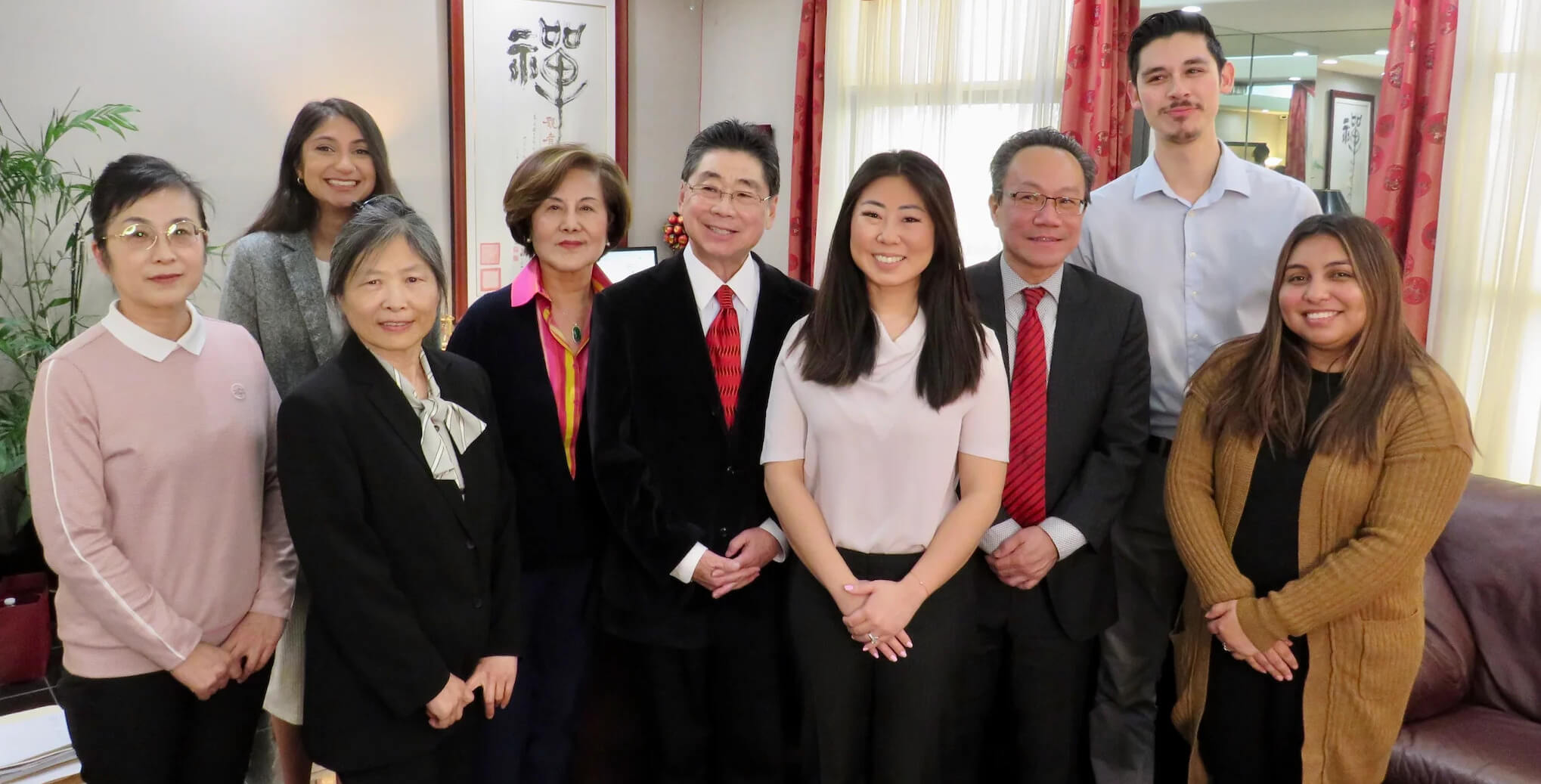
Why Choose Us?
-

Unmatched Expertise
Trust in Peter Chu's 75+ years of collective experience to guide you through complex immigration matters.
-

Tailored Solutions
Our personalized strategies adapt to your unique circumstances, ensuring we meet your specific immigration needs.
-

Proven Success
Benefit from our solid track record in achieving favorable outcomes in various immigration cases across San Diego.
-

Dedicated Service
Experience our client-first approach that ensures constant support and guidance throughout your immigration journey.


Get clear, expert legal guidance tailored to your visa, green card, or citizenship needs.

Inquire now to check if you qualify
K-3 Spouse Visa vs. CR-1/IR-1 Immigrant Visa: Which Path Is Faster for Chino Hills Families?
Many Chino Hills couples assume the K-3 visa is the fastest spouse reunification option, but current USCIS and consular processing times have eroded the K-3's original time advantage. Here's the honest answer: the K-3 was created in 2000 to allow spouses to enter the U.S. while waiting for I-130 approval, but modern I-130 processing at USCIS California Service Center (currently 12–18 months) often completes before K-3 consular processing finishes, rendering the K-3 redundant. We evaluate both pathways at the initial consultation based on your spouse's country of origin, consular post workload, and whether you have minor children who need derivative visas.
| Factor | K-3 Spouse Visa | CR-1/IR-1 Immigrant Visa | Professional Assessment |
|---|---|---|---|
| Entry Status | Temporary nonimmigrant—requires I-485 adjustment after entry | Immediate permanent resident upon entry | CR-1/IR-1 = one-step process, no post-entry filing burden |
| Work Authorization | Must file I-765 after entry and wait 3–5 months for EAD | Authorized to work immediately upon entry with Green Card | CR-1/IR-1 = immediate employment eligibility, no EAD delay |
| Processing Time | I-129F (6–9 months) + consular (2–4 months) = 8–13 months total | I-130 (12–18 months) + NVC/consular (2–4 months) = 14–22 months | K-3 advantage has narrowed to 1–9 months depending on consulate |
| Travel Flexibility | Requires Advance Parole for international travel during I-485 | Full international travel rights as permanent resident | CR-1/IR-1 = no travel restrictions or re-entry permit requirements |
Frequently Asked Questions
Find answers to common questions about our services
-
Current K-3 processing for Chino Hills residents averages 8–13 months total—6–9 months for USCIS California Service Center approval of Form I-129F, plus 2–4 months for National Visa Center processing and consular interview scheduling. High-volume consular
-
No—K-3 visa holders must file Form I-765 (Application for Employment Authorization) after entering the United States and wait 3–5 months for USCIS to issue an Employment Authorization Document (EAD). Work authorization is not automatic upon K-3 entry. We
-
USCIS charges $675 for Form I-129F (K-3 petition), $325 for Form I-485 (Adjustment of Status), $260 for Form I-765 (work authorization), and $630 for Form I-131 (Advance Parole)—totaling $1,890 in government fees if all applications are filed. The U.S. De
-
USCIS does not require attorney representation for K-3 petitions, but the statutory filing sequence—Form I-130 must be filed before Form I-129F, and both must include identical beneficiary information—creates technical traps that trigger Requests for Evid
-
A K-3 visa is valid for two years from the date of issuance, but your spouse must use it to enter the United States before the visa expiration date printed in the passport. If the visa expires unused—due to travel delays, COVID-19 restrictions, or consula
-
Yes—K-3 visa holders are authorized to attend college or university in the United States without changing to F-1 student status, because K-3 is a dual-intent visa classification that permits both nonimmigrant activity (study) and immigrant intent (adjustm
-
K-1 (fiancé) visas are for couples who are not yet married—the U.S. citizen petitions for the foreign fiancé(e) to enter the U.S. and the couple must marry within 90 days of entry. K-3 visas are for couples already legally married abroad—the U.S. citizen
-
Yes, but you must demonstrate U.S. domicile to meet the I-864 Affidavit of Support requirement that applies during the adjustment of status phase. U.S. domicile means you maintain your principal residence in the United States (or intend to reestablish it
Need Personalized Immigration Guidance?

