
Why Choose Us?

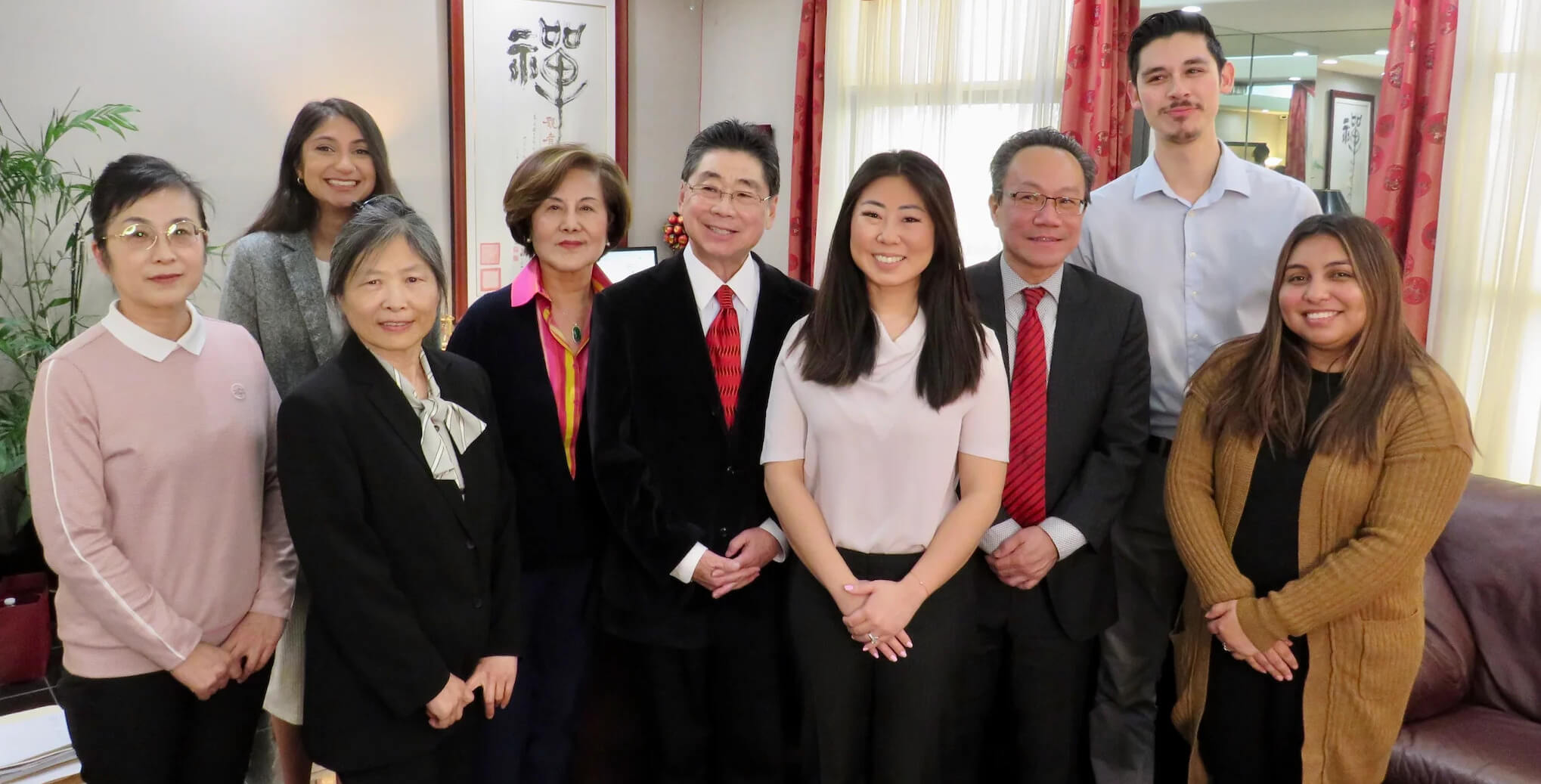
  • Unmatched Expertise

    Trust in Peter Chu's 75+ years of collective experience to guide you through complex immigration matters.

  • Tailored Solutions

    Our personalized strategies adapt to your unique circumstances, ensuring we meet your specific immigration needs.

  • Proven Success

    Benefit from our solid track record in achieving favorable outcomes in various immigration cases across San Diego.

  • Dedicated Service

    Experience our client-first approach that ensures constant support and guidance throughout your immigration journey.
Highland, CA residents filed over 320 family-based immigration petitions in San Bernardino County in 2023, making K-3 spousal visa processing one of the most time-sensitive pathways for reuniting families separated by international borders. For Highland families navigating USCIS Form I-129F deadlines and consular interview preparation, the difference between approval and administrative delay often comes down to whether supporting documentation was assembled with case-specific precision before the petition was mailed. Law office of Peter Darwin Chu has guided Highland, CA clients through K-3 visa applications since 2008, representing married couples across zip codes 92346 and 95660 with a focus on complete petition packages that meet current USCIS processing standards.

Book a Consultation

Law office of Peter Darwin Chu provides K-3 attorney Highland services to California residents. Representing married couples in Form I-129F petition preparation, consular processing coordination, and K-3 visa interview guidance, with same-week consultations available at our Southern California office. We serve Highland families seeking spousal reunification under Immigration and Nationality Act §101(a)(15)(K)(ii), ensuring every petition meets USCIS documentary evidence requirements and National Visa Center processing timelines before submission.

K-3 Attorney Highland Available Across Highland and Surrounding Areas

Law office of Peter Darwin Chu represents K-3 visa applicants throughout Highland, CA, including neighborhoods near East Highland Avenue, Sterling Avenue, and Palm Avenue corridors. Serving zip codes 92346 and 95660 across San Bernardino County. All Highland residents with pending or planned I-129F filings are eligible for consultation regardless of current visa status, and we coordinate with clients across Southern California for document preparation, translation verification, and consular appointment scheduling.

What Highland K-3 Visa Applicants Can Access

Form I-129F Petition Preparation for K-3 Spousal Visas

The K-3 visa allows a foreign spouse of a U.S. citizen to enter the United States while an immigrant visa petition (Form I-130) is pending. Reducing separation time during the adjustment of status process. Highland applicants must file Form I-129F with USCIS, establish bona fide marriage through documentary evidence (joint financial records, photographs, correspondence), and demonstrate that the underlying I-130 petition has been filed. Law office of Peter Darwin Chu prepares complete I-129F packages with Highland-specific attention to proof of legal marriage under California Family Code standards, evidence organization that meets current USCIS Adjudicator's Field Manual guidelines, and cover letters that flag case-specific processing considerations before the petition reaches the California Service Center.

Consular Processing and National Visa Center Coordination

Once USCIS approves the I-129F petition, the case transfers to the National Visa Center and then to the U.S. consulate in the foreign spouse's home country for visa interview scheduling. Highland families often face confusion during this handoff. Particularly regarding DS-160 online application completion, civil document authentication requirements, and medical examination scheduling at panel physicians. We guide Highland clients through every NVC submission deadline, ensure Affidavit of Support (Form I-134) compliance for K-3 cases, and prepare clients for consular officer questions about marital intent, prior immigration history, and planned U.S. residence after visa issuance.

Post-Entry Adjustment of Status Support

K-3 visa holders enter the U.S. on a nonimmigrant visa but are eligible to adjust status to lawful permanent resident once the underlying I-130 petition is approved. Typically filed concurrently with Form I-485, Application to Register Permanent Residence. Highland K-3 entrants must maintain valid status during adjustment processing, comply with advance parole requirements if traveling outside the U.S., and attend biometrics and interview appointments at the San Bernardino or Los Angeles USCIS field offices. Law office of Peter Darwin Chu coordinates the full adjustment timeline for Highland families, ensuring continuous lawful status from K-3 entry through green card receipt.

Get clear, expert legal guidance tailored to your visa, green card, or citizenship needs.

Licensed K-3 Immigration Representation in Highland, CA

Law office of Peter Darwin Chu maintains all required California state and local licenses and professional insurance, operating under American Immigration Lawyers Association (AILA) ethical standards and California Business and Professions Code attorney conduct requirements. Our Highland K-3 visa practice is governed by 8 U.S.C. §1184(d) (K visa statutory authority) and 8 CFR §214.2(k) (K-3 visa regulatory framework), ensuring every petition complies with current USCIS Policy Manual Volume 6 family-based immigration guidance. We provide Highland clients with written fee agreements, confidential case file access, and transparent communication about processing timelines. No K-3 case is accepted without verification that the underlying I-130 petition has been properly filed with USCIS.

Inquire now to check if you qualify

What if my spouse and I married abroad and I want to bring them to Highland faster than the normal immigrant visa process allows?

The K-3 visa was specifically designed for this scenario. Allowing your foreign spouse to enter Highland, CA while the I-130 immigrant visa petition is still pending at USCIS, potentially reducing separation time by 6–12 months compared to consular processing alone. You must file Form I-129F after the I-130 has been submitted, prove the marriage is legally recognized under the foreign country's law, and demonstrate bona fide marital intent through joint financial records and cohabitation history. Once the K-3 visa is issued and your spouse enters Highland, they can immediately file Form I-485 to adjust status to permanent resident without waiting for the I-130 to be fully approved abroad. However, current USCIS processing times have reduced the K-3 advantage. Many I-130 petitions now adjudicate faster than K-3 petitions, so a Highland immigration attorney should evaluate whether K-3 filing makes strategic sense for your specific case timeline before you invest in dual petition preparation.

What if my I-130 petition is approved while my K-3 application is still pending at the consulate?

If your I-130 immigrant visa petition is approved before the K-3 visa is issued, the K-3 application automatically terminates under 8 CFR §214.2(k)(10). The consulate will process your spouse under the faster immigrant visa (CR-1 or IR-1) category instead. This is not a failure. It means your spouse will receive a green card immediately upon entry to Highland rather than entering on a nonimmigrant K-3 visa and adjusting status later. Highland petitioners should understand that filing both I-129F and I-130 creates two parallel processing tracks, and whichever completes first governs the visa issuance. In practice, many K-3 petitions filed today never reach visa issuance because I-130 processing at the National Visa Center has accelerated since 2022. Law office of Peter Darwin Chu monitors both timelines for Highland families and advises whether to withdraw the K-3 application if the I-130 pathway becomes clearly faster.

What if my spouse entered Highland on a K-3 visa but we separated before adjustment of status was completed?

K-3 status is valid for 2 years from the date of entry, renewable if the underlying I-130 petition remains pending. But adjustment of status (Form I-485) requires that the marriage remain bona fide and subsisting at the time of the green card interview. If you and your spouse separate or divorce after K-3 entry to Highland but before the I-485 is approved, USCIS will deny the adjustment application under INA §245(d) because the marriage was the basis for eligibility. Your spouse would then fall out of lawful status unless they qualify for another visa category. However, if the marriage was entered in good faith (not for immigration fraud) and the divorce occurred due to legitimate reasons. Including domestic violence under the Violence Against Women Act (VAWA). Your spouse may still qualify for a waiver or self-petition. Highland K-3 holders facing marital dissolution should consult an immigration attorney immediately to evaluate whether VAWA relief, battered spouse waiver, or voluntary departure is the appropriate path before USCIS schedules the final interview.

What if my K-3 spouse wants to work in Highland while waiting for adjustment of status approval?

K-3 visa holders are eligible to apply for employment authorization by filing Form I-765 (Application for Employment Authorization Document) immediately upon entry to Highland, CA. No waiting period is required under 8 CFR §274a.12(c)(18). The EAD is typically issued within 90–120 days of filing and is valid for 2 years, renewable as long as the adjustment of status application remains pending. Your spouse can work for any Highland employer once the EAD is received; K-3 status itself does not grant automatic work authorization. Many Highland families file the I-765 concurrently with the I-485 adjustment application to minimize the period without income. If USCIS takes longer than 90 days to adjudicate the EAD application, the K-3 holder can request expedited processing by demonstrating severe financial hardship. A showing that Law office of Peter Darwin Chu helps Highland clients document with employer conditional offer letters and household budget declarations.

K-3 Attorney Highland vs. DIY Petition Filing or Visa Consultants

Highland families often weigh three paths for K-3 spousal visa applications: filing Form I-129F independently using USCIS instruction guides, hiring a non-attorney visa consultant or notario, or retaining a licensed immigration attorney. Here's the honest answer: K-3 petitions are technically less complex than employment-based or asylum applications, and USCIS does not require attorney representation. But the petition's success depends entirely on documentary evidence quality, and errors in marriage proof or financial support documentation are the leading cause of Requests for Evidence (RFEs) that delay approval by 4–6 months. A DIY filer in Highland who submits insufficient joint financial records or fails to authenticate a foreign marriage certificate under Hague Convention standards will receive an RFE requiring the same documents an attorney would have gathered at the outset. Except now the case is delayed and the adjudicator has flagged credibility concerns. Visa consultants and notarios cannot provide legal advice under California Business and Professions Code §6125 and are not authorized to represent clients before USCIS. Meaning they can type forms but cannot evaluate case strategy, respond to RFEs with legal argument, or advise on adjustment of status timing.

ApproachI-129F PreparationRFE ResponseConsular CoordinationProfessional Assessment
DIY FilingSelf-prepared using USCIS instructionsLimited to resubmitting documentsNo attorney guidance at consulateViable for straightforward cases with strong documentation skills; high RFE risk if marriage proof is incomplete
Visa ConsultantForm completion only, no legal adviceCannot submit legal argumentsNo attorney representationIllegal practice of law in California; no recourse if case is denied due to consultant error
Licensed Highland K-3 AttorneyComplete evidence package with legal cover letterLegal analysis and supplemental briefsDirect consular officer communicationRequired for cases with prior visa denials, complex marital history, or significant evidence gaps
Law Office of Peter Darwin ChuHighland-specific evidence gathering + USCIS compliance reviewSame-day RFE evaluation and response draftingNVC and consulate coordination from petition to entryFull-service representation from I-129F filing through adjustment of status; licensed California attorney with family immigration focus

Get in touch

Frequently Asked Questions

Find answers to common questions about our services

  • Current K-3 visa processing timelines average 12–18 months from Form I-129F filing to consular visa issuance, though this varies by USCIS service center and the foreign spouse's home country consulate. The California Service Center (which processes Highla

  • Yes, but only with advance parole authorization if an adjustment of status (Form I-485) application has been filed. A K-3 visa holder who departs Highland without advance parole automatically abandons the pending I-485, and USCIS will deny the adjustment

  • A complete K-3 petition requires proof of U.S. citizenship (passport or birth certificate), proof of legal marriage (certified marriage certificate with English translation if issued abroad), proof that Form I-130 has been filed (USCIS receipt notice), tw

  • No. There is no English language requirement for K-3 visa issuance. The consular interview will be conducted in the foreign spouse's native language with a qualified interpreter provided by the U.S. consulate at no cost. However, all civil documents submi

  • If USCIS denies your Form I-129F petition, you will receive a written denial notice explaining the reason. Most commonly insufficient evidence of bona fide marriage, failure to prove that the I-130 petition has been filed, or ineligibility due to prior im

  • Yes, but your spouse cannot adjust status based on the K-3 visa category if they entered the U.S. on a B-2 tourist visa. They would need to depart Highland, complete consular processing abroad, and reenter on the K-3 visa. However, most Highland couples i

  • A K-3 visa is a nonimmigrant visa that allows your spouse to enter Highland while the I-130 immigrant visa petition is pending. They must then file Form I-485 to adjust status to permanent resident after entry. A CR-1 (Conditional Resident) or IR-1 (Immed

  • K-3 visa representation fees in Highland typically range from $2,500 to $5,000 for full-service petition preparation, depending on case complexity and whether the attorney will also handle adjustment of status after entry. This fee covers Form I-129F prep

Need Personalized Immigration Guidance?

Law office of Peter Darwin Chu offers K-3 attorney Highland services to California residents with same-week consultations, licensed representation under California Business and Professions Code, and complete spousal visa petition preparation from Form I-129F filing through adjustment of status approval.

Related Immigration Services for Highland, CA Families

Highland residents pursuing family reunification often benefit from understanding related visa pathways and citizenship services available through Law office of Peter Darwin Chu. If your I-130 petition is processing faster than expected, consult our Ir-1 Spouse Visa page for immigrant visa timelines. Highland families with foreign children under 21 may qualify for Ir-2 Visa derivative benefits. Once your spouse adjusts status and meets residency requirements, our Citizenship services guide the naturalization process. We also represent Highland clients in National City Citizenship Attorney consultations, Citizenship Attorney In San Marcos Ca matters, and J-1 Visa Attorney cases for exchange visitors transitioning to family-based status. Every consultation includes a full case evaluation and written timeline estimate.

Speak With Us Today