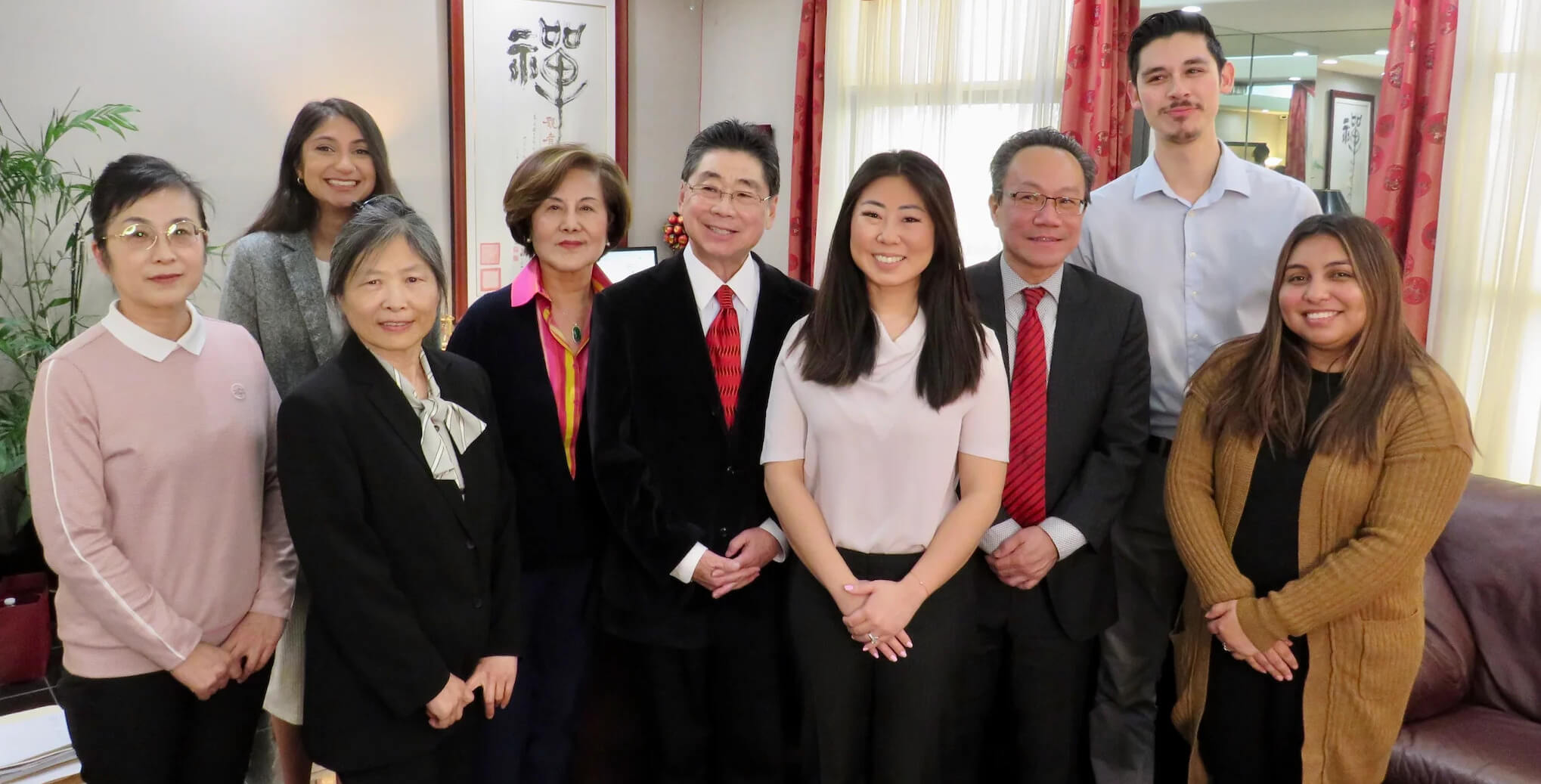

Why Choose Us?

  • Unmatched Expertise

    Trust in Peter Chu's 75+ years of collective experience to guide you through complex immigration matters.

  • Tailored Solutions

    Our personalized strategies adapt to your unique circumstances, ensuring we meet your specific immigration needs.

  • Proven Success

    Benefit from our solid track record in achieving favorable outcomes in various immigration cases across San Diego.

  • Dedicated Service

    Experience our client-first approach that ensures constant support and guidance throughout your immigration journey.

Marion County family-based immigration petitions increased 18% between 2024 and 2025, reflecting Indianapolis's growing population of binational married couples navigating the K-3 spouse visa pathway as an alternative to the standard IR-1 process. For Indianapolis residents whose U.S. citizen spouse filed an I-130 petition and now seeks interim work authorization or travel flexibility before immigrant visa approval, the difference between a strategically filed K-3 application and a misunderstood dual-petition timeline often determines whether spouses reunite in months or years. Law office of Peter Darwin Chu has represented clients in complex K-3 attorney Indianapolis cases throughout Marion County, understanding the procedural nuances that make K-3 petitions effective only when filed at the correct stage of the I-130 process.

Book a Consultation

Law office of Peter Darwin Chu provides K-3 attorney Indianapolis services to Marion County residents. Licensed immigration counsel offering K-3 spouse visa petition preparation, dual I-129F/I-130 coordination, and consular processing strategy for binational couples seeking expedited U.S. entry while the immigrant visa petition remains pending. We assess whether K-3 filing accelerates your timeline or creates unnecessary procedural redundancy based on current USCIS I-130 processing speeds and your spouse's country of origin.

K-3 Attorney Indianapolis Available Across Indianapolis and Surrounding Areas

Law office of Peter Darwin Chu serves clients throughout Indianapolis, IN, and Marion County. Including Downtown Indianapolis, Broad Ripple, Fountain Square, and surrounding zip codes 46201, 46202, 46203, 46204, and 46205. All K-3 spouse visa consultations and petition services are available to Indiana residents regardless of where the I-130 beneficiary currently resides abroad, with representation extending through USCIS petition approval, National Visa Center coordination, and consular interview preparation.

What Indianapolis Residents Can Access

K-3 Spouse Visa Petition Filing

The K-3 visa allows a U.S. citizen's foreign spouse to enter the United States on a nonimmigrant basis while the I-130 immigrant petition remains pending. A critical option when I-130 processing exceeds 12–18 months and couples face extended separation. Indianapolis residents whose I-130 petition has been filed but not yet approved may file Form I-129F (K-3 petition) to obtain interim work authorization (via Form I-765 after K-3 entry) and travel flexibility that the standard CR-1/IR-1 process does not provide until final immigrant visa issuance. However, K-3 petitions filed after I-130 approval offer no procedural advantage and waste filing fees. Making the timing assessment the most critical step in K-3 strategy. We review your I-130 receipt date, current USCIS processing times for your service center, and your spouse's country to determine whether K-3 filing genuinely accelerates reunification or should be deferred.

K-3 vs. CR-1/IR-1 Immigrant Visa Strategy

The K-3 pathway is not universally faster than the direct CR-1/IR-1 immigrant visa process. And for couples whose I-130 petition will be approved within 6–9 months, K-3 filing adds cost without benefit. Indianapolis clients frequently misunderstand that K-3 entry requires adjustment of status (Form I-485) after arrival, meaning the immigrant visa process (I-130) must still be completed domestically rather than consularly. For spouses from countries with fast consular processing (Canada, UK, Western Europe), the CR-1 route often reunites couples faster with fewer steps. We provide side-by-side timeline projections based on current USCIS and State Department data, helping Indianapolis families choose the path that minimizes separation without incurring redundant petition fees.

Post-K-3 Entry Adjustment of Status

Once your spouse enters the U.S. on K-3 status, the immigrant visa process transitions from consular processing to domestic adjustment of status. Requiring Form I-485, medical examination, biometrics, and an interview at the Indianapolis USCIS field office. This transition creates a procedural fork: if the I-130 is approved before K-3 visa issuance, USCIS typically converts the case to consular processing automatically, rendering the K-3 petition moot. Indianapolis residents who successfully bring spouses to the U.S. via K-3 status must file I-485 within the validity period of the K-3 visa and maintain lawful status throughout adjustment. We coordinate K-3 entry, work authorization filing, and I-485 preparation as a unified timeline to prevent gaps in status or work eligibility.

Get clear, expert legal guidance tailored to your visa, green card, or citizenship needs.

Licensed Immigration Representation in Indianapolis, IN

Law office of Peter Darwin Chu maintains all required Indiana state and federal immigration practice credentials, with representation authorized before USCIS, the Department of State, and U.S. immigration courts. All K-3 spouse visa petitions are prepared in compliance with INA § 101(a)(15)(K)(ii), 8 CFR § 214.2(k), and current USCIS Policy Manual guidance on dual I-129F/I-130 petition filing. Indianapolis clients receive written fee agreements detailing scope of representation, petition filing costs, and government filing fees (currently $535 for Form I-129F, $1,440 for Form I-130, and $1,225 for Form I-485 if filed domestically). We do not guarantee visa approval. Immigration decisions rest with USCIS and consular officers. But we ensure every K-3 petition submitted meets regulatory requirements and presents the strongest evidentiary foundation for expedited spouse reunification.

Inquire now to check if you qualify

What if my I-130 petition was filed six months ago and USCIS processing times in Indianapolis show 14 months remaining?

If your I-130 was filed six months ago and current USCIS processing times for your service center indicate 14 additional months until approval, filing a K-3 petition now may allow your spouse to enter the U.S. within 6–9 months (depending on consular processing speed in their country) rather than waiting the full 14 months abroad. The K-3 pathway requires filing Form I-129F after the I-130 receipt but before I-130 approval. And only provides benefit if K-3 visa issuance occurs faster than immigrant visa availability. For Indianapolis residents whose spouses are in countries with efficient U.S. consulates (e.g., Canada, UK), K-3 processing may not be meaningfully faster than the remaining I-130 timeline. We calculate the breakeven point by comparing your service center's current I-130 speed, your spouse's consular post processing time, and the cost of dual petitions versus waiting for CR-1 approval.

What if my spouse's K-3 visa interview is scheduled but my I-130 was just approved — does the K-3 interview still happen in Indianapolis cases?

If your I-130 immigrant petition is approved before your spouse's K-3 visa interview occurs, USCIS and the State Department typically convert the case to immigrant visa processing automatically. Meaning the consular interview proceeds as a CR-1/IR-1 interview rather than K-3. This outcome is common when I-130 processing accelerates unexpectedly (due to expedite requests or service center transfers) after the K-3 petition was filed. For Indianapolis residents, this scenario is ideal: you paid for both petitions, but your spouse receives an immigrant visa (permanent residence upon entry) rather than a K-3 nonimmigrant visa (requiring subsequent I-485 adjustment). The K-3 filing effectively served as insurance against prolonged separation. And the consular officer will adjudicate whichever visa category is appropriate at the time of interview.

What if I want to file a K-3 petition but my spouse is already in the U.S. on a tourist visa in Indianapolis?

K-3 petitions are designed for spouses residing abroad. Not for adjustment of status from within the United States. If your spouse is currently in Indianapolis on B-2 tourist status, filing a K-3 petition provides no benefit because K-3 status is a visa category issued at a U.S. consulate abroad, not an adjustment status available domestically. Instead, your spouse may file Form I-485 (adjustment of status) concurrently with or after your I-130 approval, assuming they entered the U.S. lawfully and did not misrepresent their intent at the time of tourist visa issuance. Indianapolis residents in this situation should focus on I-130/I-485 concurrent filing strategy rather than K-3, as K-3 requires consular processing and your spouse's departure from the U.S.. A departure that may trigger unlawful presence bars if they overstayed tourist status.

What if my K-3 spouse visa Indianapolis application requires additional evidence after the consular interview?

If the consular officer requests additional evidence during your spouse's K-3 visa interview. Such as updated financial documentation, proof of bona fide marriage, or police certificates. The visa application enters administrative processing, delaying issuance until the requested documents are submitted and reviewed. Indianapolis residents whose spouses face administrative processing should respond to document requests within the timeframe specified (typically 60–90 days) to prevent case closure. Common reasons for K-3 administrative processing include insufficient evidence that the marriage is bona fide (rather than entered solely for immigration benefit), discrepancies in prior immigration history, or consular officer concerns about financial support under the I-864 Affidavit of Support. We prepare K-3 applicants for consular interviews with country-specific briefing materials and ensure all required documents are submitted in the format the consulate expects.

Comparing K-3 Spouse Visa Options in Indianapolis

Indianapolis residents considering K-3 spouse visa filing face three primary alternatives: waiting for direct CR-1/IR-1 immigrant visa processing, filing K-3 as interim relief, or exploring K-1 fiancé visa if not yet married. Here's the honest answer: K-3 petitions made sense in the 2000s when I-130 processing took 24+ months. But in 2026, with many I-130 petitions approved in 10–14 months, K-3 is cost-effective only for couples facing service center backlogs exceeding 16 months or spouses in countries with unusually fast K-3 consular processing. Filing K-3 'just in case' without timeline analysis wastes $535 in filing fees and creates dual-petition tracking complexity. Conversely, for couples genuinely facing 18+ month I-130 wait times, K-3 allows interim work authorization and travel that the CR-1 process cannot provide until final visa issuance. Making it a legitimate acceleration tool when used strategically.

OptionTimeline to U.S. EntryWork AuthorizationCostProfessional Assessment
CR-1/IR-1 Immigrant Visa12–18 months (I-130 + consular processing)Immediate upon entry (green card)$1,440 I-130 + consular feesBest for couples within 12 months of I-130 approval; permanent status on arrival
K-3 Spouse Visa6–12 months after I-130 filingAfter K-3 entry (I-765 required)$535 I-129F + $1,440 I-130 + $1,225 I-485Effective only if I-130 backlog exceeds 16 months; requires domestic adjustment
K-1 Fiancé Visa (if not married)6–9 months (I-129F processing)After marriage + I-485 filing$535 I-129F + $1,225 I-485Faster than I-130 but requires U.S. marriage within 90 days; not applicable to married couples
Wait Abroad (No Petition)IndefiniteNone$0Acceptable only if separation is tolerable; no legal mechanism for reunification

Get in touch

Frequently Asked Questions

Find answers to common questions about our services

  • K-3 spouse visa processing in 2026 depends on three sequential timelines: USCIS approval of Form I-129F (currently 6–9 months), National Visa Center case creation and document processing (1–2 months), and consular interview scheduling and visa issuance at

  • No. K-3 visa entry does not automatically grant work authorization. Your spouse must file Form I-765 (Application for Employment Authorization) after entering the U.S. on K-3 status, which currently takes 3–6 months for USCIS approval. Work authorization

  • A K-3 spouse visa is a nonimmigrant visa that allows interim U.S. entry while the I-130 immigrant petition remains pending. Requiring subsequent adjustment of status (Form I-485) to obtain permanent residence. A CR-1 immigrant visa is issued after I-130 a

  • While USCIS does not require legal representation, K-3 petitions involve dual-petition coordination (I-129F and I-130), complex timing decisions, and evidentiary standards for proving bona fide marriage that self-represented petitioners frequently misunde

  • If your I-130 immigrant petition is approved before your spouse's scheduled K-3 visa interview, the consular officer typically converts the interview to an immigrant visa interview (CR-1/IR-1 category) rather than issuing a K-3 visa. This outcome is advan

  • Yes, but prior unlawful presence complicates K-3 eligibility significantly. If your spouse accrued more than 180 days of unlawful presence in the U.S. after a previous visa overstay, they are subject to a 3-year or 10-year bar upon departure, making them

  • The U.S. citizen petitioner must demonstrate financial ability to support the K-3 spouse at 125% of the federal poverty guideline by filing Form I-864 (Affidavit of Support). The same requirement as CR-1/IR-1 immigrant visa cases. For a household size of

  • K-3 spouse visa processing speed varies dramatically by country. Spouses in Canada or the UK typically receive K-3 visas 2–4 months after NVC case completion, while spouses in countries with consular backlogs (India, Philippines, Vietnam) may wait 6–12 mo

Need Personalized Immigration Guidance?

Law office of Peter Darwin Chu provides K-3 attorney Indianapolis services to Marion County residents through licensed immigration counsel, offering K-3 spouse visa petition preparation, dual I-129F/I-130 timeline coordination, and strategic assessment of whether K-3 filing genuinely accelerates reunification based on current USCIS processing speeds and consular post efficiency.

Related Immigration Services for Indianapolis Residents

Indianapolis clients navigating family-based immigration often benefit from understanding complementary visa pathways. Our Immigrant Visas practice area covers the full range of family-sponsored green card petitions, including CR-1/IR-1 spouse visas that serve as the primary alternative to K-3 filing. For couples not yet married, our J-1 Visa Attorney page addresses cultural exchange visa options that may provide interim U.S. presence while marriage and immigration plans develop. Indianapolis residents whose spouses require removal of conditions after conditional residence should review our I-751 Lawyer San Diego guidance, which applies nationally to Form I-751 filings. We also represent clients in Citizenship naturalization after three years of marriage-based permanent residence, completing the immigration journey from K-3 or CR-1 entry to U.S. citizenship. Review these resources to understand how K-3 spouse visa strategy fits within your long-term immigration and family goals.

Speak With Us Today