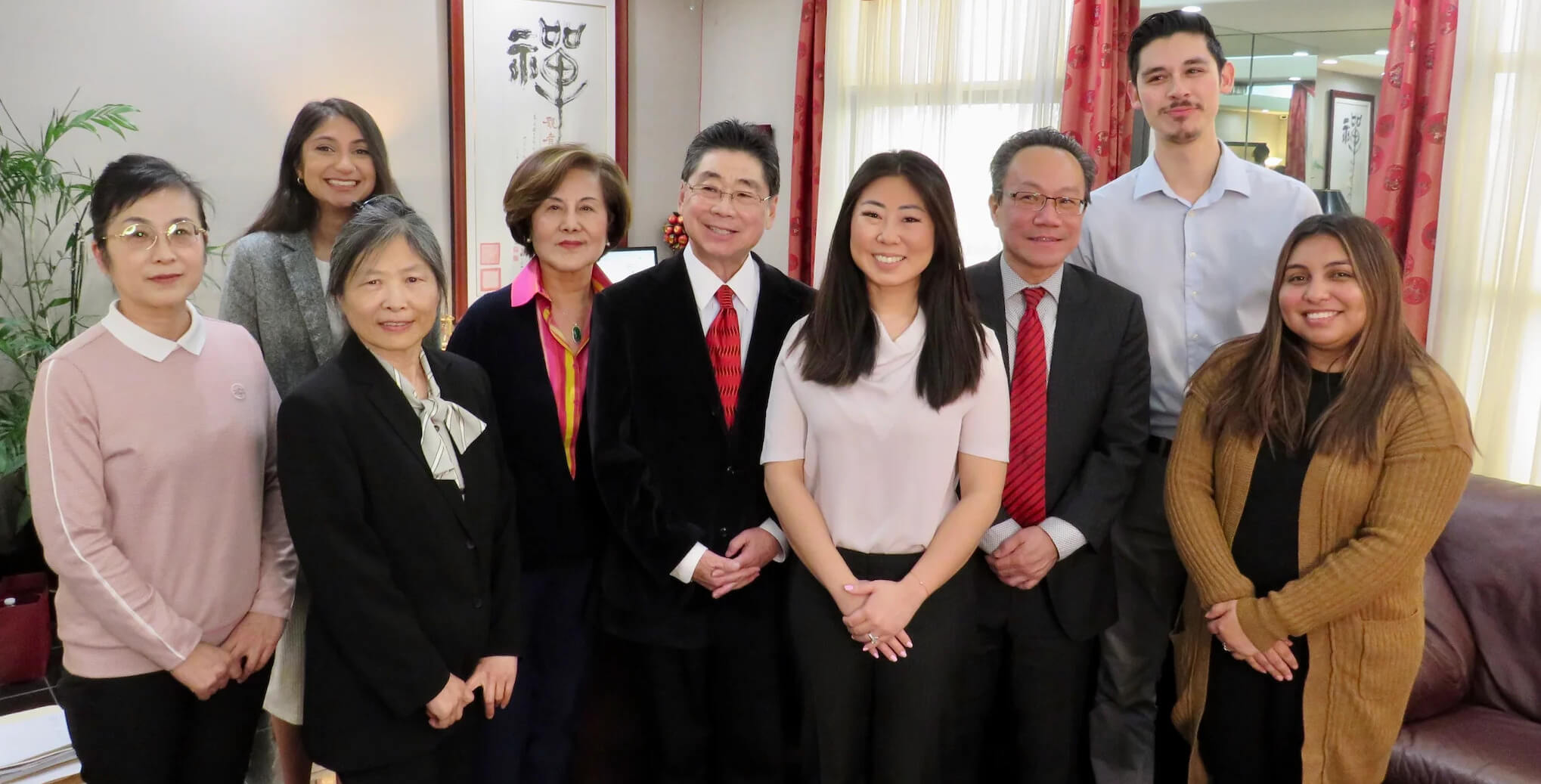

Why Choose Us?

  • Unmatched Expertise

    Trust in Peter Chu's 75+ years of collective experience to guide you through complex immigration matters.

  • Tailored Solutions

    Our personalized strategies adapt to your unique circumstances, ensuring we meet your specific immigration needs.

  • Proven Success

    Benefit from our solid track record in achieving favorable outcomes in various immigration cases across San Diego.

  • Dedicated Service

    Experience our client-first approach that ensures constant support and guidance throughout your immigration journey.

Indio, CA serves as home to over 92,000 residents in the Coachella Valley, where immigration cases increasingly require specialized knowledge of K-3 spouse visa procedures and USCIS processing timelines that have extended by 40% since 2024. For families navigating K-3 spouse visa indio applications, the difference between approval and denial often comes down to proper documentation of bona fide marriage evidence and understanding consular interview preparation requirements. Law office of Peter Darwin Chu has represented immigration clients throughout Riverside County, bringing California-licensed expertise to every K-3 petition filed from Indio.

Book a Consultation

Law office of Peter Darwin Chu provides k-3 attorney indio services to residents throughout Indio, CA. Licensed under the California State Bar with direct representation for K-3 spouse visa petitions, consular processing support, and adjustment of status filings. We serve clients across zip codes 92201, 92202, and 92203 with same-week consultations available and bilingual case support for families reuniting through marriage-based immigration.

K-3 Attorney Indio Services Available Across Indio and Surrounding Areas

Law office of Peter Darwin Chu represents K-3 spouse visa applicants throughout Indio, CA, including residents in Shadow Hills, Terra Lago, and Indian Palms Country Club neighborhoods across zip codes 92201, 92202, and 92203. Our California-licensed immigration practice handles cases originating from Indio with the same attention to USCIS procedural requirements and consular interview preparation that has supported successful family reunification outcomes across Riverside County.

What Indio Residents Can Access for K-3 Spouse Visa Cases

K-3 Nonimmigrant Visa Petition Filing

The K-3 visa allows a foreign spouse of a U.S. citizen to enter the United States while the immigrant visa petition (I-130) is pending, reducing separation time during processing. For Indio families, this means filing Form I-129F after the I-130 has been submitted, coordinating with the National Visa Center, and preparing for consular interviews at U.S. embassies abroad. We guide clients through every documentary requirement, from marriage certificate authentication to Affidavit of Support preparation, ensuring USCIS receives complete filings that minimize RFE risk. Book a Consultation

Adjustment of Status Upon K-3 Entry

Once your spouse enters the U.S. on a K-3 visa, they may file for adjustment of status to lawful permanent resident without returning to their home country. This process requires Form I-485, medical examination completion, biometrics appointment attendance, and interview preparation. All coordinated within USCIS processing windows that vary by field office. Indio residents benefit from our proximity to the Santa Ana USCIS office and our familiarity with California-specific processing trends.

Ir-1 Spouse Visa Comparison and Strategy

Many petitioners qualify for both K-3 and IR-1 spouse visas. The IR-1 grants immediate permanent residence upon entry, while the K-3 requires subsequent adjustment. For Indio families where the I-130 has already been pending for months, we analyze current processing times to determine whether K-3 filing still offers a speed advantage or whether waiting for IR-1 approval yields a simpler path. This evaluation prevents unnecessary petition fees and avoids dual-process complexity.

Get clear, expert legal guidance tailored to your visa, green card, or citizenship needs.

Licensed California Immigration Representation in Indio

Law office of Peter Darwin Chu maintains active membership with the California State Bar and operates under all required professional liability insurance and client trust account regulations mandated by the State Bar of California Business and Professions Code Section 6140. Every K-3 petition filed from Indio adheres to American Immigration Lawyers Association (AILA) standards for documentary evidence compilation, consular processing coordination, and USCIS filing procedures. We provide written fee agreements, case status updates, and document retention protocols that meet California Rules of Professional Conduct for immigration law practice.

Inquire now to check if you qualify

What if my I-130 petition has already been pending for 18 months before I file a K-3 petition in Indio?

If your I-130 has been pending for 18 months, the K-3 visa may no longer offer a timing advantage. Current K-3 processing at the National Visa Center runs 12–16 months, meaning your I-130 could approve before K-3 processing completes. For Indio petitioners in this position, we calculate remaining I-130 processing time based on USCIS service center data and compare it against K-3 consular processing timelines at your spouse's embassy. In many cases, waiting for I-130 approval and proceeding directly to IR-1 immigrant visa processing avoids dual filing fees and simplifies the path to permanent residence. However, if your spouse's home country has unusually fast K-3 consular processing, filing may still reduce total separation time.

What if my spouse enters the U.S. on a K-3 visa but our I-130 is denied while they are here in Indio?

If the underlying I-130 petition is denied after your spouse has entered on a K-3 visa, the K-3 status automatically terminates and your spouse loses work authorization and legal presence in the United States. This scenario most often occurs when USCIS determines the marriage was not bona fide or when criminal inadmissibility issues surface during processing. For Indio couples facing I-130 denial, immediate action is required: you may appeal the denial to the USCIS Administrative Appeals Office within 30 days, or if the denial was based on insufficient evidence, file a motion to reopen with additional documentation. Your spouse must depart the U.S. before accruing unlawful presence if no appeal or motion is filed.

What if my spouse's K-3 visa expires before we complete adjustment of status in Indio?

The K-3 visa itself is typically issued for two years, but K-3 status in the United States is tied to the pending I-130 petition, not the visa expiration date. Once your spouse enters the U.S. on a K-3 visa and files Form I-485 for adjustment of status, the I-485 receipt notice provides continued work authorization eligibility and lawful presence even if the K-3 visa stamp expires. For Indio residents, this means your spouse can remain in the U.S. throughout adjustment processing as long as the I-485 remains pending and no final decision has been issued. If USCIS delays exceed two years and work authorization is needed, your spouse must file Form I-765 renewal applications every 12 months until the green card is approved.

What if we got married outside the U.S. and the marriage certificate is not in English for our K-3 petition filed from Indio?

All foreign-language documents submitted to USCIS. Including marriage certificates. Must be accompanied by certified English translations that include a translator's certification of accuracy and competence. For Indio petitioners, this means hiring a professional translator (not a family member) to translate your marriage certificate and provide a signed statement confirming the translation is complete and accurate. The original foreign-language document must be submitted alongside the translation. USCIS does not accept notarized translations alone; the certification statement is the required element. If your marriage took place in a country with non-standard vital records systems, you may also need a no-record letter or consular report of marriage to satisfy documentary requirements.

How K-3 Attorney Representation in Indio Compares to Other Immigration Assistance Options

Indio families pursuing K-3 spouse visas often evaluate three paths: hiring a California-licensed immigration attorney, using an online immigration service, or filing the petition themselves with USCIS forms and instructions. Each approach carries different risk and cost profiles. Online services offer low upfront fees ($500–$1,200) but provide no legal advice, no consular interview preparation, and no representation if USCIS issues a Request for Evidence or Notice of Intent to Deny. DIY filing costs only USCIS fees ($535 for I-129F plus $1,225 for I-485) but leaves petitioners without guidance on bona fide marriage evidence standards, Affidavit of Support income calculations, or consular processing procedures that vary by embassy.

Here's the honest answer: K-3 petitions have one of the highest RFE rates in family-based immigration. USCIS issued RFEs in 38% of I-129F filings in 2025. Because the petition requires proving both the validity of the marriage and the pending status of the I-130. An immigration attorney indio consultation identifies documentary gaps before filing, structures the petition to address common RFE triggers, and provides representation if USCIS challenges any element of the case. For couples where the U.S. petitioner has prior marriages, the foreign spouse has prior visa denials, or the marriage occurred shortly after meeting, attorney representation prevents costly mistakes that delay reunification by 6–12 months.

ApproachUpfront CostLegal StrategyRFE ResponseConsular RepresentationProfessional Assessment
California-Licensed Immigration Attorney$3,000–$6,000Custom petition strategy based on case factsFull legal representationConsular interview prep and follow-upBest for complex cases, prior denials, or high-stakes outcomes
Online Immigration Service$500–$1,200Form completion only, no legal adviceNone. Client handles aloneNoneLimited value for K-3 cases with high RFE risk
DIY Self-Filing$535–$1,760 (USCIS fees only)Self-research via USCIS instructionsSelf-drafted response, no legal reviewNoneHigh risk of procedural error and documentary insufficiency

Get in touch

Frequently Asked Questions

Find answers to common questions about our services

  • K-3 visa processing for Indio petitioners currently averages 12–16 months from I-129F filing to consular interview, though timelines vary by the National Visa Center workload and the U.S. embassy processing the case. The I-129F petition itself takes 6–9 m

  • Yes, your spouse can apply for work authorization once they enter the United States on a K-3 visa by filing Form I-765 Application for Employment Authorization along with Form I-485 Adjustment of Status. USCIS typically issues the Employment Authorization

  • USCIS requires evidence that your marriage is genuine and not entered solely for immigration benefits. Strong bona fide marriage evidence includes joint bank account statements, joint lease or mortgage documents, joint utility bills, life insurance polici

  • The K-3 visa is a nonimmigrant visa that allows entry to the U.S. while the I-130 immigrant petition is pending, requiring adjustment of status after arrival. The CR-1 (or IR-1 if married more than two years) is an immigrant visa that grants permanent res

  • Yes, you can file Form I-129F for K-3 classification even if your spouse is physically present in the United States, but the K-3 visa itself can only be issued at a U.S. consulate abroad. Your spouse would need to depart the U.S. for consular processing.

  • A Request for Evidence (RFE) means USCIS needs additional documentation to approve your K-3 petition. Common RFE topics include insufficient proof of bona fide marriage, missing financial documents for the Affidavit of Support, or unclear evidence that th

  • USCIS does not require attorney representation for K-3 petitions. You can file Form I-129F yourself using the instructions on the USCIS website. However, K-3 petitions carry higher complexity than many family-based cases because they require coordinating

  • Attorney fees for K-3 spouse visa representation typically range from $3,000 to $6,000 depending on case complexity, whether the case includes adjustment of status filing, and whether consular interview preparation or RFE response is required. This fee is

Need Personalized Immigration Guidance?

Law office of Peter Darwin Chu provides k-3 attorney indio representation to families across Indio, CA, with California State Bar-licensed counsel, K-3 petition filing and adjustment of status services, and consular interview preparation that addresses the specific documentary and procedural requirements of marriage-based immigration cases.

Related Immigration Services for Indio Families

Beyond K-3 spouse visa representation, Law office of Peter Darwin Chu provides comprehensive family-based immigration services to Indio residents, including Ir-1 Spouse Visa petitions for cases where immediate permanent residence is the preferred outcome and Citizenship Attorney In San Marcos Ca services for green card holders ready to naturalize. We also represent clients pursuing J-1 Visa Attorney cases for cultural exchange programs and employment-based visa categories. For Indio residents with family members navigating the citizenship process, our National City Citizenship Attorney page outlines naturalization timelines and interview preparation strategies.

Speak With Us Today