
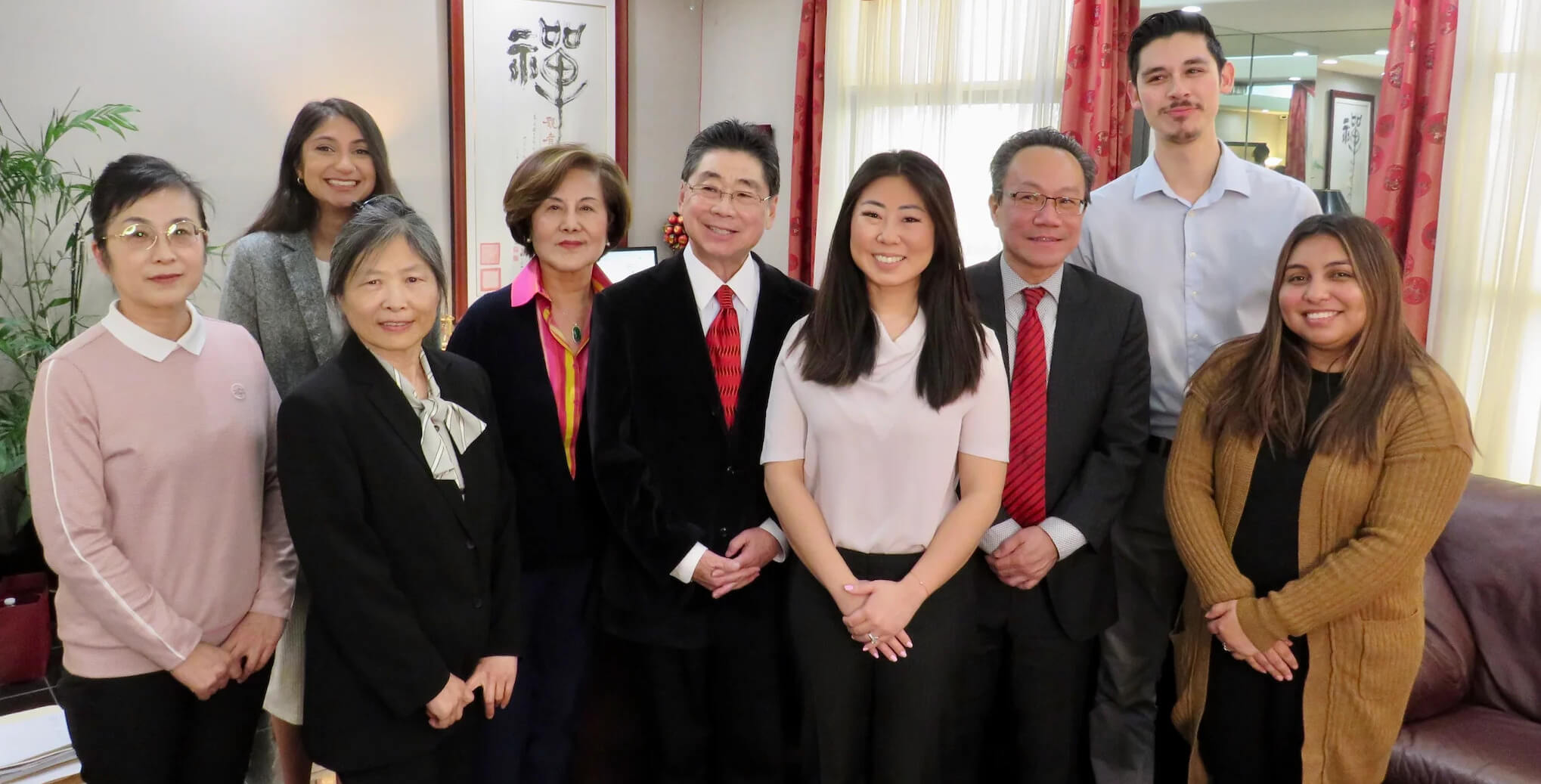
Why Choose Us?
-

Unmatched Expertise
Trust in Peter Chu's 75+ years of collective experience to guide you through complex immigration matters.
-

Tailored Solutions
Our personalized strategies adapt to your unique circumstances, ensuring we meet your specific immigration needs.
-

Proven Success
Benefit from our solid track record in achieving favorable outcomes in various immigration cases across San Diego.
-

Dedicated Service
Experience our client-first approach that ensures constant support and guidance throughout your immigration journey.


Get clear, expert legal guidance tailored to your visa, green card, or citizenship needs.

Inquire now to check if you qualify
Comparing K-3 Visa Pathways vs. Direct Consular Processing for Menlo Park Families
Menlo Park petitioners pursuing spouse reunification face a choice between the K-3 nonimmigrant pathway and direct consular processing of the I-130 immigrant visa petition. Each route has distinct timelines, cost structures, and procedural requirements. Here's the honest answer: K-3 petitions made sense when I-130 processing took 18–24 months and K-3 petitions processed in 6–8 months. But current USCIS processing times have narrowed that gap substantially. In 2026, I-130 petitions filed by U.S. citizens for spouses are processed in 7–11 months at California Service Center, while K-3 petitions take 6–9 months plus consular processing time. For many Menlo Park families, the K-3 route no longer saves significant time and adds the complexity of adjustment of status after entry. The K-3 pathway remains valuable in three scenarios: when the I-130 is delayed by RFEs or administrative processing beyond normal timelines, when the petitioner wants the option to bring the spouse to the U.S. before final immigrant visa approval, or when the foreign spouse is in a country with unusually long consular interview wait times.
| Factor | K-3 Nonimmigrant Visa | Direct I-130 Consular Processing | Professional Assessment |
|---|---|---|---|
| Total Timeline | 12–18 months (I-129F + consular + entry) | 10–15 months (I-130 + consular) | Direct processing often faster in 2026 unless I-130 is already delayed |
| Work Authorization | Available after entry via I-765 (3–6 month wait) | Available immediately upon immigrant visa entry | Immigrant visa provides immediate work authorization. No waiting period |
| Cost | $535 I-129F + $325 I-485 + $1,500–$3,000 legal fees | $535 I-130 + consular fees + $1,200–$2,500 legal fees | K-3 costs more due to adjustment of status filing after entry |
| Complexity | Requires two petitions (I-129F and eventual I-485) | Single I-130 petition through completion | Direct processing eliminates adjustment of status step and associated complexity |
Frequently Asked Questions
Find answers to common questions about our services
-
K-3 visa processing involves three stages: USCIS adjudication of Form I-129F (6–9 months at California Service Center), National Visa Center processing (1–2 months), and consular interview scheduling and completion (2–6 months depending on consular post).
-
K-3 visa representation fees in Menlo Park typically range from $1,500–$3,000 for full-service representation covering I-129F preparation, consular interview guidance, and adjustment of status consultation. This legal fee is separate from government filin
-
No. K-3 visa holders must apply for employment authorization by filing Form I-765 after entry to the United States. Current processing times for I-765 applications range from 3–6 months, meaning there is a mandatory waiting period between K-3 entry and wo
-
A complete K-3 petition requires Form I-129F with filing fee, proof of pending or approved I-130 petition (receipt notice or approval notice), marriage certificate with certified English translation if issued in a foreign language, two passport-style phot
-
If USCIS approves the underlying I-130 immigrant petition before the K-3 petition completes adjudication, the case automatically converts to consular processing under the immigrant visa category. The K-3 petition is administratively closed, and the Nation
-
Even straightforward K-3 cases benefit from legal review due to the dual-petition structure (I-129F and eventual I-485) and the risk of automatic case conversion if the I-130 approves first. Common issues that appear straightforward but create problems in
-
Yes. Unmarried children under age 21 of the K-3 beneficiary may be included in the I-129F petition as K-4 derivative beneficiaries. Each child must be listed on the petition with supporting documentation (birth certificates proving parentage, and evidence
-
A K-3 visa is a nonimmigrant visa allowing entry to the United States while an I-130 immigrant petition is pending, with adjustment of status required after entry to obtain permanent residence. A CR-1 visa (conditional resident immigrant visa) is issued w
Need Personalized Immigration Guidance?

