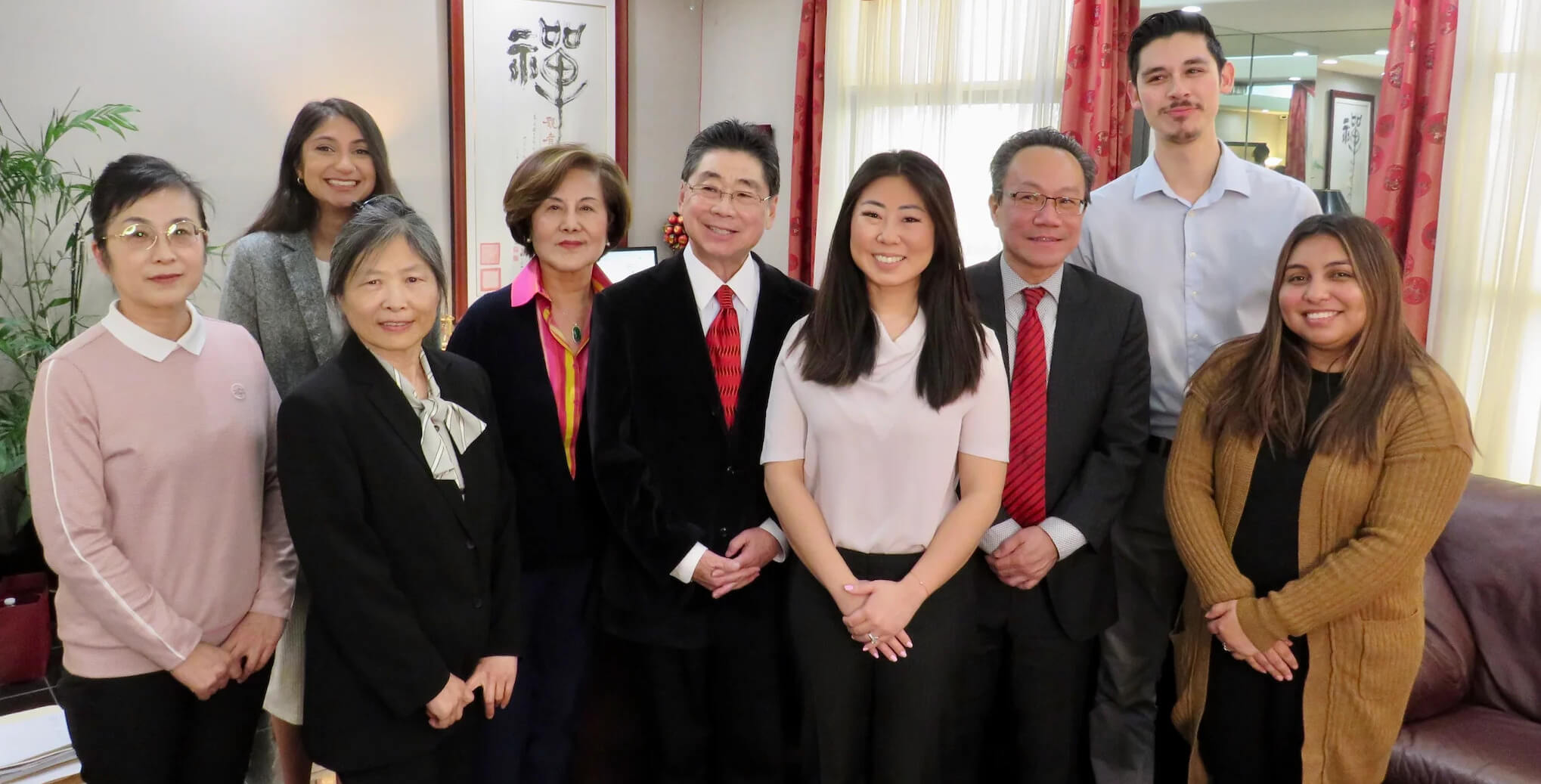

Why Choose Us?

  • Unmatched Expertise

    Trust in Peter Chu's 75+ years of collective experience to guide you through complex immigration matters.

  • Tailored Solutions

    Our personalized strategies adapt to your unique circumstances, ensuring we meet your specific immigration needs.

  • Proven Success

    Benefit from our solid track record in achieving favorable outcomes in various immigration cases across San Diego.

  • Dedicated Service

    Experience our client-first approach that ensures constant support and guidance throughout your immigration journey.

Minneapolis processes over 2,400 family-based immigration petitions annually through USCIS's Twin Cities field office, making it one of the highest-volume family immigration hubs in the upper Midwest. For Minneapolis, MN residents pursuing K-3 spouse visa cases, the difference between a timely approval and a delayed application often comes down to whether you had experienced K-3 attorney Minneapolis guidance reviewing your I-129F petition before submission. The Law office of Peter Darwin Chu has represented Minnesota families in K-3 and immigrant visa cases for over a decade, with specific knowledge of USCIS Minneapolis processing patterns and consular interview procedures that affect Twin Cities applicants.

Book a Consultation

The Law office of Peter Darwin Chu provides K-3 attorney Minneapolis services to Minnesota residents navigating spouse visa applications. Offering licensed immigration counsel under Minnesota Bar regulations, serving all Minneapolis neighborhoods and surrounding Hennepin County communities, with consultation appointments available within one business week. Our practice focuses exclusively on family-based immigration, including K-3 spouse visas, CR-1/IR-1 immigrant visas, and adjustment of status applications for married couples separated by international borders.

K-3 Attorney Minneapolis Available Across Minneapolis and Surrounding Areas

The Law office of Peter Darwin Chu serves clients throughout Minneapolis, MN, including Downtown, North Loop, Uptown, Northeast Minneapolis, and South Minneapolis. Covering zip codes 55400, 55401, 55402, 55403, and 55404. Our immigration practice represents Minnesota residents across Hennepin County and the greater Twin Cities metropolitan area, with all case preparation conducted by attorneys licensed to practice immigration law before USCIS, consular posts, and immigration courts. Whether you reside in Minneapolis proper or commute from surrounding communities, our K-3 spouse visa services are accessible to all Minnesota families pursuing lawful permanent residence for foreign national spouses.

What Minneapolis Residents Can Access

K-3 Spouse Visa Petition Preparation

The K-3 nonimmigrant visa allows foreign national spouses of U.S. citizens to enter the United States while their immigrant visa (CR-1 or IR-1) petition is pending. Our K-3 attorney Minneapolis team prepares Form I-129F petitions with supporting evidence packages tailored to USCIS Minneapolis processing standards. Including marriage certificate authentication, financial sponsorship documentation under INA Section 221(g), and consular interview preparation specific to your spouse's home country embassy. Minneapolis clients benefit from our familiarity with common Requests for Evidence (RFEs) issued by the USCIS Nebraska Service Center, which processes most Minnesota K-3 cases. Typical case timelines range from 6–10 months from filing to visa issuance, though consular backlogs vary by country.

CR-1/IR-1 Immigrant Visa Concurrent Filing

Because K-3 visa processing times have converged with CR-1/IR-1 immigrant visa timelines in recent years, many Minneapolis families now pursue concurrent filing strategies. Submitting both the I-130 immigrant petition and I-129F K-3 petition simultaneously to preserve optionality. Our Ir-1 Spouse Visa practice evaluates which pathway offers faster reunification based on current USCIS processing times, your spouse's country of origin, and whether you qualify for Direct Consular Filing (DCF) exceptions. Minnesota residents married to spouses from countries with significant visa backlogs. Such as Mexico, India, or the Philippines. May find immigrant visa routes faster than K-3 nonimmigrant processing in 2026.

Adjustment of Status After K-3 Entry

Once a K-3 visa holder enters Minneapolis, they become eligible to file Form I-485 (adjustment of status) to transition from nonimmigrant to lawful permanent resident status without returning to their home country for consular processing. Our immigration attorney Minneapolis team handles I-485 applications concurrently with Employment Authorization Document (EAD) and Advance Parole applications, allowing spouses to work legally in Minnesota and travel internationally while the green card application is pending. USCIS Twin Cities field office interviews for adjustment cases typically occur 8–14 months after filing, with approval rates exceeding 92% for properly documented spousal cases.

Consular Interview Preparation and RFE Response

Consular interviews remain the most unpredictable stage of K-3 spouse visa processing, with denial rates varying significantly by embassy and consular officer discretion. We provide Minneapolis clients with country-specific interview preparation. Covering common questioning patterns at embassies in Mexico City, Manila, and other high-volume posts. And draft responsive legal briefs when consulates issue INA Section 221(g) administrative processing requests or fraud concerns. If your case receives a Request for Evidence from USCIS, our response packages include legal argument, authenticated documentation, and procedural compliance that Minneapolis applicants need to overcome evidentiary deficiencies without restarting the petition.

Get clear, expert legal guidance tailored to your visa, green card, or citizenship needs.

Licensed Immigration Counsel Serving Minneapolis Families

The Law office of Peter Darwin Chu maintains active licensure with the Minnesota State Bar and is registered with the Executive Office for Immigration Review (EOIR) to represent clients in immigration proceedings. All K-3 attorney Minneapolis services comply with Minnesota Rules of Professional Conduct governing attorney-client privilege, conflict-of-interest disclosures, and fee agreement transparency. Our immigration practice undergoes annual continuing legal education in federal immigration law updates, USCIS policy memoranda, and consular processing changes that directly affect Minnesota families pursuing spouse visas. We carry professional liability insurance and maintain client trust accounts in compliance with Minnesota Board of Professional Responsibility standards. Minneapolis residents receive written fee agreements before any representation begins, with clearly itemized costs for petition preparation, government filing fees, and optional services such as expedite requests or appeals.

Inquire now to check if you qualify

What if my spouse's K-3 visa interview in their home country gets denied — can a Minneapolis attorney help after the fact?

Yes. If a consular officer denies your spouse's K-3 visa application, a K-3 attorney Minneapolis can request the consular officer's written basis for denial under INA Section 221(g) and evaluate whether the denial was based on correctible documentation deficiencies, fraud concerns, or legal inadmissibility grounds. Many denials are actually administrative processing holds. Not final refusals. And can be overcome with additional evidence submitted through the embassy's follow-up procedures. Our practice drafts legal briefs addressing consular concerns, obtains supplementary affidavits or financial documentation, and coordinates with the National Visa Center when cases require supervisory review. In cases of true inadmissibility (such as prior immigration violations or criminal history), we evaluate waiver eligibility under INA Section 212 and prepare I-601 waiver applications before reattempting the visa interview.

What if I filed a K-3 petition months ago but USCIS Minneapolis processing times have gotten slower — should I withdraw and file CR-1 instead?

The strategic calculus depends on where your case currently sits in the pipeline. If USCIS has not yet approved your I-129F petition, and current CR-1 processing times are now shorter than remaining K-3 timelines plus consular processing, switching to an immigrant visa route may reunite you with your spouse faster. However, if your I-129F is already approved and awaiting consular interview scheduling, withdrawing the K-3 case and starting a CR-1 petition resets the clock entirely. Potentially adding 8–12 months to your separation. A K-3 attorney Minneapolis can pull current processing time data for both USCIS Nebraska Service Center (which handles Minnesota I-129F petitions) and the National Visa Center (which handles CR-1 cases) to model both timelines and recommend the faster path. Many Minneapolis families now pursue both petitions concurrently and proceed with whichever reaches consular interview first.

What if my spouse entered Minneapolis on a K-3 visa but we want to apply for their green card immediately — is that allowed?

Yes. K-3 visa holders are explicitly authorized to file Form I-485 (adjustment of status) immediately upon entry to the United States, without waiting periods or additional approvals, as long as an immigrant visa petition (I-130) was filed on their behalf. Minneapolis residents benefit from filing adjustment applications shortly after K-3 entry because it triggers eligibility for work authorization (Form I-765) and travel permission (Form I-131 Advance Parole), both of which are typically approved within 3–5 months. Filing adjustment of status also renders the K-3 visa's 2-year validity period irrelevant. Your spouse transitions to pending green card applicant status and is no longer subject to K-3 departure requirements. USCIS Twin Cities field office schedules adjustment interviews for Minneapolis applicants approximately 10–14 months after filing, with most spousal cases approved at the interview or within 60 days.

What if USCIS issues a Request for Evidence on my I-129F K-3 petition and the response deadline is only 30 days — can a Minneapolis immigration attorney respond that quickly?

Yes, and meeting RFE deadlines is critical. Failure to respond within the specified timeframe (typically 30, 60, or 87 days depending on the RFE type) results in automatic petition denial. Our K-3 attorney Minneapolis practice prioritizes RFE responses and can typically draft comprehensive evidence packages within 10–14 days of receiving the RFE notice, allowing time for clients to gather supplementary documentation such as updated financial records, additional relationship evidence, or corrected marriage certificates. Common RFEs in Minnesota K-3 cases request proof of bona fide marriage (joint financial accounts, cohabitation evidence, photos), updated I-864 financial sponsorship forms when income falls below 125% of federal poverty guidelines, or certified translations of foreign-language documents. We submit RFE responses via certified mail with tracking and retain upload confirmations when USCIS accepts electronic filing, ensuring proof of timely submission if processing delays occur.

K-3 Attorney Minneapolis vs. DIY Petition Filing vs. Nonlawyer Immigration Consultants

Minneapolis families pursuing K-3 spouse visas face three primary paths: hiring a licensed immigration attorney, preparing petitions independently using USCIS forms and instructions, or engaging nonlawyer immigration consultants (also called "notarios" in some communities). Each approach carries distinct tradeoffs in cost, risk, and outcome probability. Here's the honest answer: K-3 petitions are among the most documentation-intensive family immigration applications, with RFE rates exceeding 40% for self-prepared cases according to USCIS data. And a single incorrectly completed form or missing evidentiary exhibit can delay your case by 6–9 months or result in outright denial. Nonlawyer consultants are prohibited from providing legal advice under Minnesota law and cannot represent you if USCIS issues an RFE or your case reaches immigration court. Meaning you pay twice when complications arise. Licensed immigration attorneys provide end-to-end case management, legal strategy when issues surface, and malpractice accountability that DIY and nonlawyer routes lack entirely.

ApproachTypical CostRFE/Denial RiskLegal Representation if Issues AriseProfessional Assessment
Licensed K-3 Attorney Minneapolis$2,500–$4,500Low (15–20%)Full representation through appeal/consular reviewBest for complex cases, prior immigration violations, or high-stakes timelines where delay = prolonged separation
DIY Self-Filing$535 filing fee onlyHigh (40–50%)None. You represent yourself in RFE/interview issuesViable only if you have straightforward case, strong documentation skills, and time to research USCIS policy memoranda
Nonlawyer Immigration Consultant$800–$1,800Moderate-High (30–40%)None. Consultants cannot provide legal advice or appear before USCIS/courtsRisky. You pay for form preparation but gain no legal protection; many consultants unauthorized to practice under MN law
Online Legal Document Services$200–$600High (similar to DIY)None. Templates only, no attorney reviewCheapest option but offers no advantage over free USCIS forms; legal review still required if issues surface

Get in touch

Frequently Asked Questions

Find answers to common questions about our services

  • Current K-3 processing timelines for Minneapolis residents average 8–12 months from I-129F petition filing to visa issuance, though this varies significantly by your spouse's country of origin and consular post workload. USCIS Nebraska Service Center, whi

  • A K-3 visa is a nonimmigrant visa that allows your foreign spouse to enter the United States while their immigrant visa petition is pending. They must still apply for a green card after arrival. A CR-1 or IR-1 visa is an immigrant visa that grants lawful

  • No. K-3 visa holders do not receive automatic work authorization upon entry to the United States. Your spouse must file Form I-765 (Application for Employment Authorization) after arriving in Minneapolis, typically submitted concurrently with Form I-485 (

  • If your marriage ends in divorce after your spouse enters Minneapolis on a K-3 visa but before they adjust status to lawful permanent resident, their eligibility for adjustment of status is generally terminated. The I-485 application requires an ongoing m

  • Even straightforward K-3 cases benefit from attorney review because 'straightforward' is difficult to self-assess. Common issues that applicants underestimate include insufficient evidence of bona fide marriage, I-864 financial sponsorship calculations wh

  • Yes, but the strategy changes significantly. If your spouse is already in Minneapolis on a valid nonimmigrant visa (such as F-1 student, H-1B work visa, or B-2 visitor visa), they may be eligible to adjust status to lawful permanent resident directly with

  • A complete K-3 petition package for Minneapolis applicants typically includes: your U.S. passport or birth certificate proving citizenship, your spouse's passport and birth certificate, your certified marriage certificate with English translation if issue

  • USCIS and consular officers evaluate bona fide marriage through a totality-of-circumstances analysis, examining whether the couple entered marriage with the intent to establish a life together rather than solely to obtain immigration benefits. Evidence sc

Need Personalized Immigration Guidance?

The Law office of Peter Darwin Chu provides K-3 attorney Minneapolis services to Minnesota residents pursuing spouse visa cases. Offering licensed immigration representation under Minnesota Bar standards, serving all Hennepin County neighborhoods, with consultation appointments scheduled within one business week and case preparation that addresses USCIS Minneapolis processing patterns specific to Twin Cities applicants.

Related Immigration Services for Minneapolis Families

In addition to K-3 spouse visa representation, the Law office of Peter Darwin Chu assists Minneapolis residents with a full range of family-based immigration matters. If you are evaluating whether K-3 or CR-1/IR-1 immigrant visa processing offers faster reunification for your situation, review our Ir-1 Visa Family page for immigrant visa timelines and Direct Consular Filing eligibility. Minneapolis families pursuing citizenship after obtaining lawful permanent residence through marriage can explore our Citizenship services, including naturalization application preparation and interview representation. For clients with spouses already in the United States on nonimmigrant visas such as J-1 Visa Attorney or F-1 Visa status, we provide adjustment of status counsel to transition from temporary to permanent residence without consular processing. Additional immigration services include National City Citizenship Attorney, Citizenship Attorney In San Marcos Ca, and comprehensive family immigration planning tailored to Minnesota residents' unique circumstances.

Speak With Us Today