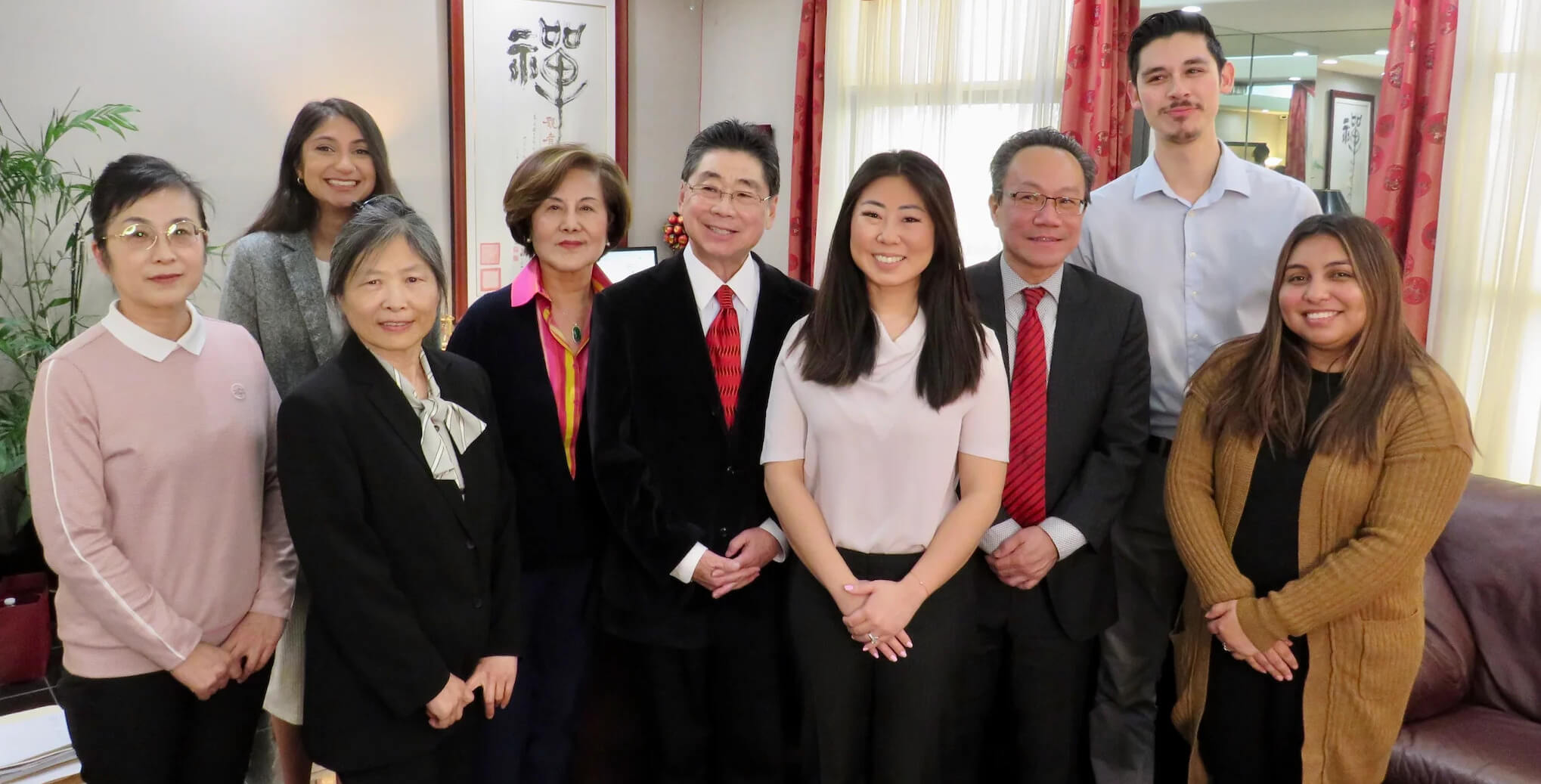

Why Choose Us?

  • Unmatched Expertise

    Trust in Peter Chu's 75+ years of collective experience to guide you through complex immigration matters.

  • Tailored Solutions

    Our personalized strategies adapt to your unique circumstances, ensuring we meet your specific immigration needs.

  • Proven Success

    Benefit from our solid track record in achieving favorable outcomes in various immigration cases across San Diego.

  • Dedicated Service

    Experience our client-first approach that ensures constant support and guidance throughout your immigration journey.

Mission Viejo's planned community design brought over 95,000 residents to Orange County, many of whom navigate the U.S. immigration system each year. Including K-3 spouse visa petitions that can reunite families months faster than traditional immigrant visa processing. For Mission Viejo, CA residents filing a K-3 spouse visa petition, the difference between approval and an RFE (Request for Evidence) often comes down to initial documentation accuracy, a factor that determines whether couples wait 6 months or 18 months for reunion. Law office of Peter Darwin Chu has guided dozens of Mission Viejo families through K-3 attorney mission viejo petitions, providing case-specific strategy grounded in current USCIS processing timelines and adjudication patterns.

Book a Consultation

Law office of Peter Darwin Chu provides k-3 attorney mission viejo services to Mission Viejo residents. California-licensed immigration counsel serving zip codes 92690, 92691, and 92692, with free 60-minute case evaluations available same week and representation structured around each couple's timeline. Our firm handles K-3 spouse visa petitions from initial I-129F filing through consular processing and admission to the United States, addressing the procedural complexities that distinguish K-3 from CR-1/IR-1 pathways.

K-3 Attorney Mission Viejo Available Across Mission Viejo and Surrounding Areas

Law office of Peter Darwin Chu represents clients throughout Mission Viejo, CA. Including neighborhoods near Lake Mission Viejo, Oso Creek, and Alicia Parkway (zip codes 92690, 92691, 92692). Plus families relocating from nearby Orange County communities. All California residents with qualifying K-3 spouse visa cases are eligible for representation regardless of current county of residence, and we coordinate consular processing worldwide for foreign national spouses.

What Mission Viejo Residents Can Access

K-3 Spouse Visa Petition Filing

The K-3 nonimmigrant visa allows a foreign national spouse of a U.S. citizen to enter the United States while the immigrant visa petition (Form I-130) is pending. A pathway designed to reduce separation time for married couples. Filing requires coordinated submission of Form I-129F (Petition for Alien Fiancé(e)) after the underlying I-130 has been filed, meeting strict timing requirements that USCIS enforces rigorously. Mission Viejo families benefit from legal review before submission to catch common errors: missing translations, insufficient financial documentation, or incomplete marriage certificate apostilles. We provide step-by-step guidance from initial eligibility assessment through USCIS receipt and case tracking.

Consular Processing and Interview Preparation

Once USCIS approves the I-129F petition, the case transfers to the National Visa Center and then to the U.S. consulate in the foreign spouse's home country for interview scheduling. Consular officers assess the bona fides of the marriage, the U.S. petitioner's ability to support the spouse financially, and any admissibility concerns under INA Section 212(a). We prepare clients for common interview questions, review required civil documents (police certificates, medical exams), and address potential grounds of inadmissibility before the consular appointment. Ensuring Mission Viejo couples present a complete, organized case file that reduces the risk of administrative processing delays.

Adjustment of Status After K-3 Admission

K-3 visa holders enter the U.S. in nonimmigrant status but remain eligible to adjust status to lawful permanent resident once the underlying I-130 petition is approved. Typically filed concurrently with Form I-485 (Application to Register Permanent Residence). Many Mission Viejo families choose the K-3 route specifically for this dual benefit: immediate reunion plus a pathway to a green card without requiring the foreign spouse to return abroad. We handle the full adjustment process, including work authorization (Form I-765) and advance parole (Form I-131) filings, biometrics scheduling, and USCIS interview preparation at the Santa Ana Field Office or other California locations.

Get clear, expert legal guidance tailored to your visa, green card, or citizenship needs.

Licensed Immigration Counsel Serving Mission Viejo

Law office of Peter Darwin Chu maintains all required California State Bar licenses and complies with American Immigration Lawyers Association (AILA) professional standards for client representation. Our firm operates under the ethical guidelines established by California Business and Professions Code Section 6125 and the Rules of Professional Conduct governing attorney-client relationships, confidentiality, and conflict-of-interest disclosure. We provide written fee agreements detailing scope of representation, cost structure, and client responsibilities before any retainer is collected. Ensuring Mission Viejo families understand exactly what services they are purchasing and what outcomes are realistically achievable under current immigration law.

Inquire now to check if you qualify

What if my spouse's I-130 petition has been pending for over a year in Mission Viejo — can I still file a K-3?

Yes. The K-3 visa is specifically designed for situations where the I-130 immigrant visa petition has already been filed but not yet approved. You may file Form I-129F after the I-130 receipt notice is issued, and USCIS will adjudicate the K-3 petition independently. However, in practice, many I-130 petitions now process faster than K-3 petitions due to USCIS staffing changes, so a Mission Viejo attorney should evaluate current processing times for your spouse's country before deciding whether K-3 filing accelerates reunion or simply adds cost. If the I-130 is already in NVC (National Visa Center) processing, the consular immigrant visa interview may occur before a K-3 visa would be issued, making the K-3 route moot.

What if my spouse was previously denied a tourist visa — does that affect K-3 eligibility in Mission Viejo?

A prior B-2 tourist visa denial does not automatically disqualify your spouse from K-3 eligibility, but it does signal that the consular officer previously found insufficient ties to the home country or suspected immigrant intent. Factors that will be scrutinized again during the K-3 interview. The key difference is that K-3 applicants are allowed to have immigrant intent (since the underlying I-130 petition establishes that intent), so the prior denial's reasoning may not apply. However, if the denial was based on fraud, misrepresentation, or a ground of inadmissibility under INA Section 212(a). Such as prior immigration violations or criminal history. Those issues remain and must be addressed, often requiring a waiver. Mission Viejo couples in this situation benefit from a legal review of the prior denial's consular notes before filing the K-3 petition.

What if we got married outside the U.S. and the marriage certificate is not in English — can I still file from Mission Viejo?

Yes. Foreign marriage certificates are acceptable for I-129F and I-130 filings, but USCIS requires a certified English translation accompanying every non-English civil document. The translation must include a certification statement from the translator attesting to their fluency in both languages and the accuracy of the translation; the translator does not need to be a professional service, but they cannot be the petitioner or beneficiary. Mission Viejo residents should also confirm that the marriage is legally recognized under the laws of the country where it was performed and does not violate U.S. public policy (e.g., polygamous marriages are not recognized). Some countries also require an apostille or authentication of the marriage certificate for use in U.S. immigration proceedings. Verifying this requirement before filing prevents RFEs and processing delays.

What if my spouse has children from a previous marriage — can they come to Mission Viejo on the K-3 visa too?

Yes. The K-4 derivative visa allows unmarried children under 21 of the K-3 principal applicant to accompany or follow to join the parent. You must list all qualifying children on the initial Form I-129F petition, and each child will receive a separate K-4 visa at the consular interview. However, K-4 eligibility is time-sensitive: if a child turns 21 or gets married before K-4 visa issuance, they lose derivative status and cannot enter on that visa. Additionally, K-4 children can adjust status to lawful permanent residence in the U.S. only if they were included as derivative beneficiaries on the underlying I-130 immigrant petition. A step that requires separate filing if not done initially. Mission Viejo families with stepchildren should address derivative beneficiary inclusion at the I-130 stage to avoid losing adjustment eligibility later.

K-3 Spouse Visa vs. CR-1/IR-1 Immigrant Visa: Which Path Fits Mission Viejo Families?

Mission Viejo couples often ask whether to pursue a K-3 nonimmigrant visa or proceed directly with the CR-1/IR-1 immigrant visa process. Here's the honest answer: K-3 visas were created in 2000 to address multi-year I-130 backlogs that no longer exist for immediate relative petitions. Current USCIS processing times for I-130 spouse petitions average 10–14 months, and CR-1/IR-1 consular processing adds another 3–6 months. Meaning most couples reunite in 13–20 months via the immigrant visa route. K-3 petitions, by contrast, require separate I-129F filing, separate USCIS adjudication, and consular processing that mirrors the CR-1 timeline. But the K-3 visa holder still needs to adjust status after entry, adding cost and procedural steps. The primary advantage of K-3 is that it allows the foreign spouse to enter the U.S. and live with the petitioner while the I-130 processes, rather than waiting abroad. A benefit that matters most when separation creates financial hardship, childcare issues, or other urgent circumstances.

FactorK-3 Spouse VisaCR-1/IR-1 Immigrant VisaDIY FilingProfessional Assessment
Entry StatusNonimmigrant (requires adjustment after entry)Immigrant (green card issued at entry)Varies by form; errors commonK-3 allows faster reunion but requires adjustment filing; CR-1 provides immediate permanent residence
Processing TimeI-129F + consular processing (~12–18 months total)I-130 + consular processing (~13–20 months total)Same timelines applyTime difference is minimal in 2026; K-3 no longer significantly faster
Work AuthorizationMust file I-765 after entry; 3–5 month waitImmediate upon entry with green cardNot applicableCR-1 holders can work day one; K-3 holders wait months for EAD
CostI-129F fee + consular fee + I-485 adjustment feeI-130 fee + consular fee (no adjustment needed)Filing fees are fixedK-3 route costs $1,000+ more due to duplicate filings
Travel FlexibilityRequires advance parole to travel during adjustmentNo restrictions; green card allows reentryNot applicableCR-1 provides immediate travel freedom; K-3 holders risk abandonment

Get in touch

Frequently Asked Questions

Find answers to common questions about our services

  • Current K-3 processing times vary by USCIS service center and consular workload, but most Mission Viejo families experience 10–14 months from I-129F filing to consular interview scheduling. USCIS adjudication of Form I-129F typically takes 6–9 months, fol

  • K-3 visa holders cannot work immediately upon entry. You must file Form I-765 (Application for Employment Authorization) after arrival and wait for USCIS to approve and issue an Employment Authorization Document (EAD). Current EAD processing times range f

  • The I-129F petition for K-3 classification requires: proof of the underlying I-130 filing (receipt notice), evidence of the qualifying marriage (marriage certificate with certified translation if not in English), proof of U.S. citizenship for the petition

  • If the I-130 immigrant visa petition is approved before the K-3 visa is issued, the K-3 petition is often rendered moot, and the case proceeds directly to consular immigrant visa processing (CR-1/IR-1). The National Visa Center will send the case to the c

  • USCIS does not require attorney representation for any immigration filing, and some Mission Viejo couples successfully file K-3 petitions pro se (self-represented). However, K-3 cases involve dual filings (I-130 and I-129F), strict timing requirements, an

  • K-3 visa holders who travel outside the U.S. after entry and before filing for adjustment of status (Form I-485) risk abandoning their nonimmigrant status and may be denied reentry. To travel safely, K-3 entrants must file Form I-131 (Application for Trav

  • The K-1 visa is for foreign national fiancé(e)s who plan to marry a U.S. citizen after entry (the marriage must occur within 90 days of admission). The K-3 visa is for foreign national spouses who are already legally married to a U.S. citizen and have a p

  • Attorney fees for K-3 spouse visa representation in Mission Viejo typically range from $2,500 to $4,500 depending on case complexity, whether the I-130 has already been filed, and whether consular processing or adjustment of status representation is inclu

Need Personalized Immigration Guidance?

Law office of Peter Darwin Chu provides k-3 attorney mission viejo representation to Mission Viejo, CA residents through California-licensed immigration counsel, offering same-week case evaluations and representation structured around each family's reunion timeline and financial circumstances.

Related Immigration Services for Mission Viejo Families

Mission Viejo residents navigating other family-based immigration pathways may benefit from our IR-1 Spouse Visa representation for immediate relative petitions, our J-1 Visa Attorney services for exchange visitor programs, and our Citizenship naturalization assistance for green card holders eligible to apply. Families in nearby Orange County communities can also explore our National City Citizenship Attorney page and Citizenship Attorney In San Marcos Ca resources for location-specific guidance. Whether you are filing your first immigration petition or navigating adjustment of status after K-3 entry, we provide the legal clarity Mission Viejo families need to make informed decisions.

Speak With Us Today