
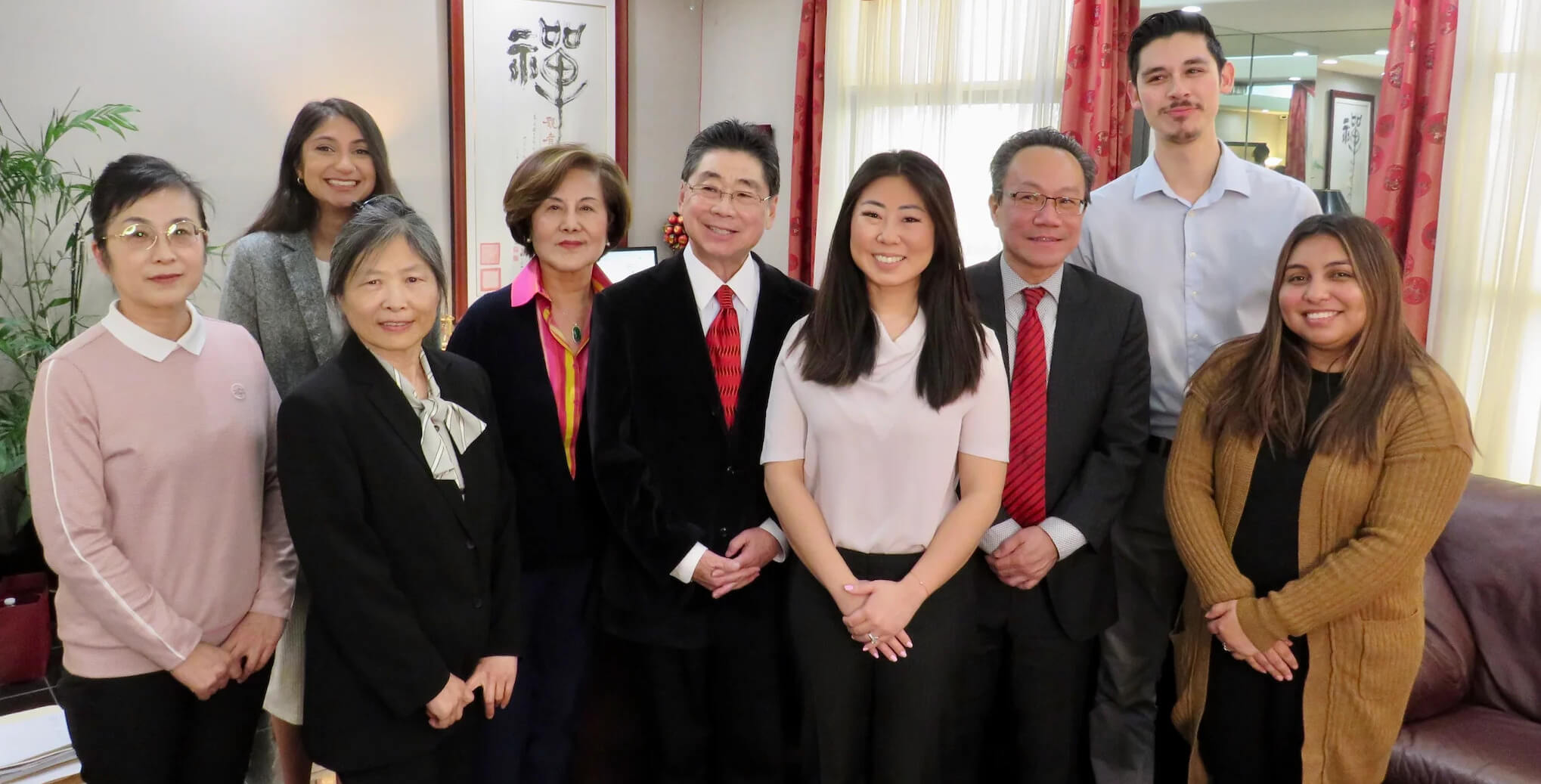
Why Choose Us?
-

Unmatched Expertise
Trust in Peter Chu's 75+ years of collective experience to guide you through complex immigration matters.
-

Tailored Solutions
Our personalized strategies adapt to your unique circumstances, ensuring we meet your specific immigration needs.
-

Proven Success
Benefit from our solid track record in achieving favorable outcomes in various immigration cases across San Diego.
-

Dedicated Service
Experience our client-first approach that ensures constant support and guidance throughout your immigration journey.


Get clear, expert legal guidance tailored to your visa, green card, or citizenship needs.

Inquire now to check if you qualify
K-3 Visa vs. Direct Consular Processing: What Philadelphia Families Need to Know
Philadelphia families pursuing spousal immigration have two primary pathways: file a K-3 nonimmigrant petition (I-129F) after the I-130 is pending, or wait for the I-130 to be approved and proceed directly to consular processing of the immigrant visa. The decision depends on current processing times, your spouse's country of origin, and whether work authorization timing is critical. Here's the honest answer: in 2026, the K-3 visa is rarely faster than direct consular processing due to USCIS processing improvements on I-130 petitions. The K-3 was designed during an era when I-130 petitions took 18–24 months to adjudicate. Today, Philadelphia USCIS processes most spousal I-130 petitions in 10–14 months, often faster than the combined time to adjudicate an I-129F and schedule a K-3 consular interview. The K-3 remains useful in narrow scenarios: when the foreign spouse is in a country with significantly shorter K-3 interview wait times, when immediate travel to the U.S. is required for family emergencies, or when applying for work authorization (via I-765) upon K-3 entry provides financial necessity that cannot wait for immigrant visa processing.
| Pathway | Processing Time | Work Authorization | Adjustment Filing | Professional Assessment |
|---|---|---|---|---|
| K-3 Visa | I-129F: 6–8 months + consular processing 2–4 months | Available upon entry with I-765 filing (~3 months) | File I-485 after entry | Best for: Cases where consulate has faster K-3 scheduling, or immediate U.S. presence needed |
| Direct Consular (IR-1) | I-130: 10–14 months + consular processing 2–4 months | Not available until entry as LPR | No adjustment needed. Enters as LPR | Best for: Most 2026 cases. Faster total timeline, enters with green card, no conditional status |
| DIY Petition | Same timelines but higher RFE risk | Same | Same | Risk: 40% RFE rate for pro se filers vs. 12% with attorney representation. Delays add 4–6 months |
| Expedite Request | Possible for I-130 with emergency proof | Depends on pathway | Depends on pathway | Reality check: USCIS grants <15% of expedite requests; requires hospitalization, death, or military deployment proof |
Frequently Asked Questions
Find answers to common questions about our services
-
K-3 petition processing time in Philadelphia consists of two stages: USCIS adjudication of Form I-129F (currently 6–8 months for Philadelphia filers) and consular processing at the embassy where your spouse will interview (2–4 months depending on country)
-
Yes. K-3 visa holders can apply for work authorization by filing Form I-765 (Application for Employment Authorization) after entering the United States. USCIS currently processes I-765 applications for K-3 holders in 3–5 months. Work authorization is vali
-
K-3 is a nonimmigrant visa that allows your spouse to enter the U.S. while the I-130 immigrant petition is pending. Your spouse must later file for adjustment of status (I-485) to obtain a green card. CR-1 (or IR-1 if married over 2 years) is an immigrant
-
You are legally permitted to file a K-3 petition without an attorney. However, Philadelphia USCIS data shows that pro se (self-filed) K-3 petitions have a 40% RFE (Request for Evidence) rate compared to 12% for attorney-prepared petitions. RFEs add 4–6 mo
-
If your I-130 immigrant visa petition is approved while the K-3 petition is still pending or after K-3 approval but before your spouse's visa interview, USCIS will automatically convert the case to immigrant visa processing. Your spouse will interview for
-
No. The K-3 visa is available only to spouses of U.S. citizens. Lawful permanent residents (green card holders) cannot petition for K-3 status for their spouses. If you are a green card holder, your spouse must wait for approval of the family-based I-130
-
A complete K-3 petition requires: Form I-129F with filing fee ($535 as of 2026), copy of your I-130 receipt notice proving the immigrant petition is pending, proof of U.S. citizenship (passport or birth certificate), proof of legal marriage (certified mar
-
K-3 attorney fees in Philadelphia typically range from $2,500 to $4,500 for full representation. Including I-129F preparation, consular processing coordination, and RFE response if needed. This is separate from USCIS filing fees ($535 for I-129F, $1,140 f
Need Personalized Immigration Guidance?

