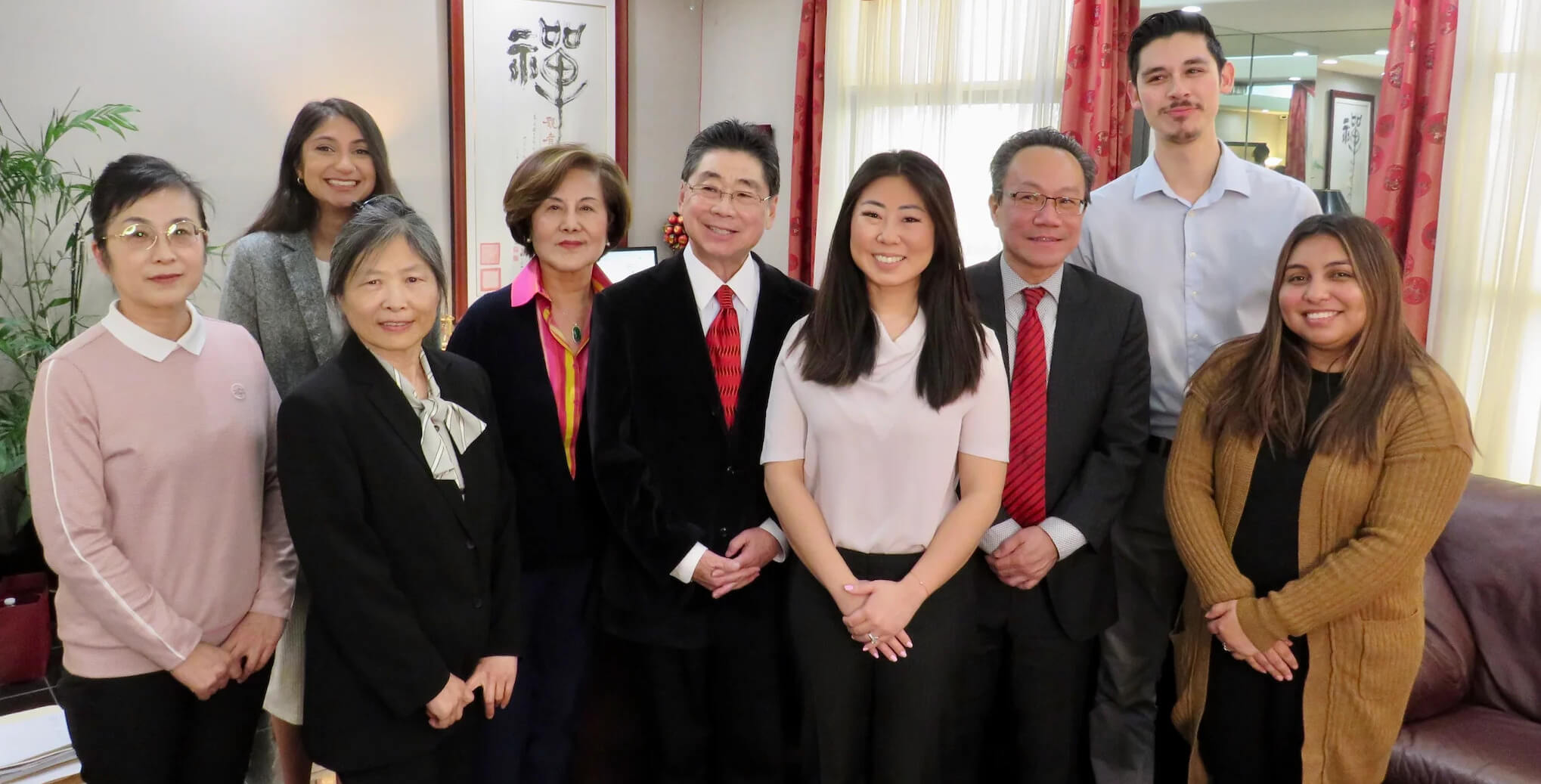

Why Choose Us?

  • Unmatched Expertise

    Trust in Peter Chu's 75+ years of collective experience to guide you through complex immigration matters.

  • Tailored Solutions

    Our personalized strategies adapt to your unique circumstances, ensuring we meet your specific immigration needs.

  • Proven Success

    Benefit from our solid track record in achieving favorable outcomes in various immigration cases across San Diego.

  • Dedicated Service

    Experience our client-first approach that ensures constant support and guidance throughout your immigration journey.

Rialto, CA processes hundreds of family-based immigration petitions annually through USCIS, with K-3 spouse visa cases representing a critical pathway for married couples seeking reunification before permanent residency approval. For Rialto residents navigating the K-3 visa process, the difference between approval and denial often comes down to precise petition preparation, accurate supporting documentation, and understanding of changing USCIS adjudication standards. Law office of Peter Darwin Chu has represented Rialto families in K-3 and related spouse visa matters, bringing California Bar-licensed experience to every case filed from San Bernardino County.

Book a Consultation

Law office of Peter Darwin Chu provides k-3 attorney rialto services to Rialto, CA residents. Licensed under the California State Bar, serving zip codes 92376 and 92377, with in-person consultations available at our office and remote case management for all San Bernardino County clients. We specialize in K-3 spouse visa petitions, I-129F preparation, and coordinated filing strategies that minimize separation time for married couples. Our immigration attorney rialto practice focuses exclusively on family-based immigration, ensuring your K-3 case receives specialized attention from petition filing through visa interview preparation.

K-3 Attorney Rialto Available Across Rialto and Surrounding Areas

Law office of Peter Darwin Chu serves clients throughout Rialto, CA and the surrounding San Bernardino County region. Including the Renaissance, North Rialto, and Rialto Heights neighborhoods in zip codes 92376 and 92377. We represent all California residents with K-3 spouse visa cases, regardless of where your marriage was celebrated or your spouse currently resides abroad, with full case support from our California-based immigration practice.

What Rialto Residents Can Access

K-3 Spouse Visa Petition Preparation

The K-3 visa allows U.S. citizens to bring their foreign spouse to the United States while the I-130 immigrant petition is pending, reducing separation time by months or years. Our k-3 rialto practice prepares Form I-129F petitions with complete supporting evidence packages. Marriage certificates with certified translations, proof of bona fide relationship, financial sponsorship documentation, and USCIS-compliant photographs. For Rialto couples, we coordinate K-3 filing strategy with your pending I-130 to maximize approval speed while protecting your immigration options if processing delays occur. Most K-3 consultations include a review of whether direct consular processing or Adjustment of Status offers faster reunification for your specific case.

K-3 Spouse Visa Interview Coaching

Consular interviews for K-3 visa applicants occur at U.S. embassies abroad and require preparation that addresses country-specific documentation standards, common grounds of inadmissibility, and interviewer questioning patterns. We provide Rialto petitioners and their spouses with interview preparation materials, mock interview sessions conducted via video conference, and written guidance on responding to relationship authenticity questions. Our immigration attorney rialto team reviews all required civil documents before your spouse's interview appointment to ensure nothing triggers a Request for Evidence or administrative processing delay.

Ir-1 Spouse Visa Alternative Analysis

Many Rialto couples initially pursue K-3 visas without realizing that IR-1 immigrant visa processing through direct consular processing may now be faster due to USCIS processing time improvements since 2024. We provide side-by-side K-3 vs. IR-1 timeline analysis based on current National Visa Center and embassy processing data for your spouse's country, helping you choose the pathway that minimizes separation while preserving work authorization and permanent residency benefits.

Get clear, expert legal guidance tailored to your visa, green card, or citizenship needs.

Licensed K-3 Attorney Rialto Representation

Law office of Peter Darwin Chu operates under active California State Bar licensing, maintaining all required professional liability insurance and client trust account compliance mandated by the California Rules of Professional Conduct. Our k-3 attorney rialto practice adheres to American Immigration Lawyers Association (AILA) ethical standards and provides written fee agreements that specify scope of representation, case milestones, and client responsibilities before any retainer is collected. We do not guarantee visa approval. No ethical attorney can. But we do guarantee that every K-3 petition filed from our office meets current USCIS regulatory requirements and includes every supporting document necessary to establish petition eligibility under Immigration and Nationality Act Section 101(a)(15)(K).

Inquire now to check if you qualify

What if my I-130 petition was already approved before I learned about K-3 visas in Rialto?

If your I-130 immigrant petition has already been approved and forwarded to the National Visa Center, filing a K-3 petition may no longer provide a timing advantage. In many cases, direct consular processing of the approved I-130 is now faster than K-3 adjudication and eliminates the need for a second visa interview. However, if your spouse faces a multi-year visa bulletin wait time due to country-specific preference category backlogs, the K-3 visa can still allow earlier entry to the United States with work authorization while waiting for the immigrant visa number to become available. Our Rialto practice reviews your Priority Date, current visa bulletin, and NVC case status to determine whether pursuing K-3 after I-130 approval makes strategic sense for your family.

What if my spouse was previously denied a tourist visa — will that affect our K-3 case in Rialto?

A prior B-2 tourist visa denial does not automatically disqualify your spouse from K-3 visa approval, but the reason for the prior denial matters significantly. If the denial was based on immigrant intent (INA Section 214(b)). The most common B-2 denial ground. The K-3 visa actually resolves that issue because K-3 is explicitly a dual-intent visa that allows applicants to have immigrant intent while entering on a nonimmigrant visa. If the prior denial involved misrepresentation, fraud, or a ground of inadmissibility under INA Section 212(a), those issues must be addressed through a waiver application before K-3 approval is possible. Our immigration attorney rialto team reviews all prior visa denial notices during your consultation to assess whether the prior denial creates a material obstacle to your K-3 case.

What if we got married outside the United States — can we still file a K-3 petition from Rialto?

Yes. K-3 petitions are available to U.S. citizens regardless of where the marriage was celebrated, as long as the marriage is legally valid in the jurisdiction where it occurred and recognized under U.S. immigration law. For Rialto petitioners, the critical requirement is that you can provide a certified marriage certificate with an English translation (if the original is in a foreign language) and evidence that both parties were legally free to marry at the time of the ceremony. Marriages conducted abroad sometimes require apostille certification or embassy authentication depending on the country. Our k-3 attorney rialto practice handles document authentication coordination and ensures your foreign marriage certificate meets USCIS evidentiary standards before filing.

What if my spouse has children from a previous relationship — can they come to Rialto on K-3 derivative visas?

Yes. Unmarried children under age 21 of your K-3 spouse are eligible for K-4 derivative visas, which allow them to accompany or follow to join your spouse to the United States. All K-4 applicants must be listed on the initial Form I-129F petition, and each child requires separate visa application fees, medical examinations, and consular interview attendance. If your spouse has children who will turn 21 soon, timing becomes critical. Children who age out before K-4 visa issuance lose derivative eligibility and must qualify for immigration through a different family preference category with significantly longer wait times. Our Rialto practice calculates Child Status Protection Act (CSPA) age for all derivative beneficiaries and advises on filing strategies that preserve eligibility for children approaching the age-21 cutoff.

Choosing the Right K-3 Spouse Visa Path in Rialto

Rialto couples pursuing spousal immigration have three primary options: K-3 nonimmigrant visa, CR-1/IR-1 immigrant visa through consular processing, or Adjustment of Status if the spouse is already in the United States on another valid status. Each pathway has distinct timelines, work authorization rules, and travel restrictions.

Here's the honest answer: K-3 visas were designed in 2000 to reduce separation time when I-130 processing took 18–24 months, but USCIS processing improvements since 2023 have made direct CR-1/IR-1 consular processing nearly as fast as K-3 in many cases. Often 12–16 months total. The primary advantage K-3 still offers is earlier work authorization (immediately upon entry) and the ability to wait for Priority Date movement inside the United States if your spouse faces visa bulletin backlogs. For Rialto couples where the U.S. spouse must maintain a household and cannot relocate abroad during processing, K-3 provides the earliest reunification option. For couples who can wait an additional 3–4 months and prefer to avoid the two-step process (K-3 entry followed by Adjustment of Status), direct IR-1 processing is often more efficient.

OptionTimeline to U.S. EntryWork AuthorizationProfessional Assessment
K-3 Visa10–14 months (I-129F + consular processing)Immediate upon entry with EAD applicationBest for couples prioritizing fastest reunification and U.S.-based waiting
IR-1 Immigrant Visa14–18 months (I-130 + NVC + consular processing)Upon entry (permanent resident)Best for couples who can wait slightly longer and prefer one-step permanent residency
Adjustment of Status12–18 months (if spouse already in U.S. on valid status)4–6 months after filing (with I-765)Only available if spouse is already lawfully present in the United States
DIY PetitionVariable (high RFE rate, often 20–30% longer)Delayed by RFE responsesHigh risk of procedural errors, incomplete evidence packages, and petition denial

Get in touch

Frequently Asked Questions

Find answers to common questions about our services

  • Current K-3 processing timelines for Rialto petitioners average 10–14 months from Form I-129F filing to visa issuance. Approximately 6–8 months for USCIS petition approval, 2–3 months for National Visa Center processing, and 2–3 months for consular interv

  • No. K-3 visa holders must apply for an Employment Authorization Document (EAD) using Form I-765 after entering the United States, and work authorization is not granted until USCIS approves the EAD application (typically 3–5 months after filing). However,

  • The I-129F petition for a K-3 visa requires: proof of your U.S. citizenship (passport or birth certificate), a certified copy of your marriage certificate with English translation if applicable, evidence that a Form I-130 immigrant petition has been filed

  • K-1 visas are for engaged couples who have not yet married and require the couple to marry within 90 days of the foreign fiancé's U.S. entry. K-3 visas are for couples who are already legally married and allow the foreign spouse to enter the United States

  • If your I-130 immigrant petition is approved and forwarded to the National Visa Center before your spouse's K-3 visa interview, the consular officer will typically process the case as an immigrant visa (CR-1 or IR-1) instead of a K-3 nonimmigrant visa. Th

  • Yes. K-3 petitions can be filed regardless of your spouse's country of residence, but applicants from countries with high rates of marriage fraud or visa fraud face additional scrutiny during consular processing. Common high-scrutiny countries include Nig

  • The I-129F filing fee for a K-3 petition is currently $535 (subject to change. Verify at uscis.gov). Additional costs include the DS-160 visa application fee ($265 per applicant), medical examination fees at an embassy-approved physician abroad (typically

  • K-3 visa holders can apply for advance parole (Form I-131) to travel outside the United States while an Adjustment of Status application is pending, but travel before receiving the advance parole document will abandon the adjustment application. Most K-3

Need Personalized Immigration Guidance?

Law office of Peter Darwin Chu provides k-3 attorney rialto services to Rialto, CA residents with in-person consultations, licensed California Bar representation, and coordinated I-129F and I-130 filing strategies that minimize spousal separation time.

Related Immigration Services for Rialto Families

If you are exploring K-3 spouse visa options in Rialto, you may also benefit from our related immigration services. Including Ir-1 Spouse Visa consular processing for couples seeking direct permanent residency, Citizenship naturalization assistance for green card holders preparing to petition family members, and I-751 Lawyer San Diego representation for conditional residents removing conditions after K-3 entry and Adjustment of Status approval. We also assist Rialto residents with National City Citizenship Attorney services and Citizenship Attorney In San Marcos Ca representation for San Diego County clients. Many of our K-3 clients later require J-1 Visa Attorney guidance for exchange visitor dependents or I-601 Waiver representation if inadmissibility grounds emerge during consular processing.

Speak With Us Today