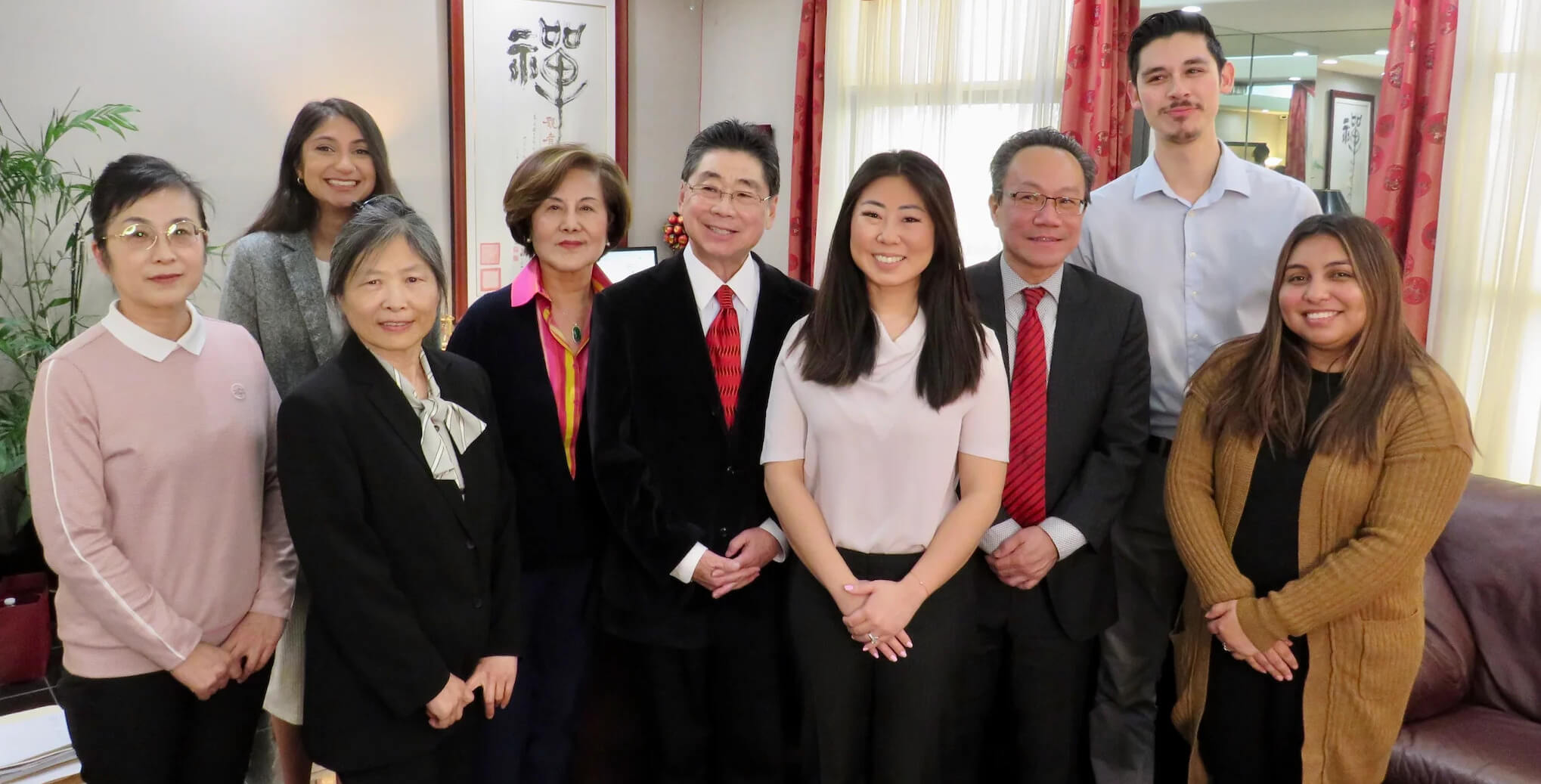

Why Choose Us?

  • Unmatched Expertise

    Trust in Peter Chu's 75+ years of collective experience to guide you through complex immigration matters.

  • Tailored Solutions

    Our personalized strategies adapt to your unique circumstances, ensuring we meet your specific immigration needs.

  • Proven Success

    Benefit from our solid track record in achieving favorable outcomes in various immigration cases across San Diego.

  • Dedicated Service

    Experience our client-first approach that ensures constant support and guidance throughout your immigration journey.

Riverside County processed over 12,800 immigration petitions in 2024, making it one of the highest-volume family-based immigration venues in Southern California—where K-3 spouse visa timing and procedural accuracy directly determine whether couples wait 6 months or 18 months for reunification. For Riverside, CA residents navigating spousal visa petitions, the difference between approval and a Request for Evidence often comes down to whether the I-129F filing included the correct supporting documentation before USCIS review. Law Office of Peter Darwin Chu has represented Riverside families in K-3 spouse visa cases since founding, with direct experience in both the California Service Center adjudication process and consular interview preparation for visa issuance abroad.

Book a Consultation

Law Office of Peter Darwin Chu provides k-3 attorney riverside services to Riverside, CA residents—licensed California immigration representation for K-3 spousal visa petitions, I-129F filings, consular interview preparation, and expedited processing requests available through same-week consultation scheduling. We specialize in reunification cases where the U.S. citizen spouse requires faster processing than the standard IR-1/CR-1 immigrant visa timeline, offering bilingual case management and direct attorney communication throughout the petition and consular phases.

K-3 Attorney Riverside Available Across Riverside and Surrounding Areas

Law Office of Peter Darwin Chu serves clients throughout Riverside, CA, including Downtown Riverside, La Sierra, Canyon Crest, Orangecrest, and Arlington—zip codes 92501, 92502, 92503, 92504, and 92505—as well as neighboring Inland Empire communities. All K-3 spouse visa representation is provided by California-licensed immigration counsel familiar with California Service Center adjudication standards, National Visa Center processing timelines, and consular interview requirements at U.S. embassies worldwide. Riverside residents with pending or planned spousal petitions qualify for representation regardless of the foreign spouse's country of residence.

What Riverside Residents Can Access

K-3 Spouse Visa Petition Preparation

The K-3 nonimmigrant visa allows the foreign spouse of a U.S. citizen to enter the United States while the immigrant visa petition (I-130) is pending, reducing separation time by 8–14 months in typical cases. We prepare and file Form I-129F (Petition for Alien Fiancé(e)) specifically for K-3 classification, coordinate with the pending I-130, and ensure USCIS receives all required supporting evidence—marriage certificate, proof of bona fide relationship, and financial sponsorship documentation—before the California Service Center issues a Notice of Action. Riverside clients receive a complete filing checklist, document authentication guidance, and timeline projections based on current USCIS processing speeds.

Consular Processing & Interview Preparation

Once USCIS approves the I-129F, the case transfers to the National Visa Center and then to the U.S. embassy or consulate in the foreign spouse's country of residence. We prepare clients for DS-160 completion, medical examination scheduling, and the consular interview itself—providing question lists, document organization strategies, and guidance on overcoming common grounds of inadmissibility. For Riverside families, consular preparation includes coordination with the I-130 immigrant visa process to ensure seamless adjustment of status upon K-3 entry.

Adjustment of Status After K-3 Entry

K-3 visa holders may file Form I-485 (Application to Register Permanent Residence) immediately upon U.S. entry if the I-130 immigrant visa petition is already approved, converting nonimmigrant status to lawful permanent residence without leaving the country. We manage the I-485 filing, employment authorization (I-765) and advance parole (I-131) applications, and biometrics scheduling—ensuring Riverside clients understand work authorization timelines and travel restrictions during the adjustment period. For additional immigration services, see Immigrant Visas and IR-1 Spouse Visa.

Get clear, expert legal guidance tailored to your visa, green card, or citizenship needs.

Licensed Riverside Immigration Representation You Can Rely On

Law Office of Peter Darwin Chu maintains all required California state and local licenses and operates under State Bar of California oversight, with immigration practice governed by the American Immigration Lawyers Association (AILA) ethical standards and USCIS representation regulations under 8 CFR § 292.1. Every K-3 spouse visa case is managed by licensed California immigration counsel—not paralegals or document preparers—with direct attorney communication throughout the petition, consular, and adjustment phases. Riverside clients receive written fee agreements, case status updates at every USCIS milestone, and secure client portal access for document submission and case tracking. Our k-3 riverside practice is built on procedural precision, not volume—each petition receives individualized review to address the specific admissibility, financial sponsorship, and bona fide relationship evidence requirements of that couple's case.

Inquire now to check if you qualify

What if my I-130 immigrant visa petition is already pending—can I still file a K-3 petition in Riverside?

Yes—the K-3 visa was specifically designed for cases where an I-130 is already filed but not yet approved, allowing the foreign spouse to join the U.S. citizen petitioner in Riverside while the immigrant visa processes. You file Form I-129F after the I-130 receipt notice is issued, referencing the I-130 receipt number in the K-3 petition. USCIS adjudicates both petitions concurrently, and if the I-130 is approved before the K-3 interview, the foreign spouse can proceed directly to immigrant visa issuance rather than K-3 entry. The strategic value of K-3 filing depends on current I-130 processing times at the California Service Center—if I-130 approval is expected within 6 months, K-3 may offer minimal time savings; if processing exceeds 12 months, K-3 can reduce separation by nearly a year. We evaluate the cost-benefit calculus based on your I-130 filing date and current processing data.

What if the foreign spouse is in a country with long consular wait times—does that affect K-3 timing for Riverside families?

Yes—K-3 visa issuance is subject to the same consular processing delays, interview appointment backlogs, and administrative processing timelines as immigrant visas, and in some countries (particularly high-fraud jurisdictions), consular K-3 processing can take as long as CR-1 processing. For Riverside residents whose spouses are in countries with consular backlogs exceeding 6 months, the time advantage of K-3 over CR-1 may be negligible, and the added cost of filing both I-129F and I-130 may not justify the minimal time savings. We review current consular processing times for the specific embassy before recommending K-3 filing, and in cases where CR-1 processing is faster, we advise focusing resources on the immigrant visa petition alone. Country-specific consular delays are the single most important variable in K-3 strategy.

What if we need to expedite the K-3 process due to medical or family emergency—can a Riverside attorney request faster processing?

USCIS allows expedite requests for I-129F petitions based on severe financial loss, emergency situations, humanitarian reasons, or USCIS error—but approval is discretionary and requires detailed evidence. For Riverside families facing medical emergencies (serious illness of the U.S. citizen petitioner or foreign spouse), we prepare expedite requests with supporting medical documentation, physician statements, and proof that the foreign spouse's presence is necessary for care or decision-making. Financial emergencies (loss of housing, inability to maintain employment due to separation) also qualify if documented with employer letters, lease termination notices, or income loss proof. Expedite requests are submitted by phone to the USCIS Contact Center and must be followed up with written evidence—approval typically comes within 5–10 business days if granted. Not all requests succeed, but we maximize approval likelihood by framing the emergency within USCIS policy criteria and providing documentation that meets evidentiary standards.

What if the foreign spouse has a prior visa denial or overstay—does that disqualify them from K-3 eligibility in Riverside?

Prior visa denials, overstays, or unlawful presence do not automatically disqualify a foreign spouse from K-3 eligibility, but they create grounds of inadmissibility that must be overcome with a waiver (Form I-601) before the K-3 visa can be issued. Unlawful presence of 180 days or more triggers a 3-year bar; 365 days or more triggers a 10-year bar—both requiring a waiver based on extreme hardship to the U.S. citizen spouse. Prior misrepresentation or fraud on a visa application creates a permanent bar unless waived. For Riverside families in this situation, we file the I-129F and I-130 concurrently, prepare the I-601 waiver application in advance of the consular interview, and coordinate waiver adjudication with the K-3 interview scheduling to minimize additional delays. Waiver approval typically adds 6–12 months to the overall timeline, but it is the only path to K-3 issuance when inadmissibility exists.

Comparing Your K-3 Spousal Visa Representation Options in Riverside

Riverside residents seeking k-3 attorney riverside services face three primary options: licensed immigration attorneys specializing in family-based petitions, general practice attorneys offering immigration as a secondary service, and online document preparation services marketing low-cost I-129F filing without legal representation. Each serves a different need—and choosing the wrong category for your case complexity consistently leads to delays, RFEs, or outright denials.

Here's the honest answer: Document preparation services can complete forms correctly, but they cannot provide legal advice on admissibility issues, waiver strategy, or consular interview preparation—the three areas where K-3 cases most commonly fail. General practice attorneys can file petitions, but without daily immersion in USCIS adjudication patterns and consular processing requirements, they miss jurisdiction-specific nuances that specialized immigration counsel catch reflexively. Licensed immigration attorneys with dedicated family reunification practices—like Law Office of Peter Darwin Chu—provide not just form completion but strategic case planning: whether K-3 filing is cost-effective given current I-130 processing times, how to structure financial sponsorship evidence to survive consular scrutiny, and how to prepare for interview questions that probe the bona fide nature of the marriage.

OptionCost RangeLegal AdviceConsular PrepProfessional Assessment
Document Prep Service$400–$800No (unauthorized practice)NoLow-cost but high-risk for cases with any complexity—one missed inadmissibility issue can delay approval by 12+ months
General Practice Attorney$1,500–$3,000Yes (limited immigration depth)BasicAdequate for straightforward cases but lacks specialized K-3 timing strategy and consular coordination experience
Immigration Specialist (Law Office of Peter Darwin Chu)$2,500–$5,000+Yes (family-based immigration focus)ComprehensiveHighest upfront cost but best equipped to navigate USCIS adjudication, consular processing, and admissibility waivers—reduces overall timeline and denial risk
Self-Filing (DIY)$535 (USCIS fee only)NoNoViable only if you have zero inadmissibility issues, perfect English fluency, and time to research USCIS policy manuals—RFE response delays cost more than initial attorney fees

The cost difference between a document service and licensed counsel is $2,000–$4,000. The cost of a denied K-3 petition due to inadequate inadmissibility analysis or poorly structured relationship evidence is 12–18 months of continued separation, reapplication fees, and potential permanent bars if misrepresentation occurs. For Riverside families with prior visa denials, overstays, or complex financial sponsorship situations, the upfront investment in specialized representation is the only path that reduces total time and cost.

Get in touch

Frequently Asked Questions

Find answers to common questions about our services

  • K-3 visa processing in 2026 involves three stages: USCIS adjudication of Form I-129F (6–9 months at California Service Center), National Visa Center processing (1–2 months), and consular interview scheduling and visa issuance (2–6 months depending on coun

  • Attorney fees for K-3 spouse visa representation in Riverside typically range from $2,500 to $5,000, depending on case complexity, whether inadmissibility waivers are required, and the scope of consular preparation services included. This fee covers I-129

  • K-3 visa holders cannot work immediately upon entry—they must first file Form I-765 (Application for Employment Authorization) and receive an Employment Authorization Document (EAD) before beginning employment in Riverside or anywhere in the U.S. The I-76

  • A complete K-3 visa petition requires Form I-129F with filing fee, proof of U.S. citizenship (passport or birth certificate), marriage certificate from the foreign country (with certified English translation if not in English), proof of legal termination

  • If the I-130 immigrant visa petition is approved before the K-3 visa interview is scheduled, the foreign spouse can proceed directly to immigrant visa (CR-1/IR-1) processing at the consulate rather than K-3 issuance—this results in the foreign spouse ente

  • If the foreign spouse is already in the United States in valid nonimmigrant status (such as B-2 visitor, F-1 student, or H-1B worker) when the I-130 immigrant visa petition is approved, they can file Form I-485 (Adjustment of Status) without leaving the c

  • A K-3 visa is a nonimmigrant visa that allows the foreign spouse to enter the United States while the I-130 immigrant visa petition is pending, providing faster reunification but requiring adjustment of status after entry. A CR-1 (or IR-1) visa is an immi

  • Consular interview preparation for K-3 visas includes reviewing the DS-160 application for accuracy, organizing required documents (passport, medical exam results, police certificates, financial support evidence), and conducting mock interviews that simul

Need Personalized Immigration Guidance?

Law Office of Peter Darwin Chu provides k-3 attorney riverside representation to Riverside, CA residents through licensed California immigration counsel, offering I-129F petition preparation, consular interview coordination, and adjustment of status filing with same-week consultation availability and bilingual case management.

Related Immigration Services for Riverside Families

Riverside residents navigating spousal reunification often benefit from understanding related visa pathways and processes. For couples preferring the direct immigrant visa route without K-3 filing, see IR-1 Spouse Visa and K-3 Spouse Visa Riverside for detailed CR-1/IR-1 timelines and adjustment strategies. Families with children from the marriage should review IR-2 Visa for derivative beneficiary petitions. For employment-based alternatives, explore O-1 Visa Lawyer San Diego, Expert H-1 Visa Lawyer San Diego, and E-1 Visa Lawyer San Diego. All k-3 riverside consultations include family-based visa comparison analysis to ensure you select the fastest, most cost-effective path to permanent residence.

Speak With Us Today