
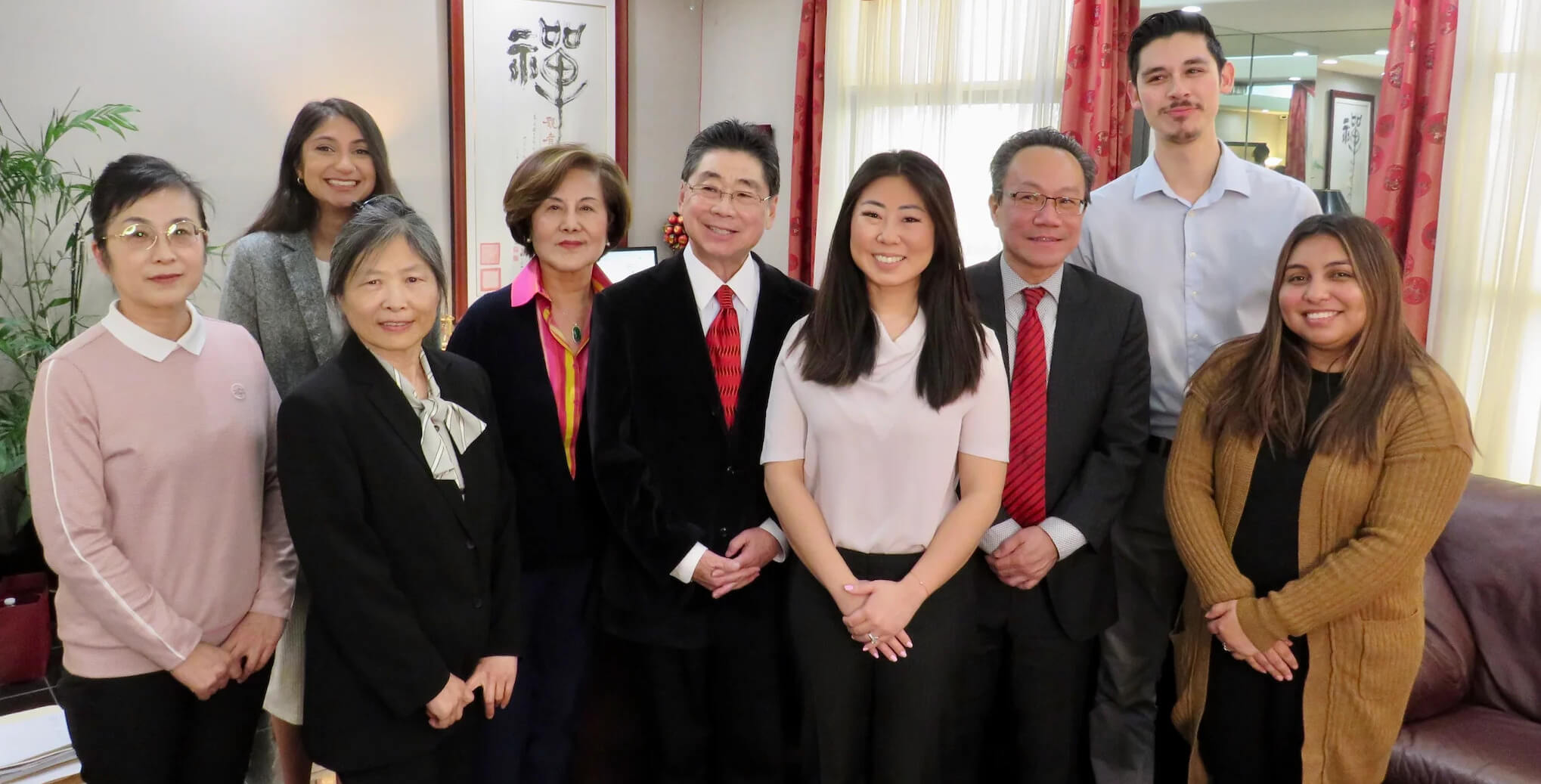
Why Choose Us?
-

Unmatched Expertise
Trust in Peter Chu's 75+ years of collective experience to guide you through complex immigration matters.
-

Tailored Solutions
Our personalized strategies adapt to your unique circumstances, ensuring we meet your specific immigration needs.
-

Proven Success
Benefit from our solid track record in achieving favorable outcomes in various immigration cases across San Diego.
-

Dedicated Service
Experience our client-first approach that ensures constant support and guidance throughout your immigration journey.


Get clear, expert legal guidance tailored to your visa, green card, or citizenship needs.

Inquire now to check if you qualify
K-3 Spouse Visa vs. CR-1 Immigrant Visa vs. DIY Filing
San Mateo couples navigating spousal immigration often weigh three paths: the K-3 nonimmigrant visa, the CR-1 immigrant visa, and self-filing without counsel. Here's the honest answer: the K-3 route is faster only if your I-130 is still pending and consular processing for CR-1 is significantly backlogged. A scenario that has become less common as USCIS processing times have improved. The CR-1 grants immediate permanent residence upon entry, while the K-3 requires adjustment of status after arrival, adding cost and processing time. DIY filing is viable for straightforward cases with no prior denials, overstays, or complex immigration history, but a single documentation error or missed RFE deadline can add months of delay that exceed the cost of attorney review.
| Factor | K-3 Spouse Visa | CR-1 Immigrant Visa | DIY Filing | Professional Assessment |
|---|---|---|---|---|
| Entry Status | Nonimmigrant (requires adjustment) | Immediate permanent resident | Varies by pathway | CR-1 eliminates post-entry adjustment costs and timeline |
| Processing Time | 8–12 months (if I-130 still pending) | 12–18 months total | Varies widely | K-3 time advantage has narrowed significantly since 2020 |
| Work Authorization | Requires EAD application after entry | Immediate upon entry | Not applicable | CR-1 allows work on day one |
| Attorney Guidance | Case-specific strategy and consular prep | Full petition and consular coordination | None | Counsel prevents costly errors and missed deadlines |
Frequently Asked Questions
Find answers to common questions about our services
-
The K-3 process typically takes 8–12 months from I-129F filing to consular interview, assuming no administrative processing delays. However, processing times vary based on USCIS workload at the California Service Center, the specific consulate where your
-
No. A K-3 visa holder must apply for an Employment Authorization Document (EAD) using Form I-765 after entering the United States. EAD processing currently takes 3–5 months, meaning your spouse will not have work authorization immediately upon arrival. In
-
Attorney fees for K-3 representation in San Mateo typically range from $2,500 to $4,500, depending on case complexity and whether consular interview preparation is included. USCIS filing fees for the I-129F petition are $535, and Department of State visa
-
Your spouse will not interview in San Mateo. The interview takes place at the U.S. embassy or consulate with jurisdiction over their country of residence. Required documents include a valid passport, DS-160 confirmation page, visa appointment confirmation
-
No. The K-3 visa is available only to spouses of U.S. citizens. If you are a lawful permanent resident (green card holder), your spouse must wait for an immigrant visa through the family-based preference category (F2A), which is subject to annual visa quo
-
If the I-130 is approved and the priority date becomes current before the K-3 visa is issued, the K-3 process is typically abandoned in favor of immigrant visa processing (CR-1 or IR-1), as the immigrant visa grants permanent residence immediately upon en
-
Even straightforward K-3 cases benefit from attorney review to ensure that Form I-129F is completed accurately, that supporting documents meet USCIS evidentiary standards, and that consular interview preparation addresses jurisdiction-specific issues. A s
-
Yes. Unmarried children under 21 of the K-3 visa holder may qualify for K-4 derivative visas, allowing them to accompany or follow the K-3 visa holder to the United States. The K-4 application is filed using Form I-129F and processed concurrently with the
Need Personalized Immigration Guidance?

